










No teachers, no homework: Inside America’s AI school
A controversial private school chain opening campuses from New York to California is replacing traditional classrooms with artificial intelligence — claiming kids can master core subjects in just two hours a day.
Alpha School, founded in Austin, Texas, in 2014, has quietly expanded nationwide, opening a campus in Manhattan’s Financial District last fall and launching new schools last summer in San Francisco, Santa Barbara and Orange County’s Lake Forest. Tuition at its New York location runs as high as $65,000 a year, the New York Post reveals in its latest article.
There are no teachers and no homework.
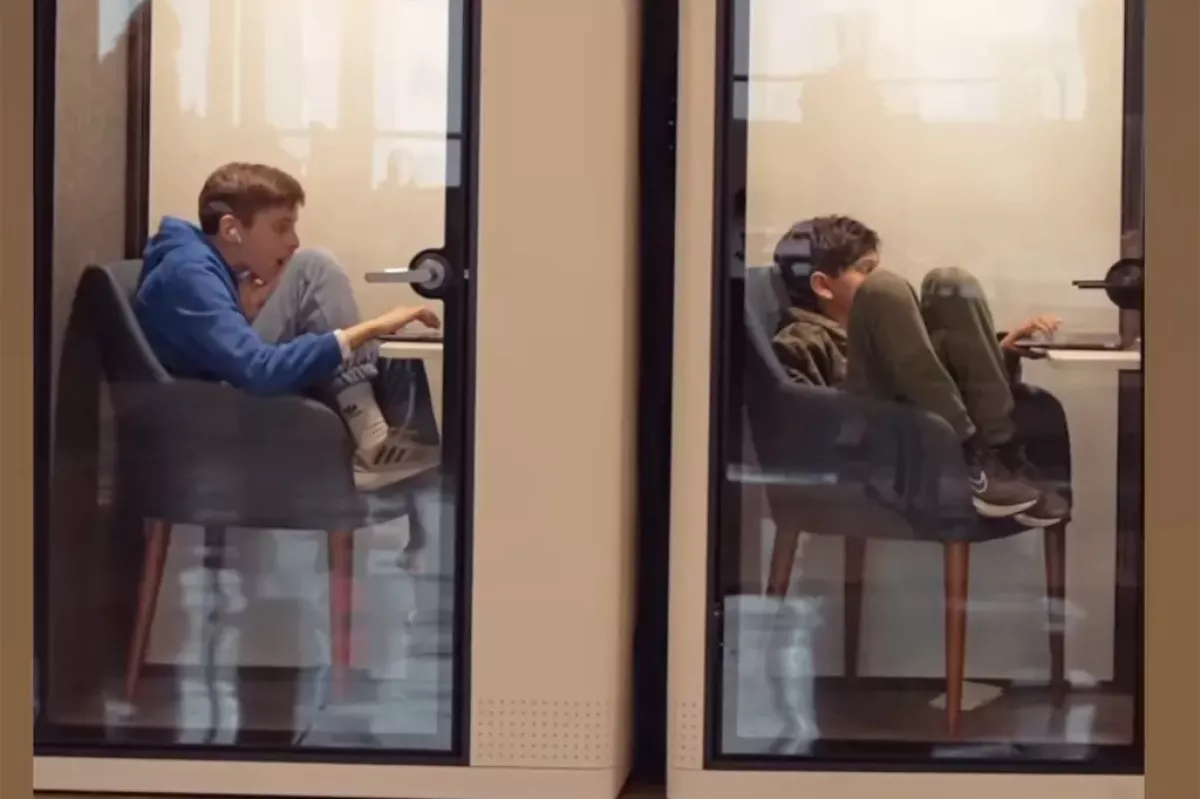
Instead, students learn math, language, science and history through AI-powered apps on tablets and laptops, overseen by roaming adult “guides.” After their two-hour academic block, the rest of the school day is devoted to so-called “life skills,” including rock climbing, building IKEA furniture and solving Rubik’s Cubes.
Alpha is led by founder and CEO MacKenzie Price, a 49-year-old Stanford-educated entrepreneur with more than 1 million Instagram followers, where she promotes the school as a Silicon Valley–style disruption of American education.
Price claims Alpha students learn twice as fast as their peers in traditional classrooms — and argues that conventional schools are failing children.
“Teachers aren’t going to be replaced — they’re going to be transformed,” Price told The Post. “This is an incredibly exciting moment.”
Her rhetoric mirrors tech startup culture. Alpha emphasizes “growth mindset,” goal-setting and self-accountability, while downplaying grades. In one Instagram post, Price wrote: “Report cards are basically useless at this point.”
On social media, Alpha students are showcased as mini prodigies — a 10-year-old claiming to manage Airbnb properties, a teenage girl announcing the launch of her own app.
But critics warn the school’s heavy reliance on screens and lack of traditional teachers may come at a cost.
Doctors and psychologists have repeatedly raised concerns about excessive technology use among children. The American Academy of Pediatrics warns that overexposure to screens can negatively affect young children’s cognitive development and increase risks of anxiety and depression among teens.
“I believe it’s dangerous to wipe teachers from classrooms,” said Joe Vercellino, a former Detroit Teacher of the Year and founder of The Lion Heart Experience, which provides mental health programming in schools. “What worries me most is what kids lose in terms of human development.”
Price, who has mingled with billionaire hedge fund manager Bill Ackman and appeared on a podcast hosted by LinkedIn co-founder Reid Hoffman, embraces the tech-world spotlight. Ackman publicly praised Alpha last August, calling it a “truly breakthrough innovation” and urging followers on X to inquire about enrollment.
At Alpha, AI software adapts lessons to each student’s level. A third grader reading at an eighth-grade level may still read about unicorns — but with advanced vocabulary. Struggling readers get simplified text without being given age-inappropriate material.
The system can even customize lessons around pop culture, teaching math through Taylor Swift album sales instead of baseball statistics.
Alpha says about 25% of its students receive scholarships, funded by tuition from wealthier families and outside donors. In places like Brownsville, Texas, families may pay as little as $500 a year. New York families, however, currently receive no financial aid.
Alpha now operates campuses in cities including Miami, Austin, Scottsdale and Charlotte — and plans further expansion.
“I don’t think there’s ever been a more exciting time to be a 5-year-old,” Price said.
Whether parents — and regulators — agree remains to be seen.
By Tamilla Hasanova







 editor@caliber.az
 +994 55 444-88-98
 Азербайджан, Баку, ул. Низами, 203, Af Business House, 5-й этаж