










Sotheby's to sell 17th century "astronomical computer" from Jaipur royal collection
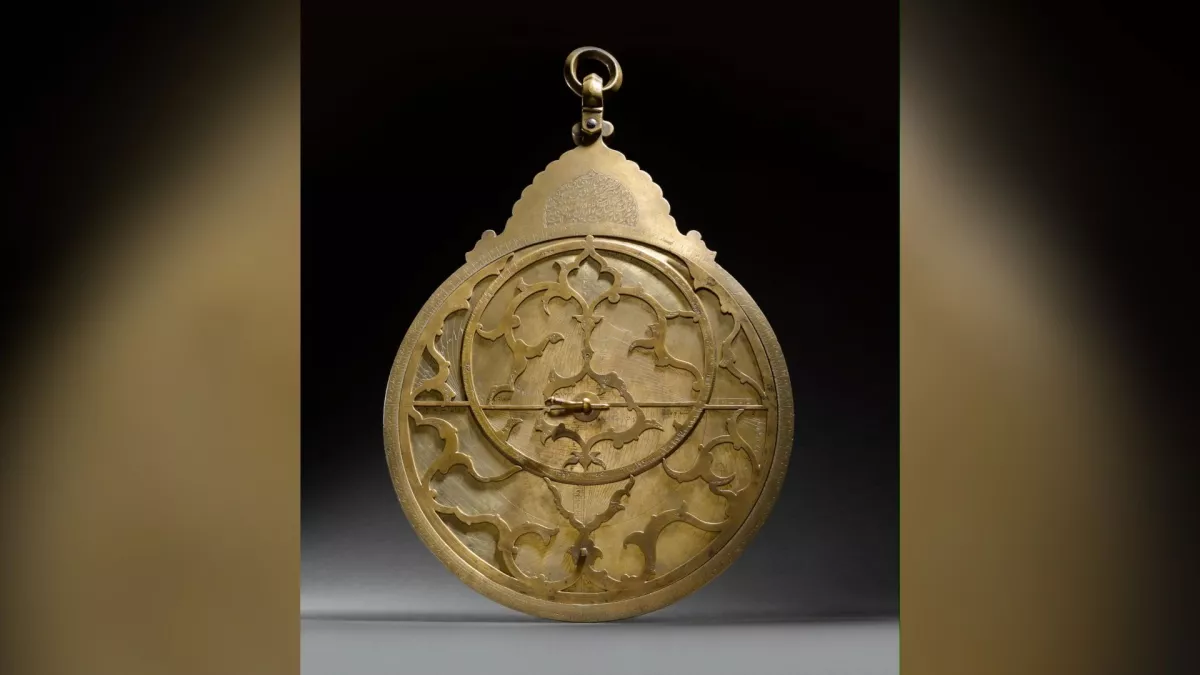
A remarkable 17th-century brass astrolabe—essentially a handheld astronomical computer—from the royal collection of Jaipur is set to go under the hammer at Sotheby's in London on April 29.
Described as “perhaps the largest in existence,” the instrument has never been publicly exhibited, according to Benedict Carter, head of Islamic and Indian Art at Sotheby’s, speaking to the BBC.
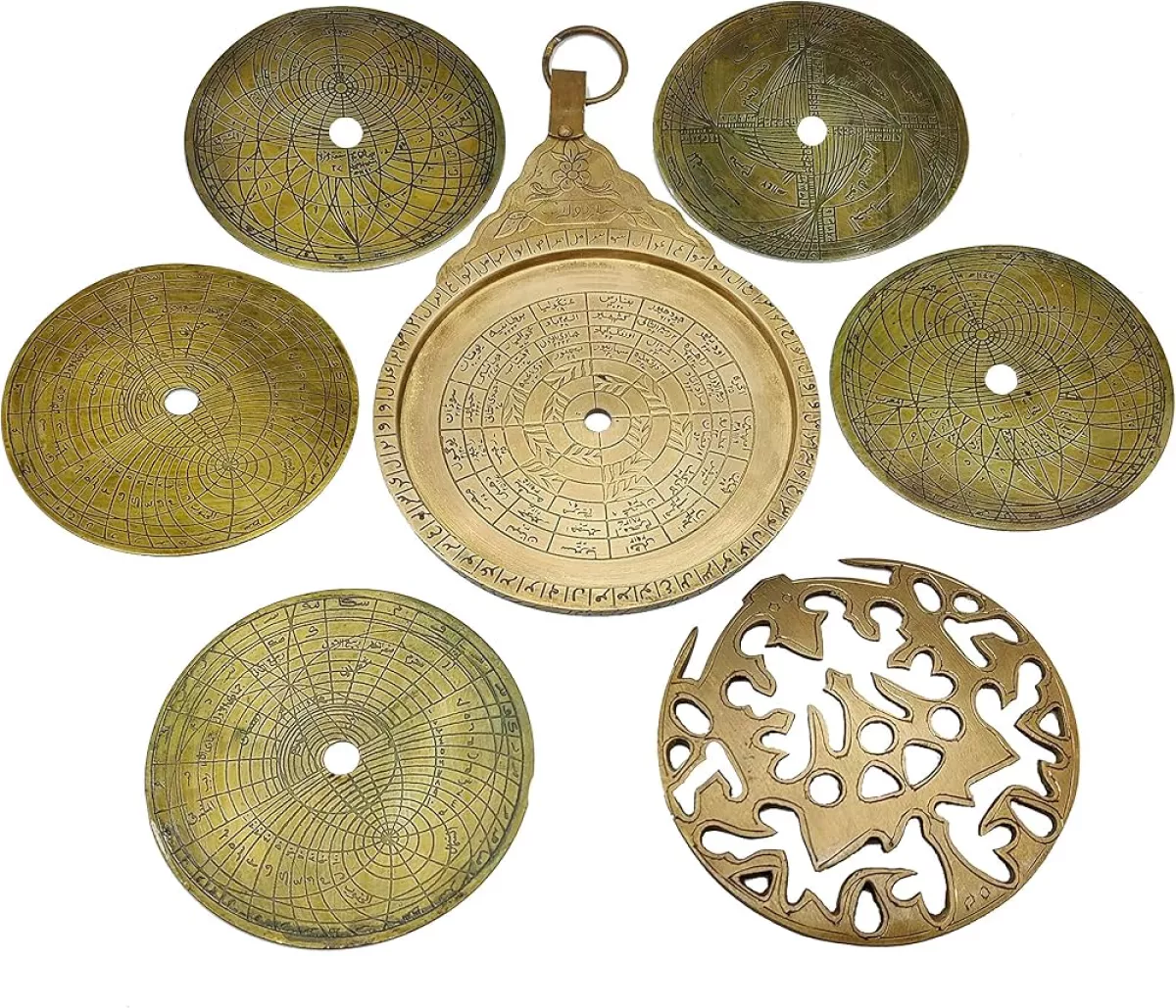
Astrolabes are intricate metal discs composed of layered, interlocking parts, historically used for a wide range of calculations—from telling time and charting stars to determining the direction of Mecca and mapping celestial motion.
“They are essentially a two-dimensional projection of a three-dimensional universe. I compare them to modern-day smartphones because you can do so many things with them,” said Dr Federica Gigante of the Oxford Centre for the History of Science, Medicine and Technology.
The astrolabe once belonged to Sawai Man Singh II and later passed to his wife, Gayatri Devi, a celebrated royal figure known for her elegance and public profile. During her lifetime, it entered a private collection.
She noted the object’s rich cultural synthesis: “The star pointers carry their standard names in Persian, alongside Sanskrit equivalents etched in the Devanagari script.”
Beyond astronomy, the device could also be used for practical and even mystical purposes. “You can calculate the time of sunset, sunrise, the height of a building, the depth of a well, distance and even use them to predict the future. Along with an almanac they were once used to cast horoscopes,” Gigante added.
Astrolabes originated in ancient Greece in the 2nd century BCE and spread into the Islamic world by the 8th century, where they flourished across regions such as Iraq, Iran, North Africa and Muslim-governed al-Andalus (today's Spain).
This particular example going under the hammer was crafted in early 17th-century Lahore—now in Pakistan—then a major centre of astrolabe production under the Mughal Empire. It was made by two brothers, Qa'im Muhammad and Muhammad Muqim, for a Mughal nobleman.
Weighing 8.2kg, measuring nearly 30cm in diameter and standing about 46cm tall, it is almost four times the size of a typical astrolabe from that period.
The brothers belonged to the renowned “Lahore School,” where the craft was often preserved within families and passed down through generations. Their work is notable for combining technical precision with artistic refinement, distinguishing it from earlier astrolabes produced elsewhere that were often more purely functional.
Only two astrolabes are known to have been jointly made by the pair; the other, significantly smaller, is housed in a museum in Iraq.
By Nazrin Sadigova







 editor@caliber.az
 +994 55 444-88-98
 Азербайджан, Баку, ул. Низами, 203, Af Business House, 5-й этаж