










Tough decision looms over Italy as fears over NATO-US rift grow
Whether or not one agrees with Canadian Prime Minister Mark Carney’s much-publicised remarks at the World Economic Forum 2026 that the old world order is rupturing, there is little doubt it is under severe strain. With the US administration of Donald Trump signalling through statements and policy papers that Europe may increasingly be left to manage its own security, the continent’s major powers face difficult and potentially divisive choices.
That dilemma is particularly acute for Italy, where Prime Minister Giorgia Meloni has not only cultivated cordial ties with Trump but has sought to position Rome as a bridge between Washington and Europe while safeguarding Italy’s core interests within the European Union.
Tensions sharpened when Trump issued threats, including additional tariffs, after European countries rejected his demands over Greenland. While French President Emmanuel Macron and German Chancellor Friedrich Merz argued forcefully for a robust response — including the deployment of troops to Greenland — Meloni and her defence minister, Guido Crosetto, declined to participate, as an analysis by the Centre for European Policy Analysis (CEPA) recalls.
Riccardo Leoni, an independent Italian defence expert, told the outlet: “Meloni has set her foreign policy on two tracks: reinforcing Italy’s role in Europe and taking advantage of her ties with Donald Trump to position Rome as Washington’s interlocutor in the EU. Yet in light of tensions within NATO and a growing possibility of the US retreating from Europe, this balance is proving extremely difficult to maintain”
Security concerns have intensified across northern Europe. Russia’s interference in the region escalated last year, prompting urgent responses from the most exposed NATO members but limited backing from Washington. Combined with US pressure over Greenland and the prospect of a Russia-friendly settlement in Ukraine, the developments have sharpened debate over Europe’s strategic autonomy.
France and Germany now speak more openly about the possibility of a European-only defensive alliance capable of deterring Russia and China — and, if necessary, acting independently of the United States. The United Kingdom, another of Europe’s five major military powers, maintains — like Italy — that the transatlantic alliance remains essential, but unlike Rome, quietly coordinates contingency planning with Berlin and Paris.
Italy’s role could prove pivotal in determining what a post-US European defence structure might look like. Any new alliance would likely be weighted toward northern Europe, potentially including France, the UK and Germany alongside Nordic, Baltic and Benelux states. Without Italy, France could be the only major southern European pillar in such a grouping.
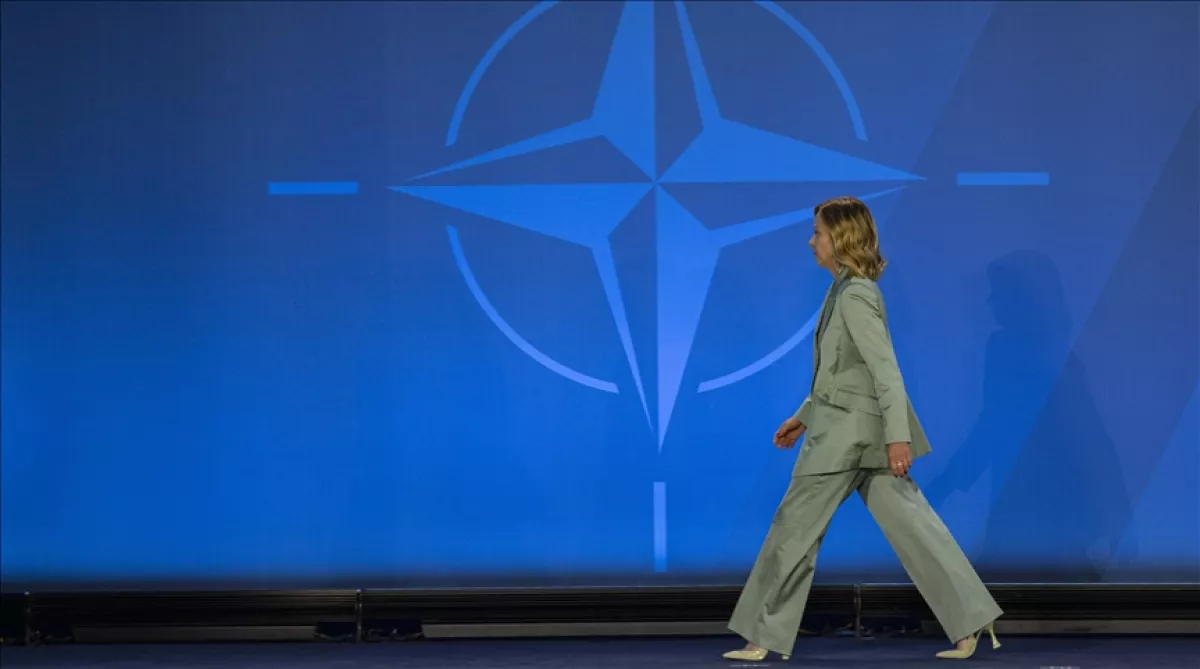
As the fifth-largest defence spender among major European NATO members and the EU’s third-largest economy, the article argues that Italy’s participation would significantly broaden the geographic and strategic scope of any new pact.
Italy also serves as a critical logistics hub for NATO. Hosting more than 100 US bases and roughly 12,000 American personnel, along with substantial equipment stockpiles, it plays a central role in the alliance’s deterrence posture. Should Washington withdraw forces and materiel, Italy would face an initial shock but would likely join other European states in constructing a post-US defence framework.
Yet Rome’s room for manoeuvre is constrained by economic realities, according to CEPA. With a debt-to-GDP ratio of 136% and sluggish growth, Italy would struggle politically and fiscally to fund a major surge in defence spending.
Still, Meloni’s government has not stood idle. Despite pressure from pro-Russian voices domestically, Italy has strongly backed Ukraine, delivering 12 aid packages worth more than €3 billion. Military spending has risen after years of underinvestment, with Italy estimated to have reached NATO’s former 2% of GDP target last year.
Additional funding is expected to support modernisation programs, including the new amphibious carrier Trieste and its F-35B aircraft. Italian defence firms are also expanding partnerships, with Leonardo collaborating with Rheinmetall on next-generation Panther tanks and Fincantieri exporting frigates. A stronger European defence posture, analysts argue, will depend heavily on capable domestic industries.
In 2022, Italy’s Defence Ministry committed to safeguarding the “wider Mediterranean”, highlighting Rome’s strategic role in countering so-called grey zone threats such as undersea cable sabotage. Crosetto has since proposed creating a 5,000-strong civil-military unit to address hybrid threats, an initiative seen as particularly relevant given Sicily’s importance as a hub for submarine communications cables.
The relative stability of Meloni’s government — something the paper calls unusual in Italian politics since the early 2000s — has reinforced the country’s standing as a serious strategic actor. Public opinion may also favour deeper European integration in defence: a recent poll found 69% of Italians support the creation of an EU army.
Leoni emphasises that the choice at hand for Italy is either strengthening defence cooperation within the EU or the creation of a new military alliance, although he believes the latter is less probable.
He added: “The EU has laid the groundwork for cooperation, and more importantly, vital financing. Without such funding, the Italian budget would not be able to support increased military funding, leaving it less impactful in an ad-hoc military alliance.”
By Nazrin Sadigova







 editor@caliber.az
 +994 55 444-88-98
 Азербайджан, Баку, ул. Низами, 203, Af Business House, 5-й этаж