










Alliances with global energy giants evolve Türkiye’s energy strategy
Turkish Petroleum (TPAO) has intensified efforts to deepen cooperation with leading global energy companies, signing two memoranda of understanding (MoUs) within less than 10 days with British Petroleum (bp) and US-based Chevron to explore potential collaboration in oil and natural gas exploration and production. The agreements — one focused primarily on overseas opportunities and the other on domestic projects — signal a broader shift in how Türkiye is positioning itself within the global energy landscape.
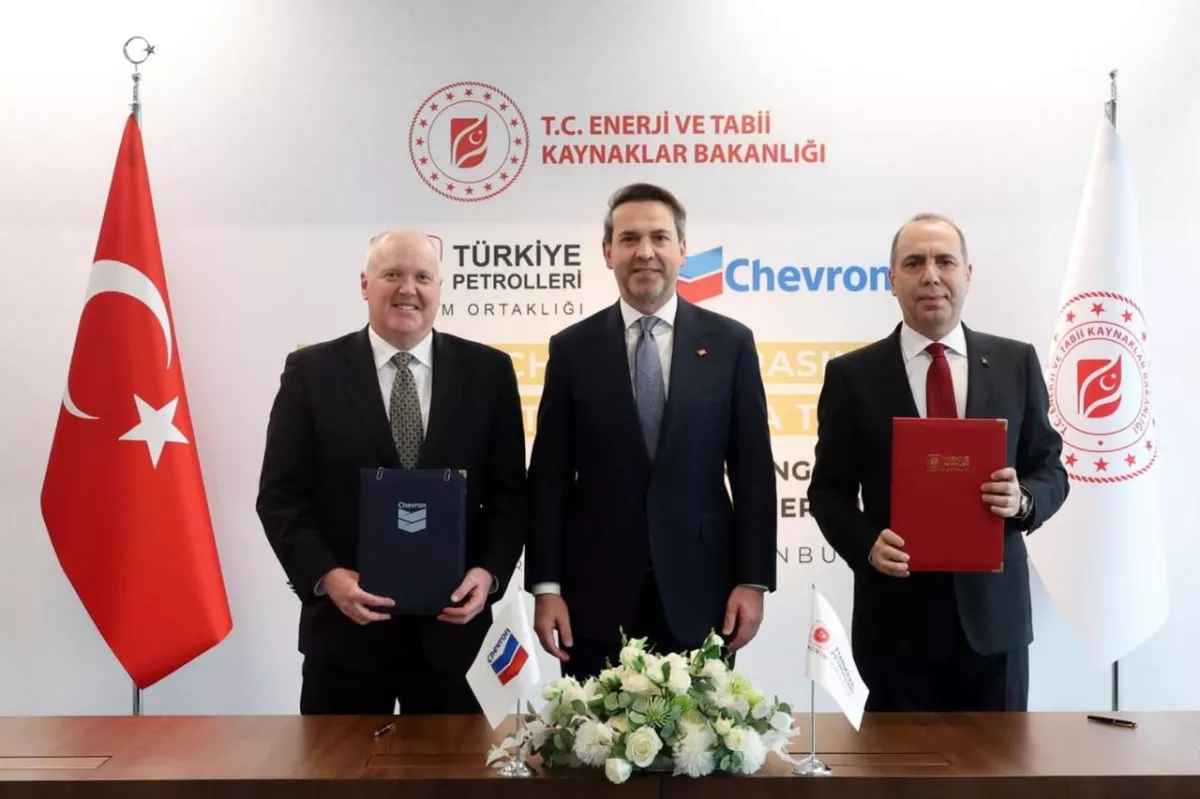
The MoU with Chevron was signed earlier this month in Istanbul and announced by Energy and Natural Resources Minister Alparslan Bayraktar. While the agreement does not authorize drilling or commit either side to specific projects, it reflects Ankara’s longer-term strategy of combining domestic resource development with international partnerships, as part of efforts to transform TPAO into a globally active upstream player.
Rather than relying on a single discovery or flagship partnership, Türkiye appears to be assembling a diversified portfolio of relationships and project options aimed at strengthening energy security, building industrial and technical capacity, and enhancing its role in global energy markets.
Chevron’s involvement underscores growing international interest in Türkiye’s upstream potential, both at home and abroad. For Ankara, attracting a major global operator brings not only capital but also technical expertise and industry credibility.
"The timing of the MoU also reflects a broader reassessment of global upstream investment. Oil and gas remain central to the world’s energy mix, even as the energy transition accelerates. However, capital has become more selective. Projects are increasingly evaluated not only on resource size, but also on cost competitiveness, execution risk, carbon intensity, and speed to market. Partnerships help address these criteria by sharing risk and combining complementary capabilities," an analysis on Türkiye's energy strategy by the Caspian Post states.
The agreement is anchored in key domestic energy regions. Bayraktar has highlighted the Gabar field in southeastern Türkiye and offshore Black Sea developments as central to the country’s current production push. The Gabar region has emerged as a focal point for increasing domestic oil output, strengthening energy security and easing pressure on the current account by reducing import dependence.
At the same time, Ankara is signaling ambitions beyond its borders. Bayraktar’s emphasis on projects “on an international scale” reflects a shift from Türkiye’s traditional role as an energy transit hub toward direct participation in upstream assets abroad — including equity production and long-term asset management.
The minister’s reference to a potential production capacity of 1 million barrels per day is viewed as a strategic benchmark rather than a near-term projection. Reaching such levels would require sustained investment, exploration success, expanded infrastructure and regulatory stability, alongside strengthened technical expertise, the outlet notes.
The Chevron agreement follows an earlier MoU between TPAO and ExxonMobil subsidiary ESSO Exploration International Limited covering exploration in the Black Sea, the Mediterranean and potentially other regions, further illustrating Ankara’s diversification strategy.
Meanwhile, TPAO’s new framework agreement with bp includes cooperation at international and regional levels on oil export capacity and natural gas transportation infrastructure.
Bayraktar noted that the two companies have worked together previously but are now seeking to broaden collaboration geographically and sectorally.
“Our most basic and priority project is cooperation in Iraq,” said Bayraktar. “Another area of joint interest is Libya, where we are also considering collaboration. We will evaluate these initiatives for various projects in Central Asia, including Kazakhstan and Azerbaijan. I believe we will share concrete developments with the public later this year.”
By Nazrin Sadigova







 editor@caliber.az
 +994 55 444-88-98
 Азербайджан, Баку, ул. Низами, 203, Af Business House, 5-й этаж