










Antalya Diplomacy Forum: US–Iran talks and Türkiye’s role Article by Türkiye Today
The Turkish newspaper Türkiye Today has published an article dedicated to diplomatic efforts aimed at resolving the US–Israel conflict with Iran. Caliber.Az presents the article to its readers with minor adaptations.
One of the most striking developments of the Iran conflict has been the decisive shift in regional diplomatic gravity. While Oman and Qatar historically served as the primary conduits for the Iran dossier, the spring of 2026 has seen Türkiye and Pakistan move to the center of the frame.
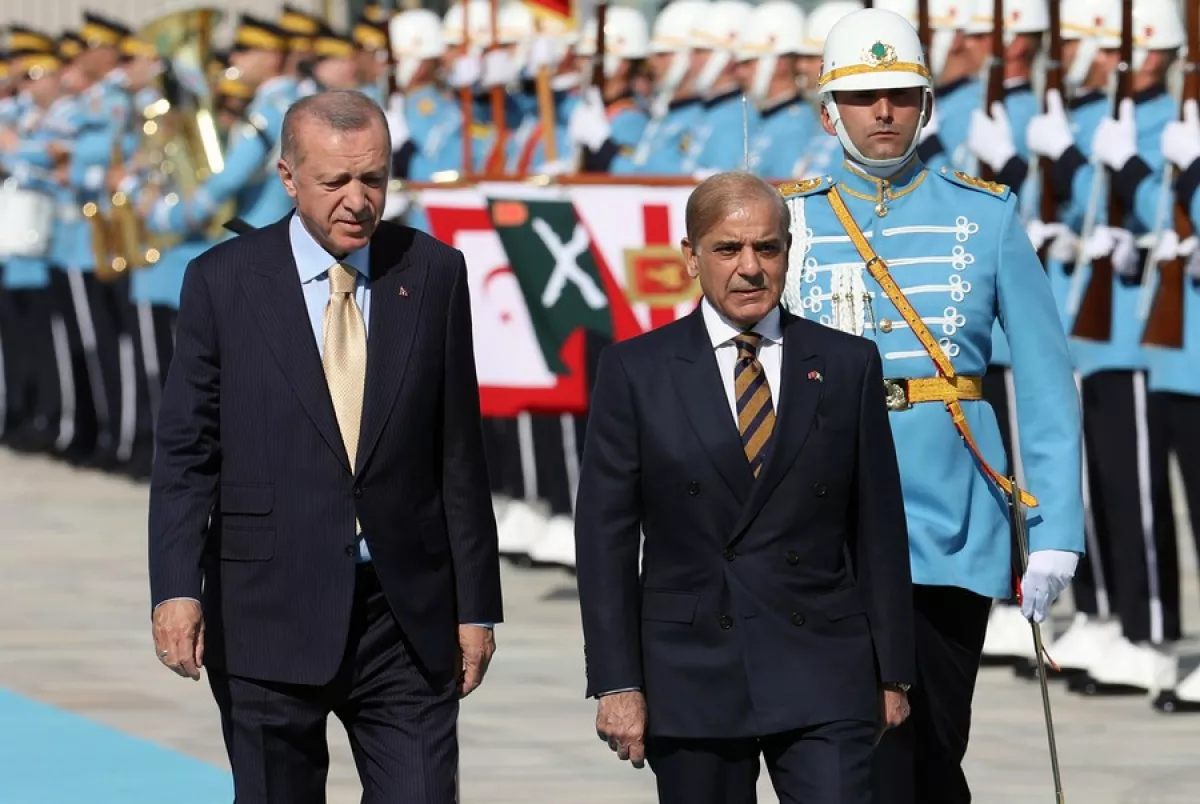
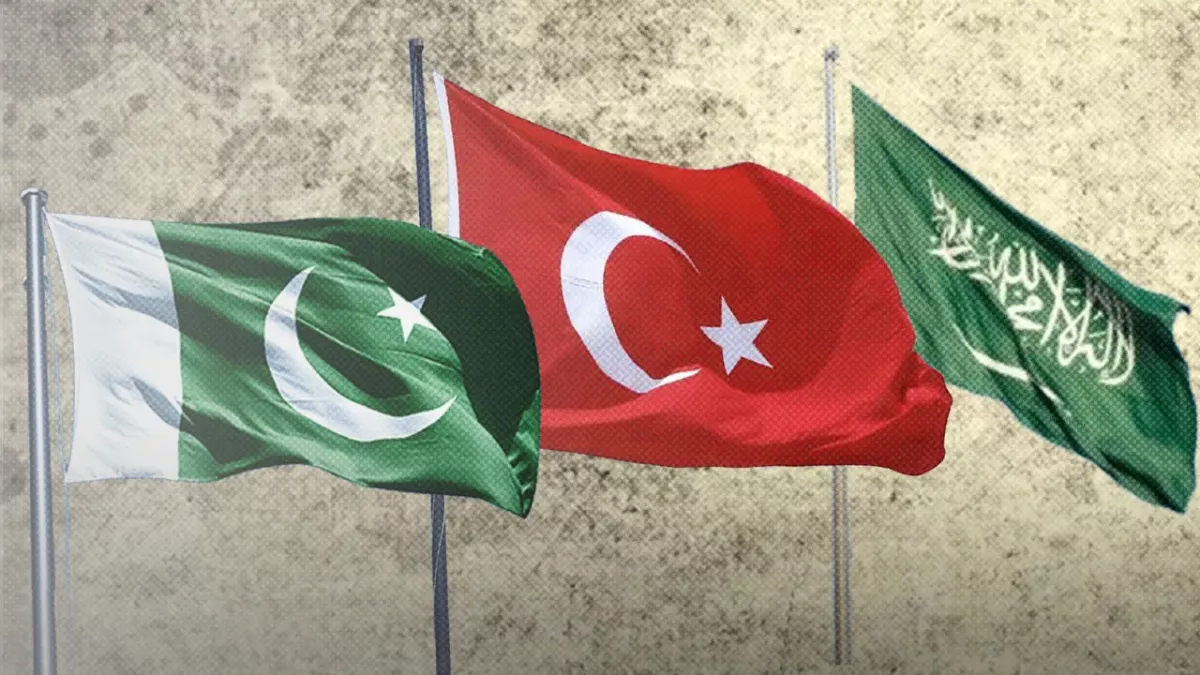
Saudi Arabia, despite being directly impacted by Iranian strikes, has transitioned from a wary observer to a vital third pillar of this new axis, lending weight, legitimacy and strategic depth to the process. As the Antalya Diplomacy Forum convenes this week, it stands as the first major test for this new trilateral architecture.
President Recep Tayyip Erdogan has explicitly declared that Türkiye is working to extend the current ceasefire between the U.S. and Iran while maintaining the momentum of negotiations. Foreign Minister Hakan Fidan’s recent high-level contacts suggest Ankara is now the primary bridge between Washington and Tehran.
In this context, the upcoming meeting between the foreign ministers of Türkiye, Pakistan, Saudi Arabia, and Egypt on the sidelines of the Antalya Diplomacy Forum has moved from a routine diplomatic engagement to a critical summit for regional stability.
Türkiye acts as an indispensable facilitator, liaison, and political balancer. In the current equation, Pakistan serves as both the host and the primary technical mediator of direct U.S.-Iran contacts.
While the first round in Islamabad concluded without a final deal, the momentum for a second round is building.
Ankara’s position
This is where Türkiye’s distinct role comes into play. Unlike Pakistan, Ankara is not a front-line state in this specific mediation. Its primary mission is to ensure the negotiating table does not collapse and is doing so uniquely and effectively.
While maintaining close contact with the U.S., Iran and Pakistan, Fidan warned that new unilateral rules or military impositions in the Strait of Hormuz could trigger a fresh wave of escalation. This demonstrates that Türkiye is concerned not only with a ceasefire but also with the energy and economic dimensions of the war. For Türkiye, the Strait of Hormuz is a matter of global energy prices, trade flows and regional economic stability.
Ankara’s diplomatic clout is drawn from three distinct sources. First, its unbroken channels of communication with Tehran. Second, its ability to maintain institutional relations with Washington even during peak friction. Third, its unique capacity to engage diverse regional actors simultaneously.
Thanks to this positioning, states like Pakistan and Egypt are emerging as central actors outside the traditional Gulf-centered diplomatic corridors. This has been Türkiye’s specific contribution in recent weeks: establishing a "middle ground" that engages Tehran and the West without alienating the Gulf.
The Türkiye-Pakistan-Saudi Arabia diplomatic alliance do not share a singular vision for Iran, nor do they maintain identical relations with Washington. However, all three are acutely aware of the existential cost of a protracted regional war.
For Pakistan, the price is measured in economic fragility and the delicate balance of its internal sectarian landscape. For Saudi Arabia, the cost is found in energy security and the direct defense of its borders. For Türkiye, the burden encompasses surging energy prices, disrupted trade routes, and the risk that the deepening instability along the Syria-Lebanon axis will lead to permanent geopolitical fragmentation. This is the foundation of Ankara’s current posture: a diplomacy that is not ideological, but one that proceeds on a basis of realism.
It is noteworthy that, against this realistic backdrop, Saudi Arabia and the UAE managed to establish a direct line of communication with Iran. Thanks to Türkiye’s behind-the-scenes diplomacy, the two powerful Gulf states that were targets of Iran’s retaliatory strikes are now engaging in talks with Iran. Indeed, the first fruits of this have emerged in the form of calls from the Gulf to the U.S. stating that the Hormuz blockade is not a solution.
Perhaps this telephone diplomacy will enter a new phase at the Antalya Diplomacy Forum, which is due to begin on Friday. The participation of Iranian guests attending the ADF, and perhaps even higher-ranking Iranian officials, in the four-way summit between Türkiye, Egypt, Pakistan, and Saudi Arabia could bring Iran onto a more conciliatory path regarding the negotiations. Who knows?
However, in any case, I believe that Türkiye’s diplomatic initiative, carried out as a realistic, patient, and unifying supporting player that prioritizes peace over taking center stage, will yield fruitful results regarding the U.S.–Iran and Israel–Lebanon negotiations in Antalya.
One thing is certain: the quartet expected to take place Friday will be one of the ADF’s most significant events, and if my expectations are met and there is high-level Iranian participation, we will take another step toward peace. At the very least, it will open a window of opportunity for the ceasefire to be extended and for the groundwork for dialogue to function more effectively.
For anyone with even a passing knowledge of diplomatic history knows that, in some wars, the first major success is not the agreement itself, but preventing the talks from breaking down entirely.







 editor@caliber.az
 +994 55 444-88-98
 Азербайджан, Баку, ул. Низами, 203, Af Business House, 5-й этаж