










“Armenians are the biggest headache for Armenia” Expert dismantles long-held security dogma
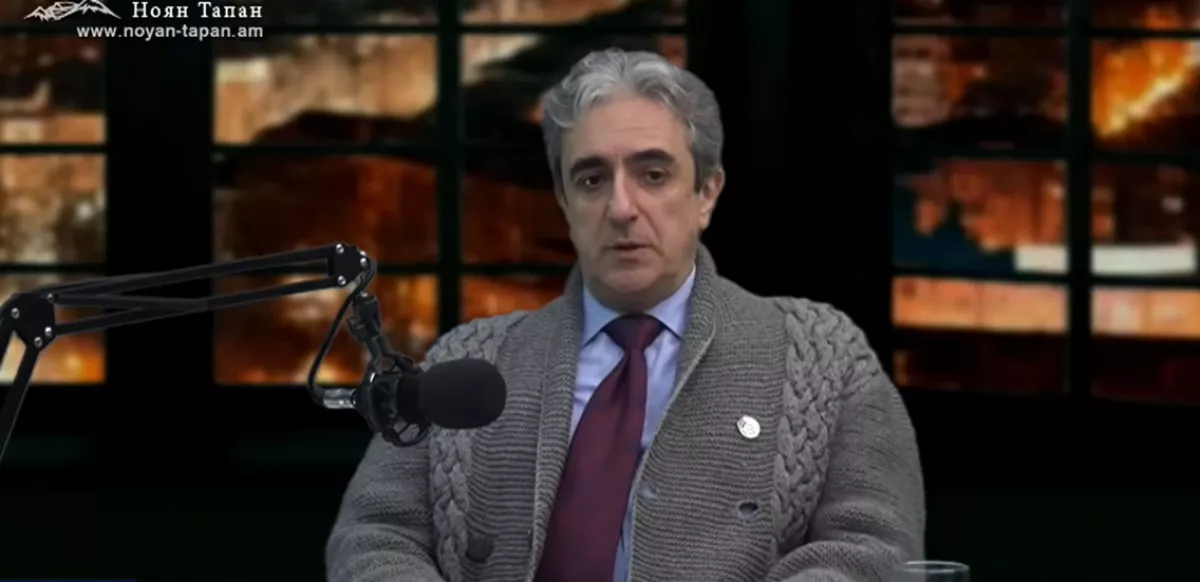
In the Armenian media space, where for decades the image of an “existential threat” from Türkiye and Azerbaijan has been cultivated, any voice that questions this entrenched paradigm is perceived as something out of the ordinary. All the more noteworthy, therefore, was the recent appearance of Armenian expert Tigran Zakoyan on the programme Noyan Tapan, in which he consistently and convincingly deconstructed the very narratives that form the foundation of Armenia’s foreign policy mythology.
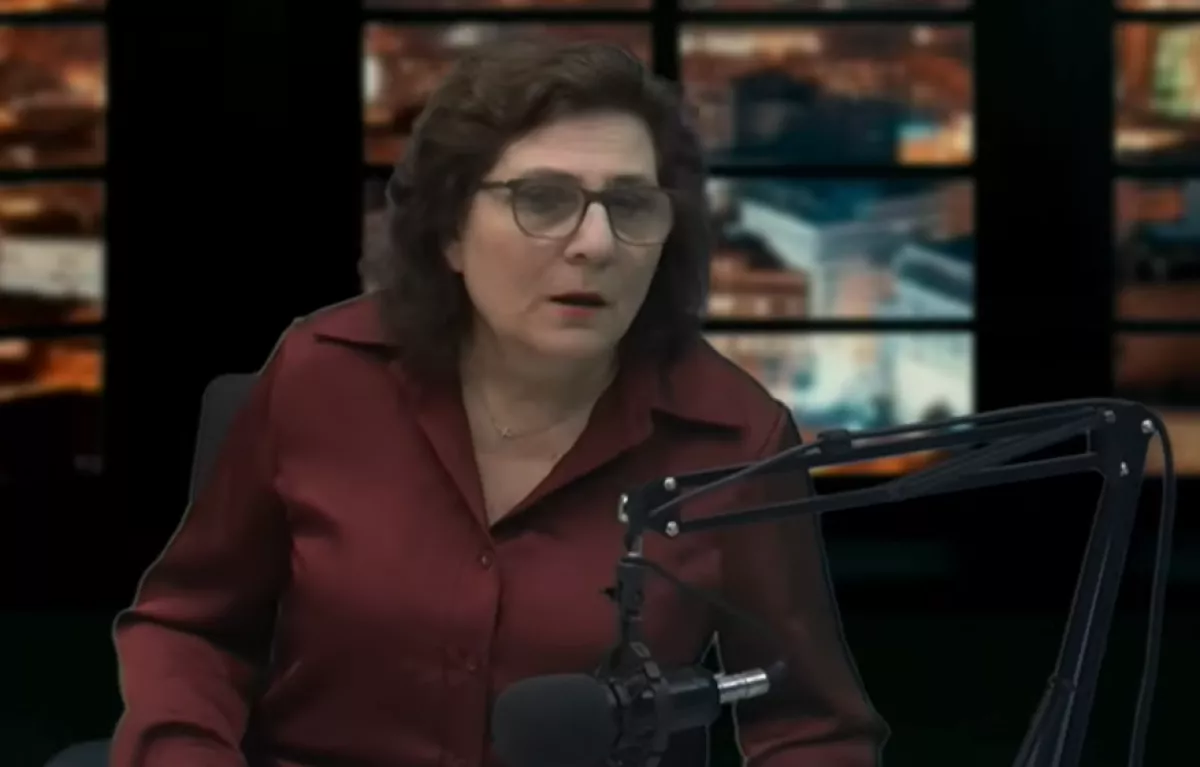
When host Gayane Arakelyan routinely repeated the claim that “the main goal, the ultimate goal of Türkiye and Azerbaijan is for Armenia not to exist as a state,” Zakoyan responded with a question of his own: “Did Türkiye or Azerbaijan tell you that?” He then pressed further, not allowing the host to retreat into familiar rhetoric: “Have you ever heard such a thing anywhere? Has Türkiye ever stated that we aim to eliminate the Armenian state?”
Naturally, Gayane Arakelyan had no answer—because such statements, and indeed such intentions, have never existed. This is a myth generated by Armenian propaganda itself and repeatedly reproduced by it.
However, Zakoyan went beyond a simple observation and put forward an argument that is difficult for anyone in Armenia to refute.
“I am absolutely certain that if Azerbaijan and Türkiye, as states—if Aliyev and Erdoğan—had even the slightest goal of eliminating the Armenian state, they would have done so long ago, in 2020–2021. They had a completely favourable opportunity, the most favourable opportunity, to eliminate the Armenian state by military means, without question. It was literally in their hands, ‘on the fingertips,’ as the English say. They did not do it. If they wanted to do it then, why didn’t they? And if they suddenly want to do it now, why would they suddenly want it now?” the expert stated.
Indeed, in the autumn of 2020, the Armenian army was defeated, national morale was at a historic low, the international community was preoccupied with the pandemic, and the Russian “security umbrella” proved ineffective. If Baku or Ankara had harboured any intentions regarding Armenian statehood, it would have been impossible to imagine a more opportune moment. Yet nothing of the sort occurred—because such intentions never existed.
Zakoyan then made another striking admission:
“Excuse me, but the reason I called Armenians the main threat to Armenia is precisely because we are far more aggressive towards Azerbaijan and Türkiye—surprising as it may seem—than they are towards us,” he said.
The host attempted to soften the wording by reframing “aggression” as “distrust,” but Zakoyan, while accepting the adjustment, added an important clarification: distrust inevitably turns into aggression. And, according to him, this very distrust constitutes the main threat to Armenia itself:
“The entire history of the past 100–150 years has done little to foster Türkiye’s trust towards Armenia. But it can trust us now—if we behave reasonably and predictably.”
Notably, Zakoyan illustrated his point with a Soviet cartoon about Little Raccoon, who approached a lake expecting to see a monster, but instead saw only his own distorted reflection filled with anger. “And his mother told him: ‘Go closer and smile,’” the expert recalled. “Distrust is a reflection of distrust. If you don’t trust, you are not trusted. To begin with, you have to try trusting yourself,” Zakoyan said.
Despite its simplicity, the metaphor accurately captures the mechanism that Armenian society has been trapped in for decades: by projecting its own fears and aggression onto its neighbours, it receives in return only a reflection of those same emotions and phobias.
When asked directly about the main threat to Armenia’s security, Zakoyan answered in a single word: “Armenians.” He elaborated: “Armenians are the biggest headache for Armenia.” According to him, after centuries of living within foreign empires, Armenians have to a significant extent lost the “sense of being able to determine their own destiny and take responsibility for what they themselves have chosen.”
“Armenians do not know how to be a people that owns a state—and that is a threat to the Armenian state,” Zakoyan concluded.
At the same time, he expressed cautious optimism, linking it to the policies of the current government of Nikol Pashinyan. According to Zakoyan, it is precisely the current authorities that are contributing to the fact that “Armenians are ceasing—and have largely already ceased—to be a threat to themselves.” The expert noted that 53 per cent voted for Pashinyan in the “difficult year of 2021,” and expressed hope for no less a convincing result in the upcoming elections on June 7.
“This means that people are already beginning to get used to the idea that we determine our own destiny, that we have our own state, and that we decide what the national interests of our people are,” he stressed.
The guest of the programme also noted that both Azerbaijan and Armenia need to jointly strengthen trust: “It is necessary to strengthen trust, to strengthen security by removing the threat to them from our side, and, accordingly, from their side—to us.”
The value of this statement lies not in the fact that Zakoyan said something new for an external observer. In Baku and Ankara, all of this has long been well understood. Its significance is that these words were voiced by an Armenian expert, on Armenian airwaves, for an Armenian audience.
To acknowledge that neighbours are not harbouring plans to destroy your state, that aggression stems primarily from within, and that the main threat is not an external enemy but one’s own inability to function as a state—this requires a certain degree of courage. In a society where any deviation from the canonical image of a “hostile encirclement” is punished by accusations of betrayal, such a position deserves respect.
Because peace in the region will only become possible when voices like Zakoyan’s cease to be an exception and become the norm in Armenian discourse.







 editor@caliber.az
 +994 55 444-88-98
 Азербайджан, Баку, ул. Низами, 203, Af Business House, 5-й этаж