










“Azerbaijan’s time to lead on regional peace” Eurasia Review on Baku’s growing strategic importance
Azerbaijan’s growing significance amid the regional war has come under focus in a new analysis by the US-based platform Eurasia Review, which highlights Baku’s evolving role as a key regional actor capable of maintaining balanced relations with competing powers and contributing to regional stability. Caliber.Az brings its readers the key points of the article.
Editor’s note: The author, Hriday C. Sarma, is a practising lawyer at the Supreme Court of India and a senior research fellow at the South Asia Democratic Forum in Brussels. He is a legal practitioner and policy researcher with a PhD in International Energy Studies.
“The U.S.-Iran standoff is now moving toward a dangerous breaking point, with the Strait of Hormuz at its center. The 60-day Memorandum of Understanding signed by Washington and Tehran on June 17 has expired, with no wider agreement in sight, and tensions remain high. The interim deal was intended to extend the ceasefire and create a path toward reopening the Strait and broader negotiations. Instead, the arrangement has collapsed amid continued disagreements over the waterway. Iran has warned American forces against entering the Persian Gulf, Gulf of Oman or Strait of Hormuz, while President Donald Trump has threatened to declare the Strait U.S. territory.
These developments also present Azerbaijan with a greater strategic responsibility.
As tensions rise across the Middle East and relations between regional powers become more strained, Baku is emerging as one of the few capitals capable of maintaining constructive relations with almost every major stakeholder. That places Azerbaijan in a unique position to contribute to regional peace, not by replacing global powers, but by preserving dialogue where others increasingly cannot.

This role has become more important as relations between Türkiye and Israel continue to deteriorate. Both countries remain central to the security architecture of the wider region, yet political engagement between them has become increasingly difficult. Azerbaijan, however, continues to enjoy strategic partnerships with both.
Türkiye remains Azerbaijan’s closest ally, with relations formalized through the 2021 Shusha Declaration. Israel, meanwhile, remains one of Azerbaijan’s key defense and technology partners and a major destination for Azerbaijani energy exports. Unlike many regional actors, Baku has resisted allowing one partnership to undermine another.
That balanced diplomacy is now becoming a strategic asset.
A similar approach has shaped Azerbaijan’s relations with Iran. Although bilateral ties have experienced tensions in recent years, both governments have continued cooperation on border management, transport connectivity and regional trade. Dialogue has remained open even during periods of political disagreement.
This ability to engage with competing regional powers gives Azerbaijan diplomatic credibility that extends well beyond the South Caucasus.
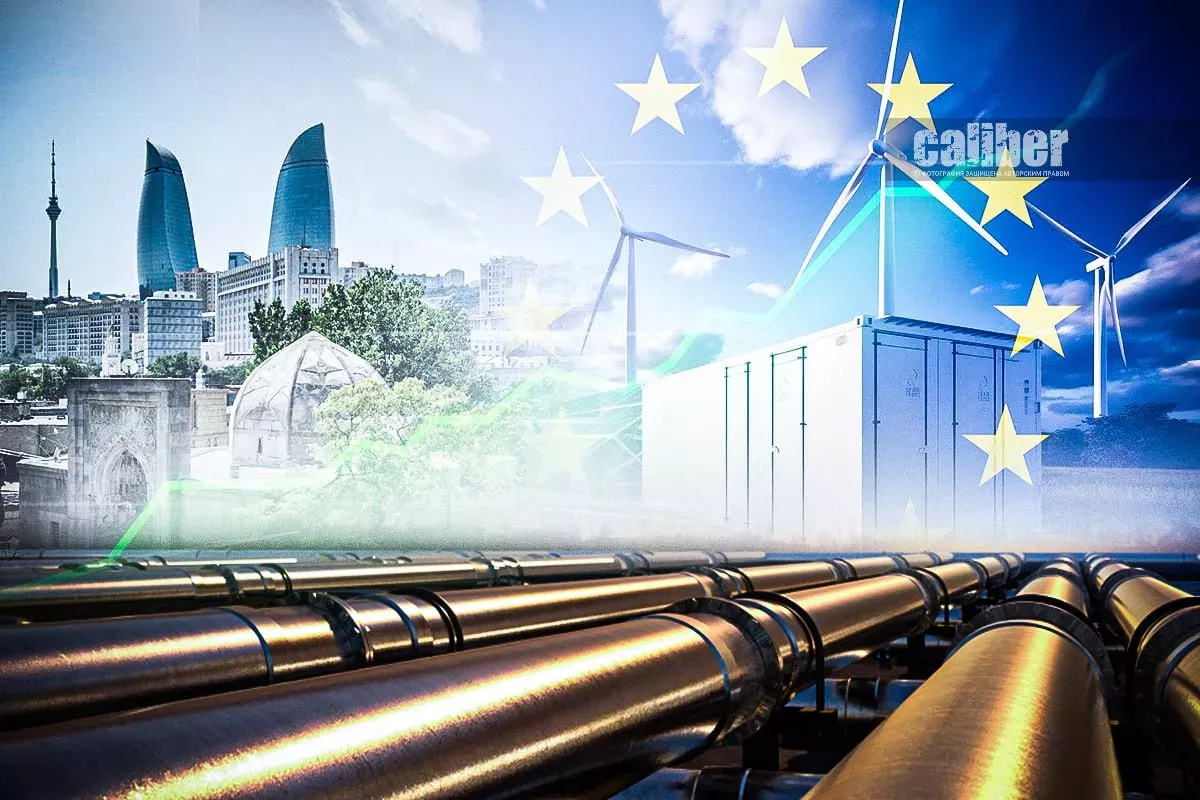
The same principle applies to Europe’s growing engagement with Azerbaijan. The European Union has deepened cooperation with Baku on energy security following the 2022 Memorandum of Understanding on a Strategic Partnership in the Field of Energy. Azerbaijan is also an important supplier to European gas markets through the Southern Gas Corridor, which carries Caspian gas through Georgia and Türkiye to Europe. This infrastructure gives Baku a direct stake in Europe’s energy security and makes regional stability even more important.
Azerbaijan has also become a central link in the Middle Corridor connecting Central Asia with Europe through the Trans-Caspian International Transport Route. Cargo volumes along the corridor have grown as governments and businesses seek alternatives to more vulnerable trade routes.
These developments are closely connected.
Transport corridors, energy infrastructure and digital connectivity cannot function without regional stability. Every military escalation in the Middle East raises insurance costs, disrupts supply chains and increases uncertainty for investors. The disruption of energy flows through the Strait of Hormuz has already shown how quickly a conflict in one part of the region can affect markets far beyond it. Preserving peace has therefore become an economic necessity as much as a diplomatic objective.
This is where Azerbaijan’s role is evolving.

For decades, the country’s strategic importance was largely defined by its geographic position and energy resources. Today, its greatest strength lies in its ability to maintain relationships across geopolitical divides. Few countries have strong ties simultaneously with Türkiye, Israel, the EU, Central Asian states and Iran. The greater value lies in preserving trust, reducing misunderstandings and keeping diplomatic channels open when formal dialogue becomes increasingly difficult.
Recent events reinforce that need. Continued instability between the United States and Iran risks creating wider security challenges across Eurasia, while strained Türkiye-Israel relations further complicate regional diplomacy. In such circumstances, middle powers capable of engaging all sides become increasingly important.
Azerbaijan is well placed to assume that responsibility.
The South Caucasus has gradually shifted from being viewed as a geopolitical fault line to becoming an important corridor linking Europe and Asia. Azerbaijan sits at the centre of that transformation. Protecting transport routes, energy infrastructure and digital connectivity requires more than physical security. It requires sustained political stability and consistent diplomatic engagement.
Azerbaijan’s ability to maintain balanced relations with competing powers, support connectivity without exclusion and preserve dialogue during periods of confrontation is no longer simply a diplomatic achievement. It has become a strategic necessity.
In an increasingly fragmented Eurasian security environment, Azerbaijan’s most important export may not be energy or connectivity. It may be stability itself,” Sarma wrote.







 editor@caliber.az
 +994 55 444-88-98
 Азербайджан, Баку, ул. Низами, 203, Af Business House, 5-й этаж