










Formula for growth: President Aliyev outlines country’s economic priorities Review by Khazar Akhundov
The Shusha Global Media Forum, which has welcomed nearly 600 media representatives from 81 countries over the course of its existence, has firmly established itself as an authoritative international platform where a wide range of pressing issues on the global agenda are discussed.
The recently held fourth forum, themed “The Mission of The Media in Promoting Peace: Restoring Truth and Rebuilding Trust,” which brought together 160 guests from 53 countries, including representatives of 30 news agencies, more than 60 media outlets, and 10 international organizations, was no exception.
As is customary, during the event President Ilham Aliyev gave detailed answers to participants’ questions covering various aspects of geopolitics and geoeconomics—from transport corridors to the Middle East conflict, which has led to the de facto blockade of the Strait of Hormuz and an energy crisis affecting a great many countries.
Eurasia’s transport hub
Within the framework of the 4th Shusha Global Media Forum, particular emphasis was placed on Azerbaijan’s role as a key transport hub, while transport and logistics cooperation was also discussed in the context of the development of the Middle Corridor, which plays an exceptional role in advancing business relations with partner countries in Central Asia (CA) and China.
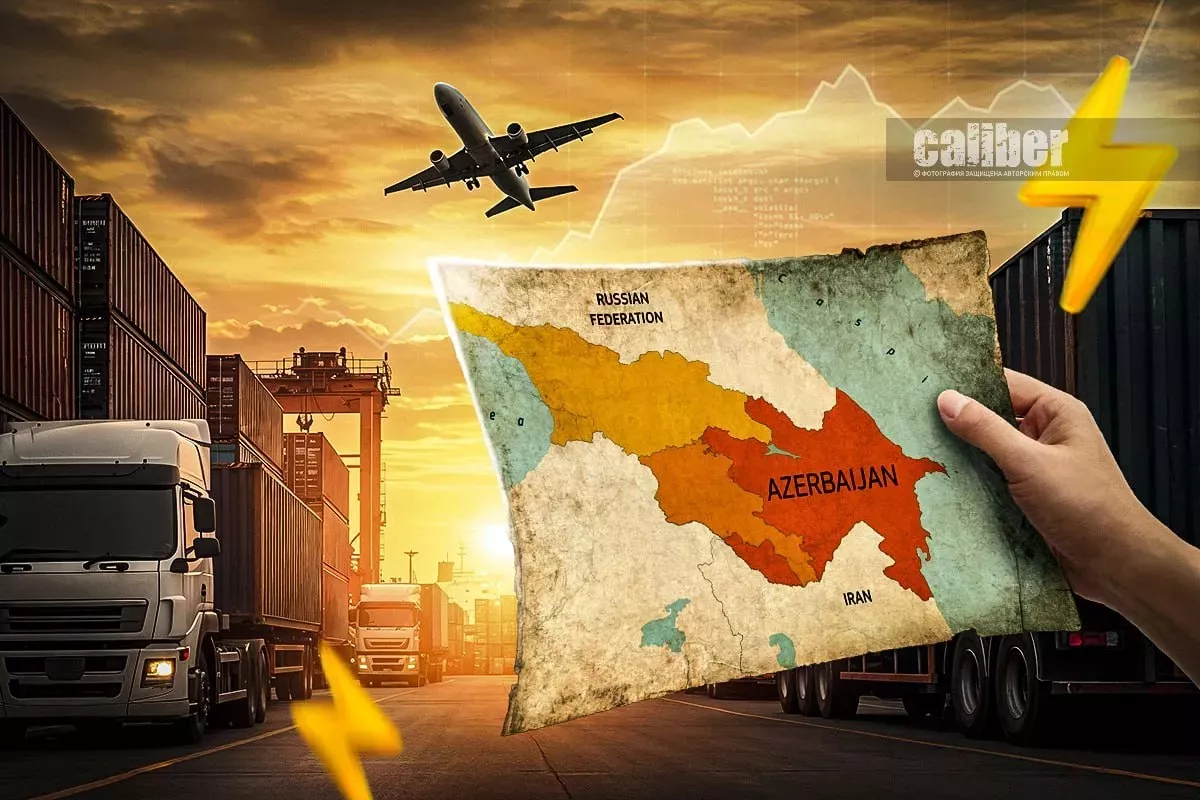
Through the country's ports and railways, oil, fuel, and petrochemical products, mineral fertilizers and ore resources, agricultural raw materials, and other non-oil goods from the Central Asian states are transshipped. A particularly important role is played by Azerbaijan’s diversified cargo fleet: more than fifty tankers, dry cargo vessels, railway ferries, and RO-RO and Ro-Pax ships facilitate freight transportation along the Middle Corridor.
This is especially significant against the backdrop of the Russia–Ukraine war, which has been ongoing for more than four years, and the current situation in the Persian Gulf and the Bab el-Mandeb Strait region, both of which have disrupted global connectivity across the vast Eurasian space.
In this context, well-established cooperation with the Central Asian countries in the field of shipbuilding is of particular importance. Vessels for Kazakhstan are being built at the Baku Shipyard (BSY), while orders from Uzbekistan, which has no direct access to the sea, are expected to be placed there in the future.
At the same time, the Balkan Shipyard in Turkmenistan recently built the Gadamly container vessel for Azerbaijan, while a new tanker constructed at BSY was delivered to partners in Turkmenistan. In addition, the Central Asian countries and Azerbaijan are simplifying cross-border and customs procedures, while the introduction of electronic CMRs, permit systems, and a digital "single window" is accelerating transit and expanding multimodal transshipment schemes.
Thanks to these and other measures, delivery times along the Trans-Caspian route have decreased from 58–60 days to 15 over the past four years, while cargo volumes have increased more than sevenfold—from 600,000 tons in 2021 to 4.5 million tons in 2025.
In this regard, particular attention should be paid to the phased modernization of the capacity of the Baku International Sea Trade Port, the largest on the Caspian Sea. Its cargo handling capacity will be increased from 15 million tons to 25 million tons. Moreover, about two years ago, the modernization of the Georgian section of the Baku–Tbilisi–Kars railway was completed, increasing its annual freight capacity from 1 million tons to 5 million tons.
All of these achievements are the result of more than a decade of active efforts to enhance transport connectivity, aimed at transforming the country's geographical advantages into a genuine platform for multilateral cooperation. It was precisely this aspect that Ilham Aliyev highlighted during the Shusha Global Media Forum, emphasizing that, in order to attain the status of an international transport hub, Azerbaijan invested in developing physical infrastructure and established logistical cooperation with its neighbors across the Eurasian region.
“The physical infrastructure is done. And now we are only working on the issues of how to expand it, because we did not expect that our geography would be so needed in recent times. Interaction with neighbors to the East and to the West is excellent, whether it's with the countries of Central Asia or our immediate neighbors like Georgia and Türkiye, and Europe,” the leader stated, noting that all of these efforts have made the transport corridors efficient.
From the “5+1” formula to the format of six
Azerbaijan’s relations with the Central Asian states—with which it consistently cooperates both on a bilateral basis and within the framework of the Organization of Turkic States (OTS), while actively expanding trade ties, introducing preferential regimes, steadily increasing investment, and strengthening cooperation in the non-oil sector—were also among the key topics of discussion at the media forum.
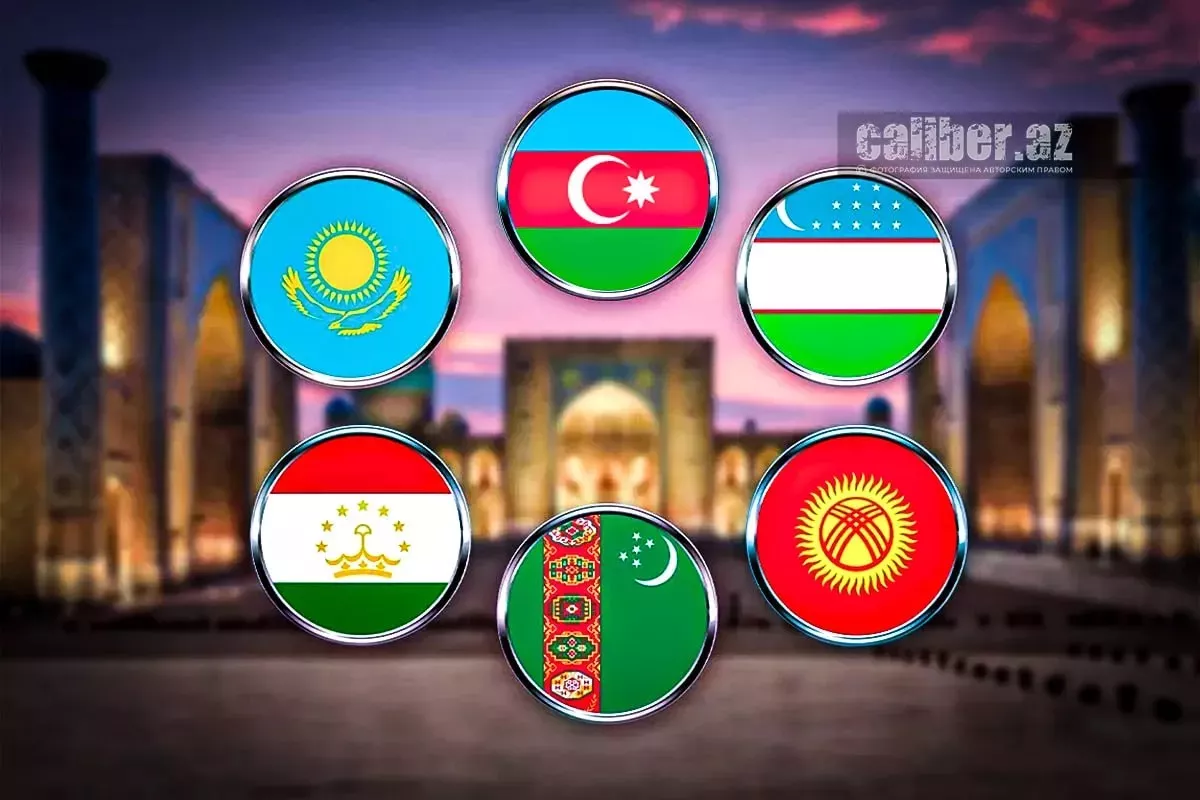
In particular, Ilham Aliyev recalled that a decision had recently been made to establish a unified Azerbaijan–Central Asia Consultative Council.
“Today, this will also have a positive impact on geopolitical and geo-economic relations. Because in this way, Central Asia and Azerbaijan are uniting into a single economic and political space. At the same time, this holds immense significance for the implementation of connectivity, transport, and logistics projects.”
The president placed particular emphasis on the cultural, historical, and linguistic ties with the Central Asian countries, especially Uzbekistan, highlighting the solidarity of the two peoples and their commitment to expanding business cooperation.
“The first major industrial enterprise in the city of Khankendi—a garment factory—was also opened through Uzbek investment, and once again, together with the honorable President Mirziyoyev, we visited that factory,” President Aliyev said. “We established a joint investment fund valued at 500 million U.S. dollars. This investment fund is engaged in the implementation of various projects in both Uzbekistan and Azerbaijan.”
The leader also noted that Azerbaijan’s state oil company, SOCAR, is currently investing in the exploration of the strategically important Ustyurt field in Uzbekistan and expressed hope that the exploration activities would yield positive results.
Azerbaijan–Kazakhstan economic cooperation is developing no less successfully. As Ilham Aliyev emphasized, without active cooperation between Astana and Baku, no transport project in the Caspian region would have been possible.
“A joint cooperation format already exists between Kazakhstan, Azerbaijan, Georgia, and Türkiye, where very important issues are being discussed and resolved — including tariff policy, digitalization, simplification of customs administration procedures, and many others. In 2024, in Baku, we signed an agreement with the Presidents of Kazakhstan and Uzbekistan on the construction of an energy cable along the bed of the Caspian Sea,” the Azerbaijani leader stated.
President Aliyev also highlighted that Azerbaijan and Kazakhstan are jointly laying a fiber-optic cable that will connect the two countries and, in the future, play a very important role in advancing digitalization, artificial intelligence, data infrastructure, and related fields.
From the Middle Kingdom to the Old World
As is well known, Azerbaijan pursues a multi-vector foreign policy and follows the same principle in building its economic relations. As a result, the country has become a key partner for a wide range of nations located in different parts of the world—from European countries to China, cooperation with which was discussed in detail during the Shusha Global Media Forum.
In particular, according to Ilham Aliyev, the signing of the Joint Statement on the Establishment of a Comprehensive Strategic Partnership has given a significant boost to cooperation with China across the political, economic, and transport spheres.
“Today, more Chinese companies are operating in Azerbaijan. Some have already made major investments, while others are participating in various infrastructure projects.
During my state visit, I met with the executives of many of China's leading companies, and I am pleased that their operations in Azerbaijan are already yielding results. They work very efficiently, quickly, and to a very high standard.
We have also opened a new chapter in our cooperation—defense cooperation. Azerbaijan has already procured certain military products from China. Some of them were displayed during the parade marking the fifth anniversary of our Victory, some are still in transit, and others are currently under discussion. Therefore, we are very interested in expanding cooperation in the field of military-technical support.
As for the Middle Corridor, cargo volumes from China transiting through Azerbaijan, as well as cargo destined for Azerbaijan, continue to grow. As I mentioned earlier, we are nearly doubling the capacity of our trade port, largely in anticipation of increased transport volumes from China as well as from the countries of Central Asia. There is already a strong track record of cooperation in this area, as well as multilateral collaboration with many of the countries located along the corridor,” the president said.
He also noted that Chinese suppliers are leading participants in Azerbaijan’s solar energy sector, are involved in the construction of a solar panel manufacturing plant, and have established joint production of BYD electric buses. In addition, a number of projects are planned in the fields of digitalization and artificial intelligence.
It is well known that Azerbaijan, as a transport hub not only for the Caspian region but also for a much broader geographical area, plays an important role in ensuring Europe's energy security. As Ilham Aliyev emphasized during the forum, “the European market is a premium market, the market with the best prices. Therefore, we are very interested in expanding our capacity.”
“Yes, we supply gas to 16 countries by pipeline, and we are number one in the world in terms of the geography of pipeline gas supplies.
And more is to come. We still are in negotiations with some members of the European Union, both to start supplying gas and to increase our supply. So we have both requests. And in today's energy market situation, gas from a reliable source, from Azerbaijan, a predictable source and an alternative source, is more important than it was probably 10 years ago,” the leader said.
President Aliyev also emphasized that Azerbaijan has the potential to increase both production and exports. In particular, natural gas production has recently commenced from the deepwater reservoirs of the Azeri–Chirag–Gunashli (ACG) field.
In this context, it is worth recalling that the recoverable deep gas reserves in the deepwater section of the Azeri–Chirag–Gunashli (ACG) field are estimated at approximately 4 trillion cubic feet. Meanwhile, full-scale development of the Absheron gas field is expected to begin within the next two to three years, with gas production projected to triple. The field's reserves are estimated at 350 billion cubic meters. In addition, production is expected to commence under the second phase of development of the Umid field, whose proven and probable reserves are estimated at approximately 3.5 trillion cubic feet of natural gas and around 100 million barrels of gas condensate.
Thus, Azerbaijan possesses substantial natural gas reserves sufficient to meet domestic demand and expand exports through the Southern Gas Corridor (SGC) for at least the next 100 years, with the European market expected to remain the principal destination for the country's gas exports for decades to come.
This is evidenced by the fact that the number of companies registered to transport gas through the Trans Adriatic Pipeline (TAP) system has increased from three to 46 in recent years. In particular, in addition to Italy, Greece, Bulgaria, Romania, Hungary, and Serbia, Azerbaijani gas supplies were launched to Slovenia, Croatia, and Slovakia the year before last. Furthermore, pilot deliveries to Ukraine via the Trans-Balkan gas pipeline began in July 2025, while SOCAR is also participating in a hybrid gasification project in North Macedonia.
During the media forum, Ilham Aliyev recalled that, as part of the expansion of Azerbaijan's export geography, natural gas exports to Syria were launched in 2025, with the prospect of extending supplies to neighboring countries. In turn, exports of Azerbaijani gas to Austria and Germany began in January 2026, with annual deliveries planned at 1 billion cubic meters and 1.5 billion cubic meters, respectively.
The Azerbaijani leader also noted that demand for Azerbaijani gas surged following the outbreak of the Russia–Ukraine conflict.
“We've been approached by the European Commission to do the maximum we could in order to increase production rapidly, and we did it. And, by the way, these figures were announced during the visit of the President of the European Commission, that we increased gas supplies to the European Union by 65% since 2022, and this will grow.”
However, for Azerbaijan it is critically important to secure long-term gas contracts with its European partners and to work jointly on expanding the existing gas transportation infrastructure. Addressing the media forum, the president emphasized this point: “So, expansion of the existing transportation infrastructure is necessary, but the stumbling block is the European Green Agenda, and European banks are not eager to finance fossil fuel projects.”
According to President Aliyev, an even more important issue is the conclusion of long-term contracts that would provide guarantees for the future.
“And that's also what we discussed with Madame Ursula von der Leyen, that we need long-term contracts. Because in order to increase production dramatically, we need to invest heavily.”
President Aliyev also addressed the development of renewable energy sources and their role in energy cooperation with Europe. As renewable energy capacity expands, Azerbaijan plans to generate 8 GW of green energy by 2032, making it possible to save several billion cubic meters of natural gas currently consumed by thermal power plants. These conserved gas volumes could, in turn, be exported.
In this context, it is worth recalling that Azerbaijan, in partnership with several European countries, is participating in the Black Sea Energy project, which envisages the construction of a 1,195-kilometre subsea electricity cable across the Black Sea with a transmission capacity of approximately 3.9 gigawatts. The project is expected to become operational in 2032 and is regarded as a key route for exporting green electricity generated in Azerbaijan to Europe.
Thus, President Ilham Aliyev's remarks at the Shusha Global Media Forum, given the breadth of the issues they addressed, amounted to a comprehensive policy statement outlining not only Azerbaijan's achievements but also the country's strategic priorities for the future.







 editor@caliber.az
 +994 55 444-88-98
 Азербайджан, Баку, ул. Низами, 203, Af Business House, 5-й этаж