










France’s antisemitism crisis puts Azerbaijan’s coexistence model in focus Article by The Times of Israel
The Times of Israel has published an article by Eric Gozlan focusing on antisemitism in France and the life of Azerbaijan’s Jewish community. Caliber.Az presents excerpts from the article below.
Editor’s note: Eric Gozlan is Government Counsellor and co-director of www.i-transform.net. He works in civic diplomacy in the Middle East and in Africa. He has received numerous awards for peace and gives numerous lectures. He served in the IDF for several years.
"In a previous article, I warned that vigilance over antisemitism in France remained essential. Several weeks later, the latest figures have unfortunately reinforced that concern.
France recorded 1,320 antisemitic incidents in 2025, more than 3.5 per day. They accounted for 53% of all recorded anti-religious acts, despite Jews making up less than 1% of the French population. Incidents were reported in 88 of the country’s 101 departments. Even more worrying, the number of physical antisemitic assaults rose to 126 in 2025, compared with 106 the previous year.
France is far from alone. Germany, the United Kingdom, Belgium and other European countries have also seen Jewish organisations increasingly mobilise in response to rising antisemitism.
The significance of these figures goes beyond statistics.
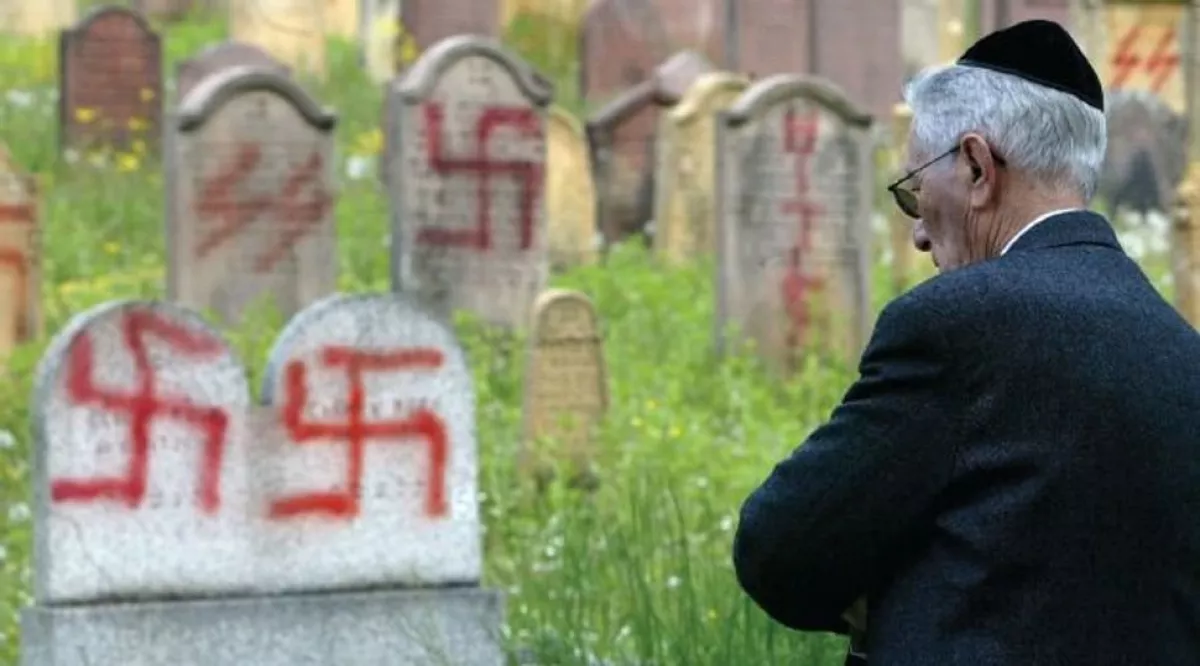
Antisemitism in Europe can no longer be treated as a marginal problem. It has become a serious challenge to security, social cohesion and democratic life.
Against this backdrop, a country thousands of kilometres from Paris deserves closer attention: Azerbaijan.
Azerbaijan as an example
Azerbaijan is a predominantly Muslim country that has maintained close ties with Israel for decades while also being home to an ancient and active Jewish community. The coexistence of different religious communities is regularly presented as part of the country’s national identity.
This experience challenges an assumption that is often made in Europe: that relations between Muslims and Jews are inevitably shaped by the Israeli-Palestinian conflict.
Azerbaijan demonstrates that this is not necessarily the case. A Muslim-majority country can maintain strategic relations with Israel while its Jewish population can live as an established part of the nation’s history rather than being viewed as an external or foreign presence.
Mountain Jews: A unique history
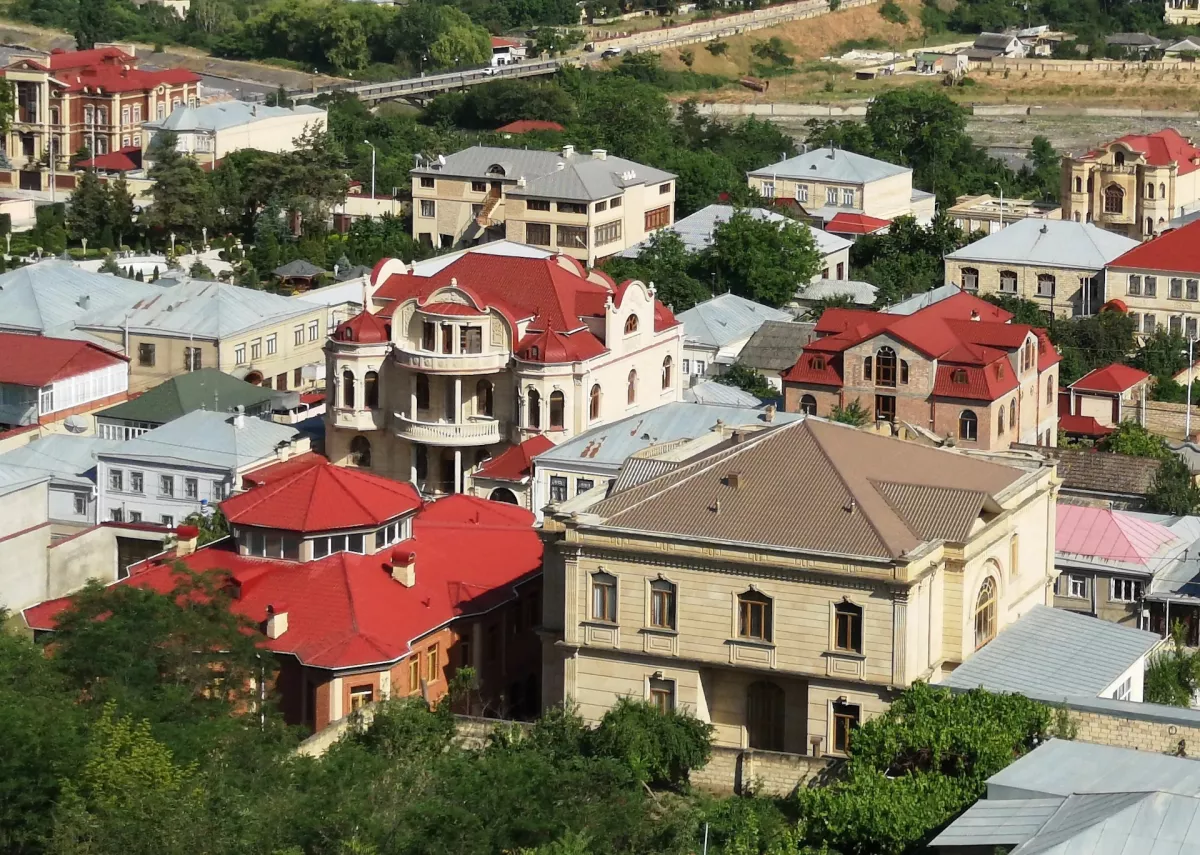
Understanding this relationship requires looking at the history of the Mountain Jews, or Juhuro, one of the Caucasus’ historic Jewish communities. Their presence in the region stretches back centuries. Over time, they developed a distinctive culture that preserved Jewish religious traditions while becoming deeply rooted in the wider Caucasian environment.
One of the clearest symbols of this history is Qırmızı Qəsəbə, near Quba, also known as Krasnaya Sloboda. Established in the 18th century, the settlement became an important centre of Mountain Jewish life. Its traditions, cultural heritage and institutions have survived, with synagogues and a museum devoted to the history of the Mountain Jews still operating today.
Relations between Baku and Tel Aviv today are deep and multifaceted, encompassing diplomacy, energy, technology, security, the economy and strategic cooperation. They demonstrate that a state can have a Muslim identity while also viewing Israel as a partner.
European Jews could pay more attention to Baku
I believe an important opportunity may have been missed. For several years, Azerbaijan has sought to strengthen its role as a platform for dialogue between different cultures and religions, and in this context, Baku could become a privileged meeting place for European Jewish communities.
Holding a major gathering of European rabbis in Baku would in itself be a powerful symbol: bringing together rabbis from different European countries in a predominantly Muslim country with a historic Jewish community and strategic ties with Israel would be an exceptional event.
It would send a simple message: dialogue between Muslims and Jews is not merely possible — it already exists.
A new chapter after the Baku-Yerevan Peace Deal

A new period has emerged in the Caucasus following the rapprochement between Azerbaijan and Armenia. On August 8, 2025, the leaders of the two countries signed a joint declaration in Washington that paved the way towards peace and normalised relations. Their foreign ministers also initialled a draft peace agreement.
This development could encourage a broader reassessment of Azerbaijan and create new opportunities for dialogue between Baku and European Jewish communities, including French Jewry.
The history of the Mountain Jews, the continued presence of Jewish institutions in Azerbaijan and the strategic relationship between Baku and Israel form a distinctive combination. Azerbaijan could be examined as a geopolitical laboratory in which coexistence has developed over centuries. That is an experience some representatives of French Jewry may not yet have fully appreciated.
Fighting antisemitism is not only about confronting hatred. It is also about creating societies in which Jews are regarded as an integral part of the nation rather than as outsiders.
From that perspective, Baku could become more than simply a partner. It could serve as a bridge connecting the Muslim world, Israel, European Jewry and Europe," the author wrote.







 editor@caliber.az
 +994 55 444-88-98
 Азербайджан, Баку, ул. Низами, 203, Af Business House, 5-й этаж