










From Washington’s lens: Why US needs closer relations with Azerbaijan Newsmax article
A recent article has been published on the American website Newsmax by Chicago-based political consultant Paul Miller, focusing on Azerbaijan’s role as a key regional partner of the West. Caliber.Az presents the most telling parts of the article.
At a moment when global energy markets are fixated on tanker routes and the next supply shock, a quieter shift is unfolding far from the world's traditional energy chokepoints.
As Armenia and Azerbaijan continue to move forward in the normalization of relations, a long-constrained corridor between the Caspian and European markets may be reopening.
Over the past two decades, Azerbaijan has invested heavily in the infrastructure underpinning east-west energy and transport connectivity, including pipelines, rail networks, and port modernization projects that have strengthened the South Caucasus as a strategic transit region. Azerbaijan is already a meaningful supplier of natural gas to Europe through the Southern Gas Corridor, which links Caspian fields to European markets via Turkey.
In the wake of Europe's push to diversify away from Russian gas, Baku has become an increasingly valuable partner.
Azerbaijan has already launched extensive reconstruction and infrastructure modernization efforts in its territories affected by decades of former conflict, including transportation links, energy systems, and industrial development projects.
Over time, these investments could further integrate the region into broader east-west trade and energy networks.
Another important component of Azerbaijan's long-term economic and logistics strategy is the Alat Free Economic Zone (AFEZ), located adjacent to the Port of Baku on the Caspian Sea.
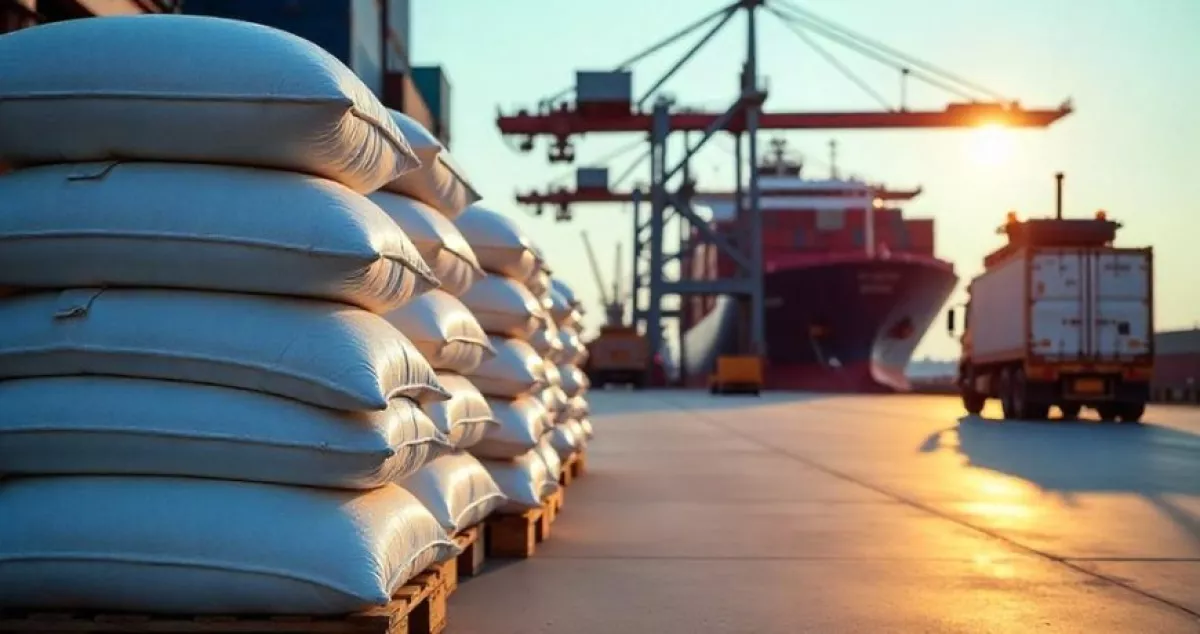
Designed as a regional hub for manufacturing, logistics, and value-added trade, the zone offers a modern regulatory framework intended to attract international investment and facilitate cross-border commerce.
Armenia, long sidelined from regional energy flows, could shift from relative regional isolation into a participant in east-west connectivity.
For Azerbaijan, however, the stakes extend beyond hydrocarbons alone.
Baku increasingly views the South Caucasus as a critical segment of the broader Middle Corridor linking Central Asia, the Caspian basin, and Europe through integrated rail, port, digital, and energy infrastructure.
Greater regional stability could accelerate the emergence of the South Caucasus not merely as an energy transit zone, but as a central artery of Eurasian trade and connectivity.
The long-term opportunity may also extend beyond natural gas.
Azerbaijan has increasingly positioned itself as a future supplier of renewable electricity generated from substantial wind and solar potential in the Caspian basin, with several projects aimed at linking green energy production to European markets.
Although the Azerbaijan-Armenia normalization process remains complex and will require sustained diplomatic effort, recent momentum toward de-escalation has begun improving the broader climate for regional connectivity and long-term infrastructure planning.
For the United States, this presents a familiar but often underappreciated opportunity to support normalization — diplomatically, quietly, and in coordination with European partners.
The role is catalytic: reducing friction, encouraging agreement, and signaling to investors that stability is not fleeting.
If Washington wants to translate this moment into durable strategic gain, it should begin by
strengthening its bilateral relationship with Azerbaijan.
That means moving beyond episodic engagement toward sustained economic, energy, and diplomatic cooperation — anchored in a shared interest in stable, diversified energy flows to Europe.
One practical step in this direction would be the repeal of the Freedom Support Act's infamous Section 907, which restricts direct U.S. government assistance to Azerbaijan.
Given Azerbaijan's importance for energy diversification, Section 907 undermines U.S. interests both in the region and globally.
Repealing this outdated measure would lay the foundation for a more constructive relationship with Azerbaijan, at a time when such cooperation is more valuable than ever.







 editor@caliber.az
 +994 55 444-88-98
 Азербайджан, Баку, ул. Низами, 203, Af Business House, 5-й этаж