










NASA captures first eruption of thought-to-be dormant African volcano PHOTO
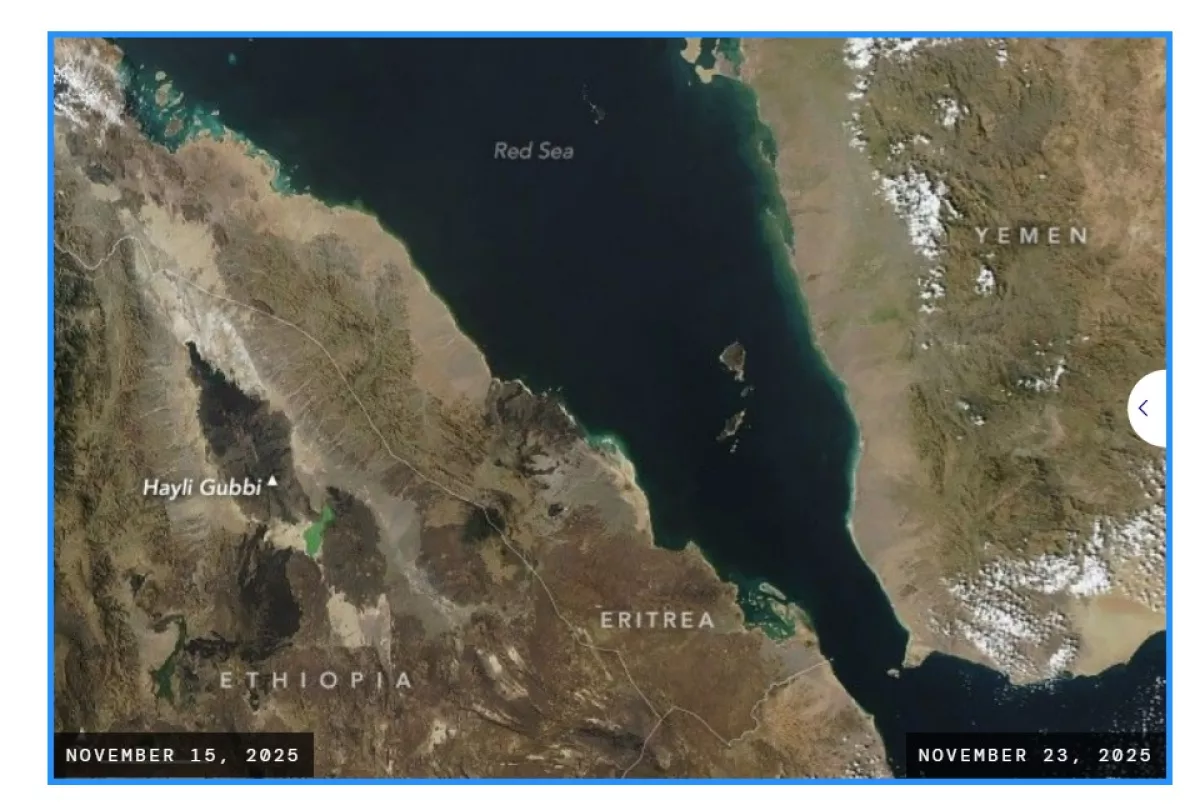
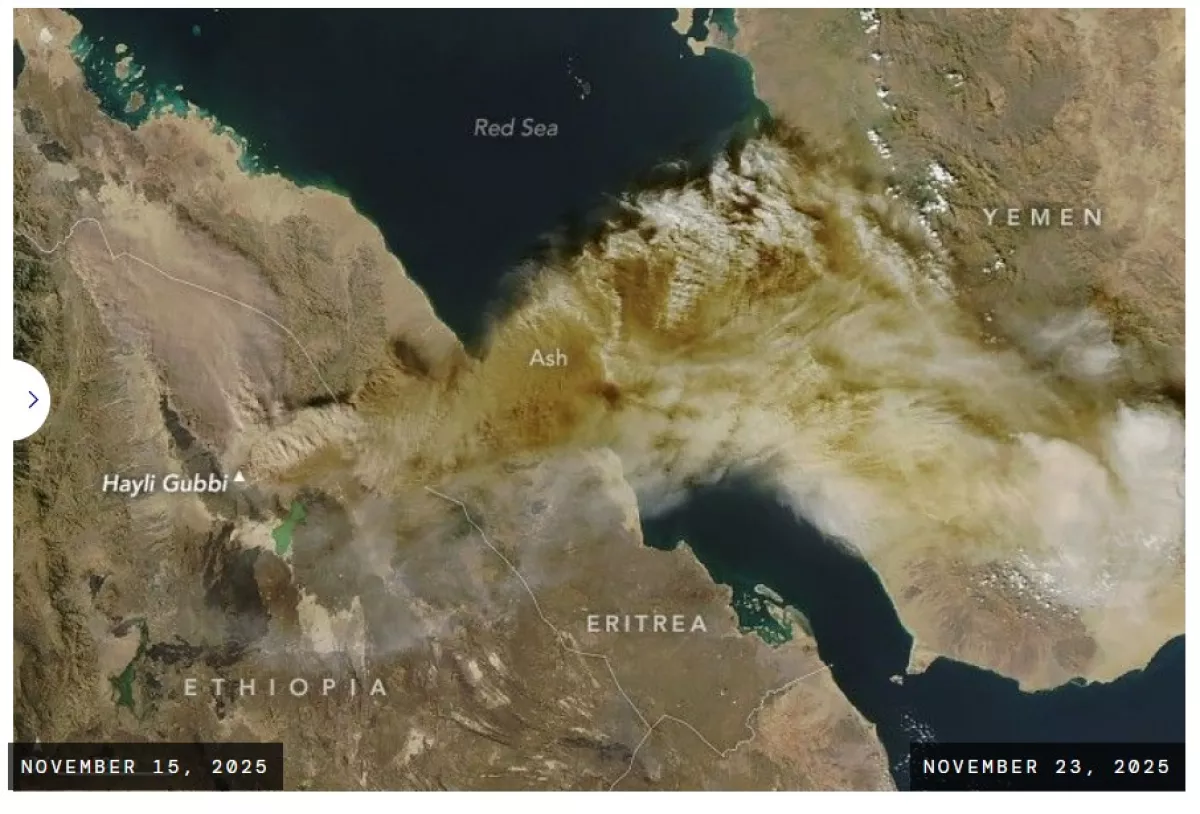
NASA has released satellite images capturing activity at Ethiopia’s long-dormant Hayli Gubbi volcano, which experienced its first recorded eruption in several millennia.
The agency said the Hayli Gubbi volcano in northern Ethiopia "erupted in dramatic fashion" on November 23, sending a cloud of gas and ash across continents, as reported by CNN.
Hayli Gubbi’s eruption is exceptionally rare, with no confirmed eruptions over the past 10,000 to 12,000 years. Scientists are closely monitoring the volcano via satellites due to the remoteness of the region. Located southeast of Ethiopia’s well-known Erta Ale within the Afar Rift—a volcanically active area of East Africa—the eruption underscores how even long-dormant volcanoes can suddenly awaken.
According to the Centre for Observation and Modelling of Earthquakes, Volcanoes and Tectonics (COMET), as cited in a NASA report this week, the volcano showed low-level activity beginning in July 2025, including underground magma movement and early sulfur dioxide emissions.
The eruption reshaped the volcano’s summit, creating two new craters. Hayli Gubbi erupted around 8:30 a.m. local time on November 23, sending an ash and sulfur dioxide plume up to 15 kilometers. Nearby villages were blanketed with ash, causing residents to cough and covering grazing areas and water sources for livestock.
The eruption’s sulfur dioxide cloud moved eastward, reaching India on November 25 and remaining detectable in the air until December 1, according to data published by the German Aerospace Center (DLR) this week. Dozens of flights had to be canceled in the area the day after the eruption, mainly near Indian airspace.
NASA Earth Observatory noted, that tectonic plates in this remote area of East Africa are moving away from each other, which allows magma to rise to the surface and feed several active volcanoes. Due in part to Hayli Gubbi’s remote setting, geologists are unsure when Hayli Gubbi last erupted. Geologic evidence suggests it was within the past 8,000 years, though experts speculate it may have been within the past few centuries.
Scientists will continue monitoring Hayli Gubbi for further activity, including gas emissions, ground deformation, or smaller eruptions, while authorities track the volcano’s impact on nearby communities and airspace.
By Nazrin Sadigova







 editor@caliber.az
 +994 55 444-88-98
 Азербайджан, Баку, ул. Низами, 203, Af Business House, 5-й этаж