










Pakistan’s $13 billion arms drive: From minor player to regional force Article by ASIA TIMES
The Chinese online publication Asia Times highlighted Pakistan’s rapidly evolving defence sector, framing it as a potential game-changer for the country’s economic and geopolitical standing. Once a marginal arms exporter, Pakistan is now building a projected $13 billion defence export pipeline, signalling a shift toward becoming a credible mid-tier supplier. The report shows how this transformation links military capability with foreign policy and long-term economic resilience. Analysts suggest that even partial realisation of the pipeline could reshape regional military-industrial dynamics while delivering lasting economic benefits. Caliber.Az features key excerpts from the piece.”
Editor's note: The author of this article, Saima Afzal is an independent researcher specialising in South Asian security, counterterrorism, the Middle East, Afghanistan, and the Indo-Pacific region.
"Pakistan’s emerging $13 billion defence export pipeline marks a decisive break from its historical role as a marginal arms exporter. If even partially realised, the shift would reposition Pakistan as a credible midtier defence supplier.
That, in turn, would have implications far beyond the military domain, reshaping the country’s balance of payments, industrial base and long-term economic resilience.
For South Asia and the broader Middle East, Pakistan’s growing defence capabilities signal a subtle but important shift in regional military-industrial dynamics, creating new avenues for diplomatic and economic influence.
The momentum behind this transformation is closely tied to Pakistan’s evolving geopolitical posture. Following recent armed conflict with India and the operational exposure of indigenous platforms during Operation Bunyan-e-Marsoos, Islamabad has leveraged enhanced diplomatic credibility into a series of state-to-state defence engagements in the Middle East, Africa and Central Asia.
Defence exports, once peripheral to Pakistan’s economic strategy, are now emerging as an extension of foreign policy, embedded within broader strategic partnerships and security cooperation frameworks.
Break from the past
Historically, Pakistan’s defence-industrial trajectory was modest, characterised by episodic arms exports. In 2024, arms and ammunition exports totalled just $22.4 million, according to UN Comtrade data.
The current pipeline — spanning fighter aircraft, trainer jets, drones, armoured vehicles, naval platforms, and ammunition — marks a transformative leap, signalling a sharp departure from past trends.
This structural shift has several drivers. First is geopolitical timing. Pakistan’s enhanced diplomatic standing following the Operation Bunyan-e-Marsoos in May 2025 and other regional engagements has led it to closer defence collaboration with the countries in the Middle East, Africa and Central Asia.
Second is the maturation of indigenous platforms. Major systems, including the JF-17 Thunder Block III, Super Mushshak trainers, K-8 Karakoram jets, armed drones, armoured vehicles and naval vessels, have moved beyond trial phases.
These platforms are now marketed as cost-effective alternatives to Western and Russian equipment, providing middle power countries with reliable and affordable solutions amid rising global defence spending.
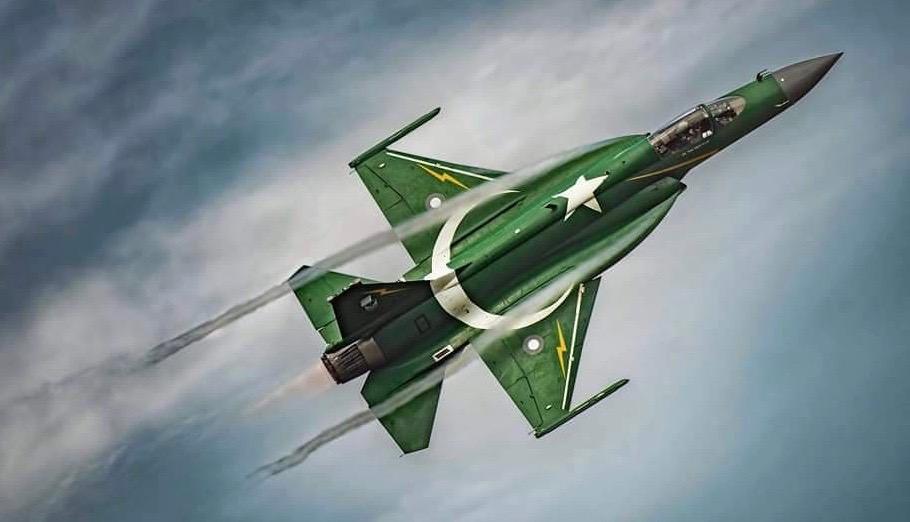
The third driver is institutional capacity. Pakistan’s defence production ecosystem, supported by Pakistan Aeronautical Complex (PAC), Heavy Industries Taxila (HIT), Pakistan Ordnance Factories (POF) and Karachi Shipyard & Engineering Works (KSEW), has reached sufficient scale and reliability to handle sustained export orders rather than occasional sales.
Pakistan’s defence exports remain overwhelmingly state-led, conducted through government-to-government frameworks. Analysts, however, anticipate a gradual transition toward a mixed public-private ecosystem.
Universities and research institutions will also likely play a growing role in R&D, particularly in avionics, AI-enabled systems, robotics, and advanced materials, following a model closer to that of the United States than traditional state-only defence producers.
Maintenance, repair and overhaul (MRO), training, upgrades, spare parts and lifecycle support generate recurring dollar revenues that can last decades, creating durable foreign exchange inflows rather than one-time boosts.
Expanding markets, strategic buyers
Interest in Pakistani defence equipment now spans Asia, Africa and the Middle East. The JF-17 Thunder has emerged as the centrepiece, with reported negotiations involving Saudi Arabia, Indonesia, Libya, Sudan, Bangladesh, Azerbaijan (The multi-role JF-17 fighter jets have already been inducted into the Azerbaijani army – Caliber.Az) and others.
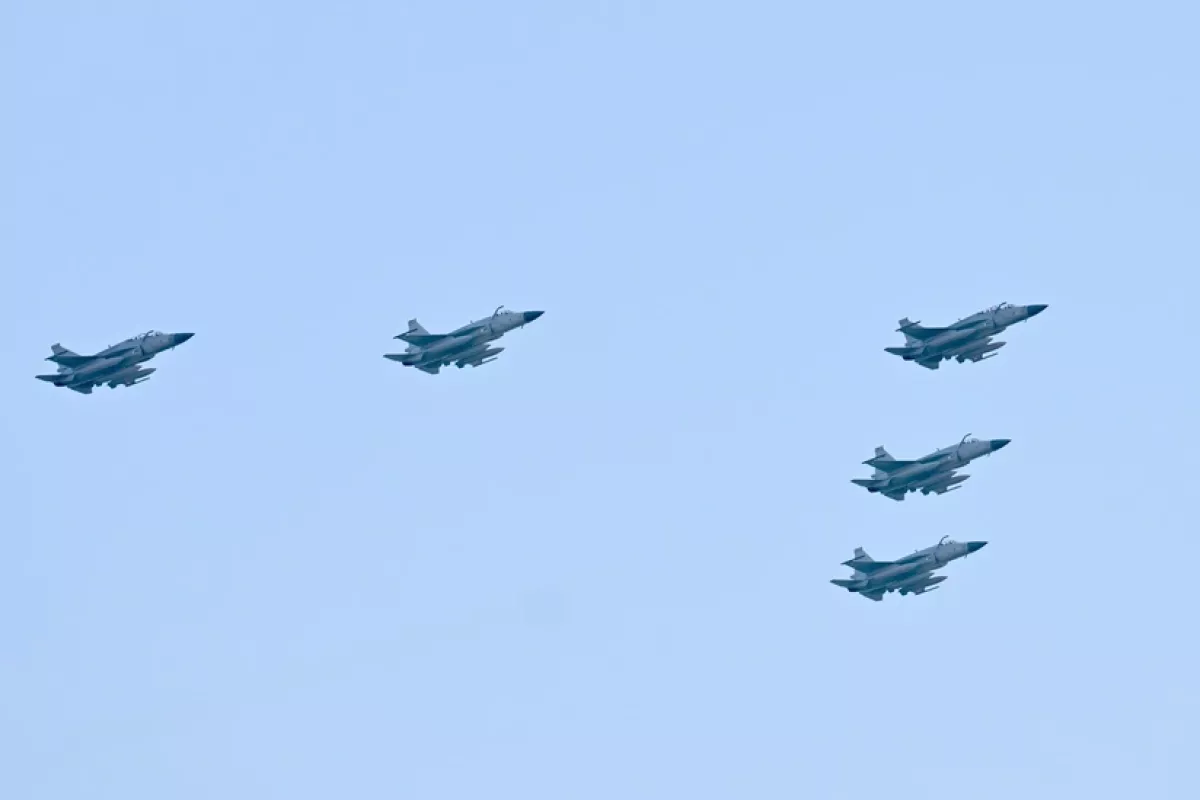
Saudi Arabia is reportedly considering converting financial support into defence procurement, potentially valued at $6 billion, while Libya is exploring a broader package approaching $4 billion.
Beyond fighter jets, Pakistan is also marketing trainer aircraft, light attack aircraft, drones, armoured vehicles, naval systems and munitions — a comprehensive portfolio capable of meeting a wide range of operational requirements.
The projected $13 billion defence export pipeline could generate significant economic gains even if only partially realised. It would strengthen the balance of payments, ease external financing pressures, support the country’s Uraan Pakistan initiative targeting $60 billion in exports, stimulate investment in advanced manufacturing and create skilled jobs.
Defense exports
Pakistan’s defence export push reflects a rare convergence of foreign policy, industrial capability and macroeconomic necessity.
Even partial execution of the envisioned pipeline would mark a qualitative shift in Pakistan’s economic structure, introducing high-value manufacturing into an export base long dominated by low-margin sectors.
If managed with a long-term vision, defence exports could emerge as one of Pakistan’s most consequential strategic levers, reshaping not only its export profile but also its position within the evolving geopolitics and geoeconomics of Asia, Africa and the Middle East," Saima wrote.







 editor@caliber.az
 +994 55 444-88-98
 Азербайджан, Баку, ул. Низами, 203, Af Business House, 5-й этаж