










Reflecting on US-Venezuela relations through lense of oil From nationalisation policy to Chinese factor
US President Donald Trump said one reason the United States will “run” Venezuela and control its oil sales is that, in his words, “years ago” Venezuela “took our oil away from us” and “stole” US assets. The reasons cited for the unprecedented launch of air strikes on Venezuela’s capital, which led to the forcible transfer of the country’s leader to the US, stem from a complex chapter in the two countries’ long history of oil trading.
His stark remarks were made at the January 3 press conference where the president discussed the US military operation that led to the capture of Venezuelan President Nicolás Maduro and his wife, Cilia Flores.
“We built [the] Venezuela oil industry with American talent, drive and skill, and the socialist regime stole it from us,” Trump decried, referring to sweeping changes introduced in 2007 under then-President Hugo Chávez as a continuation of the country's policy of nationalising its oil assets.
Then-President Carlos Andrés Pérez nationalised Venezuela’s oil industry in 1976 and established Petróleos de Venezuela S.A. (PDVSA) as the state-owned oil company. Though conditions were toughened, major firms like Chevron remained in the country. Under Chávez, foreign oil companies operating in the country were required to renegotiate contracts that handed majority control of projects to PDVSA.
Companies that refused those terms were expropriated, with their oil-related assets seized by the Venezuelan government.
“They did change the terms of the deals that they had with the companies that were operating in Venezuela,” Roxanna Vigil, an international affairs fellow at the Council on Foreign Relations, told The Annenberg Public Policy Center.
The policy shift triggered a major exodus of skilled oil workers and executives. After the country’s political and economic crisis deepened following Chávez’s death in 2013, oil extraction equipment and pipelines fell into disrepair and were further damaged by looting amid unrest.
Two major US oil companies, Exxon Mobil and ConocoPhillips, refused to accept Chávez’s conditions. After leaving Venezuela, both pursued international arbitration cases against Caracas. While courts ordered Venezuela to pay billions of dollars in compensation, neither firm has been fully reimbursed. Chevron, by contrast, accepted the new terms and remains active in Venezuela’s oil sector.
In 2023, the United States resumed imports of Venezuelan crude after Chevron received a sanctions license by Washington. By then, China had become Venezuela’s largest oil buyer, accounting for nearly half of its exports.
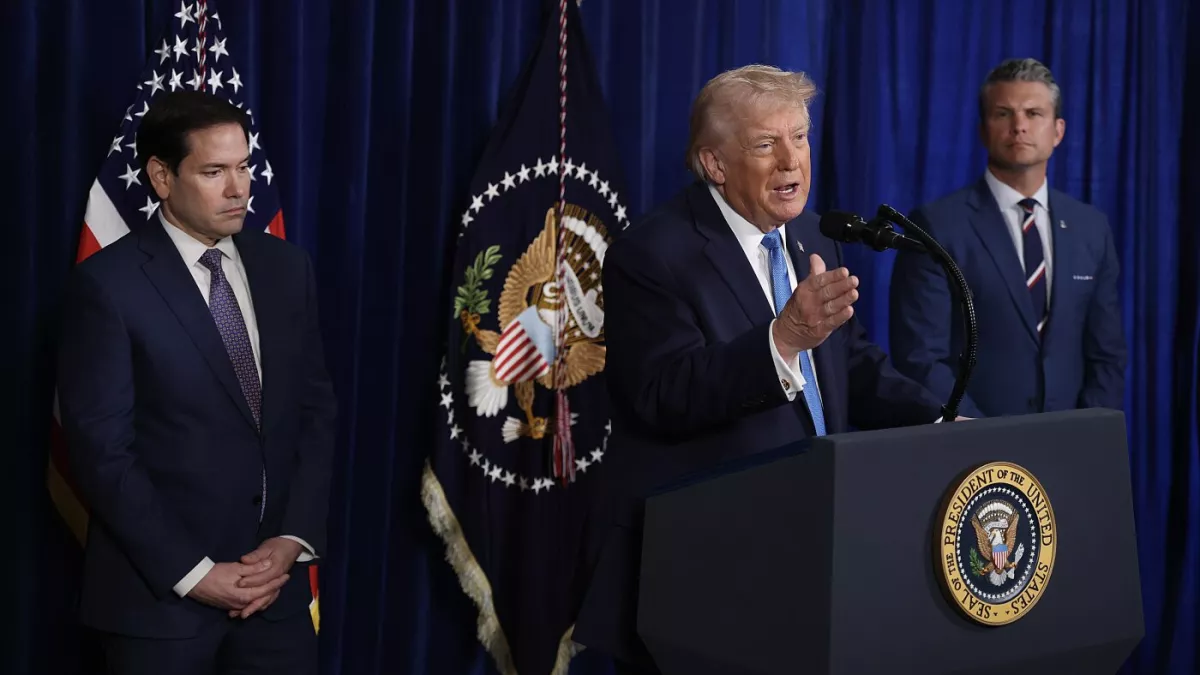
Meeting Trump at the White House following the air strikes on Caracas, ExxonMobil Chief Executive Officer Darren Woods described Venezuela as “uninvestable” in its current condition and said “significant changes” would be required for the company to consider returning.
As the only major US oil producer currently operating in Venezuela, Chevron—working under a special sanctions exemption—is widely seen as best positioned to benefit from Trump’s stated plans.
Allure of Venezuelan oil
Venezuelan crude is among the thickest, heaviest, and most carbon-intensive in the world. Processing it requires diluents—lighter hydrocarbons such as naphtha or condensate—to allow the oil to flow through pipelines.
After Maduro’s disputed 2018 re-election, Washington cut PDVSA off from US financial markets, limiting Venezuela’s access to diluents and global shipping networks.
Despite these challenges, an AP article describes Venezuelan crude oil’s strategic appeal. It is well-suited for diesel production and competes directly with Russian oil. US Gulf Coast refineries optimised for heavy crude value Venezuelan supply because it is compatible with their infrastructure and often cheaper.
Although Venezuela has domestic refineries capable of processing its heavy crude, years of mismanagement and breakdowns have left them largely dysfunctional. The country also lacks sufficient domestic diluent production and historically relied on the United States for both imported diluents and specialised refining capacity.
In the early 2000s, oil accounted for more than 90% of Venezuela’s exports, with the United States as its primary customer. In 2003 alone, the US imported more than one million barrels per day, representing over 60% of Venezuela’s exports.
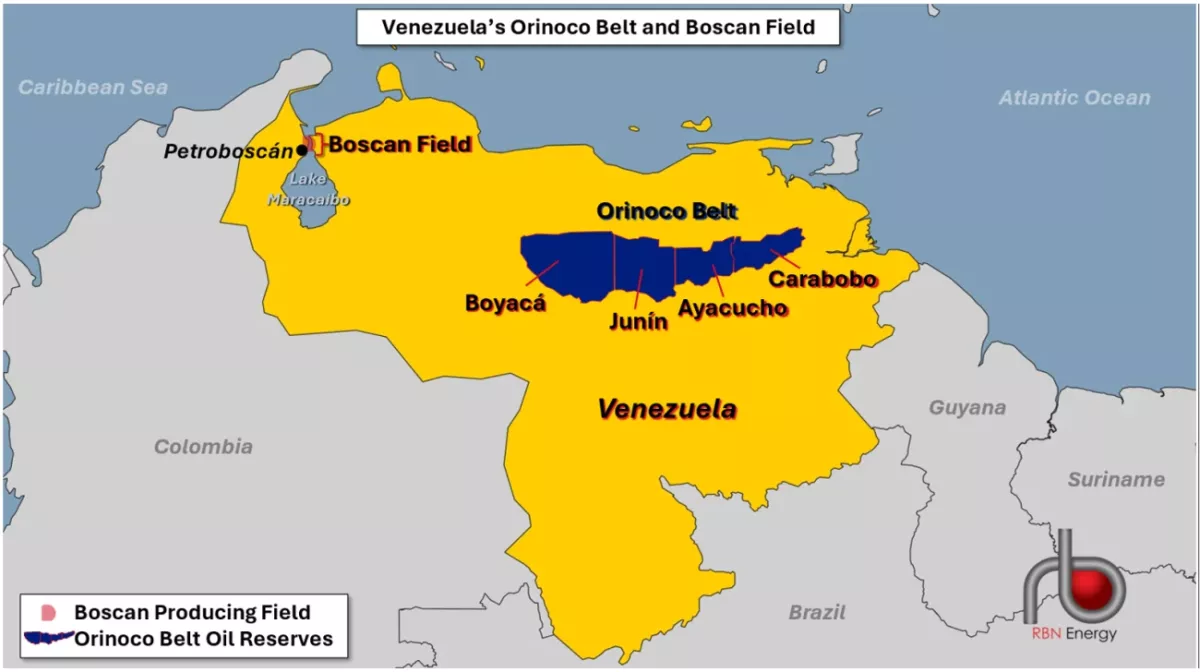
As infrastructure deteriorated and sanctions tightened, production collapsed. Between 2015 and 2025, exports fell by nearly two-thirds, forcing Venezuela to seek alternative markets. Much of the vast Orinoco Belt—the world’s largest reserve of heavy crude—remains undeveloped.
On January 6, the Trump administration announced a deal to purchase an estimated $2.8 billion in Venezuelan oil, selectively easing export restrictions. The shipments are expected to be redirected from China to US refineries along the Gulf Coast.
Chinese shadow over US-Venezuela ties
Analysts cited in the AP article say the timing and focus on oil flows highlight Washington’s concern over China’s expanding role in Venezuela and Latin America.
US officials have long viewed dollar-based oil trade as a key source of economic and geopolitical leverage. Venezuela, however, began pricing oil in Chinese yuan in 2017 and has increasingly accepted non-dollar payments, while shifting much of its banking activity to Russia.
Caracas has also experimented with cryptocurrency, including the dollar-pegged USDT stablecoin, to bypass sanctions on PDVSA.
Those financial adaptations coincided with deeper ties to US adversaries as China became Venezuela’s top oil buyer, while Iran and Russia supplied diluents and technical assistance after US sanctions cut off access. All three countries, alongside Venezuela, are members of the BRICS bloc, which seeks to expand trade outside Western-led financial systems.
By Nazrin Sadigova







 editor@caliber.az
 +994 55 444-88-98
 Азербайджан, Баку, ул. Низами, 203, Af Business House, 5-й этаж