










Researchers uncover structural secrets behind Egyptian pyramid’s longevity
The remarkable durability of the Great Pyramid of Giza has puzzled historians and engineers. Now, researchers say they have identified one of the key reasons the ancient structure has survived for more than 4,500 years, thanks to its extraordinary resistance to earthquakes.
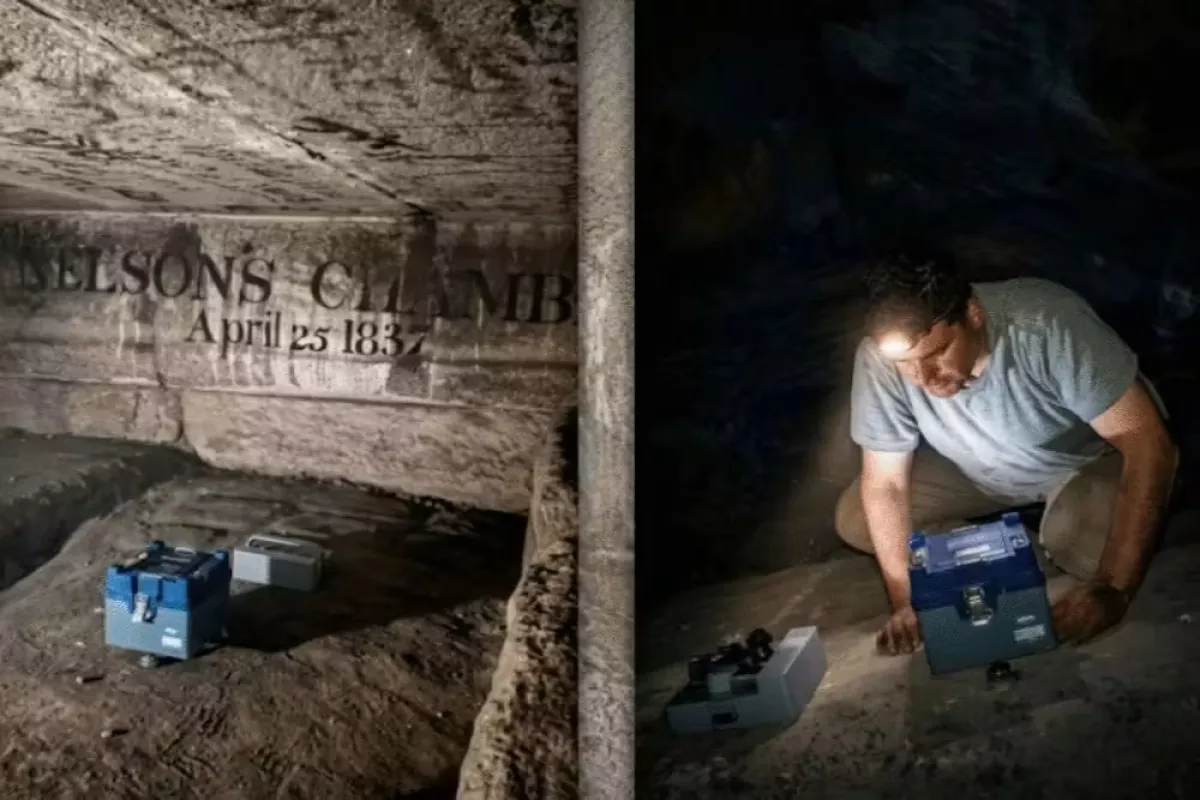
Scientists studied the pyramid’s structural dynamics using seismometers, devices that measure subtle ground vibrations generated by natural forces and human activity. Their findings were shared in the Scientific Reports journal this week, as ScienceNews reported.
Located in Giza near Cairo, the pyramid was built as the tomb of the pharaoh Khufu using massive limestone blocks. Each side of the pyramid measures roughly 230 meters at its base, covering an area of about 5.3 hectares.
The structure, the last surviving wonder of the ancient Seven Wonders of the World, originally stood around 147 meters tall. Erosion and the removal of its smooth outer casing stones over the centuries reduced its height to about 138.5 meters today. For nearly 3,800 years, it remained the tallest man-made structure on Earth.
Features for enduring stability
In the course of the latest detailed examination of the structures, researchers took measurements at 37 different locations in and around the monument. They found that the pyramid exhibited an unusually stable and uniform structural response to ambient vibrations despite its immense size and complexity.
The study identified several design characteristics that help the structure resist seismic forces. These include its extremely wide base, low center of gravity, symmetrical geometry, gradual reduction in mass toward the top, and sophisticated internal layout featuring chambers that help dampen vibrations. The pyramid was also built on solid limestone bedrock, further improving its stability.
“These elements together create a well-balanced, coherent structure,” said Mohamed ElGabry of Egypt’s National Research Institute of Astronomy and Geophysics, the study’s lead author.
Asem Salama, a senior author of the study, said the findings suggest ancient Egyptian builders possessed advanced practical knowledge of structural engineering principles.
“Ancient Egyptian builders clearly possessed practical knowledge related to stability, foundation behavior, mass distribution and load transfer,” Salama said.
The researchers found that most vibrations inside the pyramid occurred at frequencies suggesting mechanical stress was evenly distributed throughout the structure.
“So while I would hesitate to claim that they intentionally designed the pyramid specifically for earthquake resistance, I do think they developed architectural and geotechnical solutions that naturally produced structures with exceptional long-term resilience,” Salama added.
The study suggests that such expertise likely developed gradually through experimentation and trial and error, particularly since several earlier pyramids were structurally flawed.
Researchers also discovered that vibration amplification increased higher up inside the pyramid — a common feature in tall structures — but decreased inside five special chambers located above the King’s Chamber.
“This suggests these chambers effectively help dissipate seismic energy and protect the King’s Chamber — one of the most critical areas — from excessive shaking,” ElGabry said.
By Nazrin Sadigova







 editor@caliber.az
 +994 55 444-88-98
 Азербайджан, Баку, ул. Низами, 203, Af Business House, 5-й этаж