










Unsuccessful China visit: Macron returns home empty-handed While Europe remains a perpetual supplicant
The European website Euractiv has published an article about French President Emmanuel Macron's unsuccessful visit to China. Caliber.Az reprints the piece.
Emmanuel Macron’s trip to Beijing last week marks yet another step in the deepening asymmetry between Europe and China.
Macron arrived with low expectations in terms of political achievements. After three and a half years of calling on China to support Ukraine and not Russia, and having seen France’s external balance with China become a huge deficit, Macron was hoping to salvage some commercial gains and was accompanied by the heads of over 30 French companies.
President Xi Jinping’s priorities seem to have been much more strategic. A number of signals – although without official confirmation – point to Xi having requested France’s neutrality – or at a minimum, a non-opposition – to China’s Indo-Pacific quagmire around Taiwan and the recent tensions with Japan.
Some of the signals in this direction started on the summit’s eve, when Foreign Minister Wang Yi urged his French counterpart that, as World War II victors, China and France must block Japan from “stirring troubles” over Taiwan.
Xi echoed this obliquely, pledging cooperation to “exclude any interference”. These remarks hinted at Beijing’s desire for French restraint – all the more as it is the only member of the European Union with a seat at the United Nations’ Security Council.
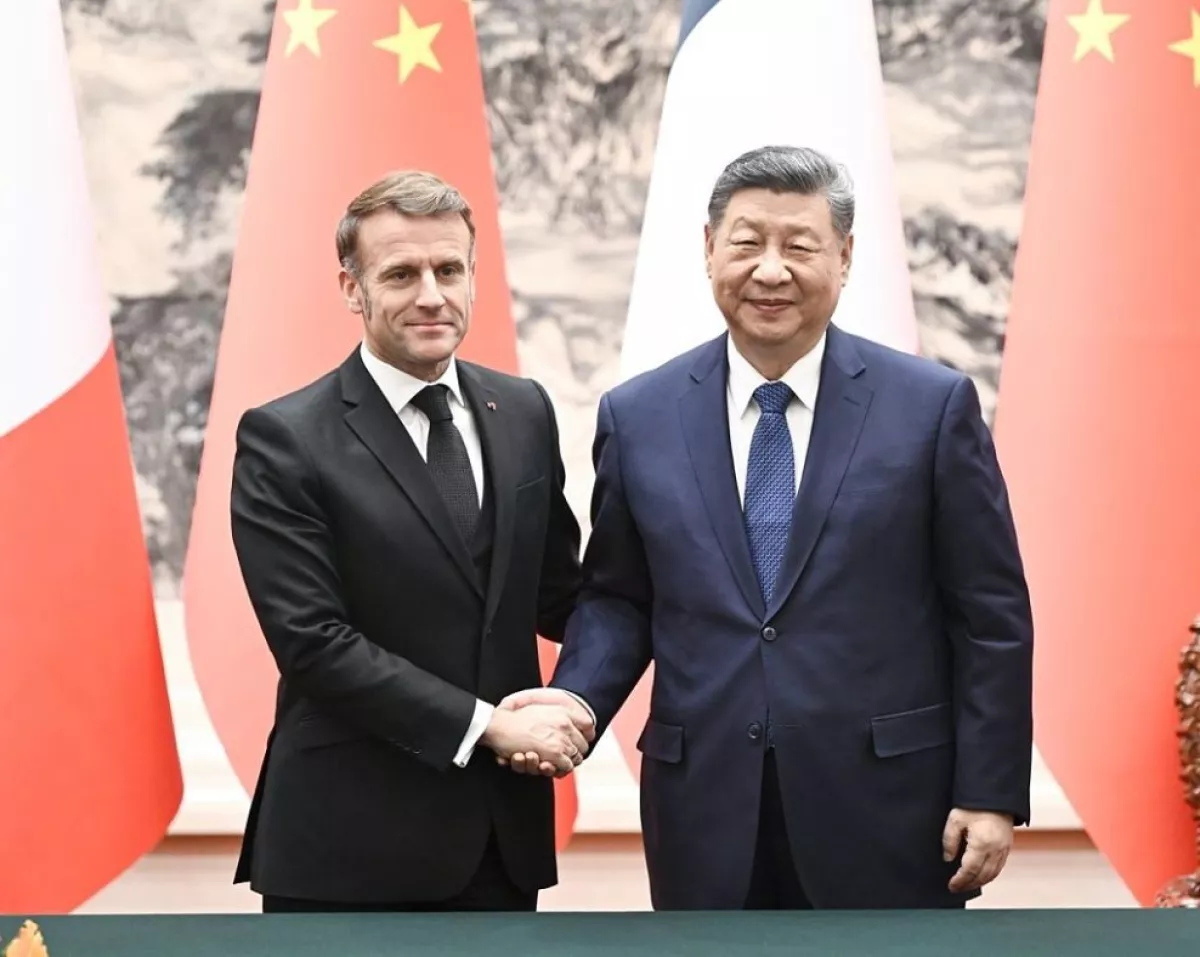
Paris was angling for a much more commercial meeting, as shown by the memorandum for the sale of 500 Airbus aircraft, which in the end China did not sign. Xi’s decline signals that business-as-usual commercial transactions are no longer on offer without broader alignment.
It appears that Macron even dangled an invitation for Xi to the 2026 G7 summit under the French presidency, framing it as a forum to tackle global imbalances and “fairer rules.” It is not clear whether Xi has brushed the invitation aside but we do know that he referred to China’s upcoming Five-Year Plan to find signals of rebalancing, thanks to consumption being one of the objectives. The reality is that this objective remains buried as a tertiary goal after those of ramping up industrial capacity – dubbed by Xi himself as “new production forces”, and innovation.
This pivot to strategy reveals Xi’s calculus. Beijing grows comfortable with imbalances that grant it outsized influence, viewing Europe’s pleas for reciprocity as leverage points rather than imperatives. As for China’s geopolitical requests, Japan’s role looms large here. Prime Minister Takaichi’s recent assertions of Tokyo’s self-defence rights in a Chinese assault on Taiwan have elicited Beijing’s fury, amplifying Xi’s apparent fears of a regional containment web.
Macron faced an untenable bind during his visit. France has long championed the rules-based order and Indo-Pacific navigation freedoms, forging security ties with Japan and other democracies. Granting Xi’s request of neutrality would strain these principles – alliances and commercial interests could not bypass this, which explains why Macron appears to have come home empty-handed when it comes to commercial contracts.
Xi’s timing was no accident, drawing lessons from Russia’s Ukraine playbook: Strategic patience and manipulation to erode US resolve. With Donald Trump’s White House return and his refusal to keep supporting Ukraine, Beijing may have easily made a parallel bid for Taiwan. Barring military conflict and focusing on a diplomatic one, France becomes even more relevant because of its seat at the UN Security Council.
This episode encapsulates Europe’s broader entrapment, squeezed on multiple fronts that compound its fragility. The Trump administration, meanwhile, in its newly published National Security Strategy, lambasts Europe as economically moribund and security-dependent.
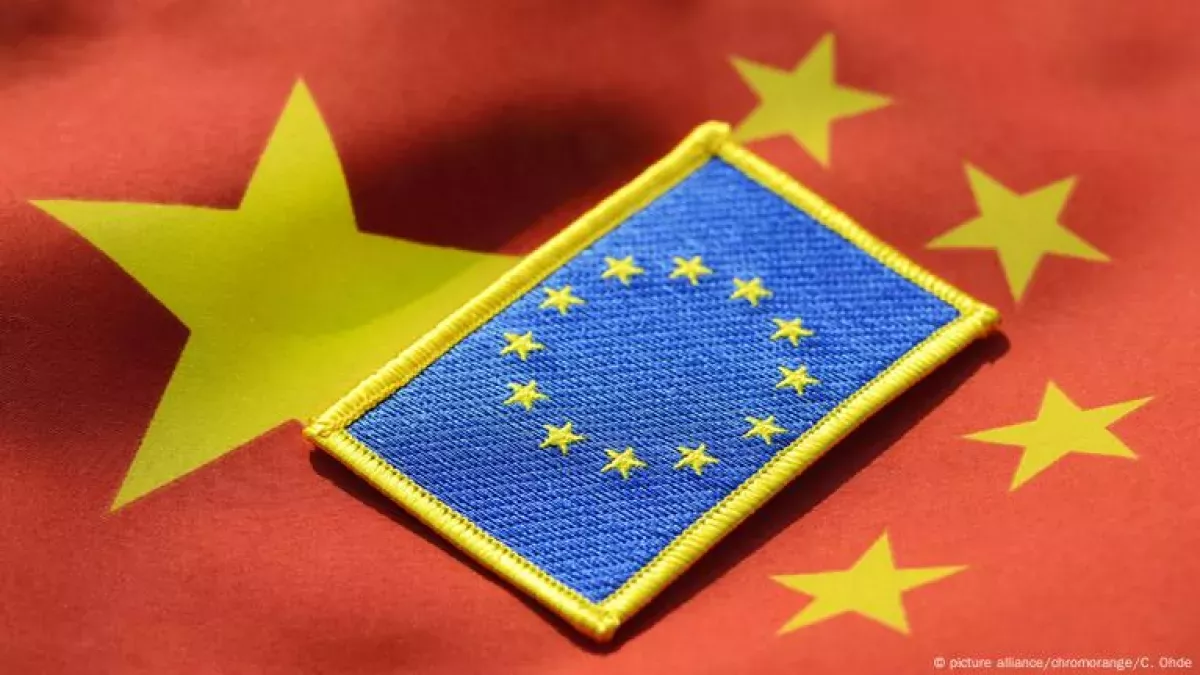
Finally, China has weaponised the strategic dependencies that Europe has been piling up without even realising. What is even worse is that these pressures are symbiotic: Concessions in one arena embolden others. In particular, faltering on Ukraine whispers to Beijing that Europe’s values bend to economic carrots. Succumbing to Chinese market strings erodes US trust, painting Europeans as fickle allies. And without true autonomy from American shields, Europe remains a perpetual supplicant, unable to counter either Washington or Beijing effectively.
When it comes to the difficult question of what the EU can do, its freshly unveiled economic security doctrine, published when Macron was landing in Beijing, aims to signal resolve against unfair competition and trade distortions. It underscores protections for critical sectors and scrutiny of foreign investments, which clearly hint at China. Yet this doctrine sounds hollow without being more specific on the sticks and carrots related to it.
Macron’s Beijing foray thus illuminates a harsh truth: The toll for EU countries to extract commercial scraps from China is increasingly high and political. Europe’s economic security doctrine is a necessary and welcome step but it falls short of the speed and resolve needed. Furthermore, the implementation of any such strategy requires unity and resolve, not solo ventures that Beijing gleefully dissects.







 editor@caliber.az
 +994 55 444-88-98
 Азербайджан, Баку, ул. Низами, 203, Af Business House, 5-й этаж