










Washington’s big bet: US secures strategic corridor, resources in South Caucasus Article by Forbes
The US-based Forbes magazine has published an article by Mark Temnycky, examining the United States’ efforts to bolster its role in the South Caucasus. Caliber.Az presents its readers with the most telling parts from the piece.
As the Trump Administration completes its first year in office, an annual review is due. Over the past year, US President Donald Trump has prioritized reducing federal spending, strengthening US border security, imposing tariffs on foreign goods, and enhancing US national security.
Throughout 2025, Trump met with leaders from countries in Europe, Asia, and Oceania to discuss U.S. economic and energy relations, stressing the importance of access to REEs and other natural resources. These activities led the U.S. to secure rare earth mineral agreements with Ukraine in May, and with Japan, Malaysia, Thailand, and Australia in November. Trump has also met with Central Asian heads of state to discuss increased trade and energy relations.
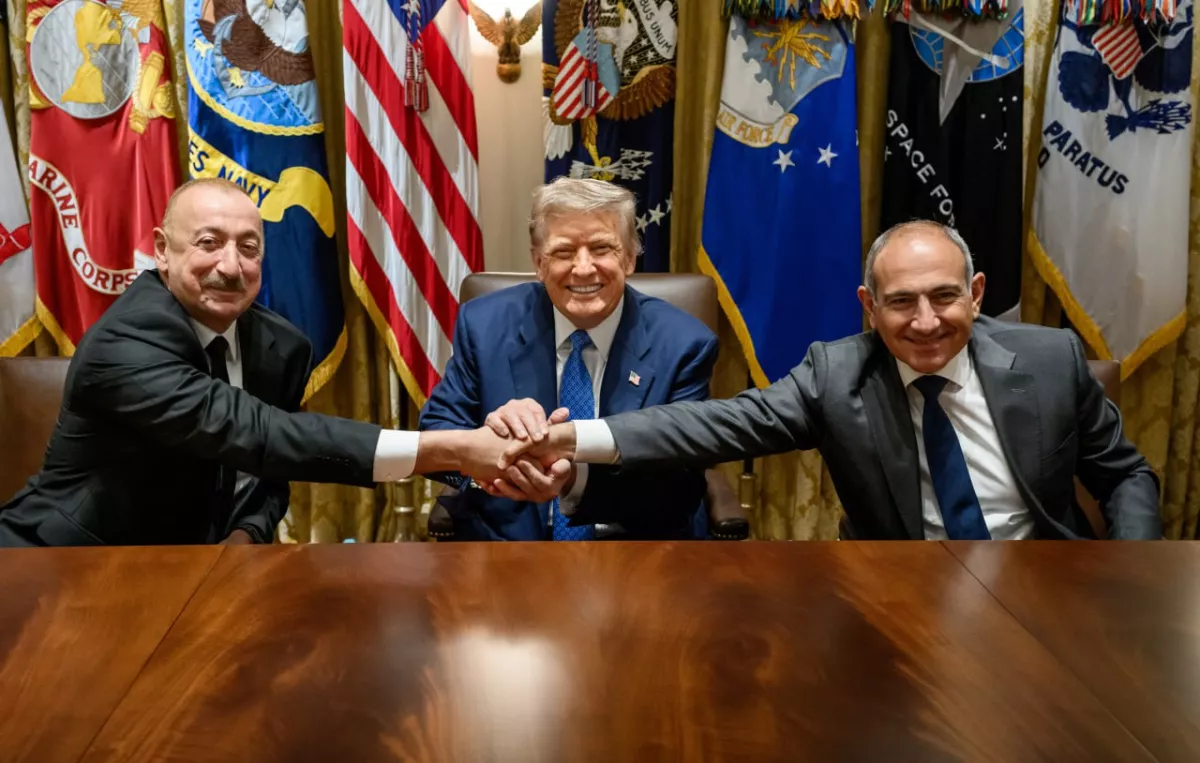
Another region where Trump has sought to enhance foreign, trade, and energy relations to strengthen America’s position against China has been the Caucasus. In August 2025, following the initiative by Azerbaijani President Ilham Aliyev, Trump invited him and Armenian Prime Minister Nikol Pashinyan to the White House to initial a peace agreement and sign a joint declaration to continue efforts toward the signing and final ratification of the agreement between the two countries. Since the 1990s, Armenia and Azerbaijan have fought over the mountainous region of Nagorno-Karabakh, which is internationally recognized as part of Azerbaijan, and more than 40,000 people have been killed throughout the conflict. More than 700,000 Azerbaijanis fled Armenia and Karabakh.
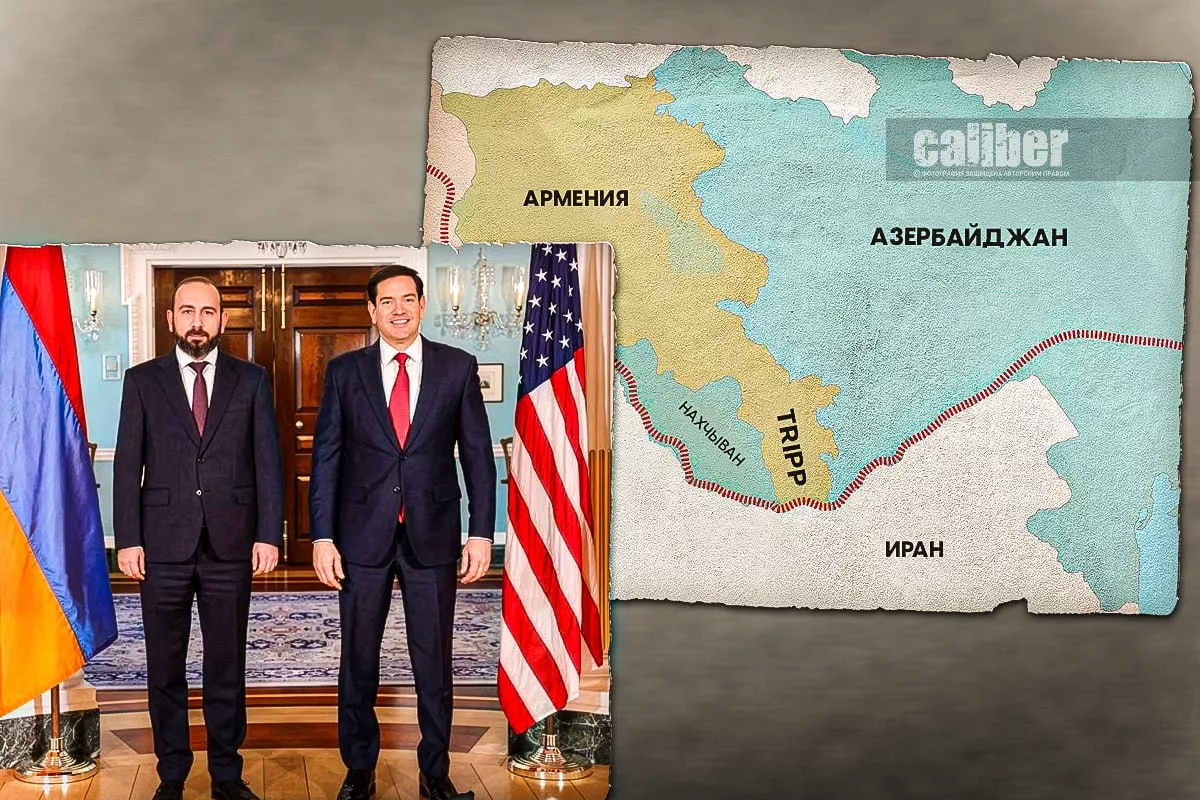
The now-defunct Minsk Group tried to facilitate peace talks since 1992, and Russia and Türkiye initially attempted to broker a ceasefire between Armenia and Azerbaijan in 2020, but it did not hold. Since then, the United States and the European Union attempted to broker peace agreements between Armenia and Azerbaijan. During the White House summit in August 2025, Trump discussed the need to strengthen US energy and trade relations with these two countries. The resulting peace initiative enabled the United States to gain access to the Zangezur Corridor, a route running through the southern Armenian province of Syunik, which will connect mainland Azerbaijan with its enclave of Nakhchivan, allowing goods to transit both to and from Azerbaijan and Armenia to the West. The US was granted exclusive rights for 99 years to construct rail, oil, and fiber-optic lines. Additionally, the corridor was renamed the Trump Route for International Peace and Prosperity.
Armenian natural resources and relations with the United States
The Caucasus is rich in natural resources. According to the International Trade Administration, Armenia contains metals such as iron, copper, gold, silver, and aluminum, as well as gold-polymetallic, copper-molybdenum, and copper pyrite deposits. Armenia has also developed a diamond processing industry, and the Armenian government is actively seeking to develop its mineral resources, which could be of great interest to the United States.
US Secretary of State Marco Rubio met with Armenian Foreign Minister Ararat Mirzoyan on January 13 to discuss the implementation framework for the TRIPP. According to a joint statement issued by the two governments, the TRIPP is “intended to establish unimpeded, multimodal transit connectivity on the territory of Armenia.” The implementation framework includes the construction of energy infrastructure, such as oil and gas pipelines, thereby providing economic and employment opportunities for Armenian citizens. Additionally, the US will receive financial returns on its initial contribution to the TRIPP. In other words, as Armenia seeks to strengthen its energy sector and boost its economy, the US will also gain access to resources it needs and realize a return on its investments.
Armenia’s ongoing engagements with the US also come at a time when it has distanced itself from Russia. Armenia has paused its membership in the Russian-led Collective Security Treaty Organization, and speculation is growing that it could withdraw entirely.
Critics have argued that the TRIPP seeks to weaken Armenian sovereignty, as it grants the United States access to natural resources in the Caucasus. Some of the most vocal critics can be found in the Armenian diaspora of the United States. While the Armenian state works to adapt to the situation on the ground and pursue peace, the Armenian National Committee of America has consistently attacked the peace agreement and anything associated with it. Thus, ANCA is opposing the repeal of Section 907 of the 1992 FREEDOM Support Act.
In October 2025, ANCA’s Policy Director, Alex Galitsky, posted on X that the peace initiative was “the surrender of Armenia’s roads, resources, borders & sovereign rights to a neo-colonial US-backed corporate consortium.” This limitation, originally lobbied for by parts of the Armenian-American community more than three decades ago, undermines US trade and investment relations with Azerbaijan, including military sales.
Azerbaijani natural resources and relations with the United States
Azerbaijan is also rich in natural resources. According to the International Trade Administration, Azerbaijan is a major producer of oil and natural gas. Azerbaijan has been supplying the European continent with oil and gas through major pipelines. Additionally, Azerbaijan is exploring offshore oil and gas projects in the Caspian and in the Mediterranean. Increased energy demand in Europe, particularly as it seeks to phase out Russian energy, will further elevate Azerbaijan’s status as a major energy supplier.
The United States has also shown an active interest in Azerbaijan. Aside from the TRIPP, Azerbaijani and US officials have also discussed a detailed roadmap for energy cooperation. In December 2025, US officials met with representatives from the Azerbaijani Energy Ministry, who highlighted “cooperation opportunities on oil and gas, electricity export-transit routes, the TRIPP, and other interconnector projects.” Additionally, in June 2025, ExxonMobil signed a new memorandum of understanding with Azerbaijan’s state energy company, SOCAR, to further collaborative exploration, development, and production of onshore oil and gas resources in Azerbaijan, continuing and expanding Exxon’s involvement with the country.
American relations with the Caucasus and investment in the region can achieve several objectives. First, it will employ Armenian and Azerbaijani citizens working on various infrastructure projects in the TRIPP. Second, American investment and cooperation with US businesses will boost the economies of Armenia and Azerbaijan, as well as generating wealth for the investor companies. Third, it will allow Armenia and Azerbaijan to distance themselves from Russia’s and Iran’s spheres of influence. Finally, access to Armenian and Azerbaijani natural resources can further expand America’s energy supply and access to critical minerals.
Armenia and Azerbaijan can become valuable American partners as the US continues its mission to achieve greater energy independence. The Trump Administration, energy companies, and international observers of the Caucasus will be interested to see how the TRIPP develops.







 editor@caliber.az
 +994 55 444-88-98
 Азербайджан, Баку, ул. Низами, 203, Af Business House, 5-й этаж