










Why Kyiv continues to pay dear price for Biden administration's legacy in Ukraine Article by Foreign Policy
US President Donald Trump has frequently described the Russia-Ukraine war as “Biden’s war.” His claim that former President Joe Biden is personally responsible for the invasion is, of course, not factual, since the decision to attack and illegally cross into Ukrainian territory belongs solely to the Kremlin.
Still, more than a year after leaving office, both critics and supporters of the former president are increasingly examining how key aspects of the war have been shaped by the Biden administration’s choices—particularly its approach to arming Kyiv and its use of military aid to influence how Ukraine fights.
Ukraine’s current territorial control, battlefield position, and heavy military and civilian losses are significantly affected by the restrictions the Biden administration placed on how Ukraine could prosecute the war, according to an article by the Foreign Policy journal. The outlet’s latest report argues that Washington’s early caution and later constraints slowed Ukraine’s progress and shaped the trajectory of the conflict.
Foreign Policy identifies one of the first major failures to be Biden’s refusal to truly bolster Ukraine’s defences during Russia’s large-scale force buildup that began in March 2021, just weeks into his presidency. Ukraine pushed for weapons beyond the anti-tank systems it received under the first Trump administration, but the article asserts, Biden chose not to act—continuing what the article characterises as a legacy mindset from the Obama era, when he served as vice president.
“Even after Washington prepared to send a modest $200 million arms package, Biden dragged his feet on sending the assistance for fear of escalating tensions with Putin,” the article notes, citing an NBC News story reporting that Biden withheld the aid to “give more time for diplomatic efforts to defuse tensions.” The delay stretched across crucial weeks during which US intelligence had already concluded that Russia was preparing a full invasion.
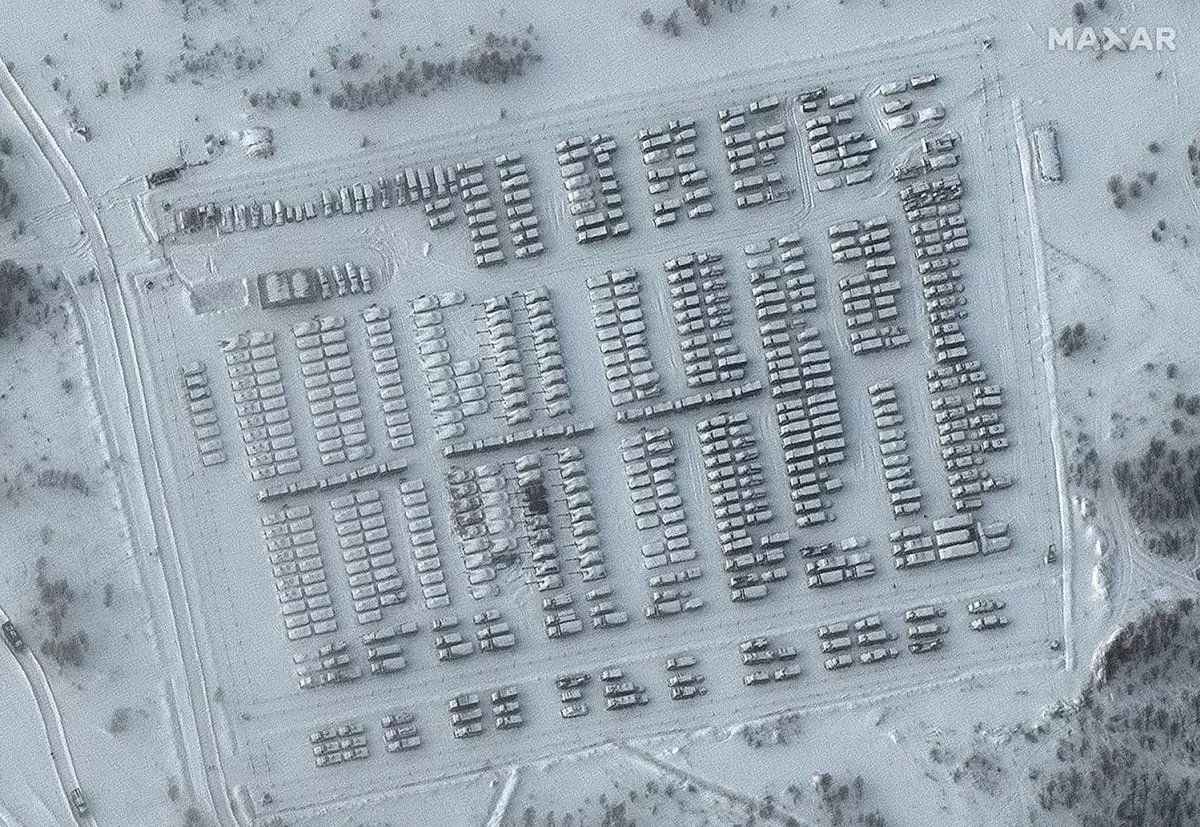
The publication also argues that the combination of those delays, Biden’s effective endorsement of the Nord Stream 2 pipeline, and the chaotic US exit from Afghanistan sent a signal of weakness to Moscow: “the Kremlin could not but see all of this as signalling Washington’s weakness and lack of resolve.”
The journal also describes direct pressure from the Biden administration discouraging Ukraine from striking certain Russian military targets, even those on Ukrainian or Russian-occupied territory. A New York Times report cited in the article revealed US opposition to Ukrainian strikes on the Kerch Strait Bridge and a Russian air base in Crimea, and it referenced a separate Ukrainian operation stopped at Russia’s request.
This pattern extended to US allies as well. According to the article, Washington initially blocked European countries from providing tanks, long-range missiles, and even their own F-16 aircraft. Once these restrictions were eventually removed, the fighters played a critical role in defending Ukraine’s skies.
Hudson Institute analyst Luke Coffey summarised the effect of these delays: “delays affected the provision of cluster munitions, tanks, infantry fighting vehicles and [ATACMS]. While the US eventually authorised all these systems, its indecision cost Ukraine dearly, forcing it to respond reactively instead of proactively.”
Foreign Policy further argues that Washington’s targeting constraints left Ukraine with limited ability to strike military and infrastructure sites inside Russia—airfields launching bombers, oil facilities, and other key assets.
The article claims that as late as 2024, the Biden administration was still limiting Kyiv’s use of its own domestically built weapons, pressing Ukraine to stop drone strikes on Russian refineries. Ukraine reportedly complied, redirecting its attacks to fuel depots that produced dramatic explosions but “little strategic impact.”
Those limits were later lifted under Trump, and Ukraine resumed targeting Russian refineries, which has reportedly resulted in fuel shortages inside Russia. According to the Foreign Policy author, this demonstrates that hitting oil infrastructure “was never the red line the Biden administration imagined it to be.”
The article does note that Biden’s record is not entirely negative, praising his success in building an international coalition to support Ukraine. Still, it concludes that his strategy of tight restrictions and prolonged caution helped create battlefield conditions in which “Russia feels little pressure to conclude the war and seek a settlement on any terms but its own.”
By Nazrin Sadigova







 editor@caliber.az
 +994 55 444-88-98
 Азербайджан, Баку, ул. Низами, 203, Af Business House, 5-й этаж