










Baku and Ashgabat: Betting on future corridors Review by Teymur Atayev
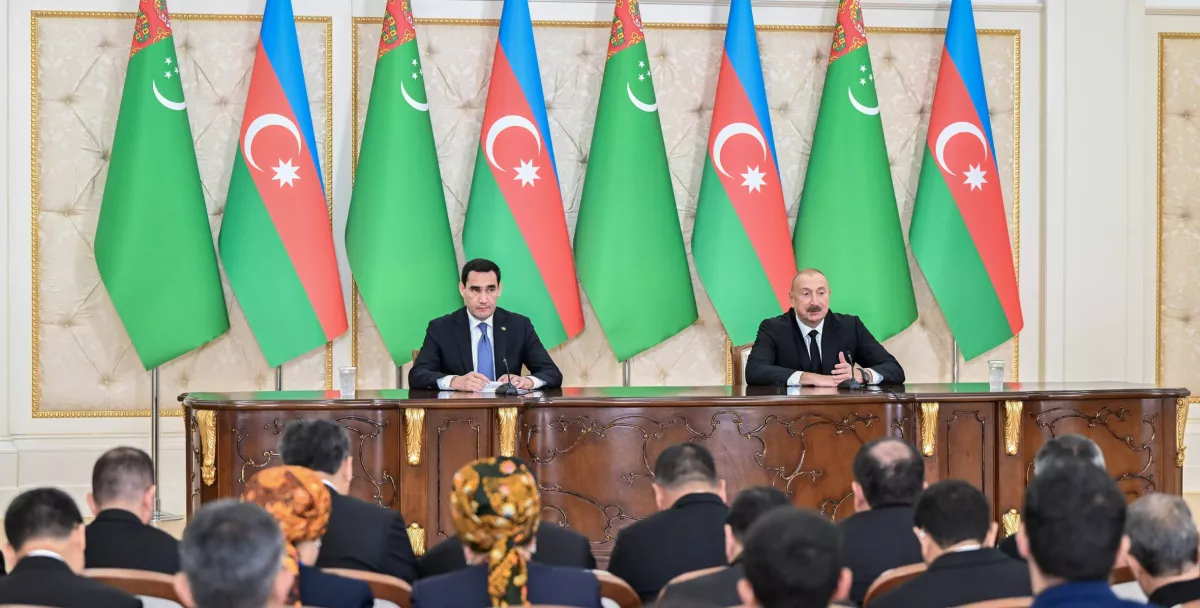
At a joint press conference with the President of Turkmenistan, Serdar Berdimuhamedov, Azerbaijani President Ilham Aliyev emphasised the importance of bilateral cooperation in the field of transport and logistics, describing it as strategic “not only for us and our neighbors, but also for a much wider geography.”
According to him, this represents a significant achievement, as at the current stage of history, there are only a limited number of reliable and secure transport routes connecting countries that cooperate with one another. In this regard, the leader stressed that transport and logistics projects cannot be viewed separately from political cooperation. Without such cooperation, even the most favourable geographical conditions would not be sufficient to unite the efforts of different countries.
This emphasis, voiced by Aliyev against the backdrop of the geopolitical turbulence unfolding before our eyes, is particularly significant, as evidenced by the global situation triggered by the Strait of Hormuz crisis. The effective closure of the strait has caused a major financial and economic shock across various regions of the world, putting even food security at risk. The disruption of the Hormuz route and its consequences for the Middle East have demonstrated the real vulnerability of the very “security umbrellas” that had previously been confidently presented as protection against any threat.
Even earlier, the situation in the Red Sea posed a serious challenge to the global economy, as shipping costs along the Suez route rose sharply. Against this backdrop, the Middle Corridor has continued to play an important role in maintaining the economic link between China and Europe. All of this clearly confirms the validity of Ilham Aliyev’s conclusion that transport and logistics projects cannot be considered separately from political cooperation among states.
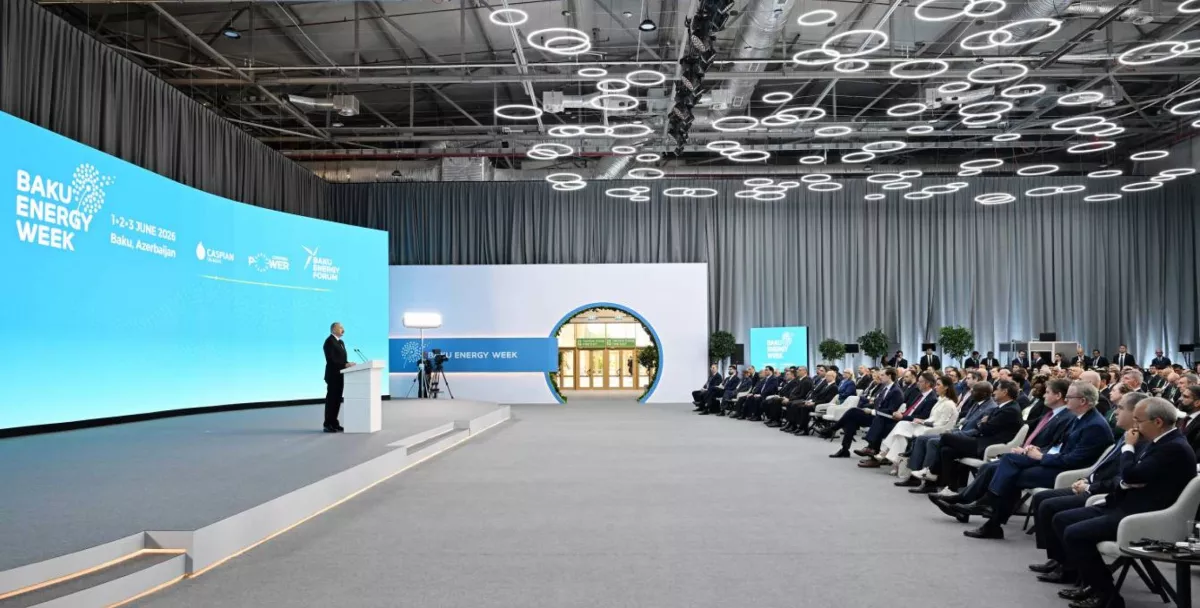
This is evidenced by the special nature of Azerbaijan’s relations with China, Georgia, Türkiye, and European countries. As Ilham Aliyev noted at the recent opening of Baku Energy Week, Azerbaijan, lacking direct access to the sea and the world’s oceans, must transport its resources across the territories of other states in order to export them.
This would be impossible without strong relations not only with its immediate geographic neighbours but also with the “neighbors of your neighbors” — something Azerbaijan has successfully achieved.
Today, 16 countries receive Azerbaijani gas through the Southern Gas Corridor and its branch networks. Through successful negotiations, the signing of agreements, and the resolution of differences, a broad regional framework for cooperation has been established, with Baku serving as its driving force. Moreover, this cooperation is based not only on Azerbaijan’s energy resources but also on the initiatives launched by the country, which have largely laid the foundation for this partnership.
As a result, Azerbaijan provides a vital transit route for its friends and partners on the eastern shore of the Caspian Sea, facilitating, among other things, the transportation of Central Asian oil to international markets through its territory.
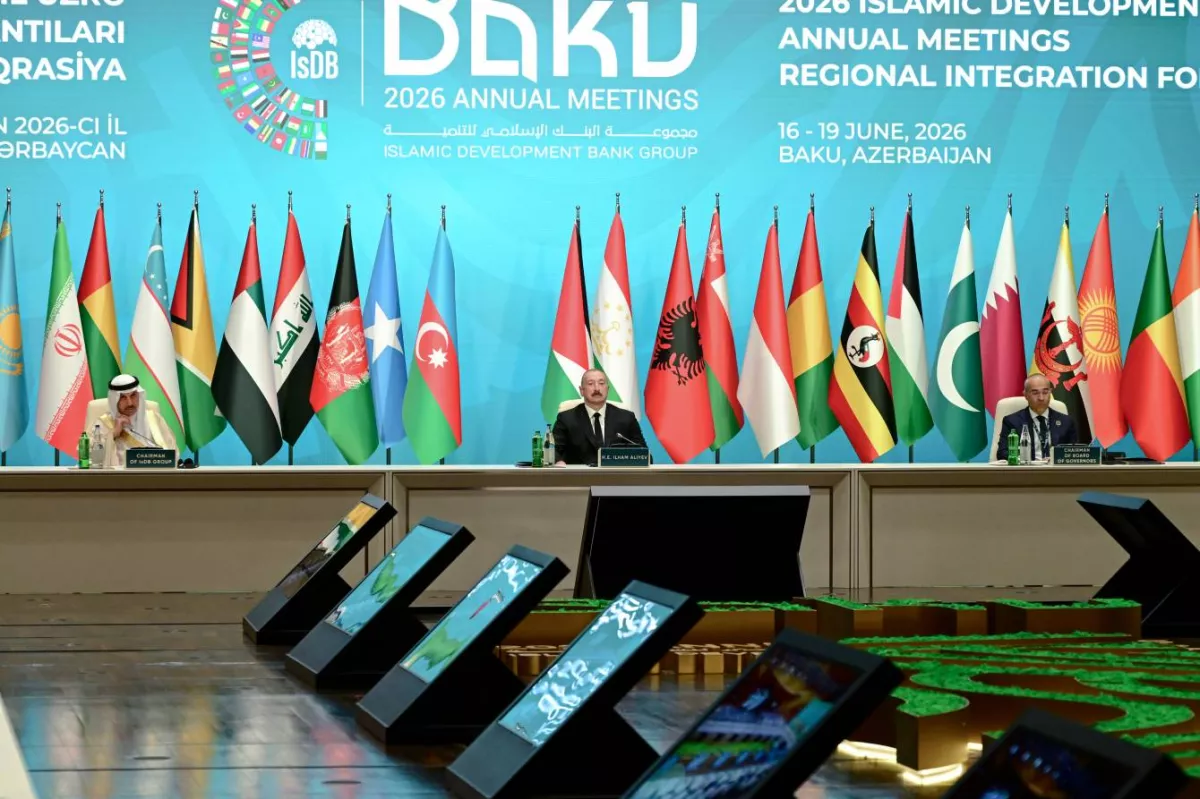
A few days ago, speaking at the opening ceremony of the 2026 Annual Meetings of the Islamic Development Bank Group, Aliyev emphasised that Baku has always sought to transform Azerbaijan from a landlocked country into an international transportation hub by leveraging its geographical location as the foundation for building a robust transport infrastructure. Without this, it would have been impossible to ensure the stable operation of the East–West and North–South transport corridors passing through the country's territory.
The president stressed that today these routes provide the uninterrupted functioning of a unified and coordinated transportation artery serving many countries.
Thus, recent developments have confirmed one of the key ideas expressed by Ilham Aliyev as far back as 2011. At that time, the head of state noted that Azerbaijan’s achievement of economic independence had also led to political independence, enabling Baku to confidently pursue its own policy in the region and globally, aimed at protecting the interests of the Azerbaijani people.
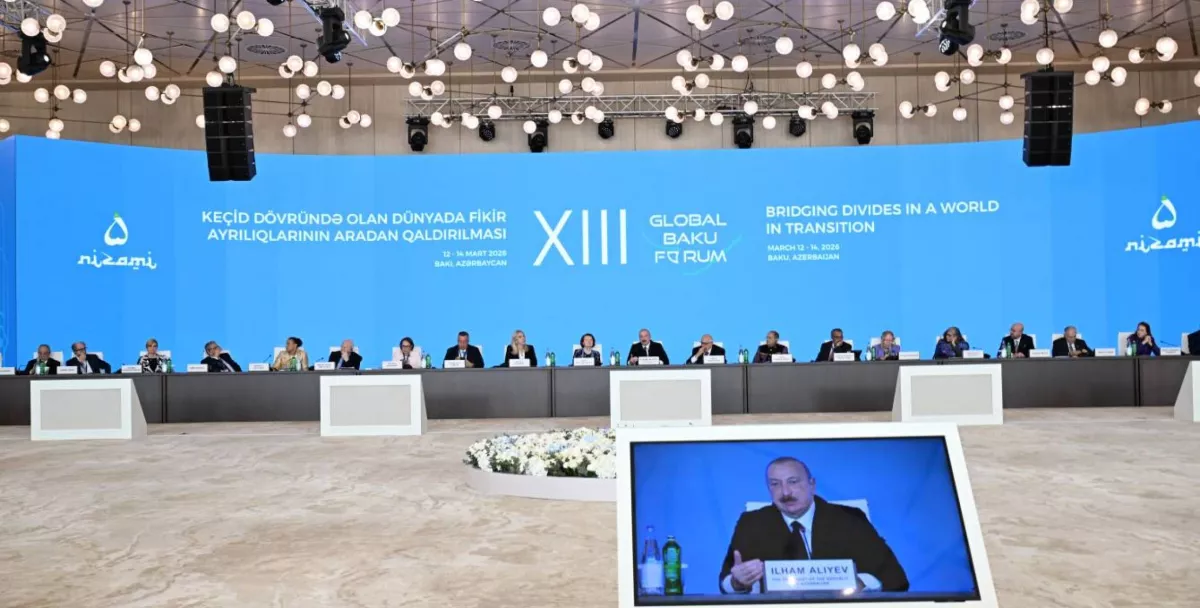
Fifteen years later, in the spring of 2026, speaking at the 13th Global Baku Forum and revisiting the issue of transport connectivity, the country's leader emphasised that ongoing conflicts are disrupting traditional transport routes and supply chains, creating an extremely challenging situation for a significant part of the international community.
The president also noted that following the achievement of peace with Armenia, Azerbaijan is working to further expand the Middle Corridor, which will pass through Armenian territory via the Zangezur Corridor. As a result, Armenia “for the first time in its independent history, will also be a transit country, which today it is not.”
According to the leader, the opportunities being created by Azerbaijan through the transportation linkage of the two parts of the country and the development of new corridors will benefit many nations.
Thus, the thesis voiced recently by Ilham Aliyev—that transport and logistics projects cannot be considered separately from political cooperation—carries an important geopolitical message. No matter how certain biased actors may attempt to contrast economics with politics, in practice these spheres form an inseparable whole. It is precisely this synergy that can ensure the development of states, especially when the interests of all stakeholders are taken into account.
As Aliyev has repeatedly emphasised, Baku is ready to share its experience in this field—and not only in this one.







 editor@caliber.az
 +994 55 444-88-98
 Азербайджан, Баку, ул. Низами, 203, Af Business House, 5-й этаж