










Dialogue against the odds: can Lebanon and Israel reach an agreement? Article by Matanat Nasibova
Today, June 23, direct talks between diplomatic and military delegations from Israel and Lebanon began in Washington, mediated by the United States. The issue is at the centre of global media attention, as the track is highly complex and contradictory, and it has a direct impact on the fragile ceasefire that emerged in the Middle East following the signing of a temporary agreement on the cessation of hostilities between the United States and Iran last week.

As Israeli media note, the main objective of the Lebanese–Israeli meetings, overseen by Secretary of State Marco Rubio, is to advance a plan for the phased withdrawal of IDF forces from several areas in southern Lebanon in exchange for the deployment of units of the regular Lebanese army there. As previously reported by the influential Israeli newspaper Haaretz, the Israeli army may partially withdraw from the so-called “yellow line” in Lebanon, after which these areas would come under the control of the Lebanese armed forces, which are expected to operate in these zones under U.S. supervision. The publication also noted that the Israeli side has lifted all restrictions imposed by the Home Front Command in the country’s north, while a source in the UN mission in Lebanon (UNIFIL) reported that on Sunday, for the first time since March 2, no incidents or exchanges of fire between Israel and Hezbollah were recorded.
For a full clarification of the issue, an important remark must be made here: Hezbollah is a paramilitary organisation that advocates the establishment of an Islamic state in Lebanon. Its main sponsor and key political ally is Iran, which provides the group with financial and military assistance. Hezbollah controls a significant part of Lebanese territory, including southern Beirut, southern Lebanon, and the eastern part of the Bekaa Valley.
Thus, as follows from the above, several parties are directly or indirectly involved in this conflict: Israel, which intends to create a buffer zone in southern Lebanon and demands the complete disarmament of Hezbollah; the Lebanese government, which considers Israel’s actions a violation of its sovereignty and is seeking to put an end to hostilities on its territory; the United States, acting as a mediator in the negotiations and supporting Israel; Hezbollah; and Iran, which provides extensive support to the organisation.

Taking into account the multi-layered nature of the conflict and considering that Hezbollah’s further actions against Israel depend directly on the Iranian side, we can analyse the current situation and the likelihood of achieving a final settlement between Israel and Lebanon from different perspectives.
Thus, according to a statement by mediators from Pakistan and Qatar at the US–Iran talks, the parties have made progress, which gives grounds for optimism. In addition, it was also noted that Washington and Tehran had agreed to establish a group to prevent conflict situations in Lebanon, which would include the United States, Iran, and Lebanon. In turn, Iranian Foreign Minister Abbas Araghchi, commenting on this statement on the social media platform X, said that the “tireless Pakistani and Qatari mediation has delivered major progress to end Lebanon War.” This can be seen as a positive trend; however, a natural question arises: can the directly involved parties — Israel and Lebanon — reach sustainable agreements on the key issues of the negotiation agenda?
To begin with, it should be noted that the Israeli side requires security guarantees for its northern regions, the withdrawal of Hezbollah armed units from border areas, and mechanisms for border control, which would also contribute to reducing tensions between Iran and Israel, since Tehran, as mentioned above, exerts significant influence over the group.
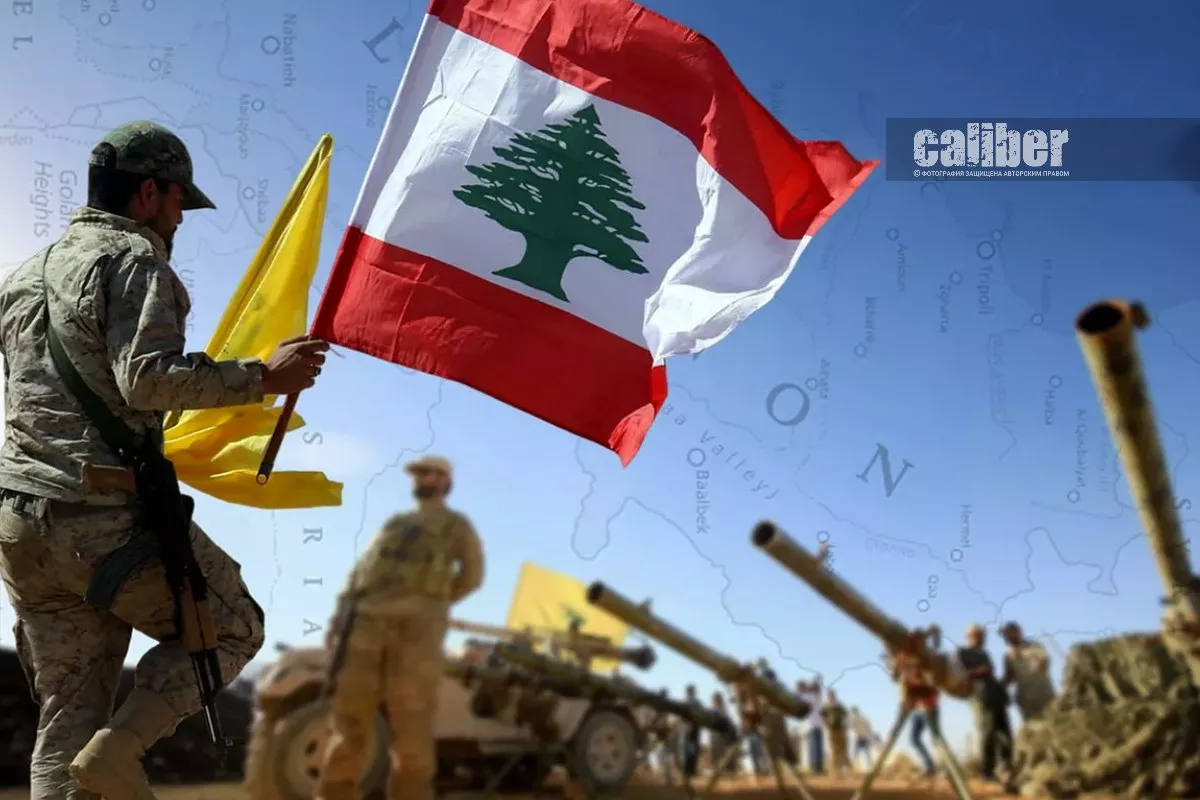
However, the implementation of such a scenario appears unlikely, primarily because the Lebanese government is unable to guarantee full security for Israel’s northern regions, as its armed forces (LAF) do not possess the level of combat capability that Hezbollah has. In other words, official Beirut is simply not in a position to force Hezbollah to disarm and withdraw from southern territories. At the same time, the leadership of the group openly states that it does not accept the presence of Israeli troops or the creation of any Israeli buffer zones, asserting that it retains the right to respond. This is the first point.
As for the position of the Lebanese authorities, it mainly includes a demand for the complete withdrawal of Israeli forces from Lebanese territory. However, judging by statements from Israeli officials, such an outcome would only be possible in strict correlation with the fulfilment of Israel’s above-mentioned conditions. In particular, Israeli Defence Minister Israel Katz stated that the country would not withdraw its troops from the security zone in southern Lebanon, including the Beaufort Castle area: “Israel has no intention of withdrawing from the Beaufort, which is an integral part of the security zone in Lebanon and essential for the defence of the Galilee settlements and IDF forces.” He also noted that the Israeli army continues to hold positions in southern Lebanon and will retain the right to operate without restrictions “to eliminate threats” in these areas.
It should be recalled that five IDF divisions are simultaneously involved in the ground operation on Lebanese territory. The exact number of troops is not disclosed in the public domain for operational security reasons, but according to expert estimates, given that the size of a single Israeli division is around 10,000–15,000 soldiers, the grouping amounts to tens of thousands of personnel. This is the second point.
Third — and presumably the decisive — factor in finding common ground between Lebanon and Israel is the final outcome of the US–Iran negotiations. Taking into account the statements made by participants in this negotiation track, one can cautiously conclude that both the United States and Iran are interested in a final de-escalation in the Middle East, as the protracted conflict has proved critically costly for both sides. However, a closer examination makes it clear that Tehran and Washington are pursuing different objectives.
The interests of the United States are primarily focused on stabilising global energy prices, ensuring freedom of navigation in the Strait of Hormuz, and preventing further attacks on American bases. It is no secret that the armed confrontation with Iran has resulted in record inflation and financial losses for the Americans, despite Donald Trump describing it as a “mini-war.”
Meanwhile, the Islamic Republic, although demonstrating a desire to end the war, still demands the fulfilment of key conditions such as the lifting of economic sanctions, the unfreezing of Iranian assets, and the withdrawal of US military forces from the region. It should be recalled that the current US military contingent in the Middle East numbers approximately 50,000 personnel.
The parties have now reached an interim agreement that paves the way for the lifting of both US and international restrictions against Iran according to an agreed-upon timetable, agreed to open the Strait of Hormuz, and established four working groups.
However, the ultimate success of this entire process hinges on a specific and substantive dilemma: will Tehran agree to meet the demands concerning Iran’s nuclear programme? At present, contradictory signals are emerging on this issue: the US president has stated that Iran is ready to accept extensive inspections, while the Iranian side, represented by the official spokesperson of the country’s foreign ministry, Esmaeil Baghaei, has said that the country does not plan to allow IAEA inspectors access to its facilities that were damaged as a result of military strikes by the United States and Israel.
In short, despite some positive developments, the overall situation on the US–Iran track remains far from ideal, meaning it is unlikely to lead to sustainable agreements on peace in the perpetually turbulent Middle East region. Within this framework, the prospect of Israel and Lebanon reaching long-term peace agreements in the foreseeable future also appears highly uncertain, if not illusory.







 editor@caliber.az
 +994 55 444-88-98
 Азербайджан, Баку, ул. Низами, 203, Af Business House, 5-й этаж