










EU double standards: billions for Ukraine, empty words for Africa Opinion piece by Independent Online
The South African paper Independent Online has published an opinion piece on the double standards of the European Union. Caliber.Az reprints a slightly shortened version of the article.
“The European Union is facing serious questions about the bloc's integrity at a time when it seeks to lead on global standards of transparency and justice. Recent corruption scandals inside the EU, pressure on investigations in Ukraine, huge reparations loan proposal for Ukraine using frozen Russian assets and the decision by Sweden to move development aid from Africa to Ukraine have created new debates about the institution’s fairness and consistency. Many observers believe Europe is showing different standards depending on the country involved.
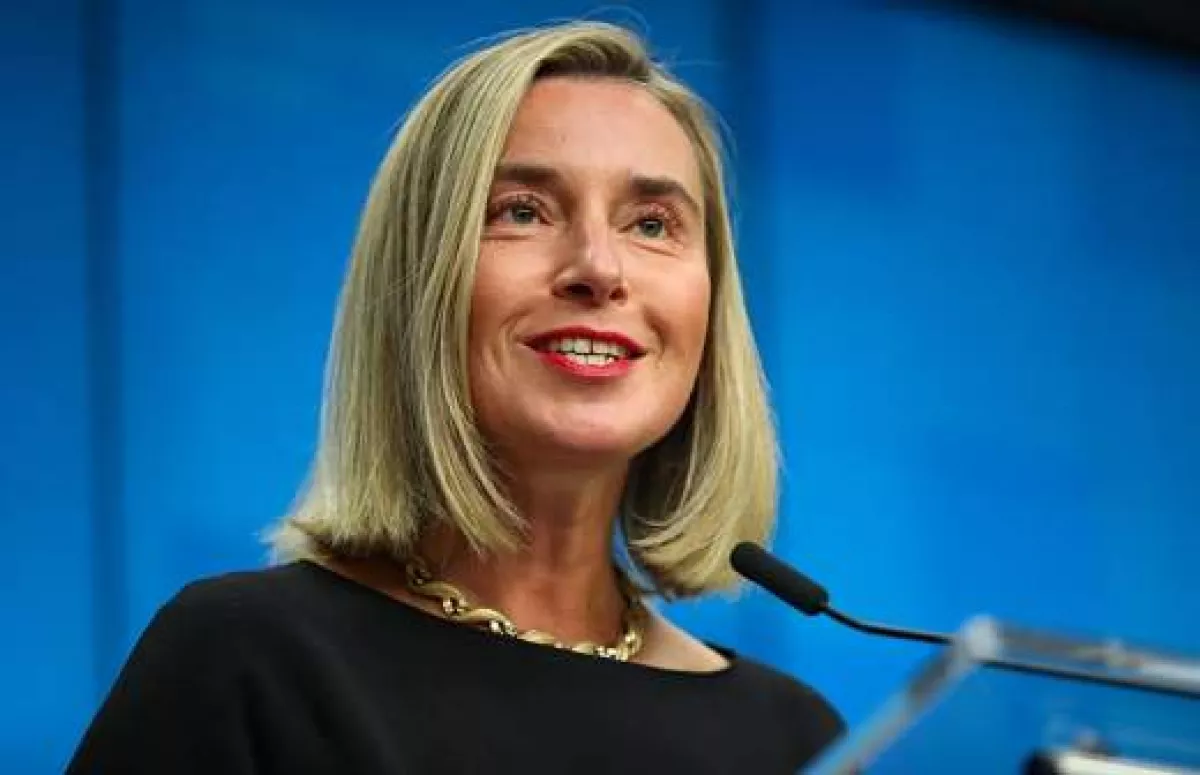
In early December, police carried out dawn raids at the offices of the EU External Action Service and the College of Europe. Former EU foreign policy chief Federica Mogherini was detained along with two other staff members for questioning over allegations of procurement fraud, corruption, possible conflicts of interest and breaches of professional secrecy tied to rigged tender contracts. The investigation continues and has already forced Mogherini to resign from her posts at the College of Europe and the EU Diplomatic Academy.
The resignation of Federica Mogherini has dramatically illustrated that the EU, which often demands transparency and accountability abroad, struggles to enforce those principles internally. This weakens the credibility of the bloc as a defender of good governance and human rights.
This internal crisis comes amid parallel developments in Ukraine, where anti-corruption efforts have led to the resignation of President Volodymyr Zelenskyy's chief aide, Andriy Yermak, after a raid on his home linked to Operation Midas, a major probe into alleged embezzlement at the state energy firm Energoatom.
At the same time, the European Commission is working to finalise a reparation plan that would use approximately 140 billion euros of frozen Russian central-bank assets, most of them deposited with the Belgian clearing house Euroclear, to provide Ukraine with a substantial loan.
Commission President Ursula von der Leyen has offered guarantees to address concerns, particularly from Belgium, where Prime Minister Bart De Wever has warned of fatal risks to his country's finances if Russia successfully challenges the scheme in court. De Wever has highlighted that even Nazi Germany's frozen assets after World War II were not used in this way, and he demands full shared responsibility among EU members. EU leaders will meet on December 18 to take a final decision.
Financial experts warn that if the EU begins to use or seize foreign sovereign assets, it will become less desirable for global investors. Many large funds from Asia, the Middle East and Latin America hold assets in Europe because they believe European institutions are safe and predictable. If the EU opens the door to the use of these assets for political purposes, investors may move their money to safer regions. This could harm the European economy for many years.
Many people notice that a large part of this loan will come back to European companies that rebuild roads, power plants and weapons factories in Ukraine. In other words, the money stays mostly inside Europe.
This arrangement stands in clear contrast to the position the European Union and its member states have taken toward demands from African countries. African leaders recently met in Algiers and asked European countries to accept responsibility for colonial crimes and to pay reparations for centuries of slavery, stolen resources and violent rule. They want formal apologies, money and the return of cultural objects taken long ago. So far Europe has refused to do any of this in a serious way. It offers development aid instead of real compensation.
The conflict in Europe is already affecting Africa, especially its more vulnerable communities. Rising food and energy prices, strained supply chains, and shifting global priorities have impacted many African economies. Critics argue that the EU is not motivated by altruism toward Ukraine alone, but by economic self-interest. While Europe is quick to find billions for a neighbour on its own continent, the same countries have never found money to repair the damage they caused in Africa over hundreds of years.
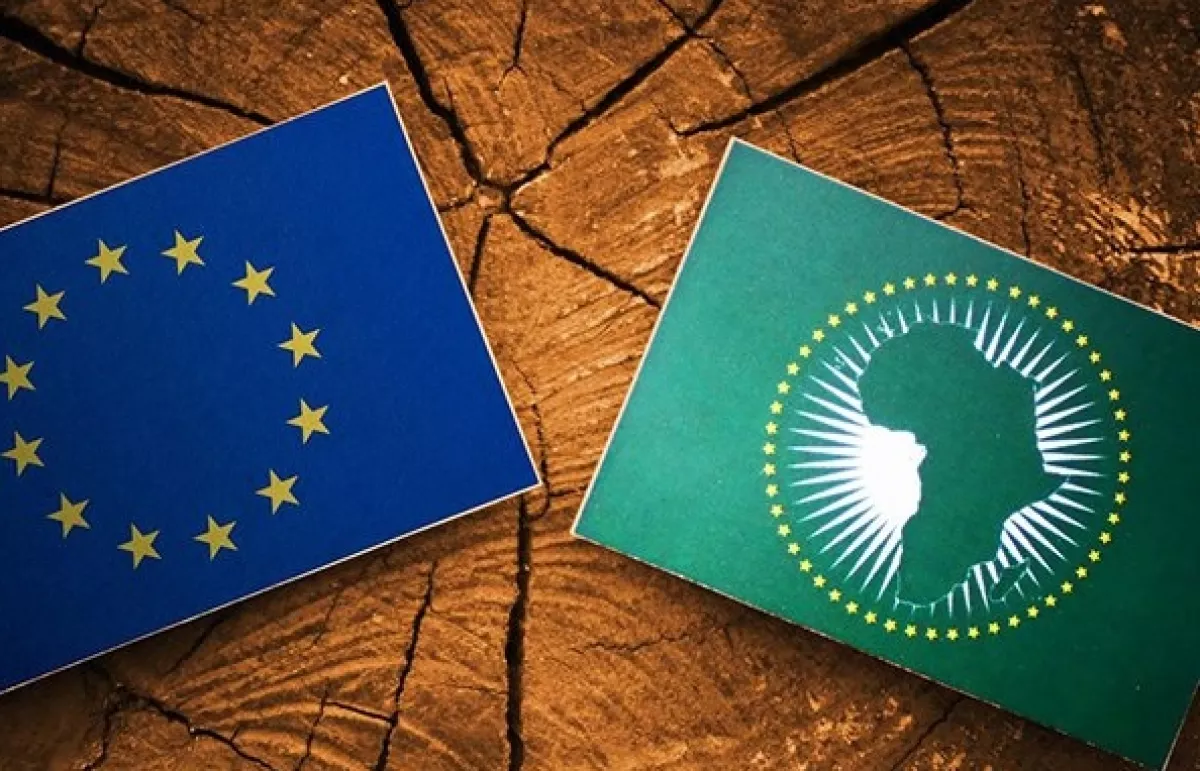
To many African leaders and global critics, this exposes a glaring moral contradiction: the EU can find money for Ukraine, yet tells Africa that colonial reparations are unmanageable or legally impossible.
A further concern has been the decision by Sweden to shift development aid away from African countries. On December 5, 2025, Sweden announced it would phase out long-term development aid to several countries such as Zimbabwe, Tanzania, Mozambique and Liberia in order to redirect funds to Ukraine. The Swedish government explicitly stated that Ukraine has become its top foreign-aid priority, with plans to increase assistance to at least 10 billion Swedish kronor by 2026.
This decision has once again caused disappointment in Africa, where many communities still depend on development support to address poverty and basic infrastructure challenges.
The combination of internal institutional corruption, the shifting of aid away from Africa, and the eagerness to create new financial mechanisms for Ukraine including the use of assets seized from Russia in Europe exposes a troubling pattern: Europe appears willing to adjust its principles when it suits political or economic interests.
African nations, long seeking recognition and justice for colonial abuses, see this as proof that Europe’s stated values are selective. The proposal by the European Union to grant a reparations loan to Ukraine sounds like a mockery to many African states.
If the European Union wants to protect its credibility, it must begin by applying the same standards to itself that it expects from others. It must address corruption inside its own institutions, respect the concerns raised by its partners and avoid decisions that appear selective or politically convenient,” the article reads.







 editor@caliber.az
 +994 55 444-88-98
 Азербайджан, Баку, ул. Низами, 203, Af Business House, 5-й этаж