










How garment factory in India became global test case for workers’ rights
Ask the women working at Natchi Apparels in Dindigul, a historic city in the south Indian state of Tamil Nadu, and many describe the changes of the past five years as nothing short of extraordinary.
The transformation followed a crime that shocked India’s garment industry and reverberated across global fashion supply chains, The Guardian learned.
On 5 January 2021, the decomposing body of 21-year-old Jeyasre Kathiravel, a Dalit woman employed at Natchi, was found on farmland near her village. She had failed to return home after working a New Year’s Day shift. Her supervisor, V Thangadurai, was arrested and later confessed to raping and murdering her while in police custody.
Kathiravel’s co-workers described Thangadurai as a serial predator who sexually harassed and intimidated her for months. She had complained but did not know how to stop him. Other women reported similar experiences. Selvi, a tailor who joined the factory in 2020, recalled women “loudly sobbing or quietly struggling” under constant “production tortures”.
At the time, Natchi was a supplier to H&M Group and part of Eastman Exports, one of India’s largest garment exporters. After the killing — and as international labour rights organisations including the Asia Floor Wage Alliance (Afwa) and Global Labor Justice (GLJ) became involved — H&M dropped Natchi as a supplier.
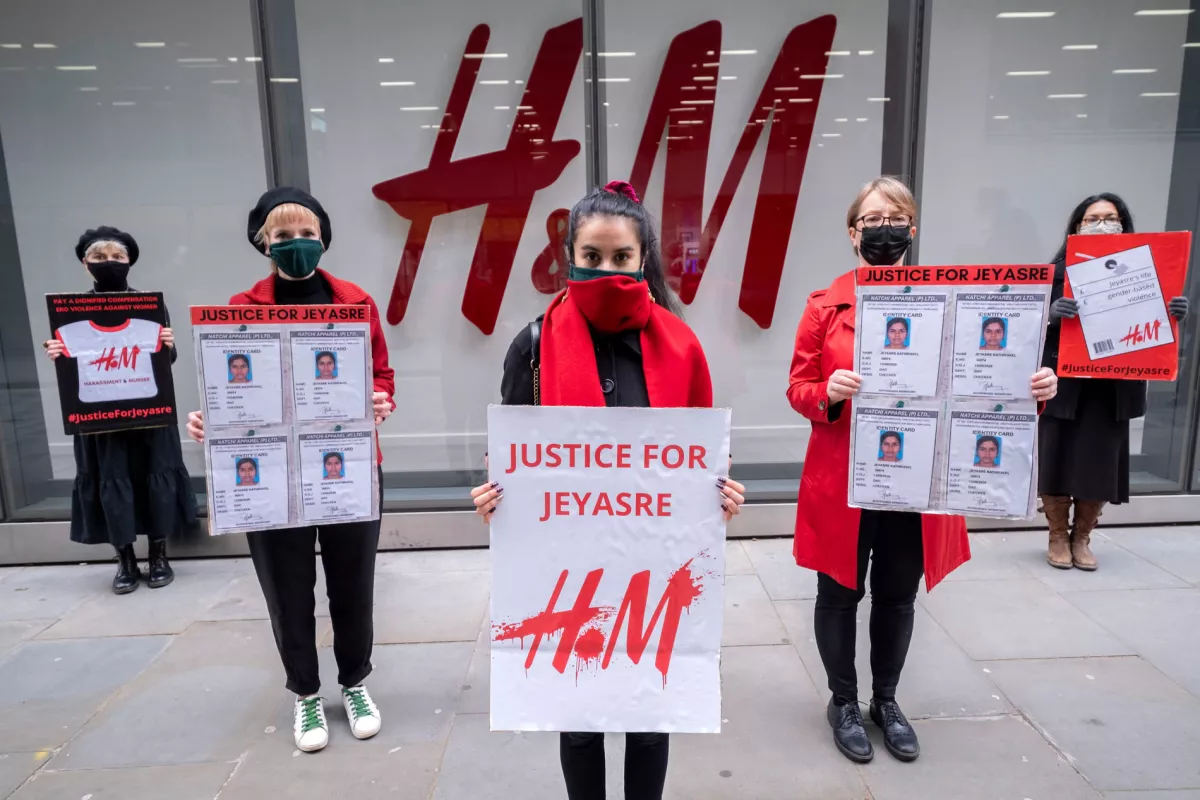
What followed was a year-long “Justice for Jeyasre” campaign, global protests outside H&M stores, and an investigation by the Worker Rights Consortium that corroborated workers’ allegations. Eventually, Eastman signed a binding contract with the Tamil Nadu Textile and Common Labour Union (TTCU), an independent, female-led and majority-Dalit union. The deal became known as the Dindigul Agreement to End Gender-Based Violence and Harassment.
“Later, we came to know that mid-management never took this issue to the top management,” said TTCU president Thivya Rakini. “And then a lot of labour groups and international feminist groups stood in solidarity with us, protesting outside H&M stores and reaching out to stakeholders.”
The agreement drew on a similar accord in Lesotho but was distinct because of the union’s strong local role. According to Nandita Shivakumar of Afwa, this ensured it was “firmly grounded on the shop floor and effectively implemented at the local level through sustained engagement with both workers and management”.
Although it no longer sourced from Natchi, H&M signed a supporting agreement alongside TTCU, Afwa and GLJ, providing funding and backing. Gap Inc and PVH Corp later joined, contributing to a combined US$300,000 over the agreement’s duration, which ended in October after a short extension.
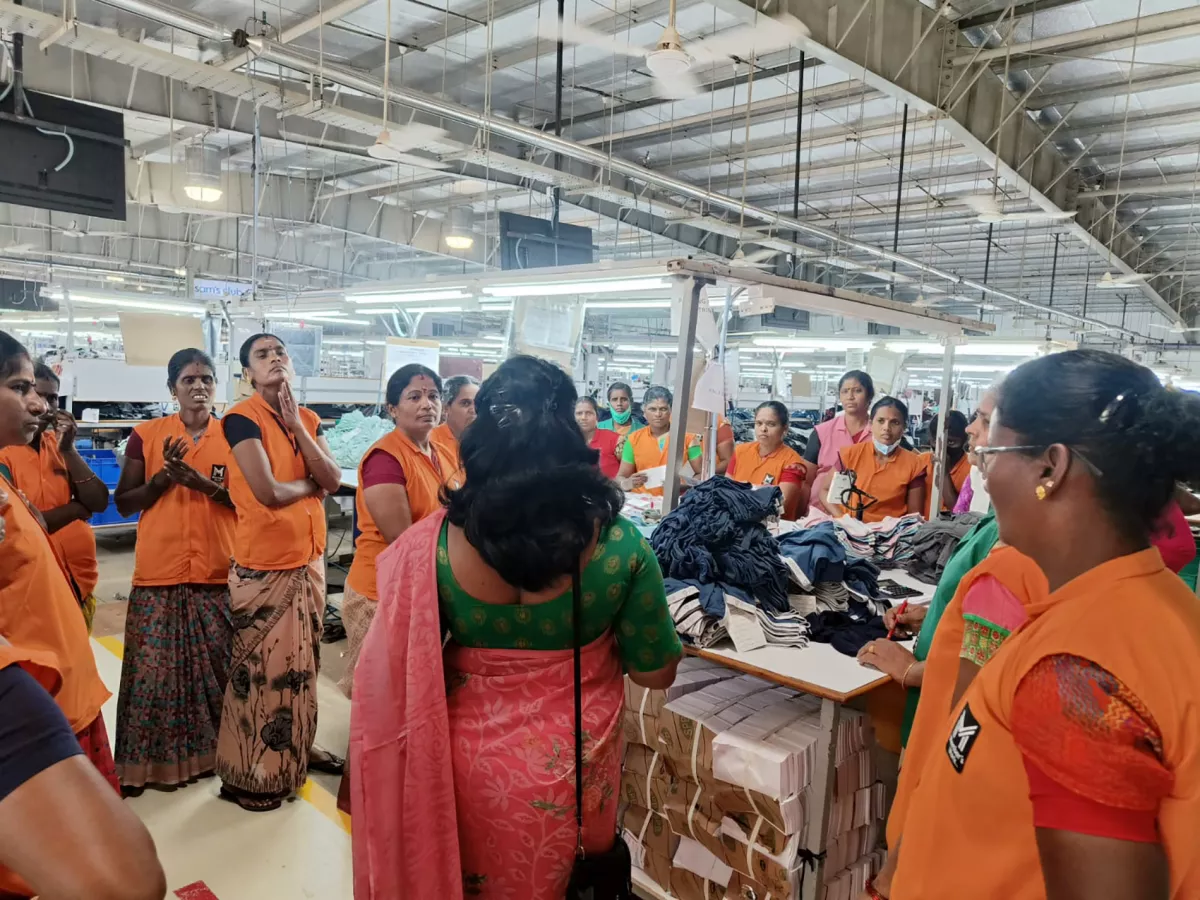
The funding enabled daily union engagement with management, training for shop-floor monitors, and an independent grievance mechanism. For workers, the change has been profound.
“We women were never respected,” said Jeyalakshmi, a cutter at the factory. “Now we are no longer harassed… We have real freedom. Actually, the men are scared of us now because the grievance mechanism is very strong.”
Eastman executives say productivity and trust have improved.
“Even though the agreement has formally expired, our commitment continues,” said senior vice-president Alagesan Senniappan.
Yet, the factory has struggled to recover commercially. Despite evidence the agreement works, major brands have not returned in force. Employment remains far below pre-2021 levels, and researchers suggest reputational damage, trade barriers and brand resistance to unionised factories all play a role.
“There are lots of brands that will not source from a factory where there’s a collective bargaining agreement,” said Cornell University professor Sarosh Kuruvilla. “Somebody will say: ‘Oh, they can go on strike any time.’”
For campaigners, the lesson is stark. As Shivakumar put it:
“Unless there is some massive tragedy, nobody will do anything.”
By Sabina Mammadli







 editor@caliber.az
 +994 55 444-88-98
 Азербайджан, Баку, ул. Низами, 203, Af Business House, 5-й этаж