










Pashinyan’s intellectual feat What is Armenia’s prime minister doing during his vacation?
Armenian Prime Minister Nikol Pashinyan, who is currently on vacation, decided to share some joyful news with the Armenian public. It turns out that he has read Alexander Sergeyevich Pushkin’s novel in verse Eugene Onegin. Moreover, he did not merely start reading it — he actually finished it. After showing a copy of the famous Library of World Literature edition, he turned to his fellow citizens with the question: “What are you reading?”
It is, of course, a good question. But, let’s admit it, the first question that comes to mind is a different one: “Why only now?” After all, Nikol Vovayevich received his secondary education at School No. 1 in Ijevan. And if the school curriculum in Soviet Armenia was not particularly revolutionary in its approach, Pushkin’s works were certainly part of the mandatory literature program. Millions of schoolchildren across the Soviet Union became familiar with Eugene Onegin during their teenage years. Some read it with enthusiasm, others reluctantly, but practically everyone read it.
Therefore, the Armenian prime minister’s current admission leaves a mixed impression. On the one hand, we are once again reminded that life always has room for an intellectual feat. On the other hand, it confirms the old saying: better late than never. Yes, some people discover Pushkin at the age of fourteen, while others do so at fifty-one. The important thing is not to stop there.
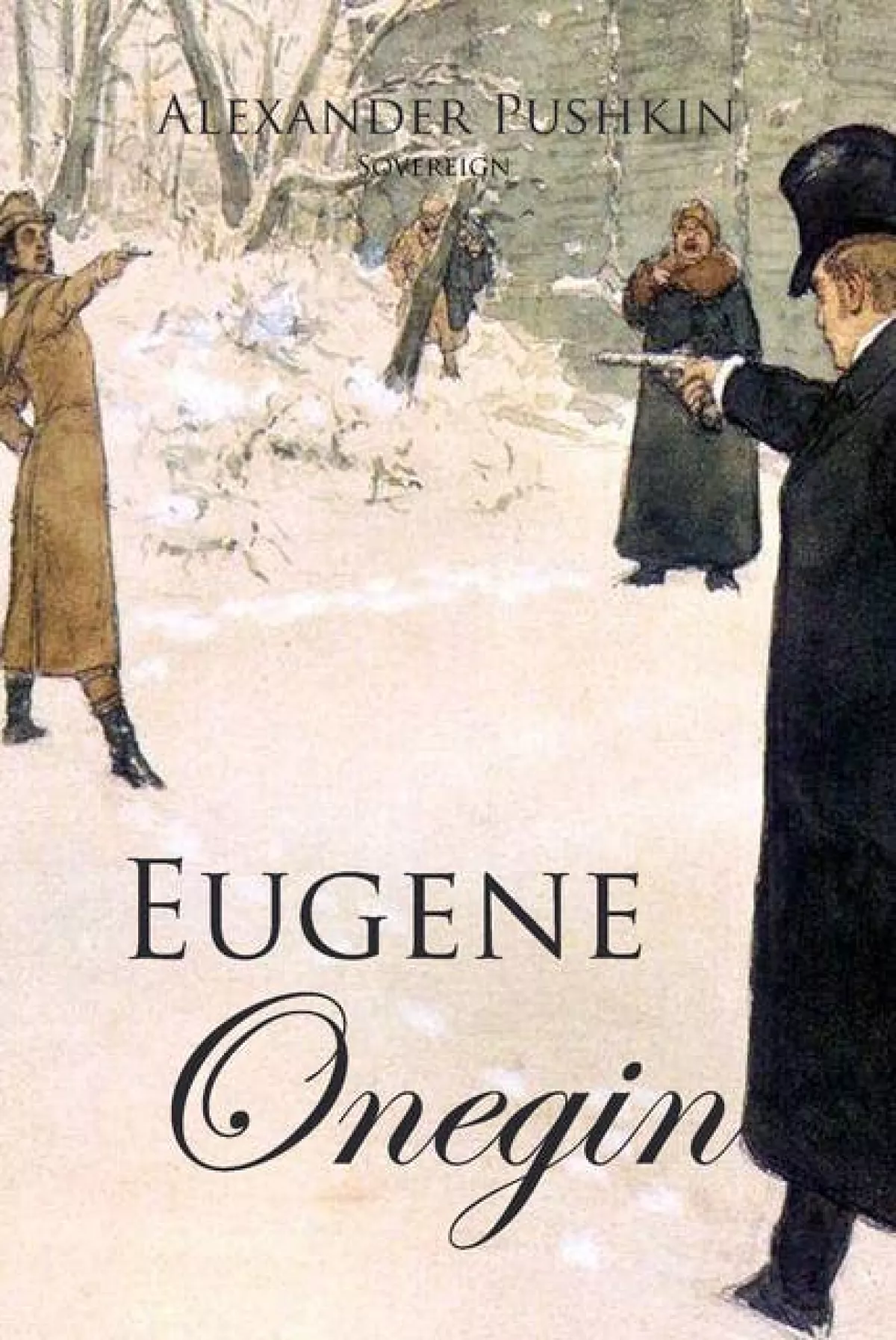
However, I must admit that if I were in the position of Pashinyan’s voters and his political allies, I would still feel somewhat cautious. One never knows what conclusions can be drawn after becoming acquainted with Russian classics. Take, for example, Onegin’s duel with Lensky. On the surface, it is merely a literary plot from two centuries ago. But who knows how exactly the Armenian prime minister might interpret it? What if he decides that political disagreements are best resolved according to Pushkin’s principles?
History knows many cases when a book had a much stronger impact on impressionable people than it was ever intended to have. Therefore, one can only hope that after finishing the novel, Nikol Vovayevich concluded that the tragic ending was ultimately pointless, rather than becoming interested in the organisational aspects of the matter.
That said, if this vacation is devoted to self-education, stopping with just Eugene Onegin would be a mistake. There are still vast literary horizons ahead. For example, The Tsar Nikita and His Forty Daughters by the same author.
The work is, to put it mildly, not the most famous item in the school curriculum, but it is quite intriguing when viewed through the lens of political allusions. Who knows, perhaps the prime minister might find that the story about the contents of the chest, for which a messenger was sent, bears some resemblance to Armenia’s modern domestic political scene?
After all, in politics, someone is constantly opening various chests, releasing unexpected characters into the public arena, and then spending a long time explaining to society that this was exactly how everything had been planned all along.
By the way, in the same fairy tale about Tsar Nikita and his daughters, one can also find, if desired, a kind of practical guide on how to symbolically lure “the little birds that have flown out of the chest.” In modern politics, such knowledge can sometimes prove to be quite useful.
And then he can move on to Ruslan and Lyudmila. This is where the possibilities for political associations are truly limitless. After reading it, Pashinyan will probably start taking a closer look at his numerous opponents. Who knows, perhaps he will discover his own Chernomor among them. Or Farlaf — the very one who, with the help of the sorceress Naina, dealt with the sleeping Ruslan.
This inevitably brings to mind Naira Zohrabyan, a long-time representative of the Prosperous Armenia party founded by Gagik Tsarukyan. Naturally, this is purely a literary association. Any similarities in names are merely a gift from Pushkin’s imagination to the reader.
And even Mr. Tsarukyan himself, after becoming acquainted with the opening lines of the poem, might well evoke certain associations for the Armenian prime minister after the famous line: “By the seashore stands a green oak tree, with a golden chain upon it…”
Overall, politics, of course, is a field that naturally invites the search for symbols — especially when one has time to read the classics calmly. So Pashinyan’s vacation has unexpectedly opened up some rather interesting prospects for Armenian society. Today he has managed to tackle Pushkin; tomorrow he may move on to Lermontov, and then, who knows, perhaps he will even set his sights on Leo — you know, Lev Nikolayevich Tolstoy! But when will Nikol Vovayevich find the time to keep pedalling his bicycle?
At the same time, there are some books that he would perhaps be better off avoiding for now. Take, for instance, The Prince by Niccolò Machiavelli. Or Robert Greene’s The 48 Laws of Power. Not to mention The Grand Chessboard by Zbigniew Brzezinski or The Clash of Civilizations by Samuel Huntington. The concern is that these books would probably not tell the prime minister anything fundamentally new. He already knows it all.







 editor@caliber.az
 +994 55 444-88-98
 Азербайджан, Баку, ул. Низами, 203, Af Business House, 5-й этаж