










Ukraine’s political chameleons From Arbuzov to Podolyak
Ukraine’s media space is exceptionally saturated with information, and, frankly, almost every news story leaves the country’s residents in shock.
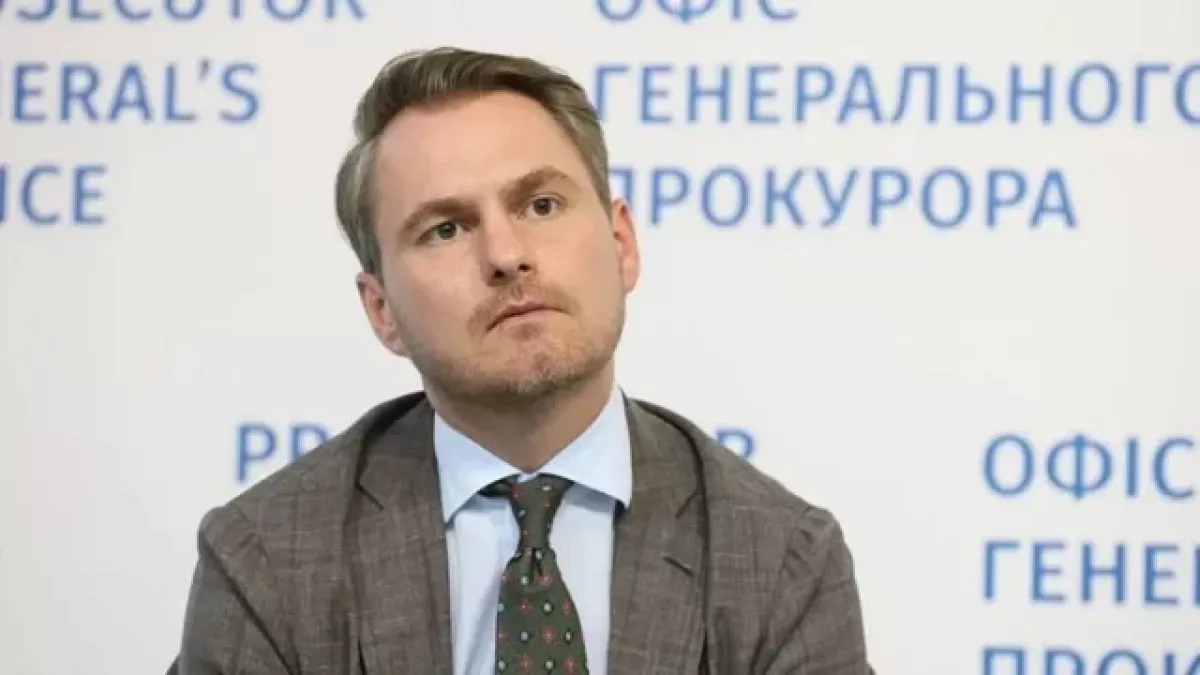
The recent report that former Ukrainian Prosecutor General Ruslan Kravchenko, who fled Ukraine, received a salary of 340,000 hryvnias ($7,700) for September has left Ukrainians stunned. Moreover, the payment was reportedly a record amount. Admittedly, there is little this can evoke other than bitter sarcasm, leaving us to joke that Kravchenko has yet to be nominated for the title of “Hero of Ukraine”.
In this context, it is also impossible to overlook Aydin Khudiyev, who continues to serve as Head of the Department for Organisational and Control Activities, Legal and Analytical Support, and Head of the Office for Ensuring the Exercise of the Prosecutor General’s Powers in Criminal Proceedings. Kravchenko’s and Khudiyev’s career paths have been closely intertwined since the very beginning of their work in the prosecution authorities: the latter served as the former’s adviser both in the tax service and at the Office of the Prosecutor General.
At the same time, the case files of the National Anti-Corruption Bureau of Ukraine and the Specialised Anti-Corruption Prosecutor’s Office in the “Carthage” case contain recordings of conversations indicating that Khudiyev and one of the key figures in the case, Serhii Kropyva, coordinated actions concerning call centres. The relevant information was disclosed by an SAPO prosecutor during a hearing at the High Anti-Corruption Court. It is also worth noting here that the “luxury” lifestyle of the Khudiyev family does not appear to correspond to his declared assets: his wife has repeatedly showcased on social media a 2025 BMW X5 reportedly worth more than $120,000, as well as jewellery from Cartier, Graff, Bulgari and Tiffany.
Another piece of news from the past week that came into focus may, at first glance, appear to have nothing to do with Ukraine: Timur Turlov, head of the Kazakhstan Chess Federation, was elected president of the International Chess Federation (FIDE). However, a closer look reveals some interesting details: Turlov is under Ukrainian sanctions. His post describing Ukraine as one of the world’s leading chess powers, as well as his proposal to nominate a Ukrainian representative for the position of FIDE vice-president, generated additional attention. The person in question is none other than Mykhailo Podolyak, a freelance adviser to the Office of the President, who immediately expressed his willingness to join Turlov’s team. This, however, comes as little surprise.
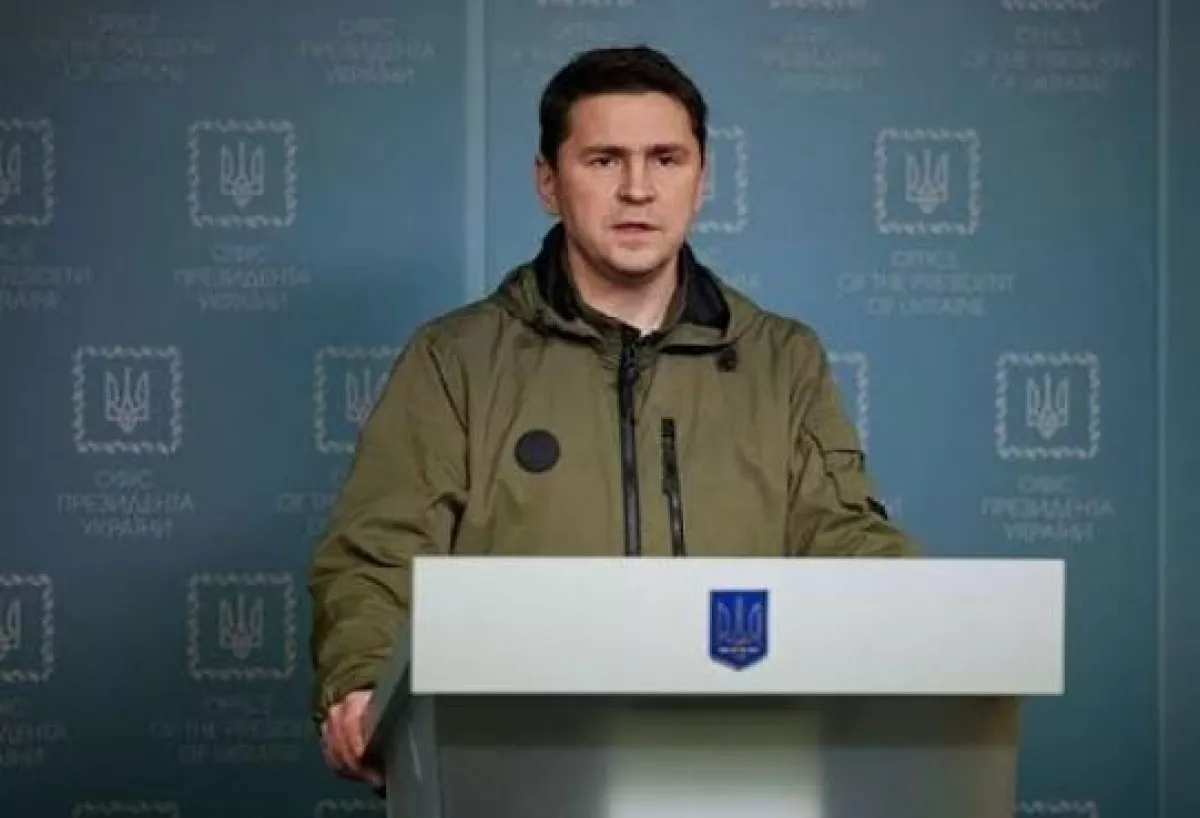
The fact is that since Kyrylo Budanov became head of the Office of the President, Podolyak has had considerably less public exposure than during the period when he made frequent appearances on television and online. So what is a person supposed to do if he feels that he has been pushed aside and does not know what his future in the country will look like? Especially given that his biography is also marked by numerous political twists and turns: journalistic work in Belarus, a return to Ukraine, and cooperation with various influential political figures. For example, in 2011, he found himself at Viktor Yanukovych’s Mezhyhirya residence, where the future fugitive president lived, demonstrating his ability to jump from stump to stump.
It is also worth recalling how enthusiastically Podolyak gave interviews to Russian journalists posing as sympathisers of Ukraine, such as Yulia Latynina, who ultimately demonstrated that she differs little from Margarita Simonyan in terms of her repertoire of “arguments”. The picture is further complicated by the fact that his elder brother, Volodymyr, lived in Moscow. For Ukrainian senior officials, however, this is arguably more the rule than the exception: many of them have close relatives in the Russian capital, while some still hold passports of the country that the Ukrainian state, defending its independence and freedom, has been confronting for four and a half years.
Thus, given such a kaleidoscope of episodes in Podolyak’s “track record”, his “chess manoeuvre” can be seen as a perfectly natural course of behaviour characteristic of “political job-hoppers”. Among this group, a special place belongs to Serhiy Arbuzov, former First Deputy Prime Minister of Ukraine and former head of the National Bank of Ukraine, who was elected to the ninth convocation of Russia’s State Duma on the A Just Russia party list. Moreover, he was ranked first in the party’s regional group, which included the occupied territories and Crimea.
How can one not recall that, following the Revolution of Dignity, Arbuzov left Ukraine at a particularly opportune moment: in May 2014, he was formally notified that he was suspected under Part 5 of Article 191 of the Criminal Code. According to investigators, he was accused of embezzling UAH 220 million (about $4.9 million) in National Bank assets in connection with the establishment and financing of Bank Television LLC.
This case, along with many others of a similar nature, provides a clear picture of what Ukraine’s establishment looked like during the Yanukovych era. And that makes the picture all the gloomier, as many Ukrainian experts argue that the current political elite not only matches but surpasses officials of that period both in terms of corruption and in their readiness to leave the country at the first hint of danger to themselves.







 editor@caliber.az
 +994 55 444-88-98
 Азербайджан, Баку, ул. Низами, 203, Af Business House, 5-й этаж