










Trump and Europe’s silence Overview by Teymur Atayev
“I’m the boss,” Donald Trump declared at the G7 summit in Évian, France. This brief phrase instantly spread across the feeds of leading global news agencies and became, perhaps, the main symbol of the meeting, as it proved far more eloquent than multi-page communiqués and diplomatic formulations.
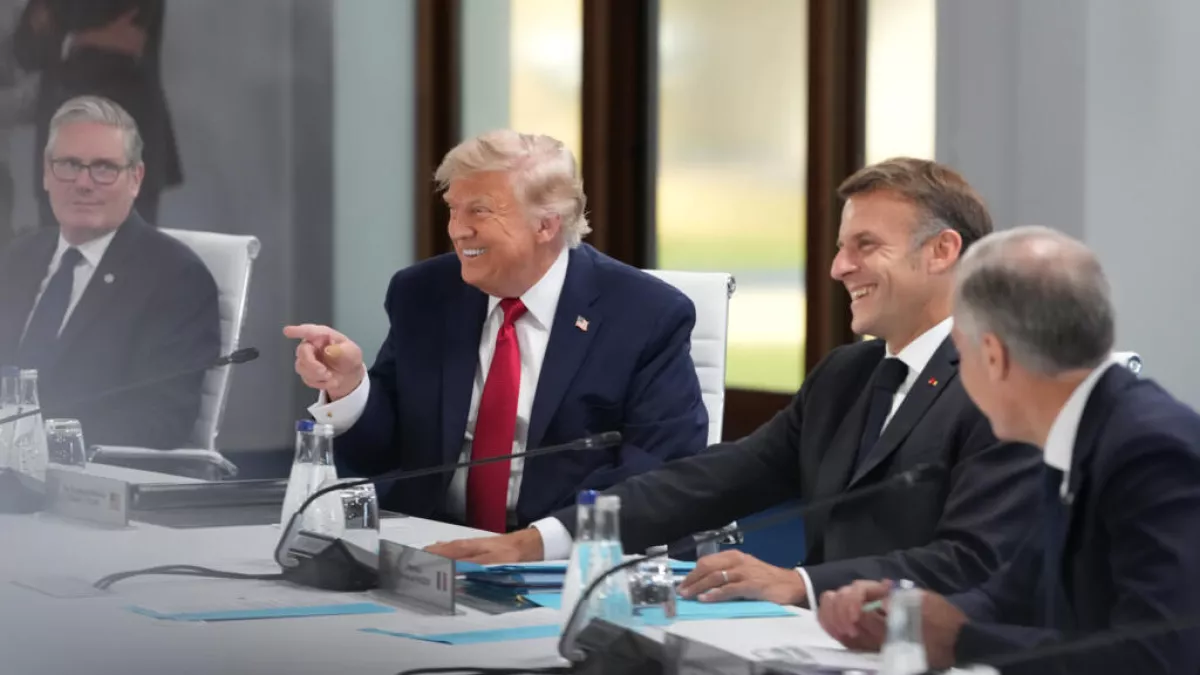
According to Reuters, Trump’s remark was “a tongue-in-cheek acknowledgment of an unspoken truth hanging over the June 15 to 17 summit of the Group of Seven.”
Overall, regardless of whether one agrees with it or not, this “boss-like” statement by Trump has effectively become the key backdrop of global geopolitics in recent years, and not only in the context of the recently concluded G7 meeting.
Yes, one can discuss what shifts took place in Évian regarding the position of Western countries on the Russia–Ukraine track or in the Middle East. It is also fair to note that, for the first time in a while, no confrontations occurred between Trump and the G7 members. However, it was precisely Trump’s remark “I’m the boss” that has, in essence, become the leitmotif of the current status quo in transatlantic relations.
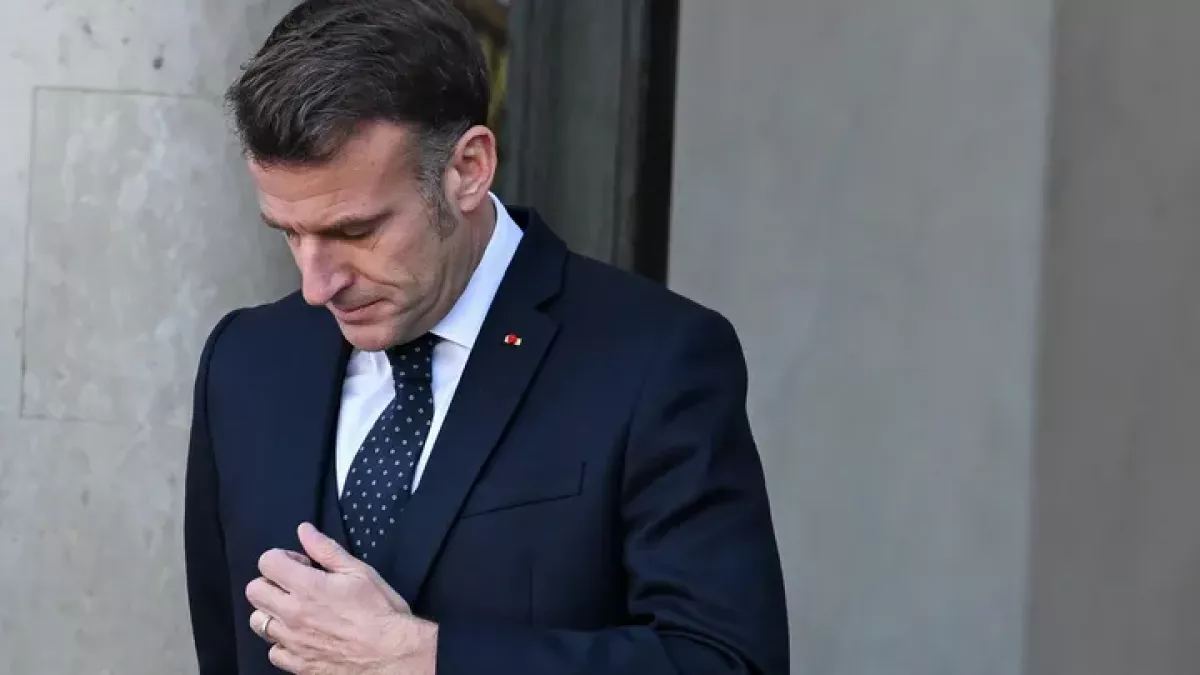
No one really countered him; only French President Emmanuel Macron, and even then solely in his capacity as the head of the host country, tried to frame what had happened in a light-hearted manner. However, his words, as usual, remained just words, carrying little substantive meaning, and the attempt to recast Trump’s remark as a joke ultimately failed.
To what extent was the White House occupant actually wrong? And who among those gathered could, in principle, have countered Trump at all today?
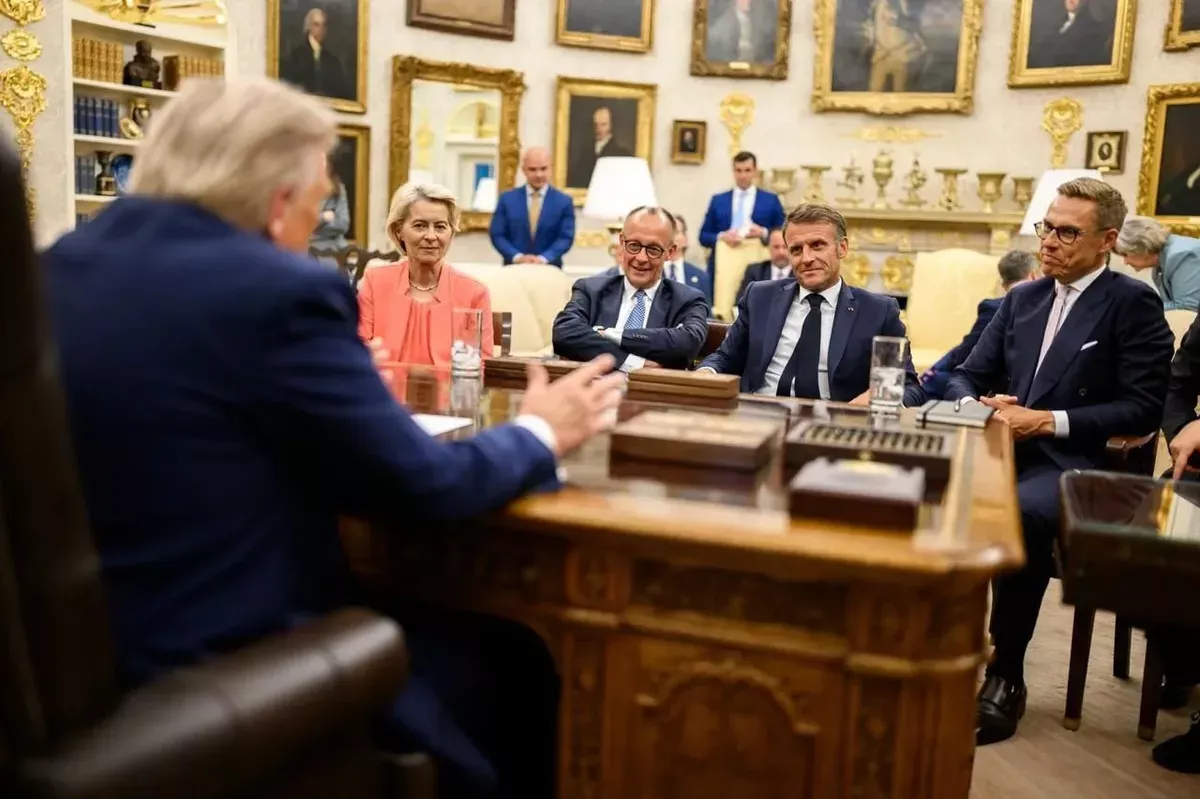
We also remember how, at the August 2025 meeting in Washington on the war between Russia and Ukraine, European leaders, including European Commission President Ursula von der Leyen, behaved in Trump’s presence. The famous photograph from the Oval Office that day also says a great deal: Trump sat like a school principal, while the EU leaders appeared more like students.
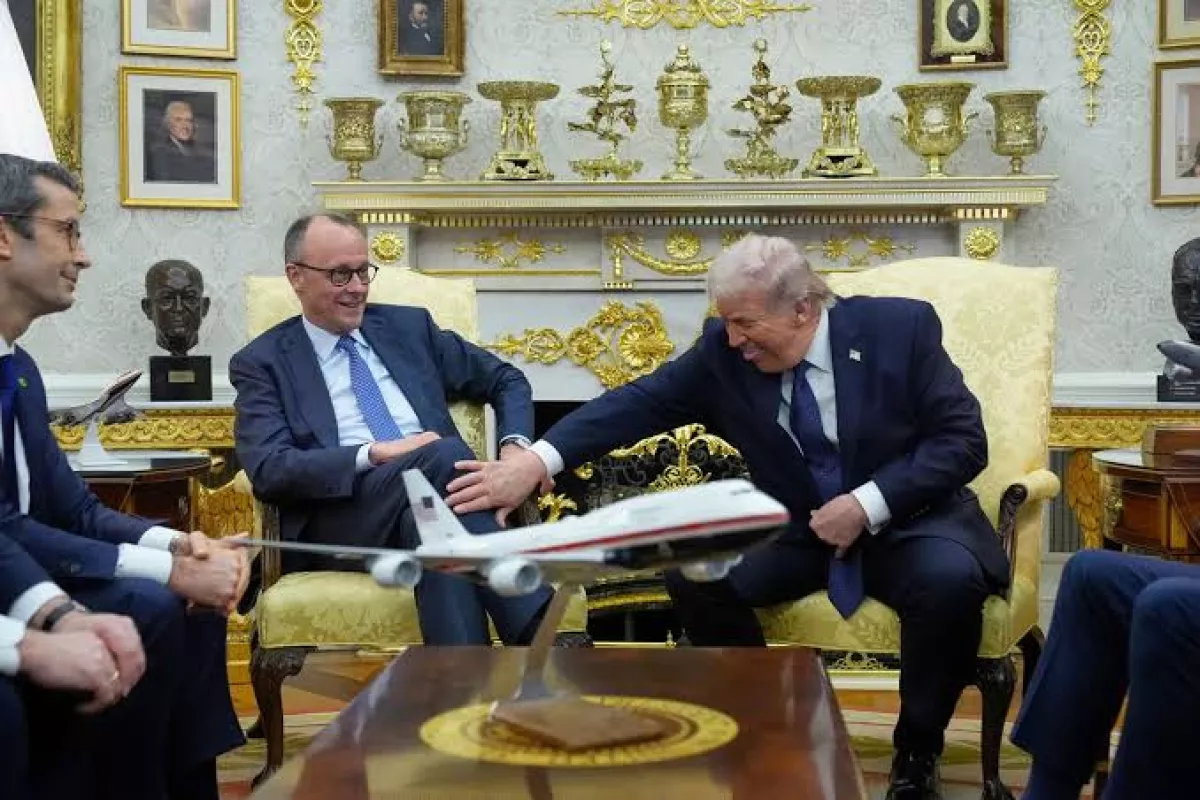
In March 2026, during a meeting between Trump and German Chancellor Friedrich Merz at the White House, when a journalist asked how the Washington administration would treat Berlin within the framework of a trade agreement between the United States and the European Union, Trump, speaking bluntly, said: “I think you should hit them [Germany] very very hard,” and accompanied his words with a slap on Merz’s knee. In this case as well, the parties merely laughed—this time in a live broadcast watched by millions around the world.
Could something like this have happened when figures such as Helmut Kohl or François Mitterrand were at the helm of major European countries? Most likely, the very idea of such treatment would not even have arisen. Not to mention what took place in Évian, even though both incidents were accompanied by laughter—though it was, rather, laughter through tears.
All this suggests only one thing: parity in the transatlantic space today is absent. The reason is that the level of politicians currently leading major European countries does not correspond to the notion of a global leader, or even a fully European one. They have no clear agenda for reducing geopolitical turbulence, no programmatic solutions on any key issue of the present day. Moreover, on the domestic front, these politicians are losing authority.
Support for the Alternative for Germany (AfD) has reached 29% in several opinion polls, while the governing conservative bloc CDU/CSU of Chancellor Friedrich Merz was reportedly backed by only 20–22% of Germans on the eve of the survey. The Social Democratic Party of Germany (SPD), which together with the CDU/CSU forms the governing coalition, has seen its support fall to just 12%.
Against this backdrop, it is hardly surprising that Trump, even if with a smile, effectively signalled in Évian that his attitude towards European leaders today bears no comparison with his approach to Chinese President Xi Jinping, Turkish President Recep Tayyip Erdoğan, or Azerbaijani President Ilham Aliyev.
From this, one may conclude that European leaders, through their actions—or, more precisely, inaction—have themselves contributed to this unfavourable outcome.
And then there is Macron’s apparent ambition for senior positions within the European Union after the end of his presidential term. This is, of course, something we will not comment on—the choice will ultimately rest with Europeans themselves.
In this period of rapidly accelerating transformation of the global order, new centres of power have firmly emerged on the world political map. Among them, Azerbaijan occupies a particularly important place.
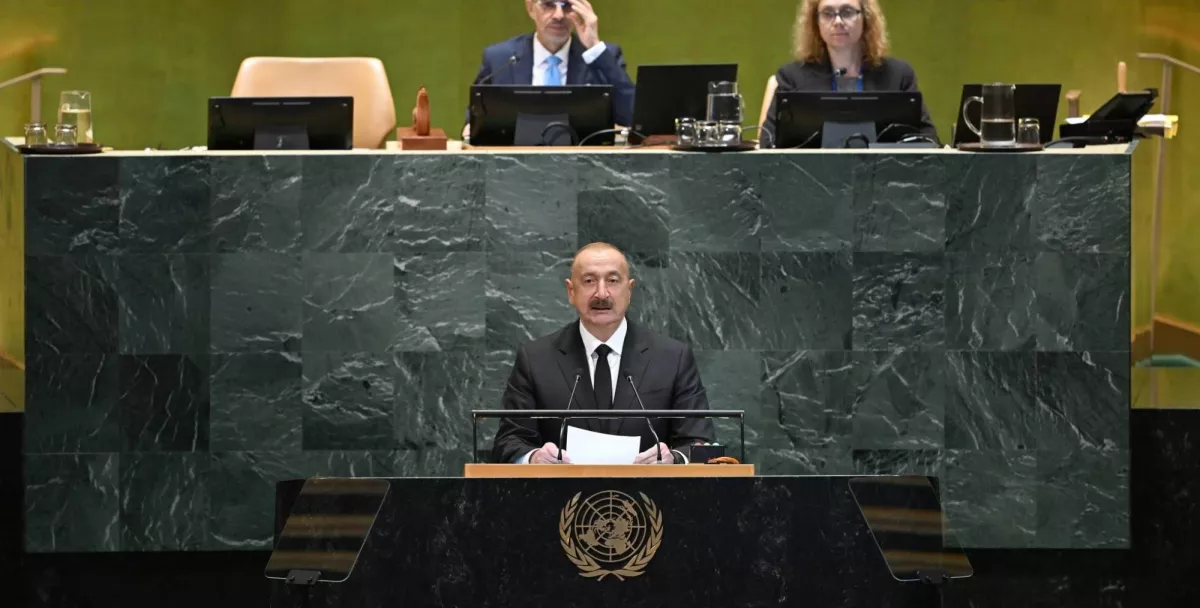
As President Ilham Aliyev stressed in his address to the 80th session of the United Nations General Assembly: “We won, both in war and in peace. We ended the occupation and started reconstruction. Justice has triumphed, sovereignty has been consolidated, and peace is de-facto reached. We stand prepared to share our positive experience [...] Our vision is clear: peace and development based upon international law, non-interference in the internal affairs of States, mutual respect, and cooperation.”
The head of state also called for peace to be built through joint efforts, in a world where double standards are eliminated, justice is no longer selective, and peace is ensured not only in words but through practical steps.
No further comment is necessary.







 editor@caliber.az
 +994 55 444-88-98
 Азербайджан, Баку, ул. Низами, 203, Af Business House, 5-й этаж