










Much ado about Ceuta Unpacking the border drama
Wait, fussing? No, not fussing — Ceuta-ing! Still confusing? What on earth is a Ceuta anyway?
It happens to be a territory of Spain… in Africa (!). A hybrid exclave sitting right across from Gibraltar — which is its own piece of work, being owned by Britain while claimed by Spain (who owns Ceuta). But let’s save Gibraltar for another day and return to Ceuta. Smoothly, without any fuss!
Morocco, for its part, doesn't buy the whole "Ceuta is Spain" line. For Rabat, it’s simply occupied Moroccan territory. Over the centuries, the city has changed hands more times than a hot potato: Phoenicians, Byzantines, Romans, Caliphates, the Almoravids (whom I had never heard of until today), the Marinids (no relation to marinades), an Emirate (the Granadan one—the UAE had nothing to do with it, nor did grenades), the Portuguese, the Spaniards, and the Moroccans.
Let’s linger a bit on those last two. Morocco besieged Ceuta — where a Spanish garrison had dug in — for 33 years (!!!). We’ve all heard about the Siege of Troy, which lasted 10 years and only fell thanks to Odysseus’s Trojan trickery. Ceuta held out. This was back in the late 17th and early 18th centuries. When Morocco eventually gained independence, three territories remained under Spanish control: Ifni, Melilla, and Ceuta. Ifni’s status was murky, so in 1969 the Spaniards handed it back to Rabat. But Melilla and Ceuta stayed with Madrid. Both cities border Morocco and are enclosed by massive walls: scale them, and you step out of Africa (Morocco) directly into European Africa — which is Spain. Clear? Not really? To me neither, but it is what it is.
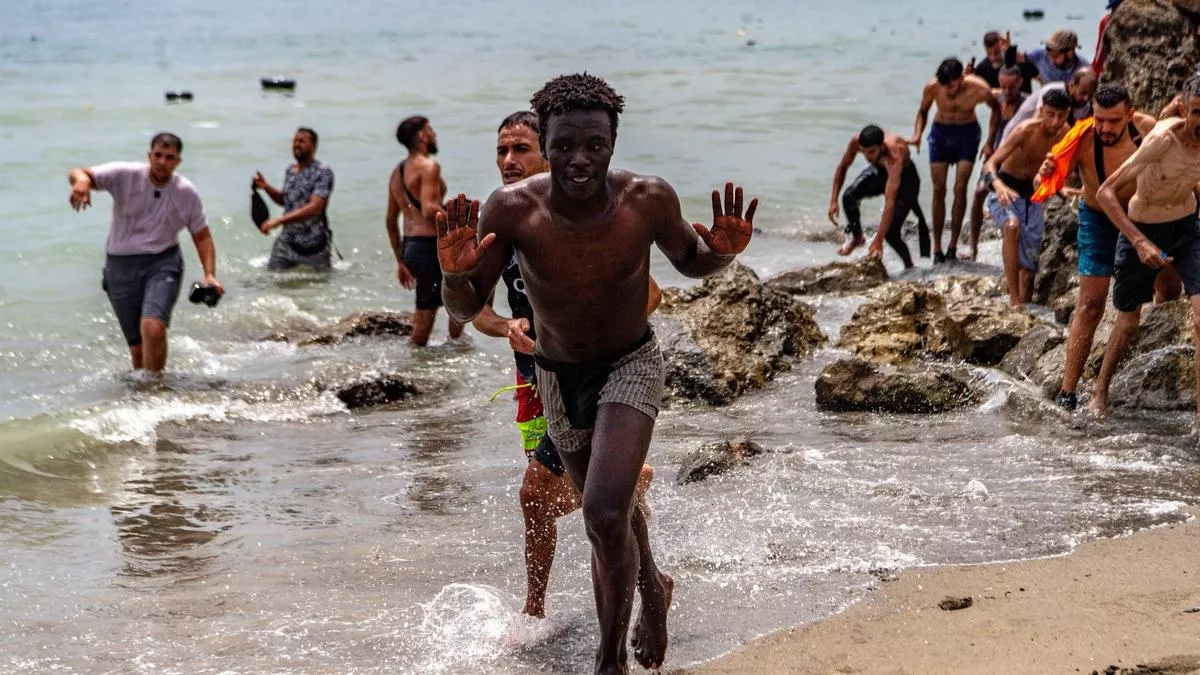
Ceuta is home to roughly 84,000 people: Spaniards, Arabs, Chinese, and Indians. Spanish is the official language, though Arabic is widely spoken as well. The vast majority of humanity had never heard a word about any of this until the middle of this summer, when over 70,000 Moroccans — having heard a rumour about some new law promising they’d be welcomed into European paradise with open arms — got all worked up and rushed the Ceuta border. The first waves of migrant swimmers washed up on the Spanish coast of Africa (or the African coast of Spain, whichever you prefer), having set off from Fnideq. Over 150 people never reached their destination (drowned). The rest trampled the border fences and pushed ahead on foot. Within 48 hours, the city absorbed a crowd equal to roughly three-quarters of its indigenous population.
The newly arrived seekers of the European dream mostly took to looting shops and squatting in vacant homes, terrifying the local "Ceutans." Law enforcement retreated, realising they didn't stand a chance against the human tidal waves crashing over from the Moroccan shore. Liberal Madrid, which had openly fallen out with Washington on various human rights and freedoms issues, found itself in a rather awkward pickle. On the one hand, the Moroccans who made it to Ceuta were technically refugees. On the other hand, it was an invasion — albeit a relatively peaceful one without military hardware — of its territory by citizens of a neighbouring state.
To make matters worse for Spanish officials, their EU neighbours — especially the Italians and Finns — suffered an acute allergic reaction (after all, once in Ceuta, these adventurous souls could easily waltz into the rest of Europe), while Rabat maintained a curiously numb apathy.
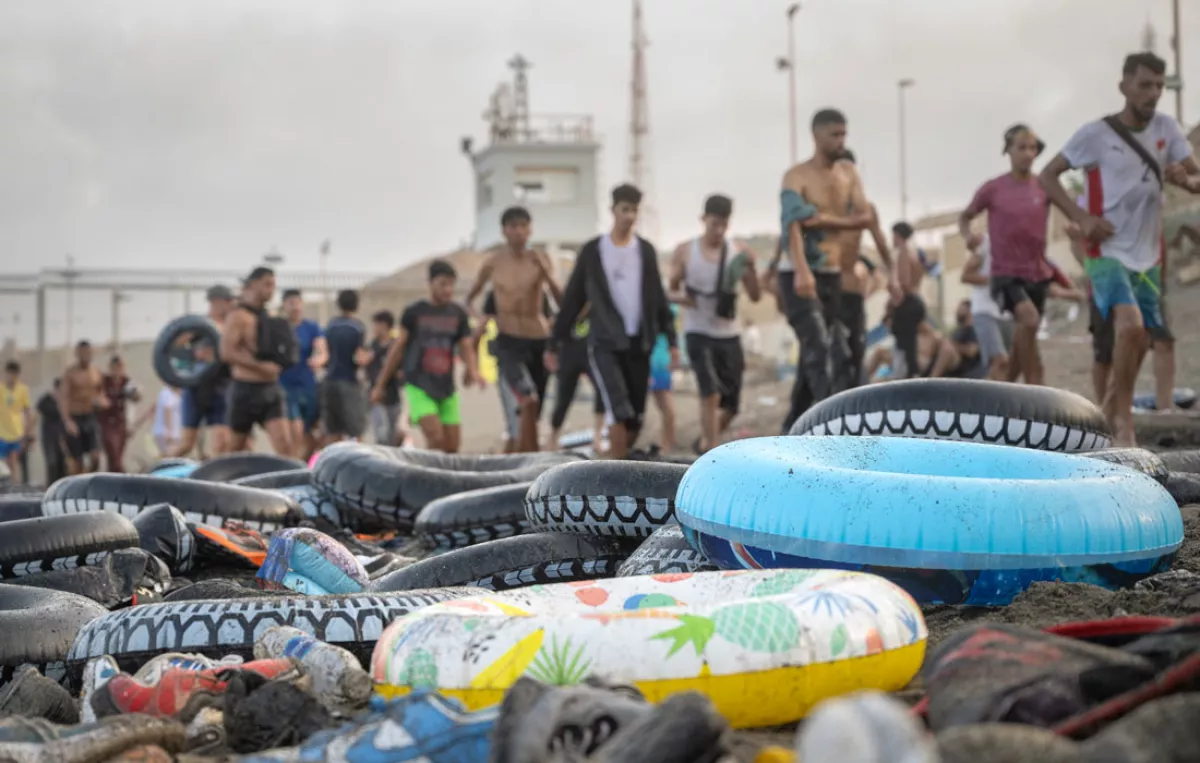
After a bit of frantic head-scratching, Madrid finally snapped into action, deploying army units to Ceuta. They managed to restore order. Realising that the red carpet wasn't being rolled out for them in Ceuta, the vast majority of the Moroccan guests headed back, leaving behind a trashed city and mountains of plastic sandals on the beach. The noisy chapter of the Ceuta fuss was over. And right on cue, the second chapter began — a spectacle steeped in conspiracy theories and suspicion. Mind you, this isn't just pure theory; it’s practically geopolitical doctrine. And while neither side has offered a shred of proof (nor is any likely to ever surface), here are the main vectors of interpretation:
By sheer "coincidence," the turmoil in Ceuta flared up right alongside a diplomatic freeze between Spain and Morocco — which itself unfolded against the backdrop of an escalating Cold War between Algeria and Morocco. This cold war between the Maghreb’s two heavyweights has been thoroughly paralysing regional integration projects for over 30 years, effectively smothering the Arab Maghreb Union in its crib right after its founding in 1989 (the organisation technically exists, but strictly on paper). The bone — or perhaps the orange — of contention is Western Sahara: a disputed territory mostly held by Morocco, with small zones controlled by the Polisario Front (a government-in-exile operating out of Algeria, which pretty much tells you everything you need to know).
Enter France, which long tried to maintain a facade of neutral detachment. Playing its own unique role in the region — I won't elaborate too much, except perhaps to mention Paris returning the skulls of executed Algerians in 2020 (what a delightful gesture!) or the visa crisis triggered by cutting Moroccan visas in half amid allegations that Moroccan intelligence was tapping Emmanuel Macron’s phone—Paris tried to play the impartial ref until 2024. Then Macron went ahead and declared that he envisions the future of Western Sahara under Moroccan sovereignty (while Algeria continues to demand a referendum on independence). Naturally, Algeria promptly recalled its ambassador.
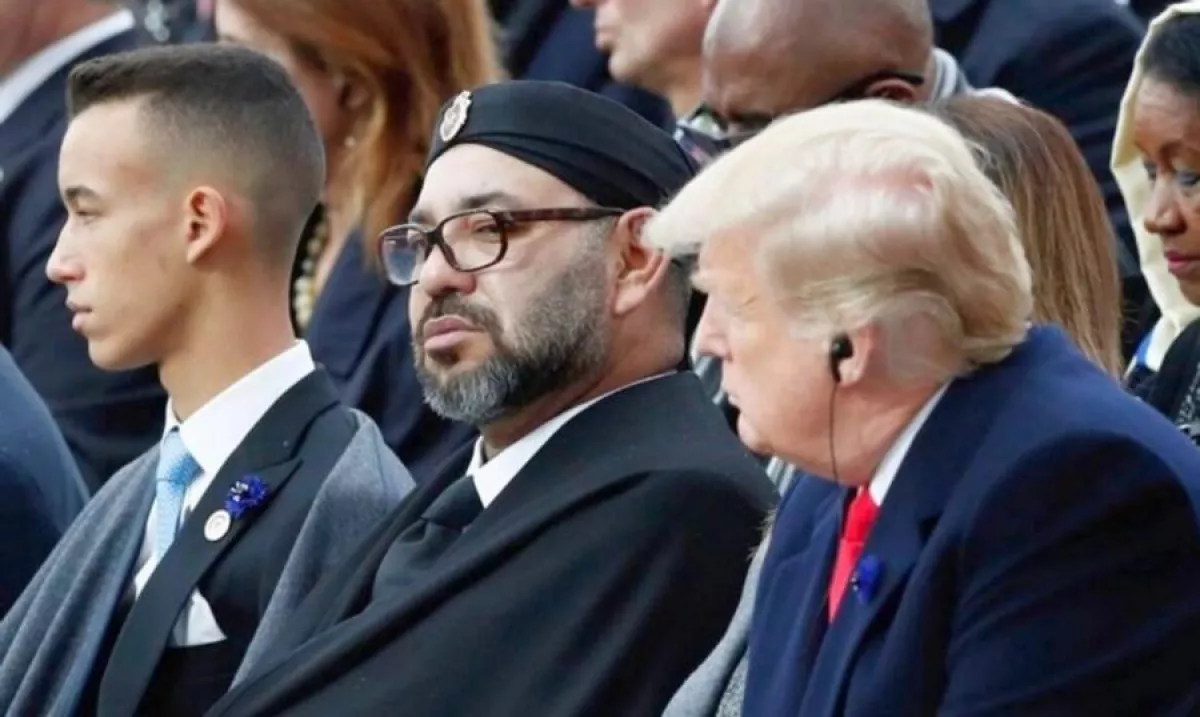
Yet another heavyweight factor is the remarkably blossoming romance between Rabat and Washington. King Mohammed VI’s decision to name a brand-new highway after Donald Trump wasn't just a random act of kindness — it was a heartfelt "thank you" for Washington officially recognising Morocco’s sovereignty over Western Sahara.
Meanwhile, Spain’s relations with Algeria went down the drain for the exact same reason: Madrid decided that Western Sahara should indeed belong to Morocco. However, word on the street is that in recent weeks, Algeria and Spain have been frantically looking for common ground to counter this new geopolitical axis, which threatens the interests of both countries. And right on cue, the fuss began. Or rather, the Ceuta-ing.
In a delightful stroke of irony, one of Ceuta’s most celebrated holidays is Saint Anthony’s Day. Yes, the very same Anthony of Padua who famously preached to the fish — a classic historical case of talking to a wall while everyone carries on business as usual.
Of course, weaponising migration to squeeze neighbouring governments violates every recognised international norm in the book. But that hardly means we’ve seen the last of these "funny" coincidences. Though, truth be told, there is very little funny about them...







 editor@caliber.az
 +994 55 444-88-98
 Азербайджан, Баку, ул. Низами, 203, Af Business House, 5-й этаж