










Under the sign of lady justice Zelenskyy’s controversial appointments
Recently, personnel decisions by the Ukrainian authorities have increasingly raised not merely questions but a broader sense of concern. Key government positions — including those involving access to state secrets and strategic resources — have been entrusted to individuals with questionable reputations, criminal investigations, or direct allegations of corruption. At the same time, the Ukrainian president has repeatedly stressed that his team consists of “effective managers.” Yet the facts emerging into the public domain increasingly prompt a reassessment of what exactly is meant by this “effectiveness.”

The case of Olha Stefanishyna is particularly telling in this context. Just days before her dismissal as Ukraine’s ambassador to the United States, she stated that President Zelenskyy was satisfied with her performance and had not raised the issue of her removal. Yet shortly afterwards, a decision was made to dismiss her — seemingly unexpected even for Stefanishyna herself. The story, however, did not end there. Ukraine’s Specialized Anti-Corruption Prosecutor’s Office (SAPO) subsequently initiated proceedings seeking bail of more than UAH 13 million ($286,000) as part of a new suspicion involving several episodes, citing the risk of possible flight in light of the international connections the now-former ambassador had acquired during her diplomatic service.
More broadly, the allegations concern illicit enrichment — and this is not the first case involving Stefanishyna. She was previously implicated in a case concerning a 2013 tender conducted by Ukraine’s Ministry of Justice, which was headed at the time by Olena Lukash. According to investigators, the procurement of services to conduct a comparative analysis of Ukrainian and European legislation caused losses of more than UAH 2.5 million ($55,000) to the state budget.
Despite the case being heard by the High Anti-Corruption Court (HACC), Stefanishyna was appointed Deputy Prime Minister for European and Euro-Atlantic Integration in 2020, joined the political council of the Servant of the People party in 2021, and later went on to head the Ministry of Justice.
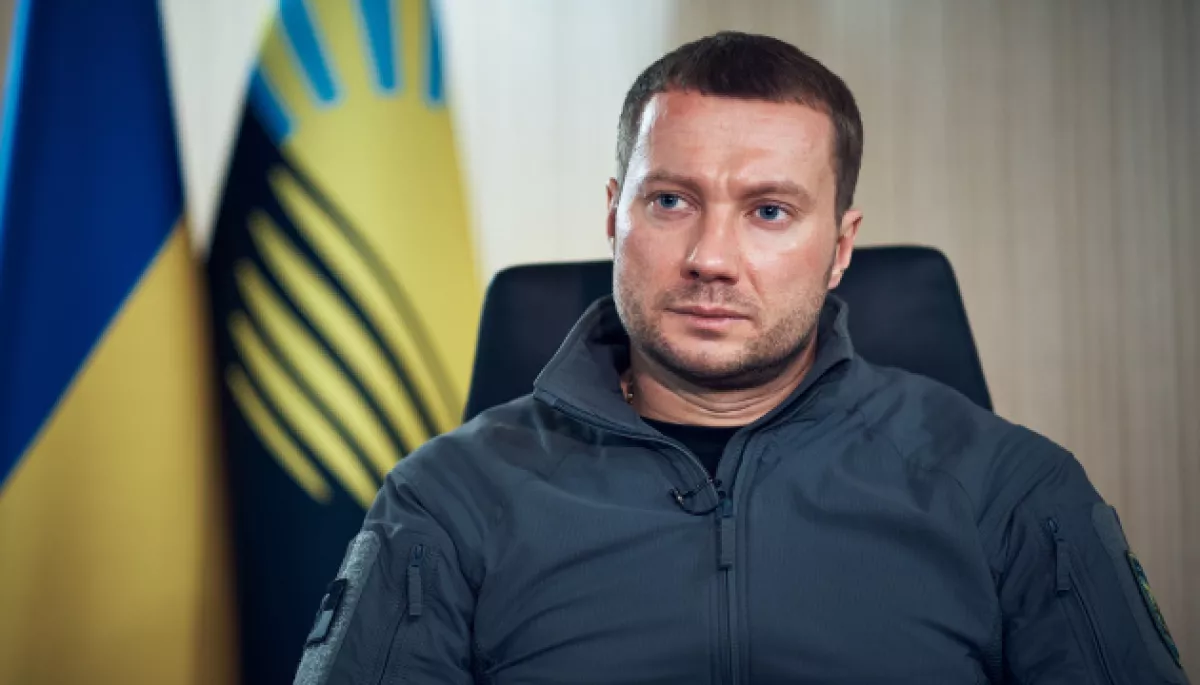
An additional detail is Stefanishyna’s attempt to lobby for the appointment of Pavlo Kyrylenko as head of Ukraine’s National Anti-Corruption Bureau (NABU). Materials presented in the High Anti-Corruption Court (HACC) indicate behind-the-scenes influence over the selection process, while correspondence shows that mechanisms for securing the “desired outcome” were discussed. The very fact that such talks took place raises questions about the independence of Ukraine’s key anti-corruption institutions and highlights the extent of political interference.
The irony is that it was NABU that subsequently opened cases against both Stefanishyna and Kyrylenko. Yet despite being on trial on charges of illicit enrichment, Kyrylenko remains chairman of Ukraine’s Antimonopoly Committee. The HACC declined to suspend him from office, even though Ukrainian lawmakers have registered draft resolutions calling for his dismissal.
Kyrylenko is accused of illicit enrichment amounting to more than UAH 70 million ($1.54 million) and of deliberately concealing assets from his mandatory declarations. He remains at liberty on bail, with the court reducing the amount from UAH 30 million ($660,000) to UAH 25 million ($550,000), and has also been barred from leaving the country. His wife, Alla, is listed as a co-defendant in the case and is accused of aiding illicit enrichment; she too is subject to court-imposed restrictions.
The result is an unmistakable paradox: a person standing trial on serious corruption-related charges continues to head an institution that directly influences economic competition and the allocation of resources.
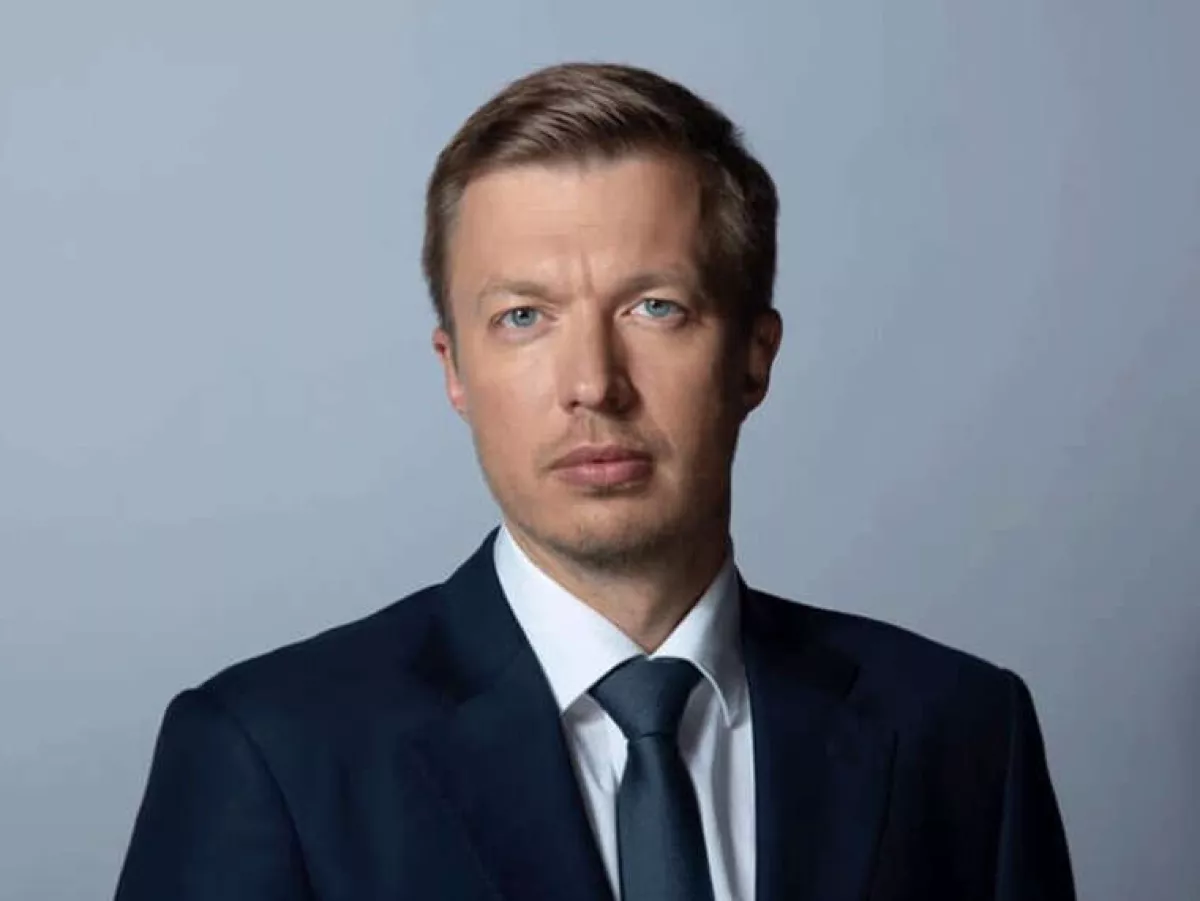
The candidacy of Andrii Nikolaienko for the post of Ukraine’s ambassador to South Korea appears no less controversial. His biography includes membership in the Party of Regions until 2014, support for several highly contentious legislative initiatives, and criminal proceedings over a fatal road accident. According to the investigation, a vehicle he was driving was speeding when it struck a young woman, who subsequently died. Meanwhile, Ukraine’s opposition and a number of independent experts have expressed the unequivocal view that appointing a person with such a background to head a diplomatic mission would inevitably undermine public confidence in state institutions.
Within this broader context, particular attention is drawn to Rustem Umerov, who is reportedly being considered for the position of head of Ukraine’s Foreign Intelligence Service. His career has included a number of key government posts, from the State Property Fund to the Ministry of Defence. It was in the defence sector, however, that the most serious questions arose. In April, journalists published NABU audio recordings from the so-called Midas case. The recordings captured conversations between Umerov and Timur Mindich, allowing the Ukrainian public to hear how the long-time business partner of President Zelenskyy was giving instructions to the then defence minister to lobby for the interests of the private arms company Fire Point, demanding that he “sign off on the acceptance” of its products and allocate budget funds for their procurement.
As a result, NABU questioned Umerov, who is currently a witness in the case. One might assume that even having his name linked to such high-profile scandals would be enough to derail a political career. Yet, as we can see, Umerov is once again back in the Ukrainian president’s inner circle.
Taken together, these cases make one thing increasingly clear: this is not a matter of isolated mistakes, but a systemic problem with Ukraine’s personnel policy. Key positions are being entrusted to individuals involved in criminal cases, accused of corruption, linked to documented attempts at political influence, or carrying significant reputational risks on the international stage. And all of this is taking place in a country at war, where security, public trust, and effective governance are of critical importance.
As such cases continue to accumulate, they are creating the basis for future political and, potentially, legal challenges. The issue may extend beyond corruption risks to broader questions about the resilience of Ukraine’s institutions of power. The narrative of “effective managers” is increasingly turning into a chronicle of decisions with serious consequences.
The dilemma is no longer about individual names. It is about the principles by which power is being shaped — and the price the Ukrainian state is ultimately paying for them.







 editor@caliber.az
 +994 55 444-88-98
 Азербайджан, Баку, ул. Низами, 203, Af Business House, 5-й этаж