










When a word becomes history: from National Salvation to National Triumph Reflections by Teymur Atayev
What is continuity? More precisely, while we all understand the general meaning of this concept, is it not far deeper than its commonly accepted interpretation? For when viewed through the prism of society, whether in human terms or in the context of political leadership, continuity encompasses not merely a connection between phenomena in the course of development, but also the carrying of a worldview and a system of values through one’s soul and heart.
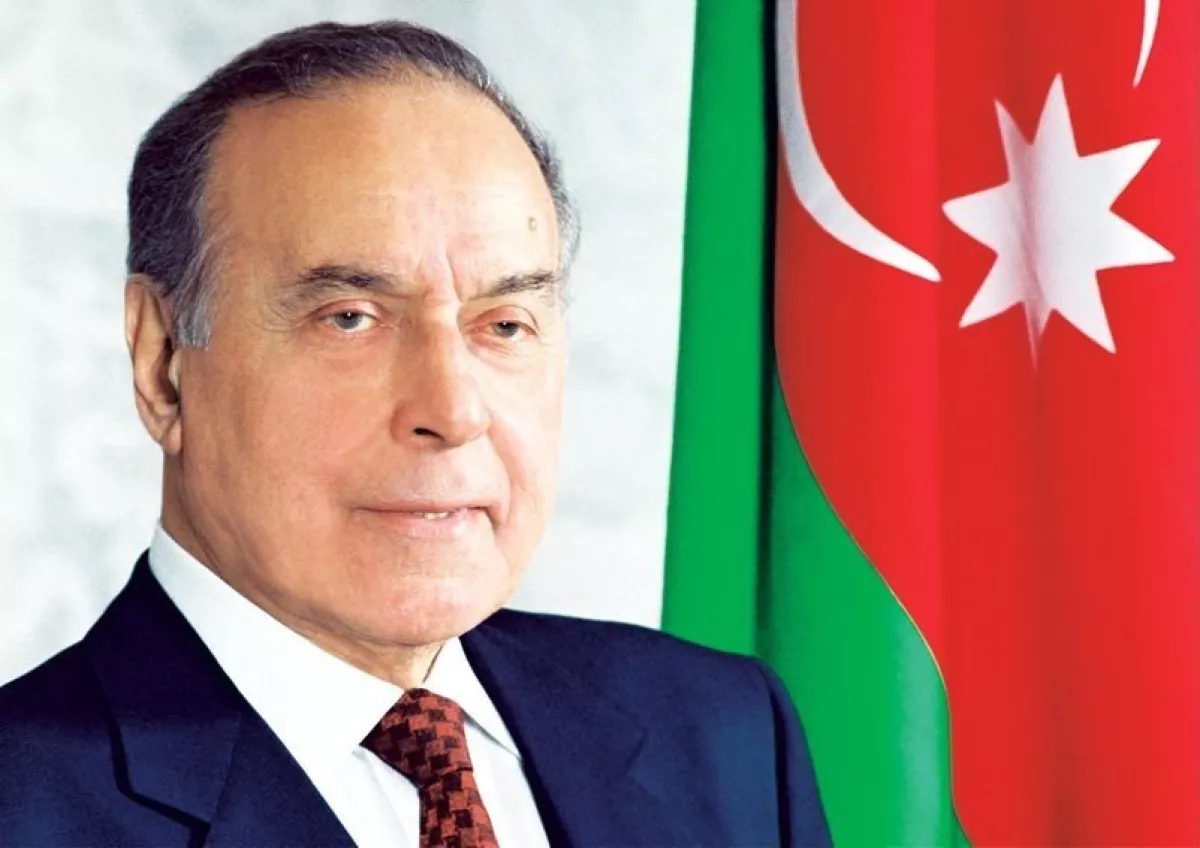
It is precisely today, on June 15, 2026, that this crucial nuance, as it relates to Azerbaijan—and indeed to everything taking place across the region and beyond—can be felt with particular clarity. To avoid speaking in abstractions, let us recall the key points of the speech delivered by National Leader Heydar Aliyev on June 15, 1993, the day he was elected Chairman of the Milli Majlis (Parliament) of the country.
Acknowledging the grave situation facing the state, he identified among the foremost priorities the strengthening of independence on the basis of the traditions of the Azerbaijan Democratic Republic and the contemporary processes unfolding around the world. In this context, Heydar Aliyev declared with confidence that “the Republic of Azerbaijan will never lose its independence, will never again become part of any other state, and will never fall under the authority of another country.”
He further emphasised the liberation of the territories occupied by Armenia, the restoration of Azerbaijan’s territorial integrity, and the establishment of peace, stressing that the citizens of the country should live in peace and prosperity while building “the state in the way they themselves desire.” The great leader noted that this path would enable Azerbaijan to demonstrate to the world its historical achievements and national traditions, particularly since the Azerbaijani people possess considerable historical and contemporary potential. Against this backdrop, Heydar Aliyev underscored that Azerbaijan, which for centuries had been the homeland of all those living on its soil, would remain so in the future as well.
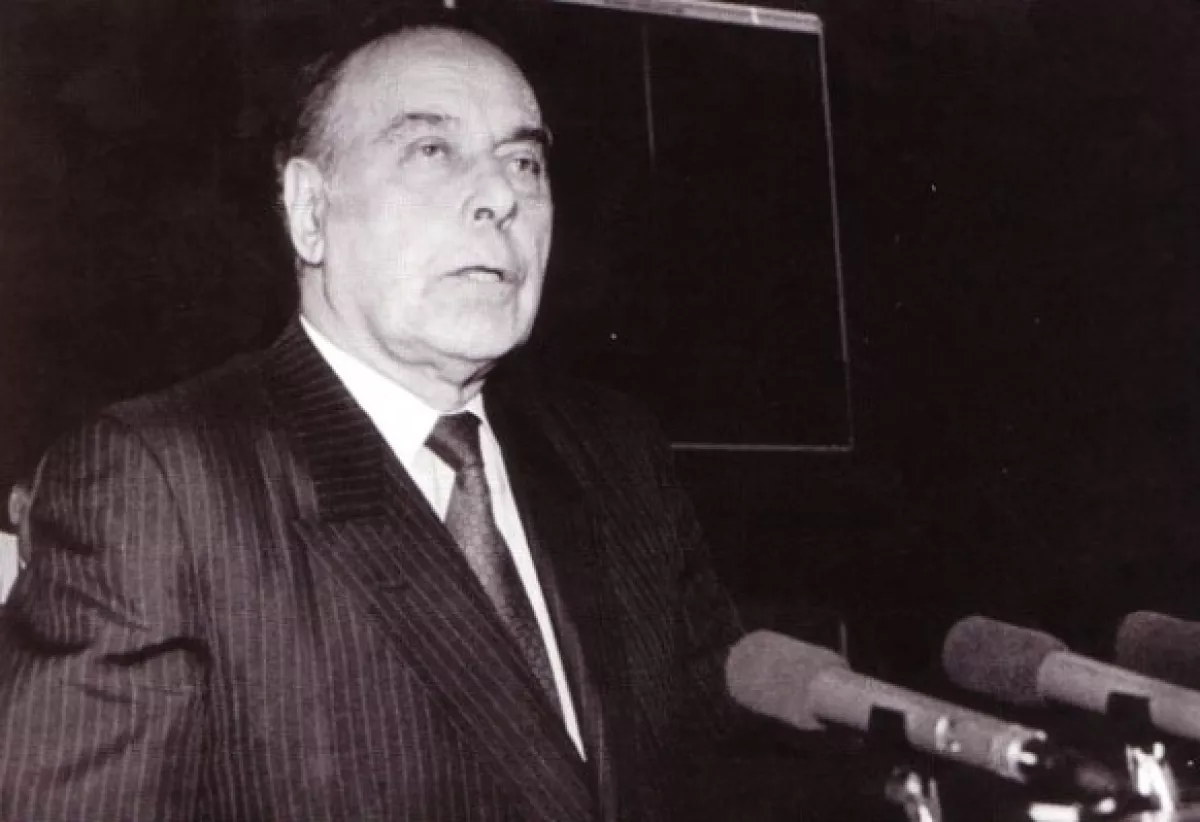
In the sphere of foreign policy, Heydar Aliyev placed particular emphasis on the importance of Azerbaijan building relations of equality with all states, first and foremost with its geographical neighbours, “on the principles of independence.” At the same time, he outlined the significance of further deepening ties with all European countries and with the Muslim world, including Arab and Turkic states.
Those who lived through that period would undoubtedly agree that, against the backdrop of a very real threat to Azerbaijan’s statehood and the presence of elements of civil war, Heydar Aliyev’s words could not but inspire confidence. His crucial emphasis on unity became the cornerstone of Baku’s domestic policy.
Thus, step by step, beginning on June 15, 1993, Azerbaijan embarked upon the ascent that has brought it to its current level of development. With masterful precision and strategic foresight—often making decisions that were the only viable course at a particular stage of history—the National Leader assembled the intricate and impressive mosaic of the modern Republic of Azerbaijan. The economy, politics, diplomacy, and ideology worked in unison towards the fulfilment of the objectives he had set forth.
In this regard, in his address to the nation in October 2003, Heydar Aliyev stressed that throughout this journey he had drawn “all my strength and determination solely from my wise and grateful people,” whose support enabled him to remain steadfast and achieve success. Ten years after his speech in the parliament building, Heydar Aliyev noted that the Azerbaijani people had secured their rightful place among the world’s most advanced nations. As a result, the international community had come to recognise “their rich spiritual world, their worthy contribution to the treasury of world culture, and their ability to embrace the values of global civilisation.”
Remarkable, is it not? In just ten years, under the wise leadership of the National Leader, Azerbaijan traversed an extraordinary path during one of the most difficult periods in its history—a time when various external forces tirelessly sought to destabilise the country. Yet all attempts to engineer coups and foment unrest ultimately failed. The very unity of the nation, which Heydar Aliyev had described with such conviction, demonstrated the strength of the Azerbaijani people, who—regardless of ethnic or religious affiliation and irrespective of where they lived—stood shoulder to shoulder with the state in building a new Azerbaijan.
As Heydar Aliyev noted, the country was steadily strengthening its defence capabilities and military power, while the armed forces were adopting advanced practices and young people were willingly joining the army. It was in this context that, in October 2003, the National Leader confidently declared that Azerbaijan had “secured a worthy place in the international community, and today global issues concerning peace, our region, and the world around us cannot be resolved without taking into account our opinion and our interests.”
In the same spirit, he expressed confidence that Azerbaijan would be able to participate in the most promising and beneficial international projects, investing not only within the country itself but also beyond its borders.
Here, once again, the word remarkable comes to mind—indeed, Remarkable with a capital “R”. For today, events are unfolding precisely as Heydar Aliyev had foreseen. And this is true not only in terms of Azerbaijan’s significant investments abroad.
The crucial point, however, is that the journey towards the present day had to be continued by the political successor of the National Leader—Ilham Aliyev—whose candidacy Heydar Aliyev urged the nation to support in the presidential election in his October 2003 address.
Expressing confidence that Ilham Aliyev, “having united around himself the most worthy sons and daughters of our people,” would spare no effort in advancing Azerbaijan’s development, Heydar Aliyev declared: “With your help and support, Ilham Aliyev will be able to complete the destiny-shaping tasks and plans that I was unable to bring to fruition. I trust him as I trust myself, and I place great hopes in his future.”
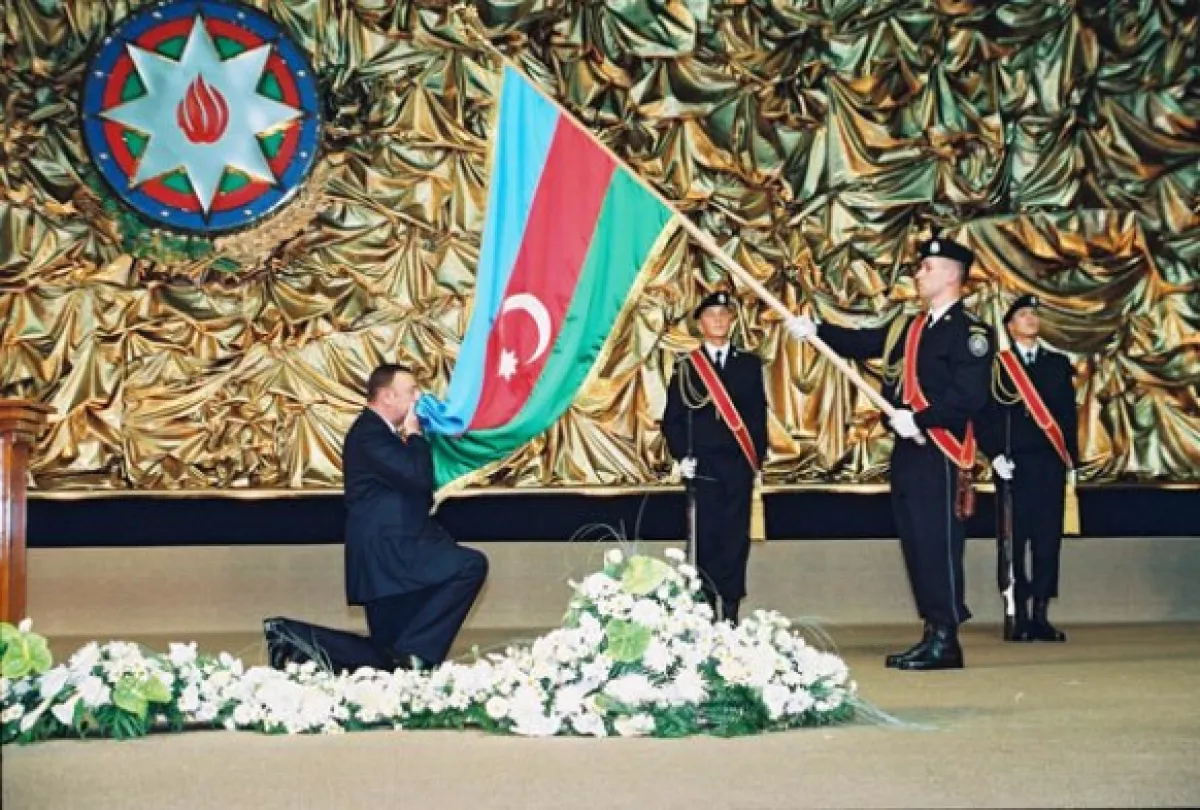
In his inaugural address on October 31, 2003, Ilham Aliyev stressed that he would continue the policies of the National Leader. He emphasised that Azerbaijan’s growing economic potential would enable its armed forces to fulfil all the tasks before them. Drawing attention to the ineffectiveness of the OSCE Minsk Group, he unequivocally stated that Azerbaijani lands must be liberated from occupation, refugees and internally displaced persons must return to their native homes, and the country’s territorial integrity must be restored.
“Everyone must know that Azerbaijan will liberate its lands at any cost,” President Ilham Aliyev concluded.
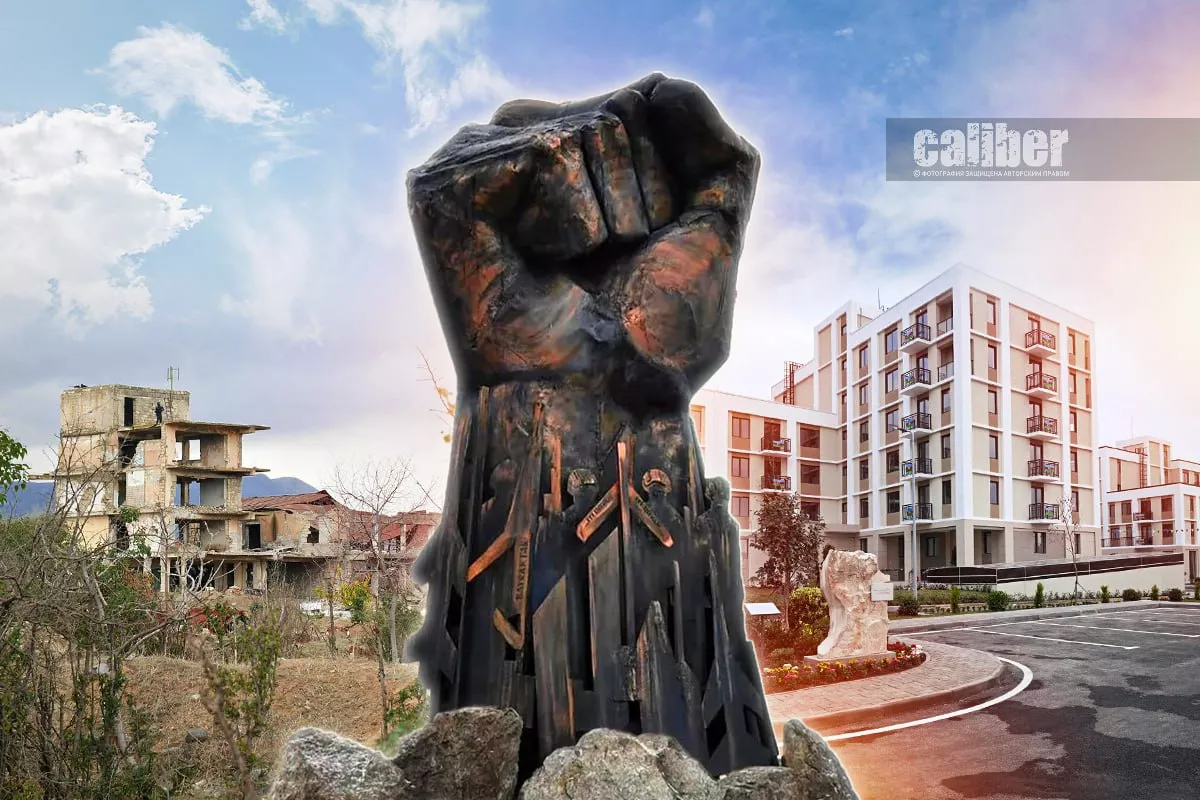
One cannot help but agree that, in this respect as well, the word Remarkable once again comes to the fore. Everything promised by the head of state, as the successor to the National Leader, has been fulfilled by the present day.
Building upon the solid foundation laid by Heydar Aliyev, the country’s leader—together with the “Iron Fist” of national unity and the valiant Azerbaijani Armed Forces—succeeded in accomplishing all of Azerbaijan’s historic objectives. The country’s territorial integrity has been restored. Sovereignty has become a reality across the entirety of the state’s territory.
Former internally displaced persons are returning to their rebuilt homes and native lands. Shusha, Khankendi, Khojaly, Karkijahan—an integral part of Khankendi—Aghdam, and many other Azerbaijani territories have taken on new life and new significance. In this way, historical justice has prevailed in accordance with all norms and principles of international law.
As President Ilham Aliyev pledged, Azerbaijan achieved victory on the battlefield and continues to consolidate that victory through peaceful means. In this context, he has also reiterated his confidence that the Zangezur Corridor will inevitably be opened. The world is already well aware that every statement made by the head of the Azerbaijani state is followed by concrete action.
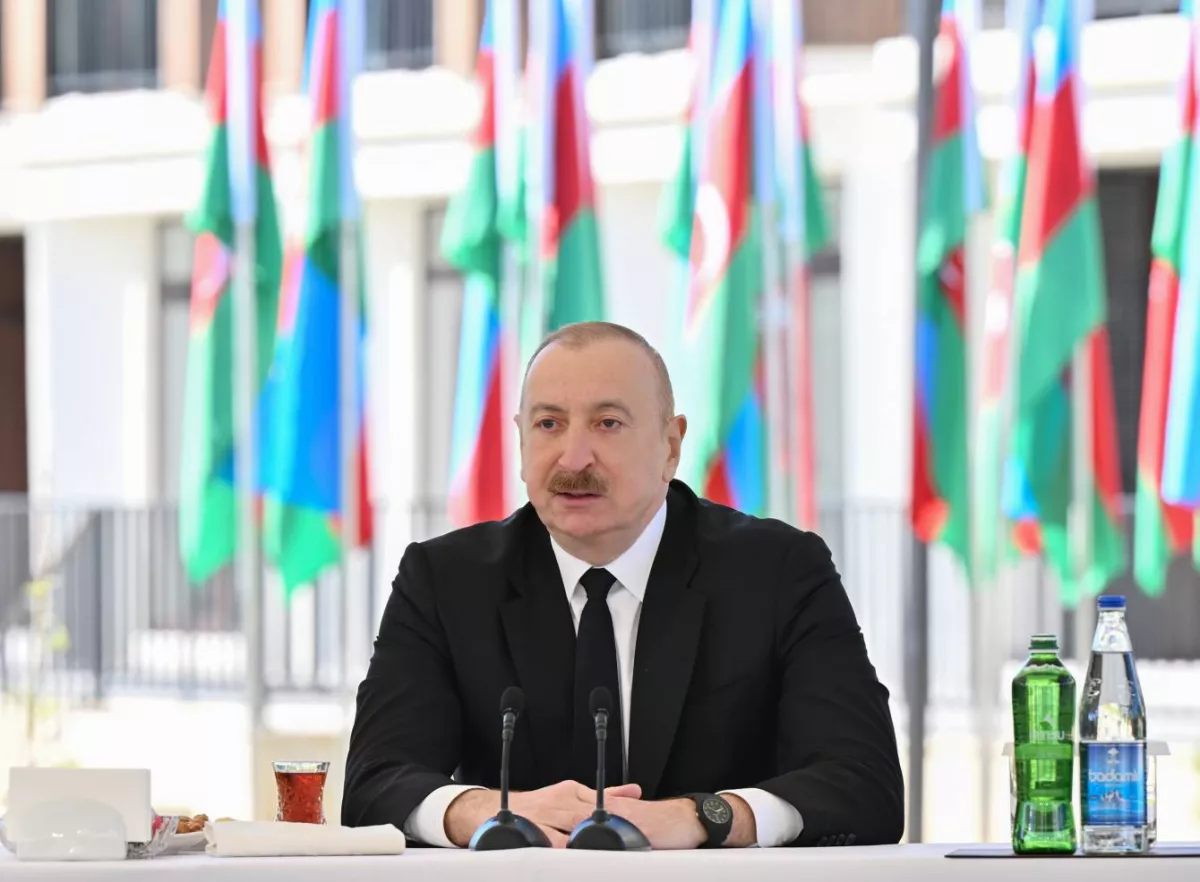
As Ilham Aliyev emphasised in his May address during a meeting with families who had relocated to the first residential complex in Zangilan, the greatest dream of the National Leader was the liberation of our native lands from occupation, and “we—his successors—have fulfilled his testament. Today, every inch of land within the territory of Azerbaijan belongs to the Azerbaijani people.”
Describing Heydar Aliyev’s role in the history of the Azerbaijani state as indisputable, the President noted that thanks to the National Leader’s activities, Azerbaijan—having effectively been on the brink of disintegration—was able to preserve its independence. Stability was achieved, and the process of state development began.
In his recent address to participants of Baku Energy Week, President Ilham Aliyev, referring to the 20th century as a period of formation of Azerbaijan’s international energy partnership under the leadership of the National Leader, also highlighted that in the 21st century the country has already entered a new stage of transition toward green energy and the creation of a sustainable energy model.
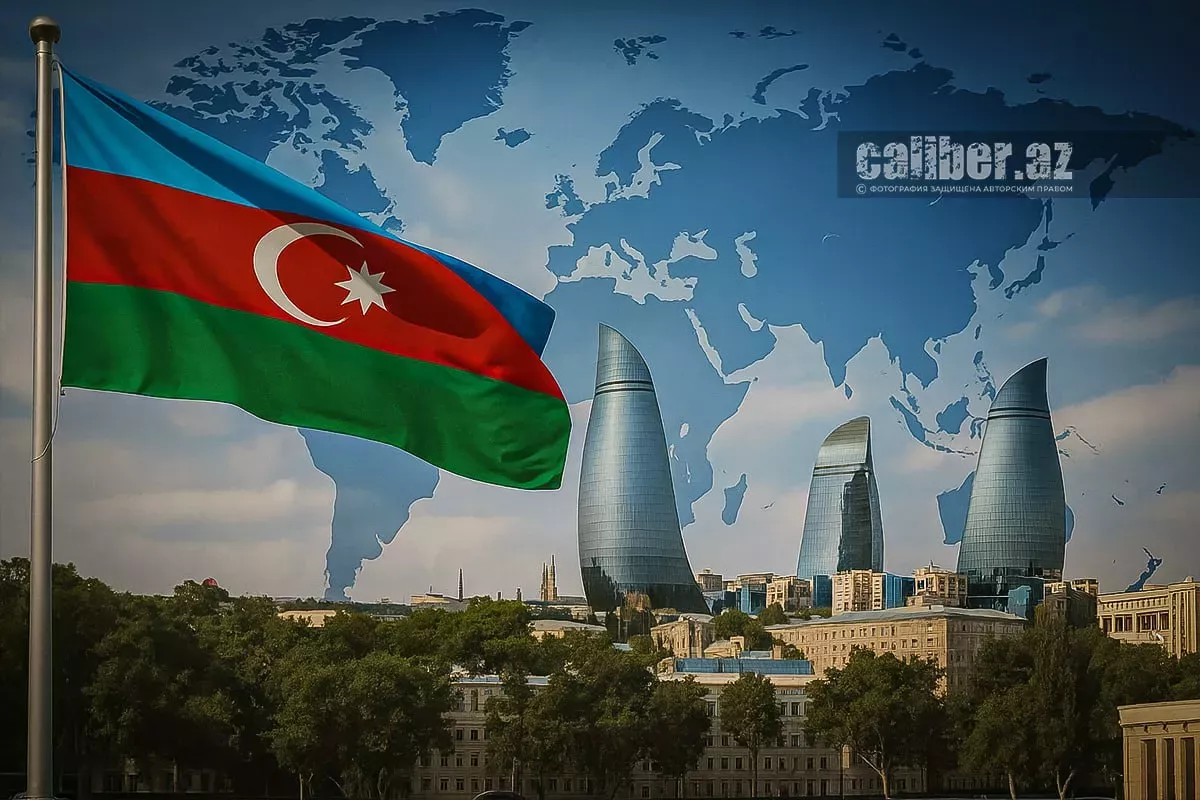
In a broader global context, all the geopolitical forecasts articulated by the National Leader have materialised. As President Ilham Aliyev emphasised at a meeting dedicated to agricultural issues, Azerbaijan today maintains extensive international relations, and the number of states seeking cooperation with the country is increasing every year. Baku enjoys a very high reputation and a positive image within the international community. As a result, the Republic of Azerbaijan is already recognised in the world as a middle power, and companies from many countries are eager to cooperate with us across various fields.
And here we may leave the discussion open-ended, as the state still has new and even greater successes ahead, God willing. This, in itself, stands as the finest monument to the National Leader Heydar Aliyev, in whose honour June 15 is marked as the Day of National Salvation.







 editor@caliber.az
 +994 55 444-88-98
 Азербайджан, Баку, ул. Низами, 203, Af Business House, 5-й этаж