










Shusha as a platform for global dialogue Aliyev outlines Azerbaijan’s policy priorities
The Shusha Global Media Forum, traditionally attended by President Ilham Aliyev, has effectively evolved into one of the key pillars of Azerbaijan's foreign policy strategy, uniquely combining diplomacy, information policy, and the promotion of the country's national interests on the international stage.
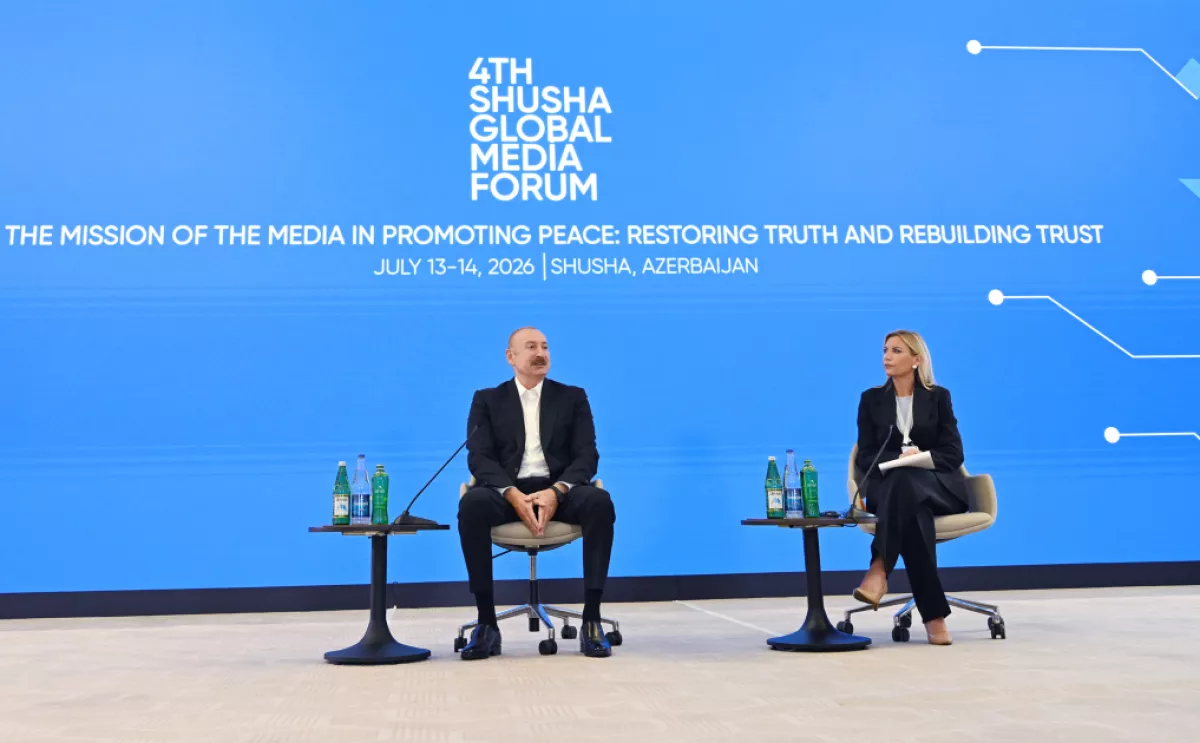
The fourth edition of the forum, which opened on July 13, is no exception. Its theme—"The Mission of the Media in Promoting Peace: Restoring Truth and Rebuilding Trust,"—speaks for itself. The event has brought together 160 media representatives, experts, and senior executives from 54 countries, along with delegates from around 30 international news agencies and more than 60 leading media organisations. The participation of representatives from approximately 10 international organizations and companies further underscores the strong global interest in Azerbaijan.
It is highly symbolic that, over the past four years, Shusha has firmly established itself as an international hub for dialogue, enabling Azerbaijan to integrate Karabakh ever more deeply into the global information space. President Ilham Aliyev emphasized this point in his address to the forum.
"The idea of the forum was to create an atmosphere for media representatives from different parts of the world to address the issues of interest, mutual concern, and also to get acquainted with Garabagh, with Shusha. As time passes, I am sure many of our guests who visit us regularly see the development of Garabagh, and they see the reconstruction," Ilham Aliyev said.
According to the President, the very presence of representatives from leading global media outlets and international organisations at the event enables Azerbaijan to communicate its own perspective on regional developments directly, while giving foreign guests the opportunity to witness firsthand the масштаб of the reconstruction and development underway in the territories liberated from occupation. Taken together, the President's remarks made it clear that his address at the forum amounted to a comprehensive outline of Azerbaijan's foreign policy and economic priorities.
Bridging Europe and Asia
One of the central messages delivered by the head of state was that Azerbaijan is determined to strengthen its position as a reliable energy partner for Europe, a key transportation hub across Eurasia, and an independent regional centre of power.
"We supply gas to 16 countries by pipeline, and we are number one in the world in terms of the geography of pipeline gas supplies. And more is to come. We still are in negotiations with some members of the European Union, both to start supplying gas and to increase our supply. So we have both requests. And in today's energy market situation, gas from a reliable source, from Azerbaijan, a predictable source and an alternative source, is more important than it was probably 10 years ago," the President said.
He added that strengthening Azerbaijan's presence in European and global markets remains an integral part of the country's broader long-term strategy.
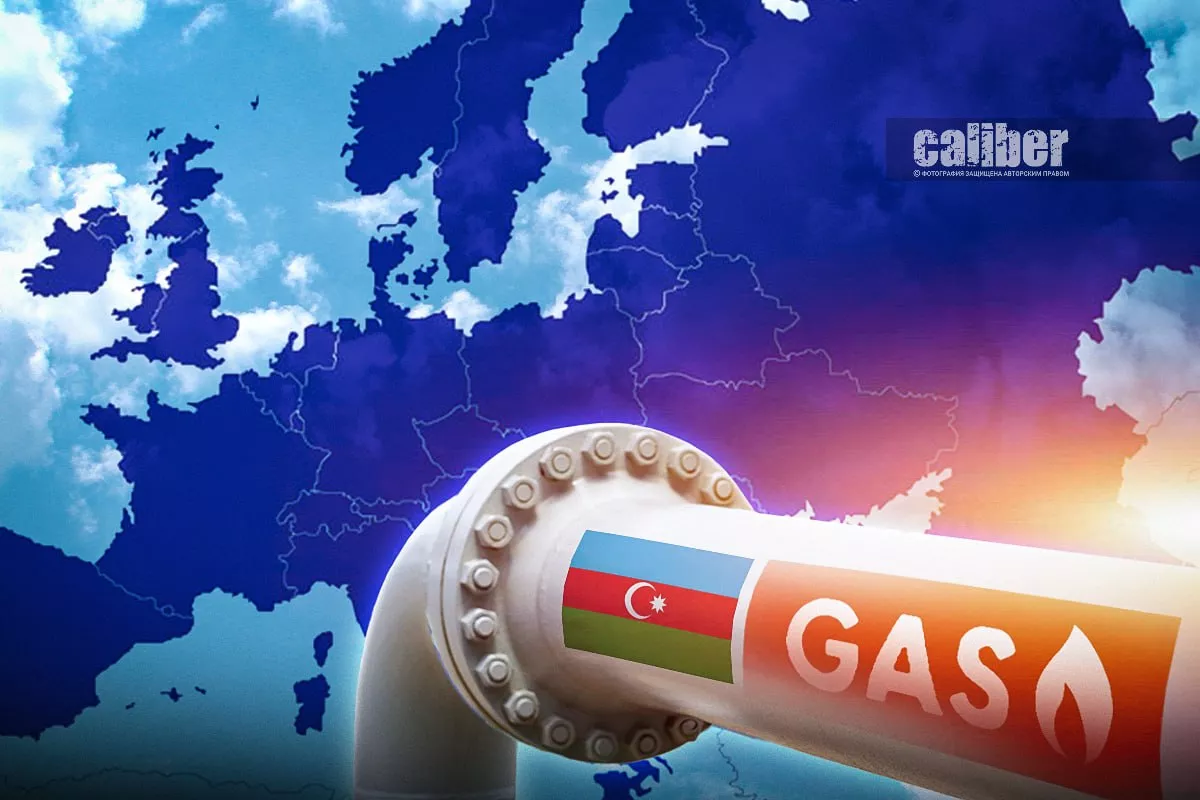
"We started to supply Germany and Austria this year," the President emphasised, noting that the European market is a premium market offering the most attractive prices, and that Azerbaijan is interested in expanding its presence there. The head of state also highlighted that Azerbaijan has started supplying gas to Syria and has plans to extend deliveries to neighbouring countries in the future.
Another central theme of the President's address was Azerbaijan's evolving geoeconomic role. Ilham Aliyev stressed the country's growing strategic importance, emphasising that Azerbaijan continues to expand its transport infrastructure.
"We have been working on connectivity issues for quite a while. So maybe actively for more than ten years, trying to turn the advantages of our geographical location into a real platform for multinational cooperation," he said.
This statement underscores Azerbaijan's ambition to establish itself as one of the principal hubs of the Middle Corridor, linking China, Central Asia, the South Caucasus, and Europe.
"As for the Middle Corridor, cargo volumes from China transiting through Azerbaijan, as well as cargo destined for Azerbaijan, continue to grow. As I mentioned earlier, we are nearly doubling the capacity of our trade port, largely in anticipation of increased transport volumes from China as well as from the countries of Central Asia," the President said, highlighting that amid the instability of traditional trade routes, transport connectivity has become one of the most important instruments for strengthening international influence.
A multi-vector foreign policy as a state strategy
In his address, President Aliyev once again reaffirmed Azerbaijan's commitment to a multi-vector foreign policy, emphasizing that Baku maintains strong relations with Türkiye, the countries of Central Asia and the Middle East, the United States, European nations, Russia, and China.
"Central Asia and Azerbaijan are uniting into a single economic and political space. At the same time, this holds immense significance for the implementation of connectivity, transport, and logistics projects," the President said.
As an example, Ilham Aliyev pointed to the close partnership between Azerbaijan and Kazakhstan, stressing that the two Caspian littoral states have developed highly active and productive cooperation.
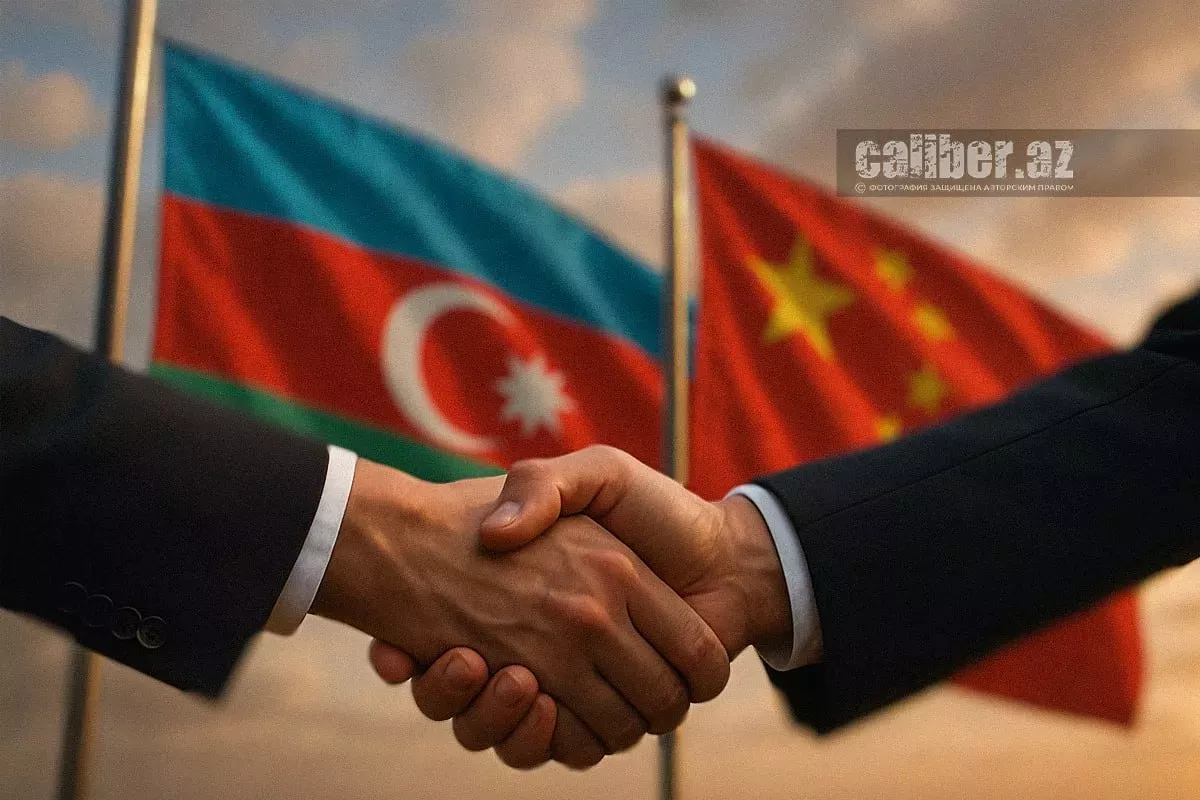
Another key theme of the President's address was the development of ties with countries located along the Middle Corridor, particularly China, with a special emphasis on cooperation in transport and logistics. President Aliyev also spoke with particular warmth about Azerbaijan's brotherly relationship with Türkiye: "You will see that probably no other two countries in the world are so close to each other, so supportive of each other, and so friendly toward each other than Türkiye and Azerbaijan. And this is a big asset for our peoples, for our countries. Together, we are much stronger."
Taken together, Ilham Aliyev's remarks once again reaffirmed Baku's intention to maintain its non-aligned foreign policy while continuing to strengthen relations with a wide range of partners, including countries that are, at times, on opposing sides of geopolitical divides.
Geopolitical risks and Baku's pragmatism
From a political standpoint, the President's clear statements regarding developments in the South Caucasus and his message to neighboring countries deserve particular attention.
"Everyone needs to move away from this approach and stop viewing the South Caucasus as an arena for geopolitical competition. In any case, in Azerbaijan we have achieved this. We did not allow ourselves to be drawn into geopolitical intrigues, nor did we allow any external players to use us for their own purposes — whether against someone else or against who knows whom," the President said.
The central message of President Aliyev's statement was that Azerbaijan cooperates with a number of leading global and regional powers while refusing to become a participant in anyone else's geopolitical agendas. He made it clear that all neighboring countries should pursue the same independent and sovereign course.
"We would like to see peace to the south and to the north established as soon as possible. But peace must be just and fair and based on international law, and not based on someone's ambitions and agenda. So international law is a universal platform for any peace. For instance, if we look back at our war with Armenia, we were always on the side of international law," the President said.
These pragmatic appeals by the Azerbaijani leader, grounded in the principles of international law, should be heard not only in neighboring Armenia but also in countries that continue to support militarization and the occupation of foreign territories elsewhere on the continent. In this context, President Aliyev also drew attention to France's colonial policy, recalling the longstanding grievances of its overseas territories. He specifically highlighted the work of the Baku Initiative Group, emphasizing the platform's role in bringing issues of human rights and global colonialism to the forefront of the international agenda.
The infamous section 907
Turning to relations with the United States, President Aliyev first recalled the historic initialing of the peace agreement in Washington in the presence of President Donald Trump, underscoring the high level of U.S.–Azerbaijan relations, which, he noted, have now evolved into a strategic partnership.
President Aliyev also addressed the much-discussed Section 907, describing it as an unfair and biased decision by the U.S. Congress directed against Azerbaijan.
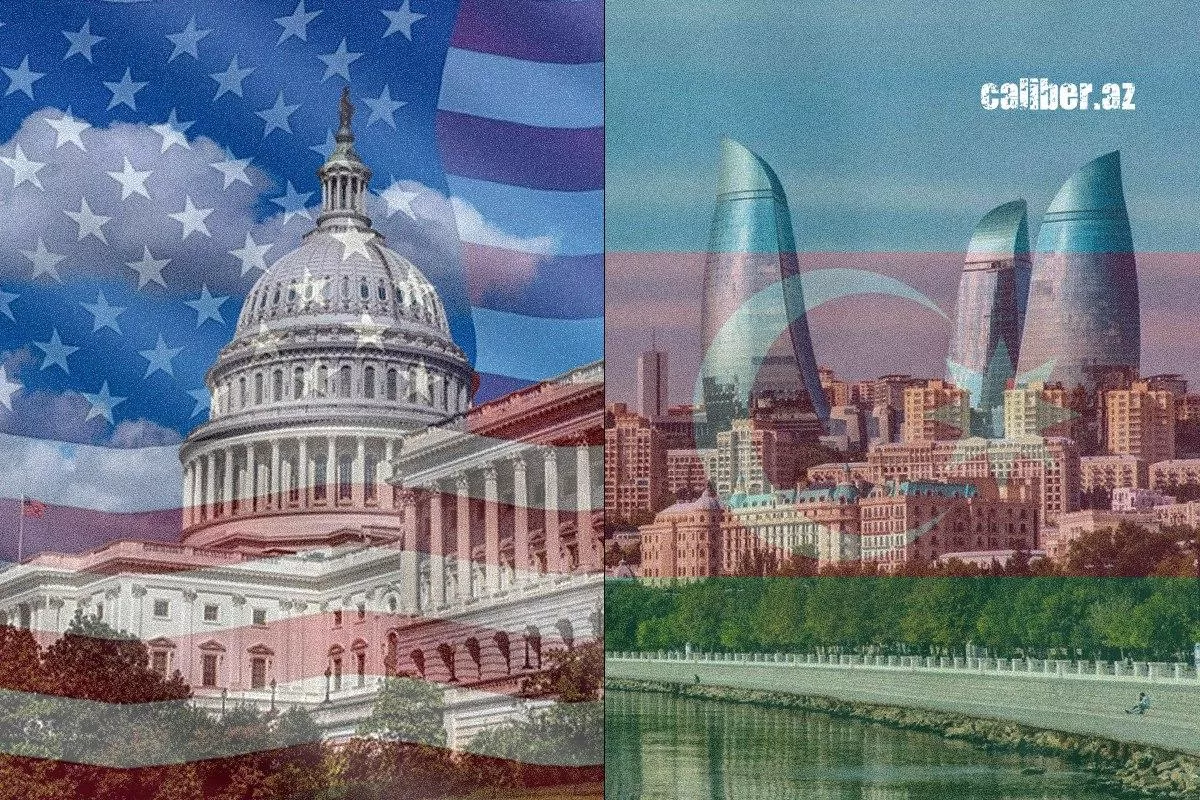
"That was a very unfair move by the United States Congress towards Azerbaijan back in 1992, when the Freedom Support Act was adopted by the U.S. Congress in order to support the newly emerged countries after the collapse of the Soviet Union by providing them with financial assistance, and Amendment 907 was introduced by pro-Armenian senators. By the way, President Biden was one of them. He was a senator at the time, and probably this explains why we had so many difficulties with the Biden administration."
By drawing a historical contrast between the two U.S. administrations, the President underscored the importance of relations between Baku and Washington, as well as the significance of personal ties between the leaders of the two countries.
On the Council of Europe's "obsession"
President Aliyev also offered a pointed critique of European institutions, using the Council of Europe as a key example.
"If Azerbaijan leaves the Council of Europe completely, no one in the country will even notice it. So being there or not being there doesn't change a lot here. To be there is better, probably. I don't know, maybe. And we are not looking for confrontation, especially when not only the Parliamentary Assembly of the Council of Europe but also the European Parliament attacks us regularly, again without any grounds. I think it's kind of an obsession with Azerbaijan," the President emphasized.
Taken together, these statements by the Azerbaijani leader suggest that, despite what Baku sees as the application of double standards and the use of human rights issues as instruments of political pressure, Azerbaijan remains open to cooperation with European institutions—but only on the basis of equality, mutual respect, and genuine partnership. Otherwise, the country's leadership argues, Azerbaijan is fully capable of pursuing its interests without membership or active engagement in certain European bodies, pointing to the suspension of cooperation with institutions such as the Parliamentary Assembly of the Council of Europe (PACE) and the European Parliament as evidence of this position.
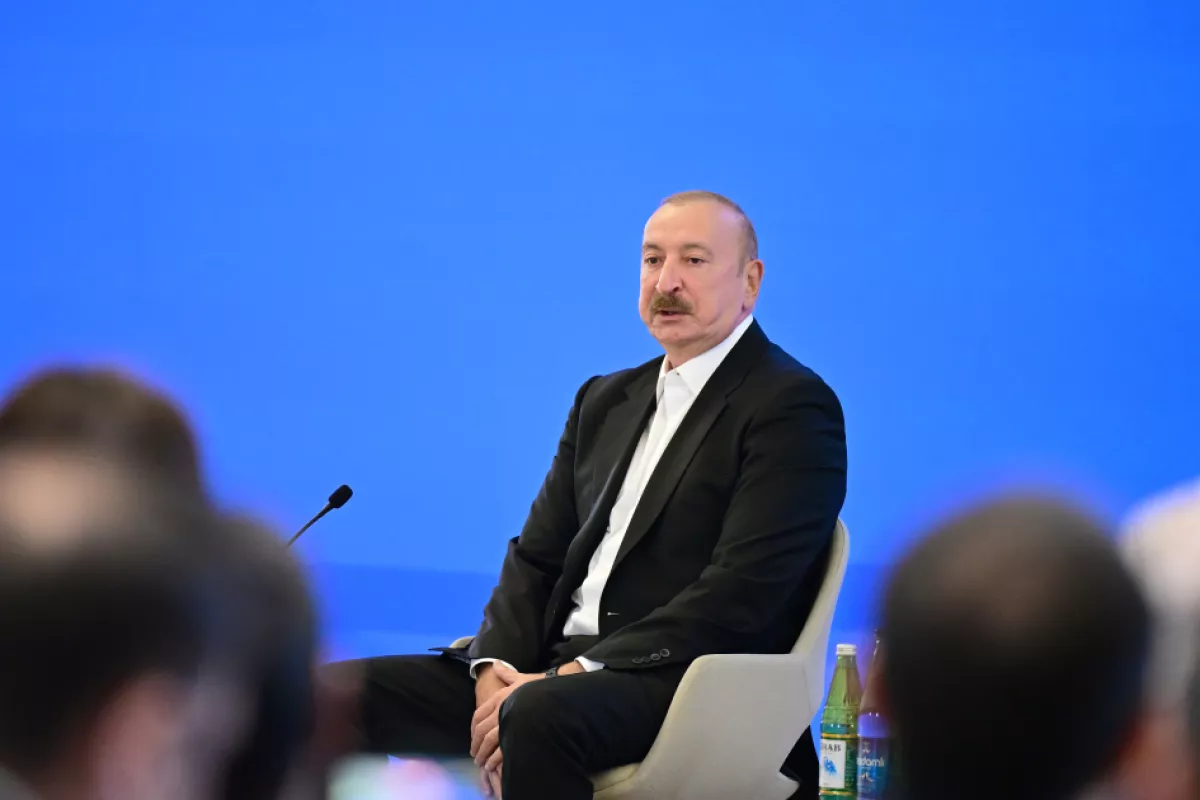
President Ilham Aliyev's keynote address made it abundantly clear that, in today's environment of intense global information competition, events such as the Shusha Global Media Forum have become important instruments of soft power, enabling states to strengthen their international standing without relying solely on traditional diplomatic mechanisms. For Azerbaijan, the forum serves several strategic objectives simultaneously: it reinforces the country's image as a facilitator of global dialogue and a platform for discussing and addressing international challenges, while further consolidating Shusha's status as an emerging international venue for diplomacy, media engagement, and intellectual exchange.







 editor@caliber.az
 +994 55 444-88-98
 Азербайджан, Баку, ул. Низами, 203, Af Business House, 5-й этаж