










SOCAR's growing footprint in energy landscape across Eastern Mediterranean Article by The Media Line
US-based The Media Line news agency has published an article by Jacob Wirtschafter on SOCAR’s growing role in the energy sector of Israel and the wider Eastern Mediterranean. Caliber.Az presents excerpts from the piece for its audience.
“As Israel’s gas exports to Egypt and Jordan have stopped and restarted three times since October 2023, Azerbaijan’s state oil company, known as SOCAR, has moved into every layer of Israel’s energy business at once.
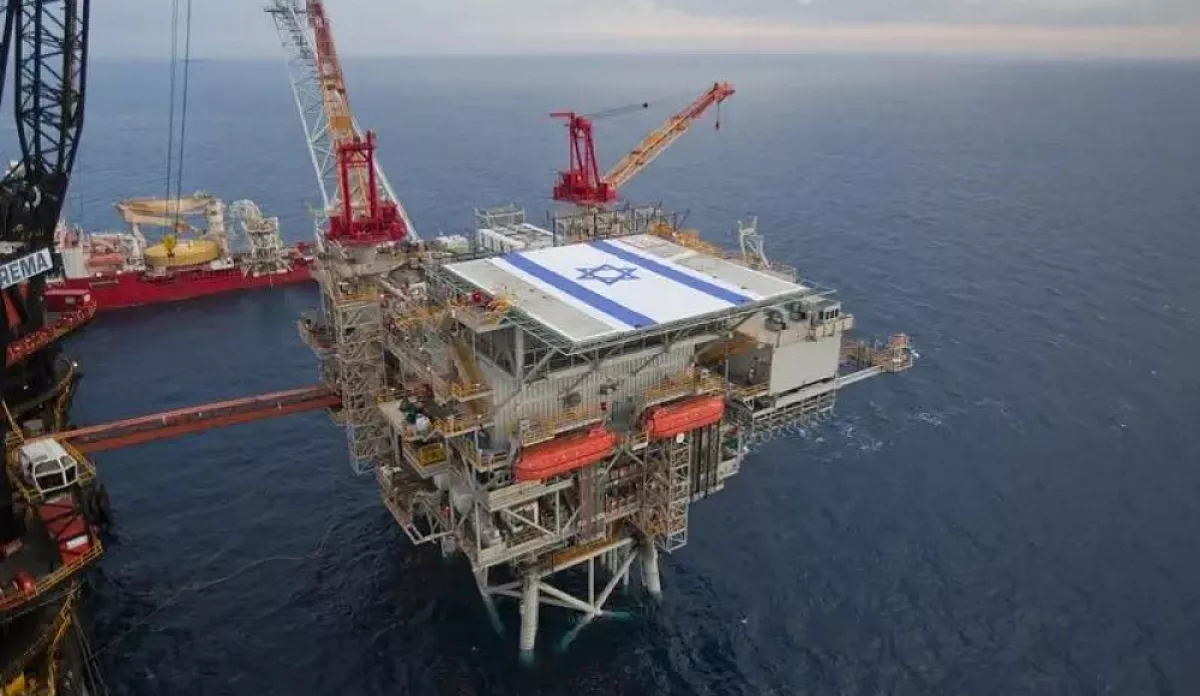
SOCAR now runs the largest new exploration zone in Israeli waters, holds 10% of the Tamar gas field, ships roughly three cargoes of liquefied natural gas (LNG) to Egypt each month, partners with a Qatari company to restart power plants in Syria using Azerbaijani gas piped through Türkiye, and is in talks to expand further into Egypt and Jordan. No other foreign company holds that many positions in or around Israeli gas.
Those positions came together publicly this week at the 31st Baku Energy Forum and the first Azerbaijan-US Economic Dialogue, held on Tuesday, June 2.
“It is our first East Mediterranean investment, and we are definitely interested in developing it further,” Vitaliy Baylarbayov, SOCAR’s deputy vice president for investments and marketing, told The Media Line at SOCAR headquarters on June 1, referring to the Tamar stake.
Tamar is operated by Chevron, the American oil major that also operates Leviathan. SOCAR’s 10% Tamar stake puts the Azerbaijani state company inside a Chevron-run field. On June 2 in Baku, SOCAR and Chevron signed a joint study agreement to assess oil and gas potential in the Middle Caspian Basin.
Mubadala Energy of Abu Dhabi holds 11% of Tamar, bought from Delek in 2021 in the largest commercial deal after the UAE-Israel normalization agreement. Combined with Chevron’s 25% and SOCAR’s 10%, foreign ownership of Tamar now stands at 46%, split across an American operator and Emirati and Azerbaijani partners.
The same Gulf-Azerbaijan business ties run in the other direction. ADNOC International holds 30% of the Absheron gas field, where SOCAR, TotalEnergies, the Abu Dhabi National Oil Company, and BOTAŞ signed a 15-year, 33 billion-cubic-meter supply agreement with Türkiye on June 2.
Masdar, the Abu Dhabi state renewables developer, operates a 230-megawatt solar plant at Garadagh and broke ground in 2024 on another gigawatt of solar and wind capacity. SOCAR holds an upstream stake in the SARB and Umm Lulu fields off Abu Dhabi. The Israel-Azerbaijan partnership sits inside a wider Gulf-Azerbaijani business web from the Abraham Accords era.
Egyptian lawmaker Mohamed Fouad, who sits on the Economic Affairs Committee of the House of Representatives in Cairo, said SOCAR is meant to supplement Israeli pipeline gas, not replace it. Egypt’s December 2025 agreement with Israel for 130 billion cubic meters of pipeline gas over 15 years, worth roughly $35 billion, remains “structurally irreplaceable” in Cairo’s calculus, Fouad said. What SOCAR provides instead is what Fouad calls “resilience engineering around Leviathan dependence.”
SOCAR Trading ships more cargoes when Israeli production drops or summer demand peaks, and fewer when Israeli supplies return to normal. SOCAR shipped three cargoes worth about $146.5 million to Egypt in March, Fouad said, placing it alongside Hartree and IRH among Egypt’s largest LNG suppliers.
Meanwhile, Turkish Energy Minister Alparslan Bayraktar proposed a Qatar-to-Türkiye pipeline routed through Saudi Arabia, Jordan, and Syria, a route that would compete directly with Israeli pipeline gas reaching Egypt and Jordan today.
Behind Türkiye’s plans sits the deepest bilateral energy relationship in the region. Türkiye is the largest single buyer of Azerbaijani gas and the destination for SOCAR’s biggest foreign investment.
The Azerbaijani state oil company is Türkiye’s largest international investor, with $19.5 billion deployed since 2008 across the STAR refinery at Aliağa, the Petkim petrochemical complex, the SOCAR Terminal container port, and a majority stake in the Trans-Anatolian Natural Gas Pipeline (TANAP), which carries Shah Deniz gas across Türkiye.
In Syria, SOCAR has partnered with the Qatari company UCC Holding and Türkiye’s BOTAŞ to supply natural gas from the Caspian’s Shah Deniz field across Turkish territory to power plants in Damascus, Homs, and Aleppo, restored under the post-Assad reconstruction beginning in August 2025. Initial delivery is 1.2 billion cubic meters annually.
“We are bringing light, if you wish,” Baylarbayov said.
That same corridor could one day carry Israeli gas in the opposite direction, Israeli energy security analyst Elai Rettig told The Media Line.
He said SOCAR’s presence in Israeli waters could add a commercial intermediary to future regional gas trade, though any such arrangement remains speculative.
Rettig pointed to oil as an example of how energy trade can survive political strain. Azerbaijani crude has reached Israel through Türkiye via the Baku-Tbilisi-Ceyhan pipeline for nearly two decades, even during periods of diplomatic rupture between Ankara and Jerusalem.
The East Mediterranean is a gas-hungry region, in his view, and having multiple suppliers benefits Israel as much as it guards against Israeli supply disruptions.
“SOCAR is considered a supplement rather than a competitor,” he said,” the article reads.







 editor@caliber.az
 +994 55 444-88-98
 Азербайджан, Баку, ул. Низами, 203, Af Business House, 5-й этаж