










The Middle Corridor: A safeguard against global crises Pakistan Today explores a route to stability
An article by Lahore-based lawyer and researcher Abid Subhan in the Pakistani newspaper Pakistan Today examines the growing importance of the Middle Corridor amid regional conflict. Caliber.Az reprints the article with minor adaptations.
In 2021, a single stranded vessel, the container ship Ever Given, blocked the Suez Canal for just six days. Yet that brief disruption halted nearly 12 percent of global trade and reminded the world how fragile the arteries of globalization truly are. Today, the escalating confrontation involving Iran, Israel and the USA offers a similar lesson, except this time the disruption is not caused by a stranded ship but by missiles, airspace closures and geopolitical confrontation.
Wars rarely remain confined to the battlefield. They redraw maps in quieter ways: through disrupted trade routes, rerouted aircraft and rising insurance premiums on global shipping. The unfolding confrontation involving Iran, Israel and the USA is already demonstrating how quickly geopolitical turbulence can reshape the arteries of global commerce.
Within days of hostilities escalating, commercial aviation across the Middle East began to adjust. Airlines diverted flights away from contested airspace, while insurers and logistics firms recalculated risk. The skies above conflict zones emptied, and aircraft began flowing northward over the South Caucasus and the Caspian Sea. These quiet adjustments in aviation maps reveal a deeper strategic reality: the global economy is only as secure as the corridors through which it moves.
In this emerging geography of disruption, one route that had long remained on the margins of global attention is quietly gaining strategic relevance, the Trans-Caspian International Transport Route, commonly known as the Middle Corridor. Stretching across the South Caucasus and Central Asia, this route links European markets to Asia through railways, ports and maritime crossings across the Caspian. What was once viewed as a secondary logistical pathway is increasingly becoming a geopolitical necessity.
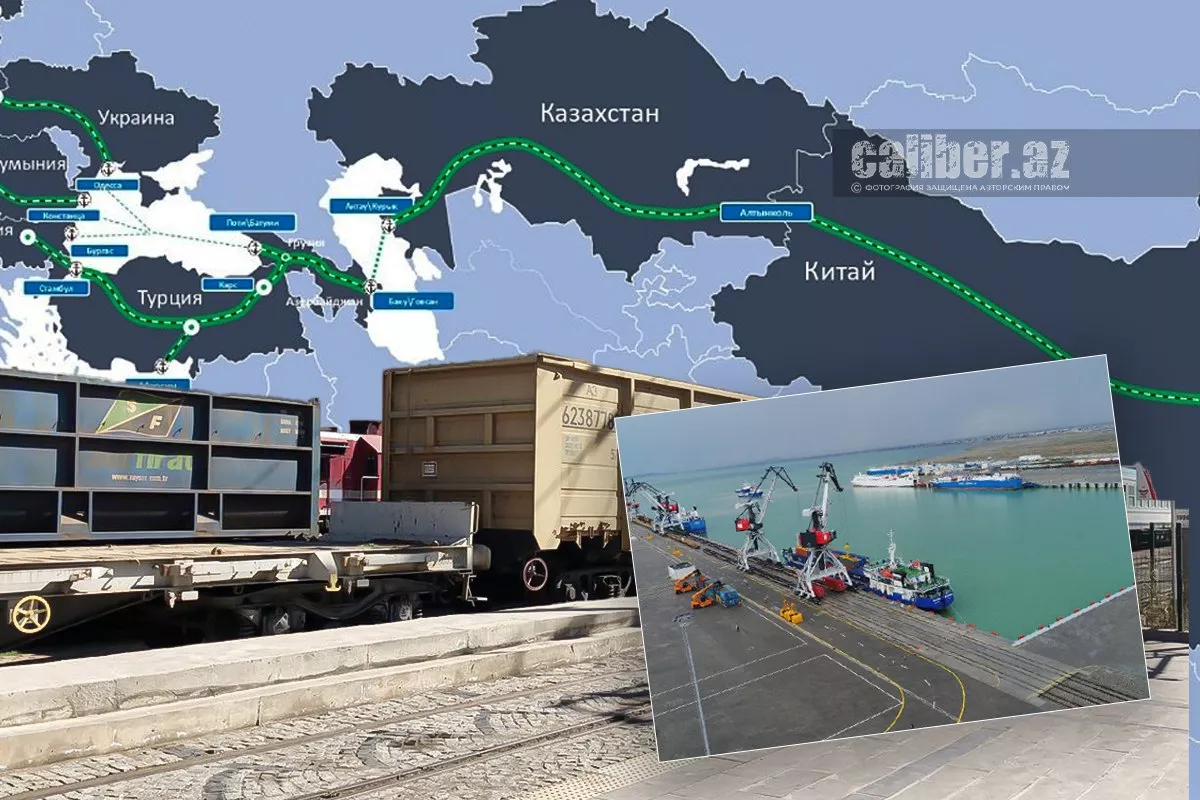
The logic behind its growing appeal is simple: the traditional arteries of Eurasian trade are no longer as dependable as they once seemed. For decades, commerce between Europe and Asia relied heavily on routes passing either through Russia or the Persian Gulf. Yet recent geopolitical shocks have exposed the fragility of both.
The Russian invasion of Ukraine triggered sweeping sanctions that complicated trade flows through Russian territory, forcing businesses and governments to reconsider the reliability of northern routes. At the same time, the persistent volatility surrounding Iran and the wider Gulf has raised concerns about southern transit corridors. Even the mere possibility of disruptions in the Strait of Hormuz, through which a substantial share of global energy shipments passes, can send tremors through markets.
Further south, instability around the Bab al-Mandab Strait has repeatedly demonstrated how vulnerable global shipping remains to regional conflict. Each of these chokepoints highlights a fundamental truth about globalisation: its infrastructure is geographically concentrated and therefore strategically fragile.
The Middle Corridor offers a rare alternative. Running through countries such as Azerbaijan, Georgia and Kazakhstan, it provides a narrow but crucial strip of connectivity between Europe and Central Asia that bypasses both Russia and Iran. In a region defined by geopolitical rivalries, this geographic positioning grants the corridor unusual strategic value.
But the corridor’s rise also reflects a broader transformation in the logic of global trade. For decades, supply chains were organised primarily around efficiency. Today, however, geopolitical risk has become an equally decisive factor. Governments and corporations are no longer merely seeking efficiency; they are seeking resilience.
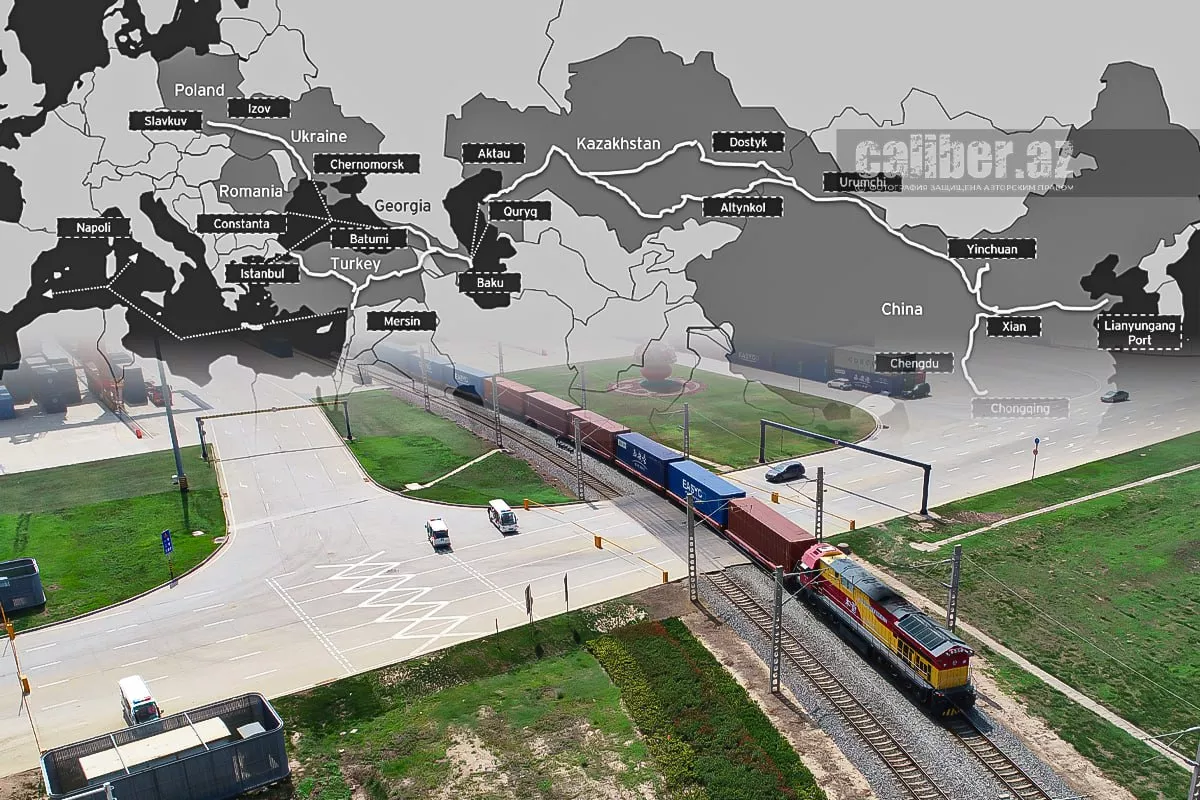
The ongoing tensions in the Middle East have accelerated this shift. When conflicts threaten established transit routes, businesses scramble to diversify. Logistics firms now speak of “route redundancy”, the ability to shift trade flows quickly if one corridor becomes unsafe. The Middle Corridor fits precisely into this emerging strategy of diversification.
Recent diplomatic signals between Armenia and Azerbaijan have raised cautious hopes that greater regional connectivity may emerge in the South Caucasus. If sustained, such developments could unlock new transit possibilities and strengthen the corridor’s long-term viability.
Ultimately, the growing importance of the Middle Corridor reveals a deeper lesson about the international system. Digital networks may transmit information instantaneously, but the movement of goods, energy, grain, manufactured products, still depends on physical routes that can be disrupted by missiles, sanctions or political confrontation.
The conflict involving Iran has once again reminded the world of this enduring reality. When traditional routes become contested, alternative corridors suddenly acquire strategic significance. The Middle Corridor may not replace existing pathways, but it offers something equally valuable: insurance against geopolitical shock.
And in an increasingly unstable world, such insurance may prove indispensable. The history of global trade shows that the routes which shape commerce are rarely chosen by geography alone. If the crises of our time continue to unsettle the traditional highways of globalization, the quiet railways and ports stretching across the Caspian may soon carry far more than cargo. They may carry the future balance of Eurasian trade.







 editor@caliber.az
 +994 55 444-88-98
 Азербайджан, Баку, ул. Низами, 203, Af Business House, 5-й этаж