










TRIPP – more than just a project: US deepens its foothold in South Caucasus Article by Suren Sargsyan in CACI Analyst
The American publication The Central Asia-Caucasus Analyst has published an article on the expansion of the US presence in the South Caucasus. Caliber.Az delivers the most insightful parts from the piece.
Editor’s note: Suren Sargsyan is a PhD candidate in Political Science. He is the director of the Armenian Center for American Studies.
The announcement regarding the construction of TRIPP and an increased U.S. activity in the South Caucasus has received significant political and analytical attention. However, five months after the announcement, it remains unclear what the timeline for implementation will be and which company will handle its operations.
The central question is whether the U.S. is seeking a strategic foothold in the South Caucasus, a goal it has historically avoided, or whether its involvement remains primarily economic and business-oriented. Washington’s previous approaches towards the South Caucasus have fallen short of both a coherent strategy or ambitions to establish a lasting strategic presence in the region. In light of developments over recent months, it is therefore important to assess how U.S. policy toward the South Caucasus is evolving under the revitalised approach of the Trump administration.
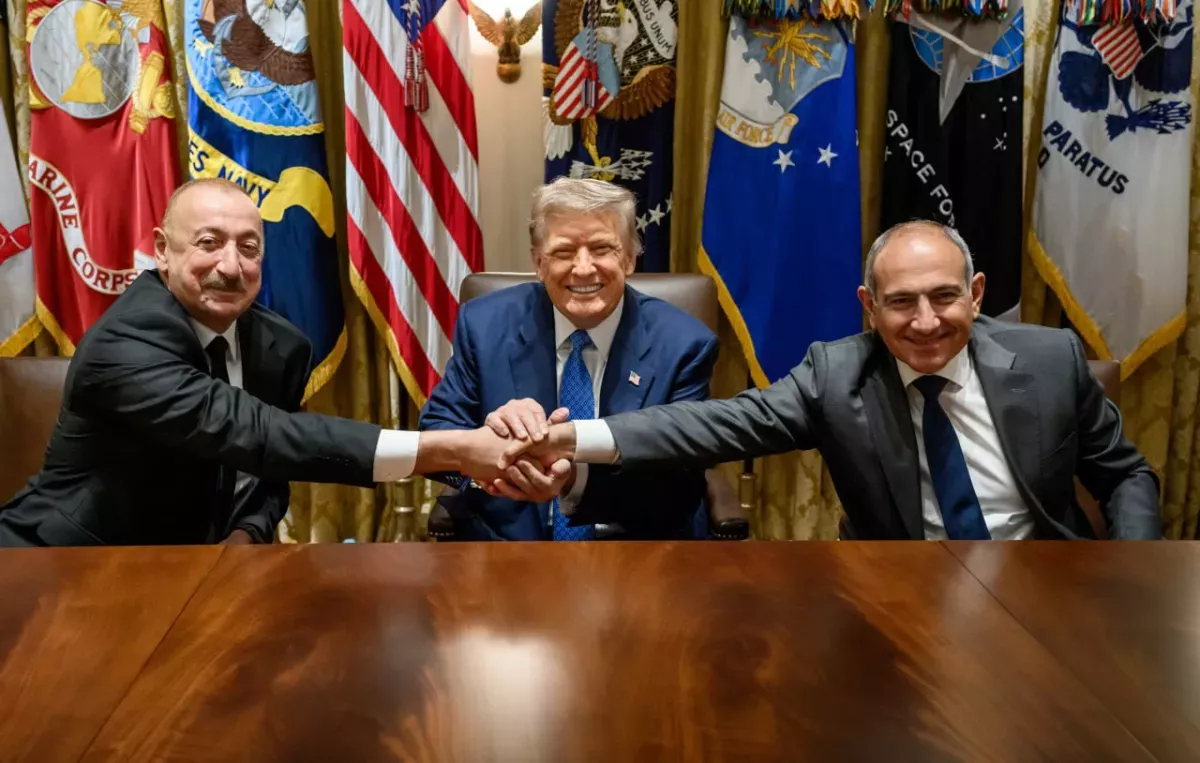
TRIPP is primarily a business project, but it also has the potential to develop into a strategic asset by giving Washington a new presence in a region traditionally viewed as Russia’s sphere of influence. While it would first create a commercial foothold, the route could acquire broader strategic importance by connecting Asia and Europe while bypassing both Russia and Iran. The inclusion of pipelines, oil and gas corridors, and railway links would also allow Central Asian energy resources to reach Europe through the Caspian Sea, fully circumventing Russian territory.
For many years, Russia deliberately relied on the continuation of the Karabakh conflict as a tool of exerting control over Armenia and Azerbaijan. When conflicts end, however, influence weakens and a vacuum emerges, which is often filled by another power. By contrast, the U.S. is seeking influence through the promotion of peace, economic development, and mediation between Armenia and Azerbaijan, presenting itself as an arbiter seeking to maintain long-term engagement in the region. The possible inclusion of Georgia in discussions on TRIPP further increases the strategic importance of this approach.
While Moscow relied on managed instability, Washington is investing in regional consolidation based on shared economic interests. This approach inevitably conflicts with the interests of states that oppose both TRIPP and the expansion of U.S. influence. Given the deep historical, institutional, and economic links between the South Caucasus and Central Asia, through organizations such as the EAEU, CSTO, CIS, and the Organization of Turkic States, any change in the balance of influence in one region will directly affect the other.
Within this broader framework, the Trump administration has sought to extend the Abraham Accords beyond their original Middle Eastern context. By including economically important, Muslim-majority but secular states such as Azerbaijan and Kazakhstan, both of which already have strong relations with Israel, the aim is not normalization, but the institutionalization of cooperation. This approach represents another U.S.-led multilateral mechanism designed to promote regional prosperity while expanding long-term strategic influence.
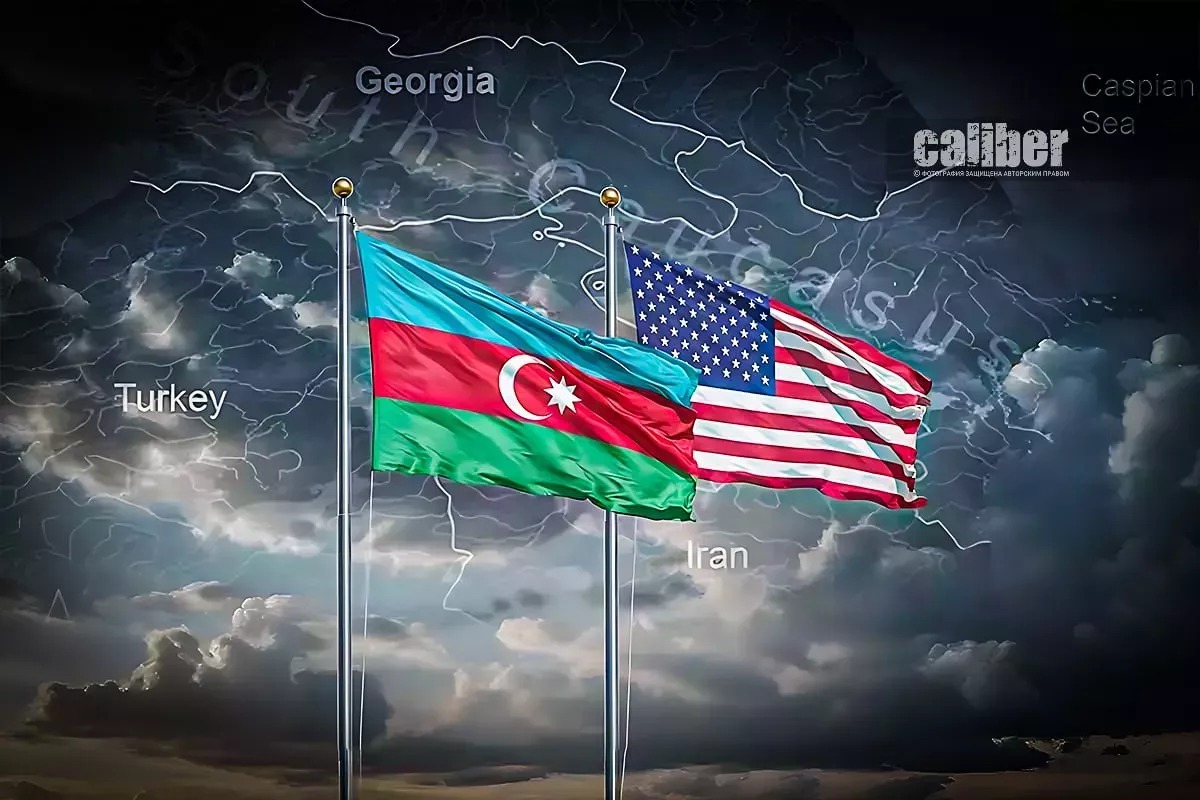
Judging from recent practical developments, it becomes clear that current U.S. policy toward the South Caucasus is growing more complex and nuanced. On January 14, 2025, the U.S. signed a strategic partnership agreement with Armenia. On November 8 of the same year, the Trump administration signed a memorandum with Azerbaijan to establish a working group tasked with preparing a strategic partnership agreement. At the same time, President Trump waived Section 907, enabling expanded cooperation between Azerbaijan and the U.S. across a range of areas.
These steps suggest that the Trump administration is prioritizing a regional approach toward the South Caucasus. In addition, the U.S. provided Armenia with US$ 145 million in assistance as part of the first tranche of funding for the TRIPP project and related agreements reached on August 8. This support is intended to finance investments in trade, infrastructure, critical mineral supply chains, and border security.
As for Georgia, despite tensions in bilateral relations, the country continues to play an important role in U.S. regional policy. Georgia has sought to align itself with Washington’s agenda of promoting peace in the South Caucasus, while also discussing possible participation in the TRIPP project and its implementation.
Current U.S. policy extends beyond the bilateral level and has regional ambitions, seeking to strengthen cooperation with South Caucasus states individually while emphasising shared regional priorities.
Despite the apparent principled agreement of all parties on the route, its timeline for implementation and the duration of the process remain unclear. If implemented, the route would give the U.S. a unique opportunity to establish a presence in the South Caucasus, and this commercial presence could evolve into a strategically significant one, especially if the route’s scale and capacity become significant enough for Azerbaijan, Armenia, and the U.S. companies responsible for its operation and security.
According to Armenian authorities, Yerevan and Washington plan to establish a consortium that would act as the main company responsible for constructing and operating the railway. The consortium could also build, manage, and operate pipelines, power transmission lines, and other related infrastructure.
In addition to road transport, rail capacity is crucial to sustain the transport of Chinese goods along this route in order to ensure its economic viability and maximise cargo volumes.







 editor@caliber.az
 +994 55 444-88-98
 Азербайджан, Баку, ул. Низами, 203, Af Business House, 5-й этаж