










Ukraine’s war has two price tags Billions for Kyiv, thousands for freedom
The cost of the war for Ukraine in 2026 has risen to around $190 million a day, up from $140 million in 2024. This was stated by Roksolana Pidlasa, head of the parliamentary Budget Committee, who was quoted by Reuters on September 12. According to her, the increase in spending is driven by inflation, a larger military, higher social payments to the families of fallen servicemen, and more intensive ammunition consumption.
During the first eight months of 2026, Ukraine spent around $42 billion on defence, excluding military assistance provided in kind. At the same time, domestic revenues and borrowing amounted to only $39 billion over the same period. “Unfortunately, this year the war has gotten so expensive that we can't even cover our share of the costs,” Pidlasa said.

And these are truly frightening figures. At $190 million a day, that amounts to around $5.7 billion a month and roughly $69 billion a year if the current rate is extrapolated across the full calendar year. Yet after reading Pidlasa’s statement, one cannot help but recall some very different figures — figures related not to government military budgets, but to what the war costs individual Ukrainians if they want to preserve their freedom, their health, or simply avoid ending up wherever the state has decided to send them.
These figures have been repeatedly cited by Dmytro Lubinets, the Verkhovna Rada’s Commissioner for Human Rights. In an interview with Ukrainska Pravda on September 1, the ombudsman described an entire system of unofficial “tariffs” allegedly operating at some territorial recruitment and social support centres (TCRs). According to Lubinets, people were asked for around $10,000 to be allowed out of a TCR minibus. Being released from the TCR building itself cost $15,000. Later, an all-inclusive service also emerged: for $50,000–70,000, a person liable for military service could allegedly be taken across the state border directly from a TCR minibus.
Lubinets cited other, even more egregious cases. According to him, one man spent 55 days inside a TCR facility. In another case, a veteran who had fought in Bakhmut was detained and given a choice: go to war or pay. The ombudsman also reported cases involving the unlawful cancellation of deferments and other violations, stressing that he publicly discloses only around one per cent of the information received by his office.
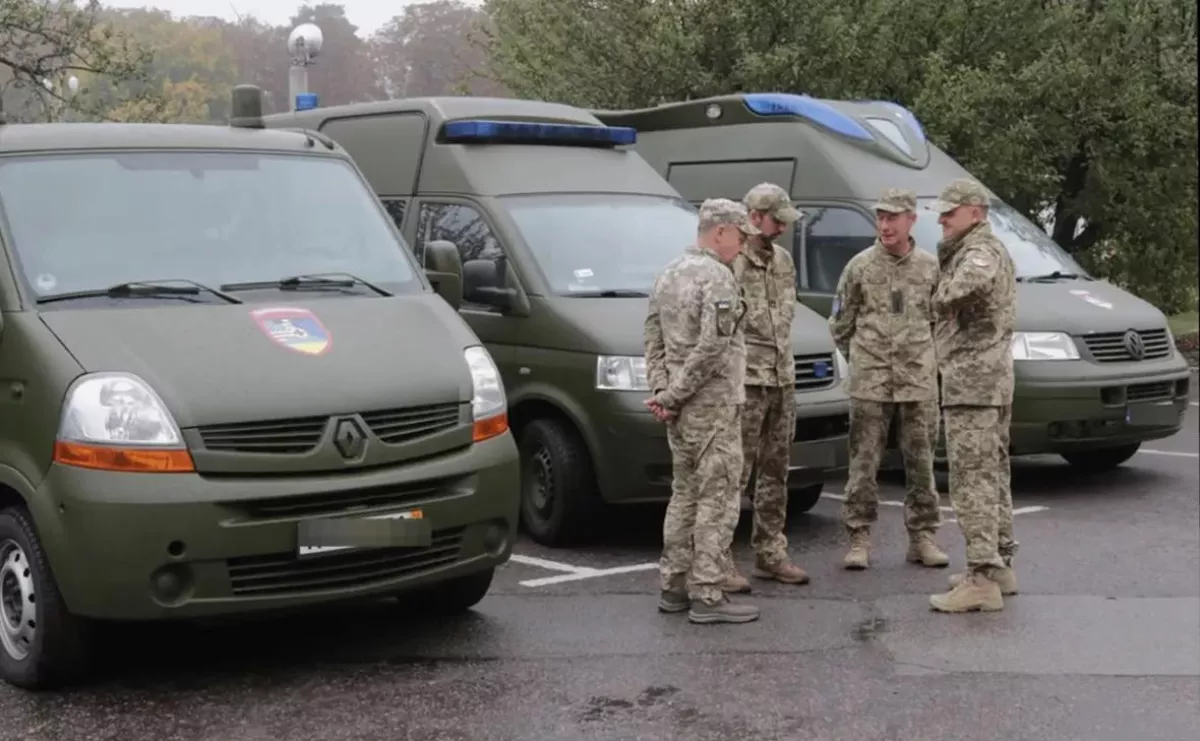
I have heard stories myself on more than one occasion about TCR officers detaining Ukrainian men of military age and then releasing them. A person is held against his will until he can raise the required ransom. The money is then collected at the address provided by the detainee, where TCR representatives arrive with a cash-counting machine and a banknote detector to verify the authenticity of the bills.
Once the money has been checked and counted, it is taken to the TCR, and a few hours later the person who managed to raise the funds to buy his temporary freedom is released. Temporary, indeed — because there is always a risk of being detained again by TCR officers. As we can see, this is no longer simply corruption in the conventional sense, but an established market in human freedom, where the price depends on the stage at which a person finds himself in the hands of the system.
I cannot give an exact figure, but it is obvious that hundreds of millions, if not billions, of dollars are circulating solely in the monetisation of freedom for Ukrainian men of military age. This creates a completely absurd situation. The state tells its citizen: “We do not have enough money for the war.” At the same time, the corrupt official responds: “Then give that money to me, and I will help you avoid taking part in it.”
In this regard, the account given by Ukrainian Armed Forces instructor Anton Cherny about the situation in the Shkval Battalion of the 59th Separate Assault Brigade is telling. In an interview with Ukrainian blogger Yuriy Romanenko, he described the existence of a parallel system of punishments in which financial penalties were imposed instead of the disciplinary procedures prescribed by law. According to Cherny, a serviceman could be ordered to pay 50,000 hryvnias (around $1,220), while in some cases the amount reached 100,000–200,000 hryvnias (around $2,440–4,880). He also described monthly collections: 5,000–7,000 hryvnias (around $120–170) deducted from a serviceman’s regular pay and 20,000–40,000 hryvnias (around $490–980) from combat payments.
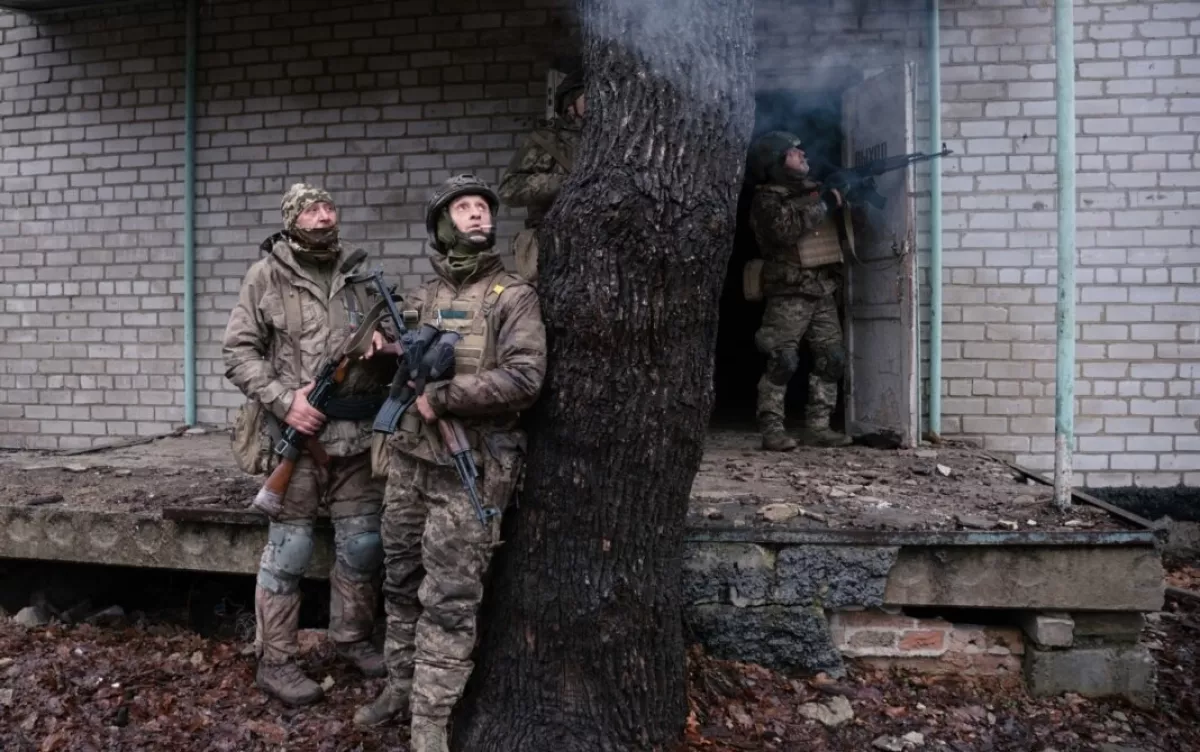
And this raises the central question: what happens to the motivation of a person who is expected to risk his life for Ukraine when he sees someone else using the war as a source of personal enrichment? The answer is obvious: his sense of fairness disappears. While one citizen is fighting and risking his life every minute, another pays tens of thousands of dollars to avoid going to the front. A third, having already joined the army, faces unofficial payments. And a fourth is given the opportunity to leave the country in exchange for money. Meanwhile, at the highest levels, yet more billions are being counted, and Western partners are being told why Ukraine once again needs more funding.
Western allies understand perfectly well that every additional billion in aid comes from the pockets of their own taxpayers. And when reports of high-profile corruption cases, abuses within state institutions and schemes surrounding mobilisation emerge at the same time, it becomes increasingly difficult to explain to Western publics why funding for Ukraine should be increased yet again.







 editor@caliber.az
 +994 55 444-88-98
 Азербайджан, Баку, ул. Низами, 203, Af Business House, 5-й этаж