










US-Canadian pioneer of deconstructive architecture dies at 96 A compilation of his most remarkable designs / PHOTO
The news of Frank Gehry's passing, who is among the most influential figures in modern American architecture, at age 96 has devastated his family, the industry and admirers of his designs alike. The American-Canadian architect was widely regarded as the most recognizable US designer since Frank Lloyd Wright, earning international acclaim for bold and unconventional work, including the Guggenheim Museum in Spain’s Bilbao, the Fondation Louis Vuitton Museum in Paris, and Prague’s Dancing House.
Born Frank Owen Goldberg on February 28, 1929, into a working-class Jewish family in Toronto, Gehry came to architecture later than many of his peers. After moving to Los Angeles in the mid-1940s and briefly serving in the US Army, he studied ceramics at the University of Southern California. In his youth, he changed his surname to Gehry, a decision he later attributed to his desire to avoid antisemitism, as noted in an article by The Guardian.
His early career was unremarkable: years spent as a mid-level designer for a shopping mall firm preceded the launch of his own practice in 1962. During that period, he also designed homes and offices for friends, gradually building a reputation. At age 50, Gehry dramatically shifted course. He abandoned commercial jobs and reinvented himself as a visionary designer, beginning with modest civic works like the Temporary Contemporary museum in Los Angeles in 1983, before his spectacular breakthrough in Bilbao during his 60s.
Gehry soon became known for daring, whimsical buildings that drew both admiration and controversy. Much of Gehry’s work is associated with Deconstructivism, an approach often described as post-structuralist due to its challenge to established architectural norms. Rather than adhere to traditional ideas—such as form following function—Deconstructivism embraces fragmentation, contradiction, and expressive form. Gehry’s buildings sometimes appear raw or unfinished, echoing California’s 1960s–70s “Funk” art movement, which embraced nontraditional media and found objects. He has even been called “The apostle of chain-link fencing and corrugated metal siding.”
Below are several of Gehry’s most renowned works:
Guggenheim Museum (Bilbao, Spain)

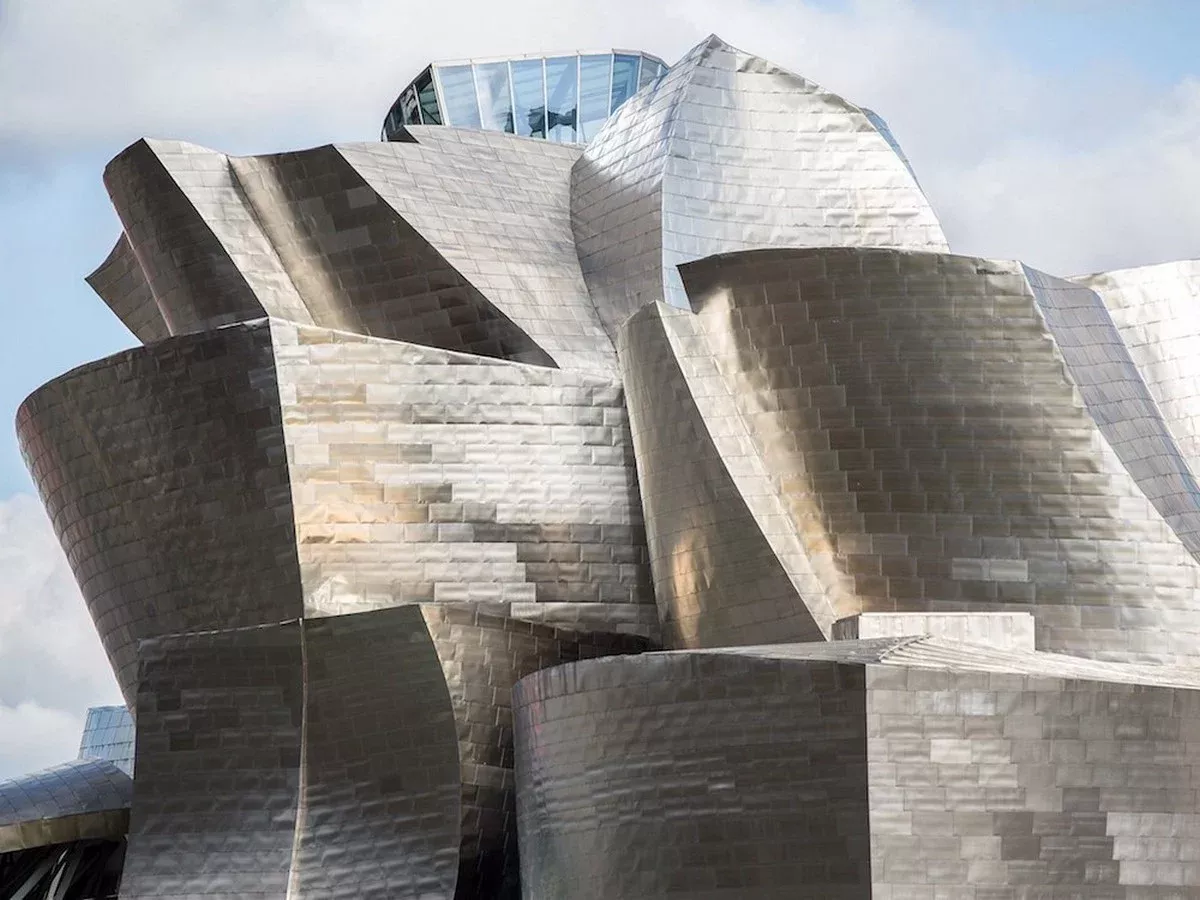
This project cemented Gehry’s global reputation. The museum’s dramatic curves and reflective titanium skin—around 33,000 paper-thin sheets—produce shifting colours depending on light and weather. Its complex geometry required collaboration with CATIA, aerospace software used to translate Gehry’s sculptural forms into buildable architecture. The building revitalized Bilbao, drawing international visitors and transforming the city’s economy. The popularity of the museum even popularized a global trend now known as the “Bilbao effect,” in which declining cities deploy dramatic architecture to stimulate tourism and economic revival.
Fondation Louis Vuitton Museum (Paris, France)

Located in the Bois de Boulogne, the museum features white “icebergs” made from fiber-reinforced concrete, covered by sweeping glass “sails” supported by timber beams. Surrounded by a water garden, the structure resembles a sailing vessel. The museum was commissioned by Bernard Arnault, founder of Louis Vuitton.
Walt Disney Concert Hall (Los Angeles, USA)
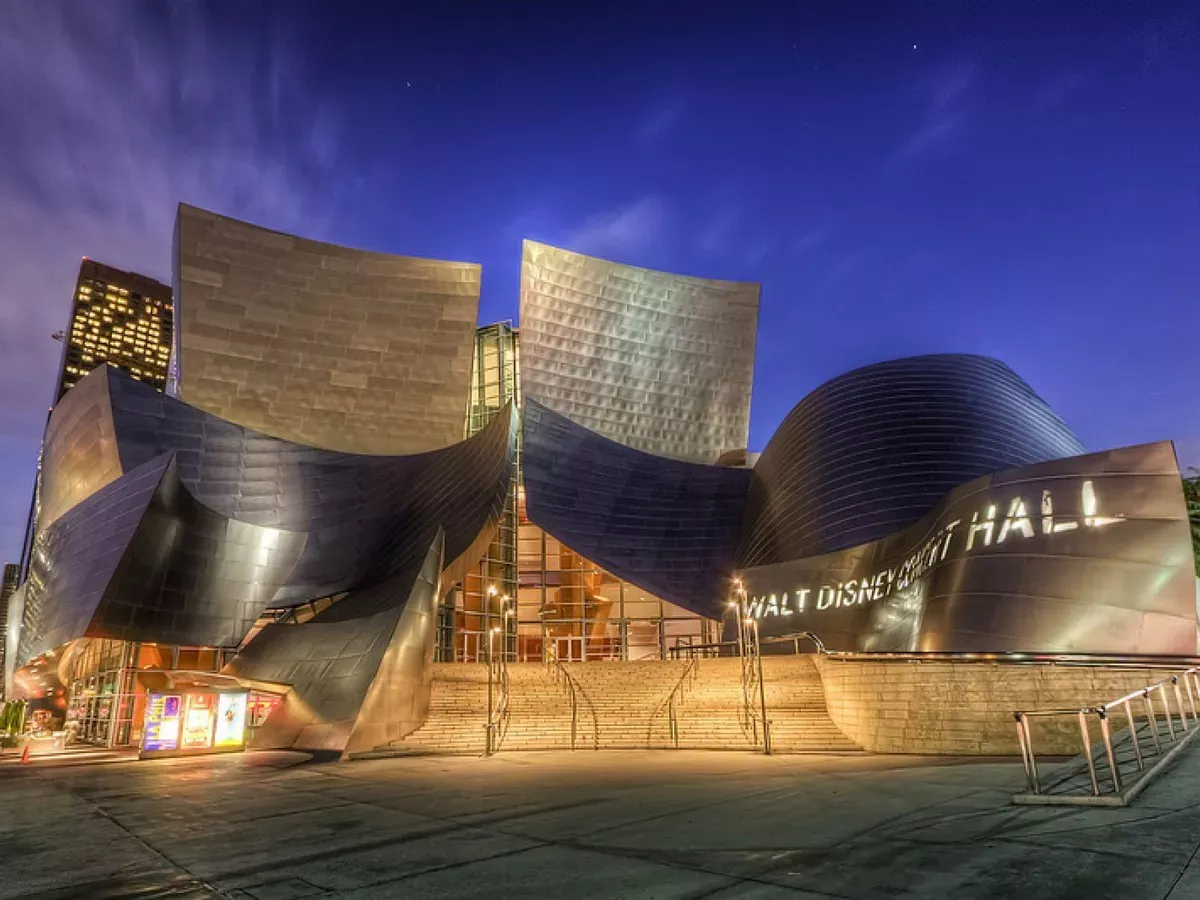
Gehry’s passion for sailing can be seen in the building’s wind-swept metallic forms, which appear as if frozen mid-motion. The concert hall has become a defining cultural landmark for Los Angeles.
The Cleveland Clinic Lou Ruvo Center for Brain Health (Las Vegas, USA)

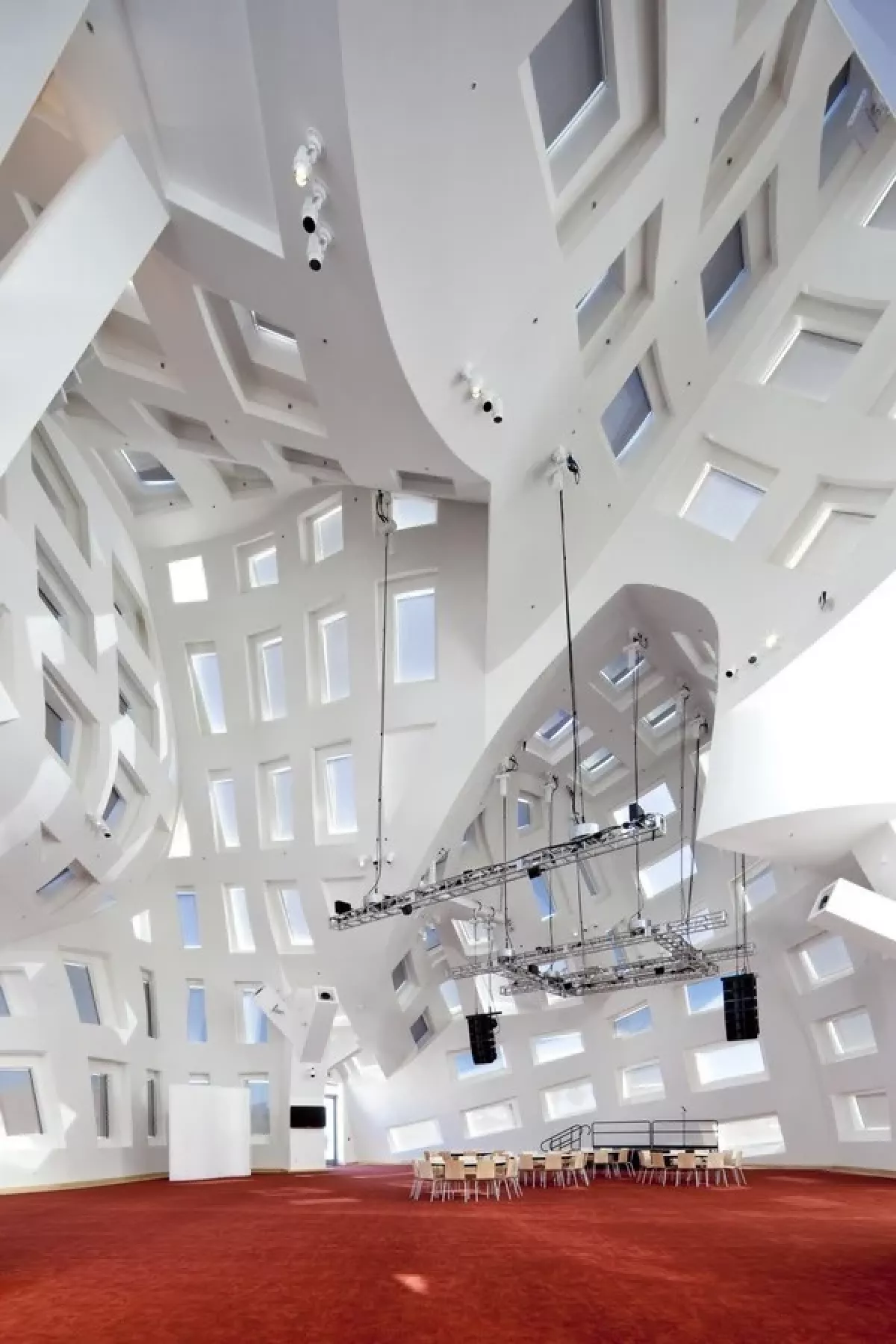
Based on Gehry’s principle to “Keep Memory Alive,” the 65,000-square-foot steel-clad facility combines research and treatment spaces. It was designed to foster community and support work toward curing neurodegenerative diseases.
Neuer Zollhof (Düsseldorf, Germany)
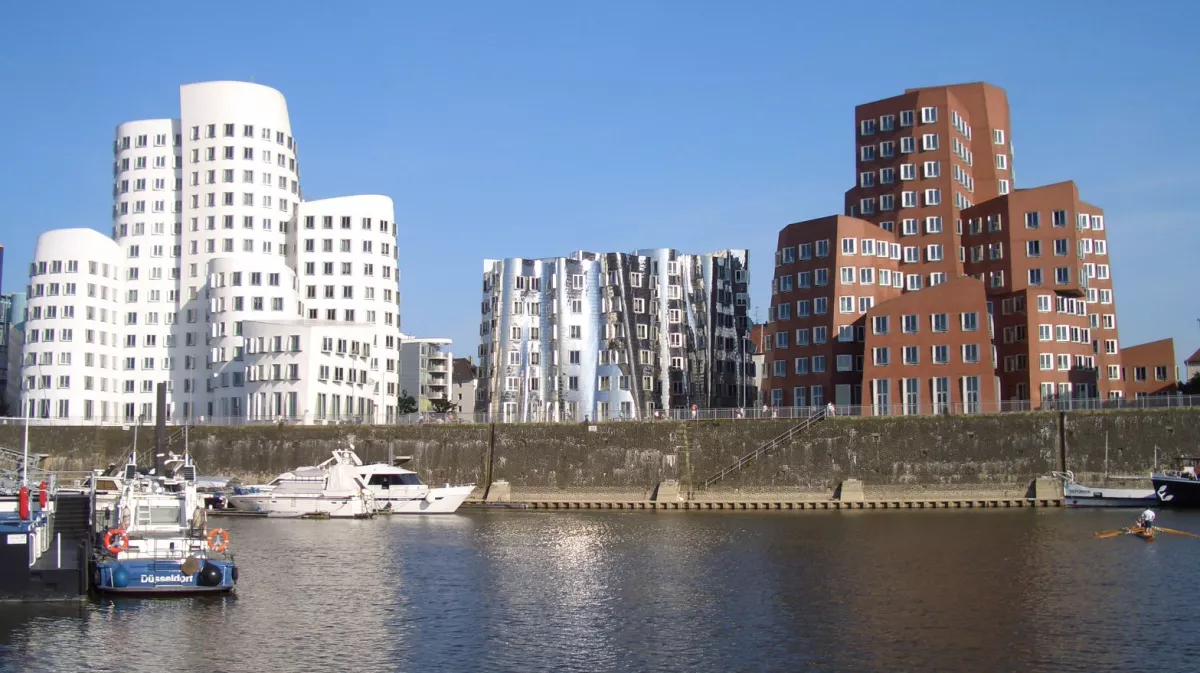
Also known as the Gehry Buildings, this complex marks a symbolic transformation of Düsseldorf’s harbour. Completed at the millennium, its three biomorphic, sculptural structures differ in material, height, and form. Although renowned British architect Zaha Hadid, who gifted the city of Baku its Heydar Aliyev Center landmark, initially won the design competition, her concept was never built.
Dancing House (Prague, Czech Republic)
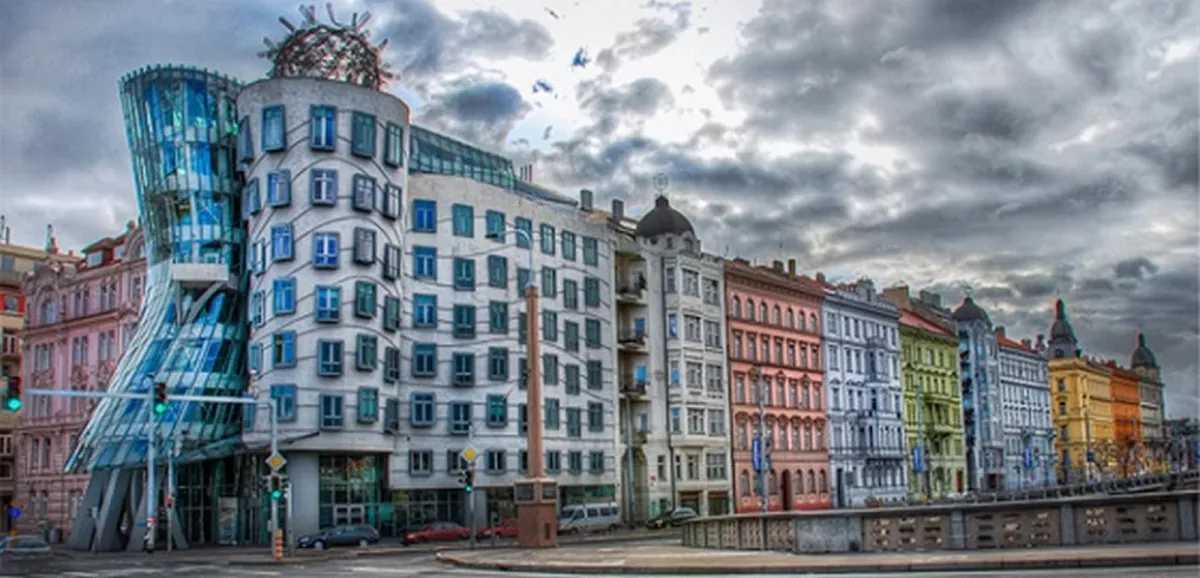

The Dancing House, or Fred and Ginger is the nickname given to a building in Prague where a major Dutch insurance firm is housed. It was designed by the Croatian-Czech architect Vlado Milunic in co-operation with the renowned Canadian-American architect. The design draws inspiration from the dancers Ginger Rogers and Fred Astaire, which is why the house resembles a pair of dancers. The structure is set on a property of great historical significance, as it was constructed on the site of a former apartment building that was destroyed by the US bombing of Prague in 1945.
By Nazrin Sadigova







 editor@caliber.az
 +994 55 444-88-98
 Азербайджан, Баку, ул. Низами, 203, Af Business House, 5-й этаж