










Baku and Bratislava "synchronised their clocks": New milestones in cooperation Overview by Khazar Akhundov
In recent years, Azerbaijan has intensified its relations with the countries of Eastern Europe across virtually all areas of the economic agenda, with Slovakia playing a particularly important role in this process. The two countries have established strong partnership ties, with cooperation in the energy sector—particularly the establishment of regular supplies of Azerbaijani gas—seen as a promising area of interaction. At the same time, Baku and Bratislava are focused on expanding cooperation in non-oil production, transport, digitalisation, the defence industry, and other areas. An important step in this process was the official visit of Slovak President Peter Pellegrini to Azerbaijan, who arrived at Fuzuli International Airport on July 13.
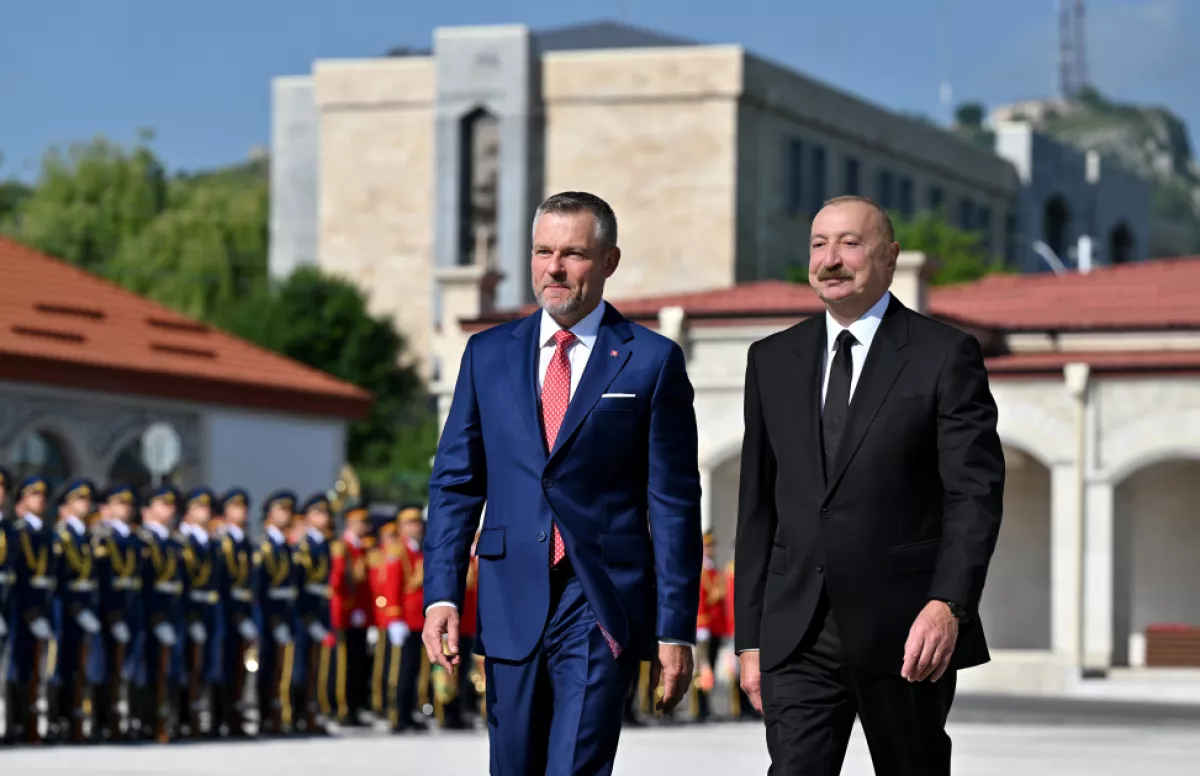
The agenda of the Slovak president’s visit was very extensive and included meetings with the Azerbaijani president as well as visits to observe the reconstruction work being carried out in the Karabakh region of the country. However, the central theme of all the meetings and events was the discussion of priorities and new areas of cooperation between the two countries, whose relations are based on the Joint Declaration on Strategic Partnership.
The talks between Ilham Aliyev and Peter Pellegrini took place in Azerbaijan’s jewel—the ancient city of Shusha—and this was by no means a coincidence. Slovakia is actively involved in the reconstruction of Karabakh. In particular, a Slovak company is implementing a "smart village" project in the village of Bash Garvand in the Aghdam district. On July 14, the two leaders familiarised themselves with the work being carried out there and also took part in the foundation-laying ceremony for the Milan Rastislav Štefánik Secondary School, which is designed to accommodate 840 students.
It was noted that the school will occupy an area of 3 hectares. The building will include 35 classrooms, technology rooms, military training rooms, computer labs, a library, and physics, biology, and chemistry laboratories. An assembly hall, sports hall, cafeteria, and other essential educational infrastructure will also be provided. Solar panels are planned to be installed to supply the building with electricity.
Continuing on this topic, it should be noted that in his press statement, the president of Azerbaijan thanked Peter Pellegrini for the Slovak side’s support and contribution to the reconstruction of Karabakh. Aliyev also noted that the issues discussed during their meetings focused on such areas as trade and economic relations, cooperation in the energy sector, military-technical cooperation, and other fields.
For his part, the president of Slovakia stated that he was proud that Slovak companies are participating in the reconstruction of Karabakh and thanked the Azerbaijani state for its prompt response during the energy crisis, recalling that natural gas supplies made a significant contribution to offsetting the shortfall following the cessation of gas transit through Ukraine. He also emphasised that the ministers of the two countries would continue discussions on finding stable long-term energy supply solutions beyond 2027.
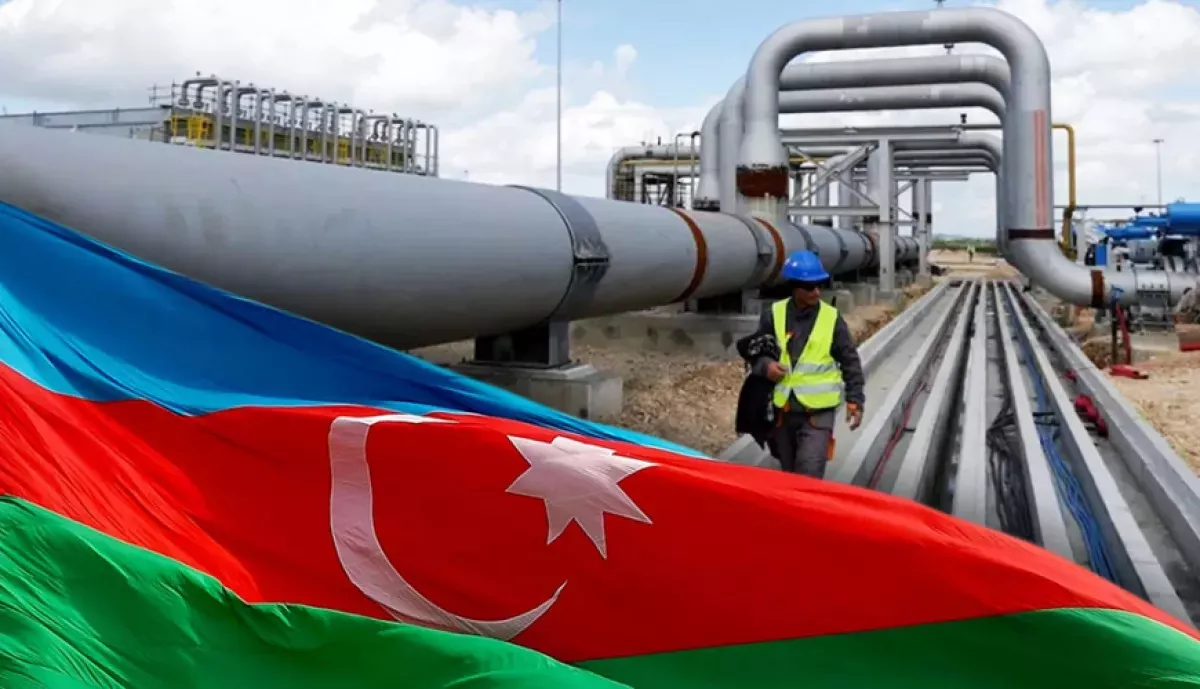
In this context, it is worth noting that in December 2024, pilot supplies of Azerbaijani natural gas to Slovakia commenced under the Solidarity Ring (STRING) initiative. However, these deliveries were carried out under a short-term contract between SOCAR and Slovakia’s largest energy company, Slovensky Plynarensky Priemysel (SPP).
At the same time, EU member states have begun implementing a plan for the gradual phase-out of Russian energy resources. Against this backdrop, the implementation of the Memorandum of Understanding for encouraging cooperation among Bulgartransgaz (Bulgaria), Transgaz (Romania), FGSZ (Hungary), Eustream (Slovakia) and the State Oil Company of the Azerbaijan Republic (SOCAR) is of particular importance. The memorandum outlined the strategy and plans for supplying additional volumes of Azerbaijani gas to Europe through the modernised STRING infrastructure.
Overall, Bratislava views Baku as a key partner in the South Caucasus for cooperation in the fields of trade and economy, transport, transit, and investment. The Joint Declaration on Strategic Partnership, signed in 2024, has opened a new chapter in relations between the two countries. There are indeed promising opportunities for the successful implementation of joint Azerbaijani-Slovak investment and industrial projects.
In recent years, the bilateral legal framework has expanded considerably, with more than a dozen documents having been signed, including an intergovernmental agreement on economic cooperation covering industry, construction, transport, logistics, investment promotion, energy, mining, tourism, small and medium-sized enterprises, agriculture, and other sectors. In January 2025, the agreement on the avoidance of double taxation entered into force between the two countries.
As for bilateral trade, it remains relatively modest and does not reflect the potential of the two states. According to Azerbaijan’s State Customs Committee, trade turnover between the parties amounted to just over $42.565 million in 2025, with Slovak imports accounting for the bulk of the exchange.
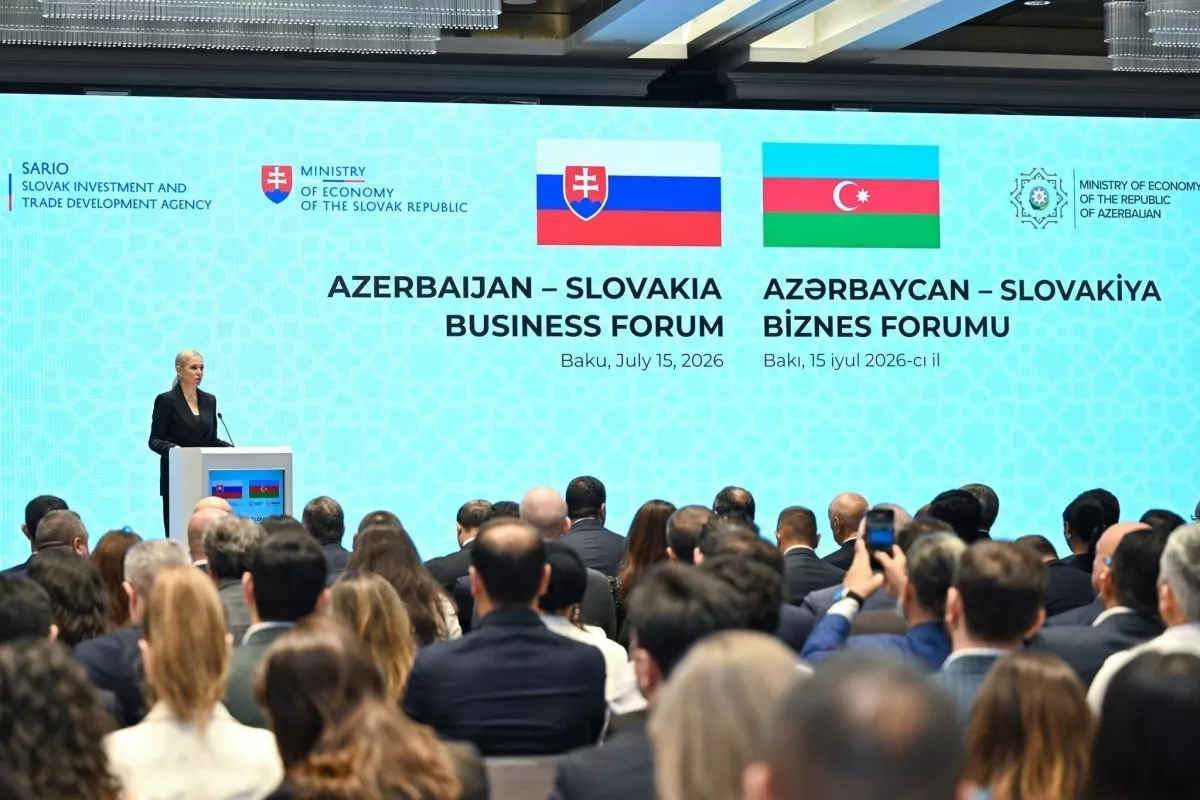
In light of the above, Azerbaijani-Slovak business relations are expected to focus on expanding trade turnover and investment cooperation. These objectives were the main focus of the business forum held in Baku the previous day. As AZPROMO Executive Director Yusif Abdullayev emphasised during the event, “Today’s forum brings together nearly 100 companies and government agencies from both sides. The Azerbaijani side is represented by companies and organisations operating in agriculture, food production, hazelnut processing, winemaking, construction materials, tourism, logistics, real estate, and finance.”
For her part, Slovak Deputy Prime Minister and Economy Minister Denisa Saková stated in her address to the forum that “the Slovak Republic is a modern industrial economy with a strong engineering tradition, a highly skilled workforce, and growing innovation potential, and Slovak companies are ready to become reliable partners in Azerbaijan’s further development.” She also stressed that Bratislava sees significant potential for cooperation in infrastructure, digitalisation, industrial production, water resource management, and advanced technologies.
According to another participant of the forum, Daniel Ondruš, Head of the Foreign Trade Department at the Slovak Investment and Trade Development Agency (SARIO), the agency’s mission is to help Slovak companies expand their international presence and find reliable partners abroad, and business forums such as this are among the most effective instruments for achieving that goal.
“This is already the fourth business mission to Azerbaijan organised by SARIO over the past three years. We view this as evidence of the growing interest of Slovak companies in Azerbaijan and the consistently strengthening economic ties between our countries,” Ondruš emphasised.
These efforts are yielding tangible results. In recent years, the two countries have identified priority projects in the IT sector, particularly in the areas of digitalisation and cybersecurity, as well as in the transport and telecommunications sectors and the establishment of regional-level data centres.
Baku and Bratislava are also expanding their partnership in the field of green energy. For example, Slovak companies export heat pumps to Azerbaijan that are used to reduce emissions through the use of low-carbon electricity.
Alongside energy and industry, cooperation between the two countries in the defence sector has also developed productively. Two years ago, Slovakia delivered a batch of 155 mm DITA L-45 self-propelled howitzers to Azerbaijan. Moreover, Slovak partners are prepared to participate in technology transfer, including the assembly of military equipment and the production of ammunition.
For its part, the Hungarian airline Wizz Air, which has established an air link between Slovakia and Azerbaijan, is expected to begin operating direct scheduled flights on the Bratislava–Baku–Bratislava route twice a week starting on September 29, 2026. This will enhance connectivity between the two capitals’ airports and expand opportunities for both business and tourist travel. To further promote this trend, a memorandum of cooperation was signed during the business forum between the Azerbaijan Tourism Bureau and Slovakia Travel.
Summing up the forum, Minister of Economy Mikayil Jabbarov highlighted the considerable opportunities arising from Azerbaijan’s unique geographical position linking the countries of Central Asia and the South Caucasus. He noted that Azerbaijan’s transport and logistics potential, together with its free trade regime, provides Slovak partners with access to the markets of the Caspian region and creates favourable conditions for establishing joint ventures.







 editor@caliber.az
 +994 55 444-88-98
 Азербайджан, Баку, ул. Низами, 203, Af Business House, 5-й этаж