










Bridge between worlds Baku’s strategy in an age of conflict
Today, the international security system is in a state of turbulence: regional conflicts are multiplying, the level of distrust between states is growing, and the traditional mechanisms of global governance are proving increasingly ineffective. Against the backdrop of this profound global transformation, Azerbaijan stands out particularly clearly. The country has managed to find a delicate balance that enables it to maintain friendly relations with a wide range of nations around the world, some of which are at times locked in a state of permanent confrontation with one another.
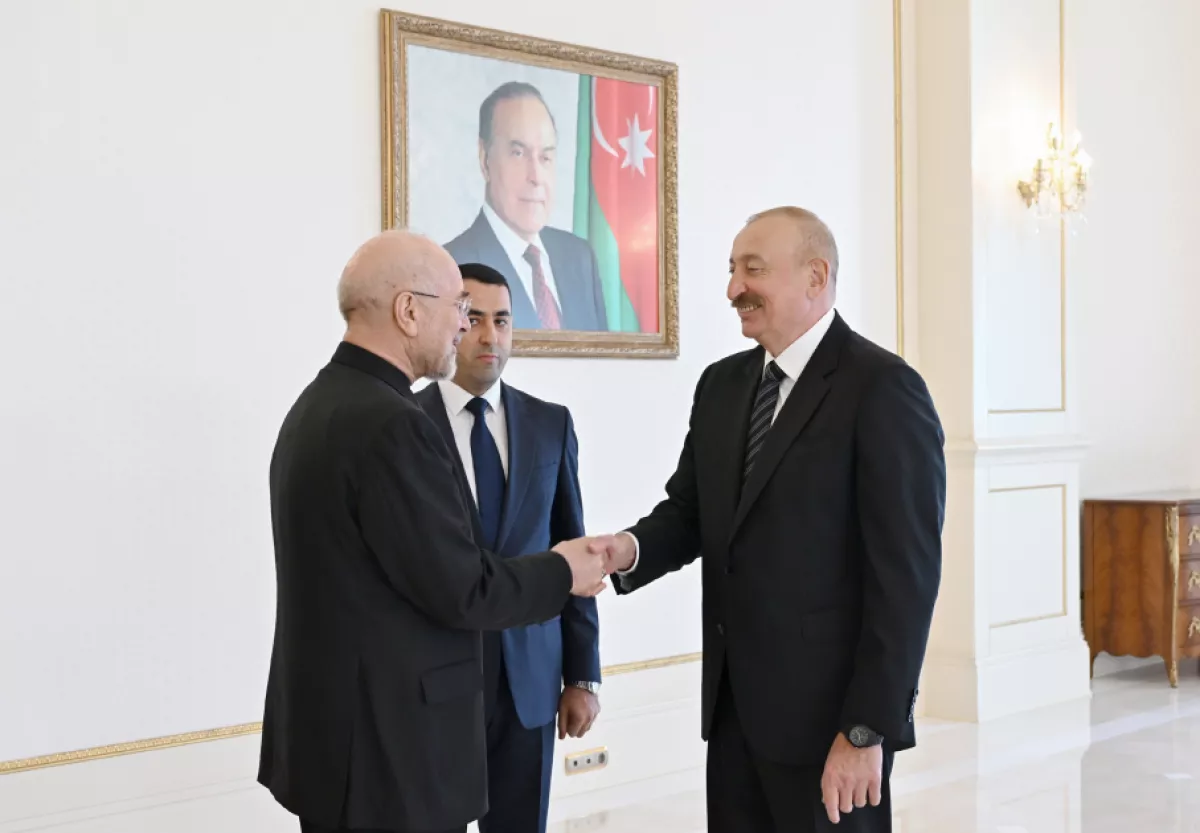
Direct evidence supporting this assessment can be clearly seen in recent developments. In particular, during the meeting on June 24 between Azerbaijani President Ilham Aliyev and the Iranian delegation led by Speaker of the Islamic Consultative Assembly of the Islamic Republic of Iran Mohammad Bagher Ghalibaf, who arrived in Azerbaijan to participate in the 20th Session of the Conference of the Parliamentary Union of the OIC Member States, special emphasis was placed on the successful development of Azerbaijani-Iranian relations.
In this context, the discussion extends beyond political dialogue to include concrete projects that are shaping a new architecture of regional cooperation and have already reached the stage of practical implementation. Construction of the Aghband–Kalaleh bridge has been completed, while the so-called Araz Corridor, which passes through Iranian territory, is being actively developed. These projects do more than expand transportation opportunities — they are creating a new geo-economic reality in which Azerbaijan and Iran act as complementary partners.
The meeting also highlighted another important point: the Azerbaijani leader expressed sympathy and support for the Iranian people, noting that they had recently endured severe hardships associated with war. He emphasised that Azerbaijan had demonstrated solidarity from the very first days, both through official statements and direct contacts. This approach serves as a clear illustration of Baku’s balanced policy toward building relations with its neighbours.

In this regard, Azerbaijan’s assessment of the ceasefire established in the Middle East is of particular significance. Ilham Aliyev stated that Baku welcomed the cessation of hostilities and promptly issued a corresponding statement. The principle that “there should be no wars in the region” is not merely a piece of diplomatic rhetoric; rather, it reflects Azerbaijan’s carefully considered strategic position as a country that has itself experienced the hardships of war and understands the true value of peace.
This was further confirmed by the words of gratitude expressed by Mohammad Bagher Ghalibaf for the support provided by Ilham Aliyev, the Azerbaijani state, and the Azerbaijani people during the difficult days his country faced.
Against this backdrop, the hosting in Azerbaijan of the 20th Session of the Conference of the Parliamentary Union of the OIC Member States (PUIC) — the supreme governing body of the interparliamentary organisation that brings together the legislative institutions of the member states of the Organisation of Islamic Cooperation (OIC) — acquires particular symbolic significance.
At the same time, the transfer of the chairmanship of the organisation from Indonesia to Azerbaijan, as well as the fact that Azerbaijan will host the OIC Summit next year and assume the chairmanship of the Organisation itself, serve as further confirmation of Baku’s steadily growing role as one of the key centres of political activity in the Islamic world.
Meanwhile, Azerbaijan is actively cooperating with the State of Israel across a wide range of areas, from energy and defence to education and artificial intelligence. A vivid testament to these enduring ties, whose foundation rests on strong people-to-people connections, was the opening of the Azerbaijani Embassy in Israel on March 29, 2023, as well as the visits of senior Israeli officials to the country.
In parallel, Azerbaijan continues to deepen its strategic dialogue with the United States. A clear indicator of this was the signing of the Charter on Strategic Partnership in Baku on February 10, 2026, by Ilham Aliyev and U.S. Vice President J.D. Vance. This historic document formalised the elevation of U.S.–Azerbaijani relations to a fundamentally new level.
Taken together, all of these factors provide clear evidence that the unique policy of balance, pragmatism, and strategic flexibility developed by Baku — a policy that prioritises tangible results over ideological constructs — is delivering real dividends. The success of this approach sends an important message to the wider world: in the emerging international order, it is precisely states such as Azerbaijan that are likely to play an increasingly significant role within the global political landscape.







 editor@caliber.az
 +994 55 444-88-98
 Азербайджан, Баку, ул. Низами, 203, Af Business House, 5-й этаж