










Constructivism in Baku: Konstantin Senchikhin’s factory-kitchen in Surakhani A journey into history with Caliber.Az
Baku is an open-air museum city. The architecture of different eras here forms a unified artistic landscape. The life and professional activity of many talented masters are closely connected with Baku. Among them, Konstantin Ivanovich Senchikhin holds a special place.
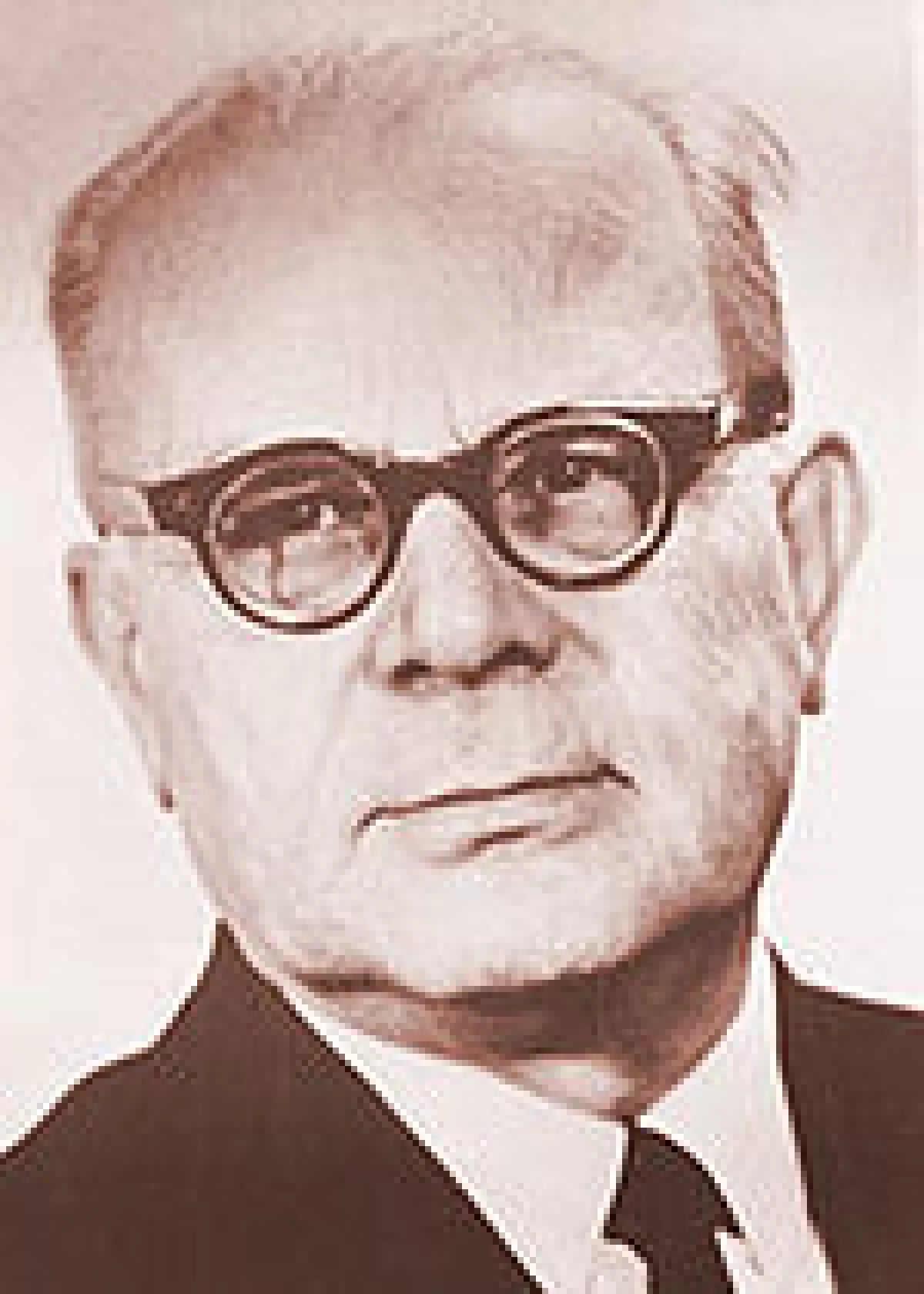
He was born in 1905 and devoted his entire creative path, knowledge, and experience to Baku. In 1925, he graduated from the Azerbaijan Polytechnic University, which marked the beginning of his long architectural career.
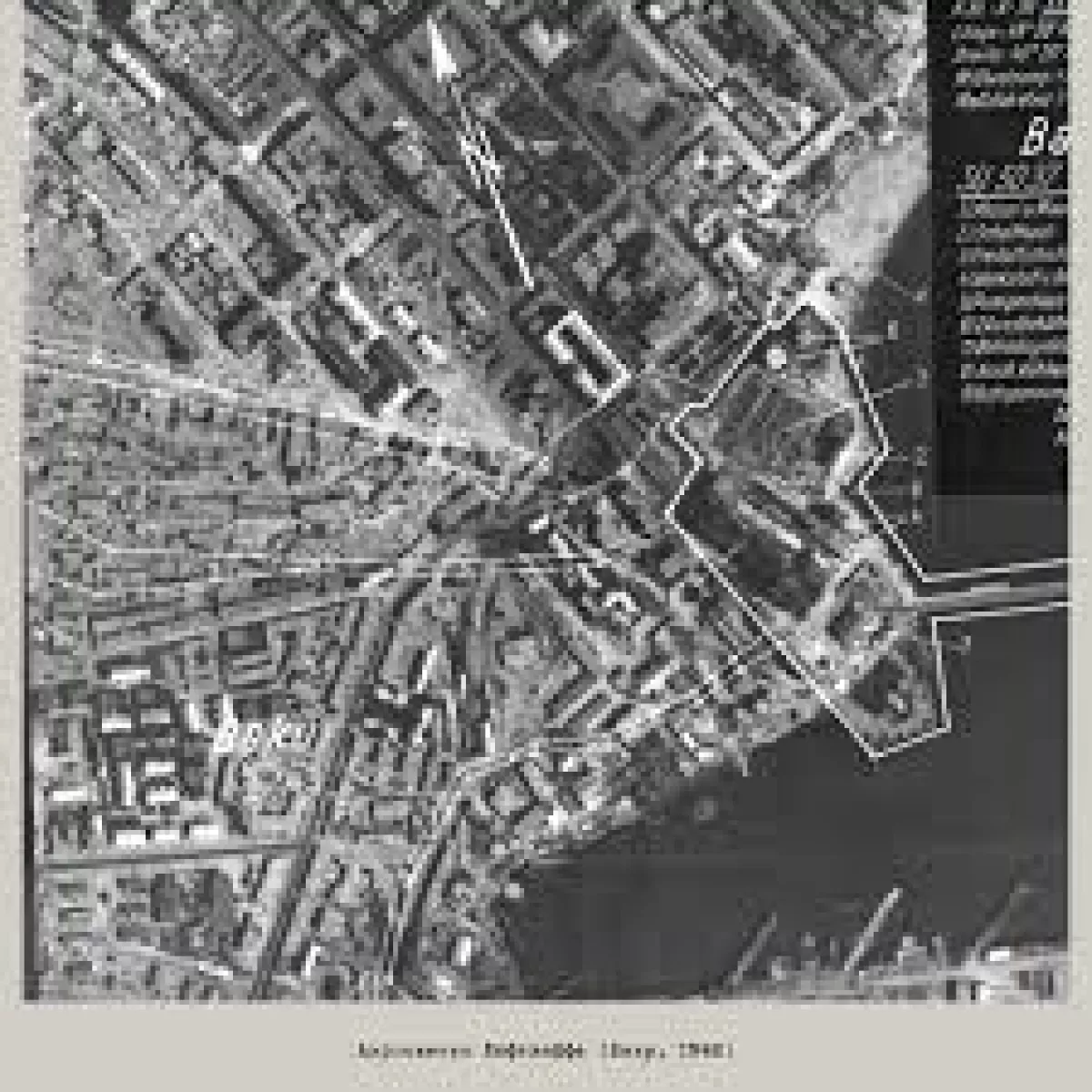
During his active professional period, Senchikhin headed the technical maintenance department and was also the architect of the “False Baku” project.
Later, he served as director of Bakmetroproekt and took part in supervising the construction of the Baku Metro. With his participation, the metro stations “Ganjlik,” “Shah Ismail Khatai,” “Bakmil” (formerly “Depo”), and “20 January” were created. His contribution to the development of underground architecture became an important part of shaping the modern image of Baku.
His contemporaries noted his distinctive style, which combined modernist and monumental solutions, for which he was even called the “Le Corbusier of Baku.”
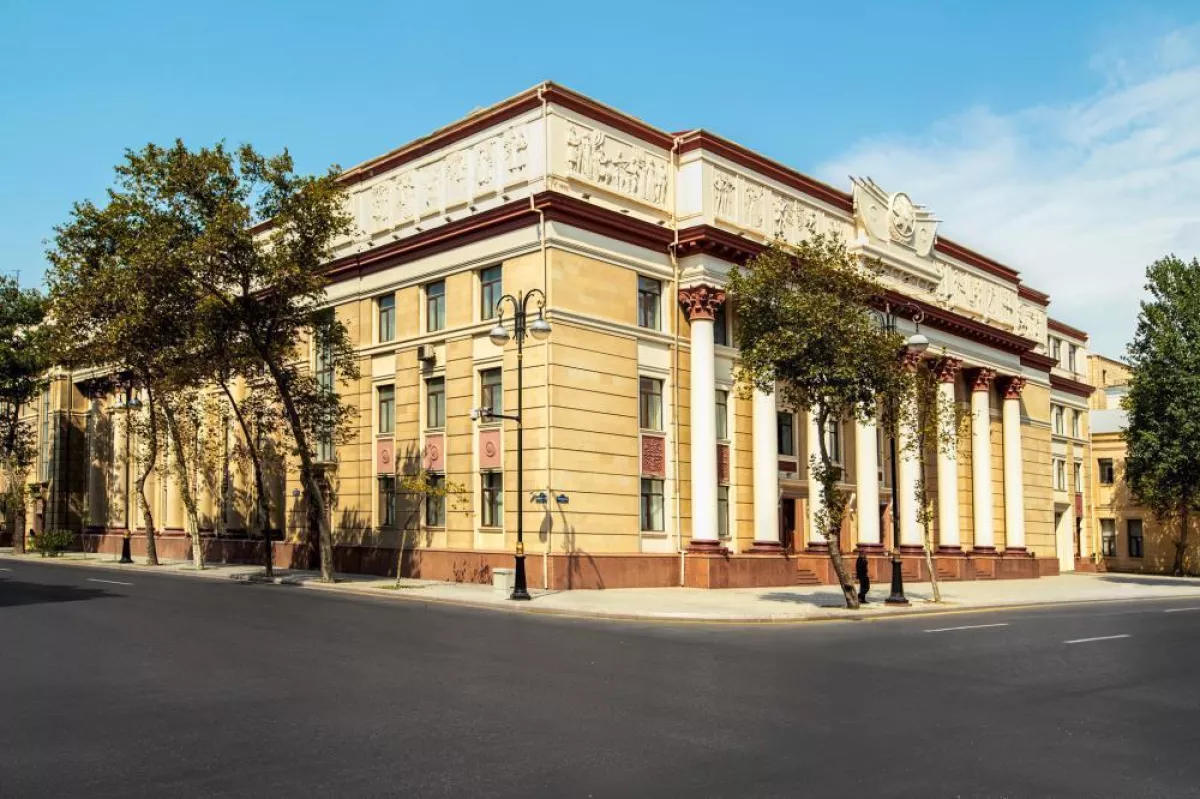
The architect left a noticeable mark on the city’s architectural landscape, creating a number of significant public and residential buildings. Among them are the building of the Azerbaijan Medical University, the interior of the Dzerzhinsky Club (now the Cultural Center of the State Security Service of Azerbaijan), the Dinamo sports complex (now the Dinamo Hotel), the complex of buildings of the former Baku Air Defense District (now the Ministry of Defense of Azerbaijan), as well as residential and administrative buildings at the intersection of Bakikhanov and Samad Vurgun streets, and the Palace of Culture in Lokbatan.
Among Senchikhin’s most well-known projects are also the “Monolith” building, the “Artists House,” and the “House of Specialists.”
An important place in his early creative work is occupied by factory-kitchens in Sabunchu (1930, diploma project) and in the settlement of Surakhani in the early 1930s, which reflect the industrial spirit of the era.
Such structures became widespread in the 1920s–1930s and were associated with the new social and everyday ideas of that time. Factory-kitchens were created as a new type of public space, intended to replace traditional domestic life with a collective system of public catering services.
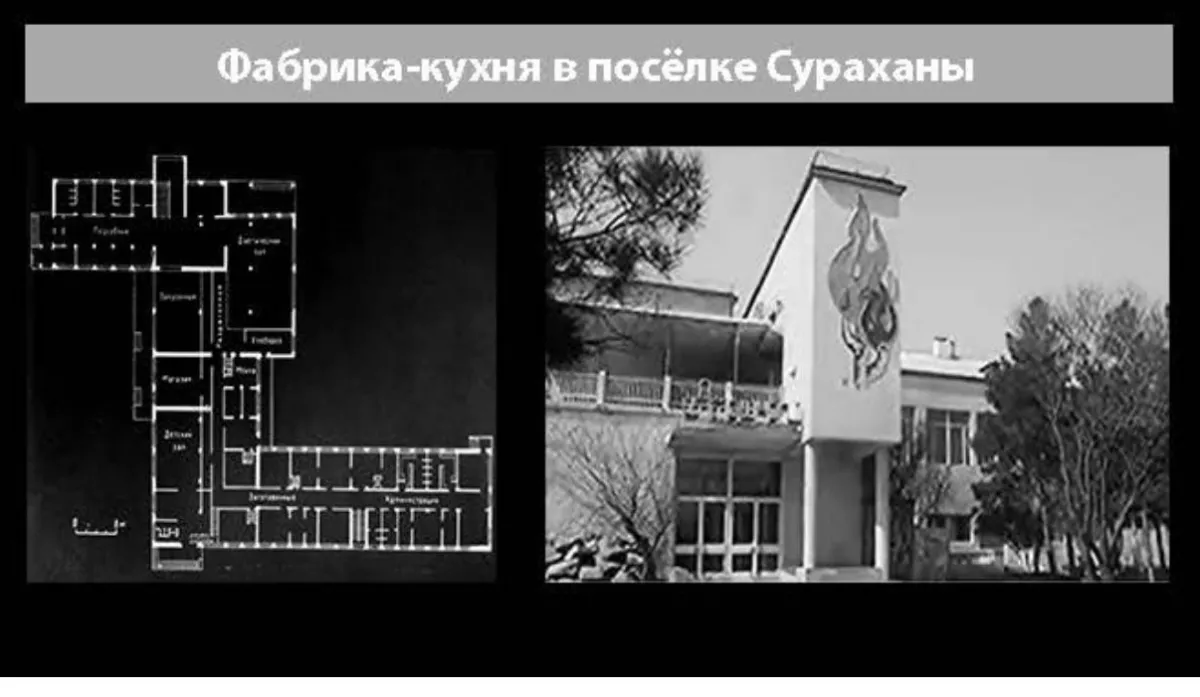
The architectural design of the building reflects the characteristic features of Constructivism: simple geometric forms, clean lines, an asymmetrical composition, and an almost complete absence of decorative elements. The main emphasis is placed on functionality and the convenience of the interior layout. Rationality and practicality are the key principles of this type of architecture.
The space is organized according to functional purposes: separate areas are designated for food preparation, storage of products, serving visitors, and utility needs.
Such an approach is typical of Constructivism, where form directly follows the function of the structure. The exterior is marked by strict conciseness: the combination of horizontal and vertical volumes creates a dynamic composition. Large window openings provide natural lighting, while flat façades emphasize the building’s modern character for its time.
Special attention should be given to the artistic treatment of the façade. In 1972, when the building housed a café, a decorative mosaic composition titled “Ateshgah” was created here by Hajibala Rajabov. This work became an important part of the building’s visual image, enriching its artistic perception and highlighting the connection between architecture and decorative art.
Despite Constructivism’s characteristic rejection of excessive decoration, such elements often appeared later during renovations and refurbishments, giving buildings additional expressiveness. The mosaic blended organically with the appearance of the structure and emphasized its industrial character. Even today, memories of the once-existing panel remain an important part of the history of this site and add to its architectural value.
The factory-kitchen in the settlement of Surakhani represents a valuable example of Constructivist architecture in Azerbaijan and testifies to the development of modernist trends in the first half of the 20th century.
Over the past decades, the building has undergone a number of changes: the façades were covered with modern materials, and some of the original elements have been lost.
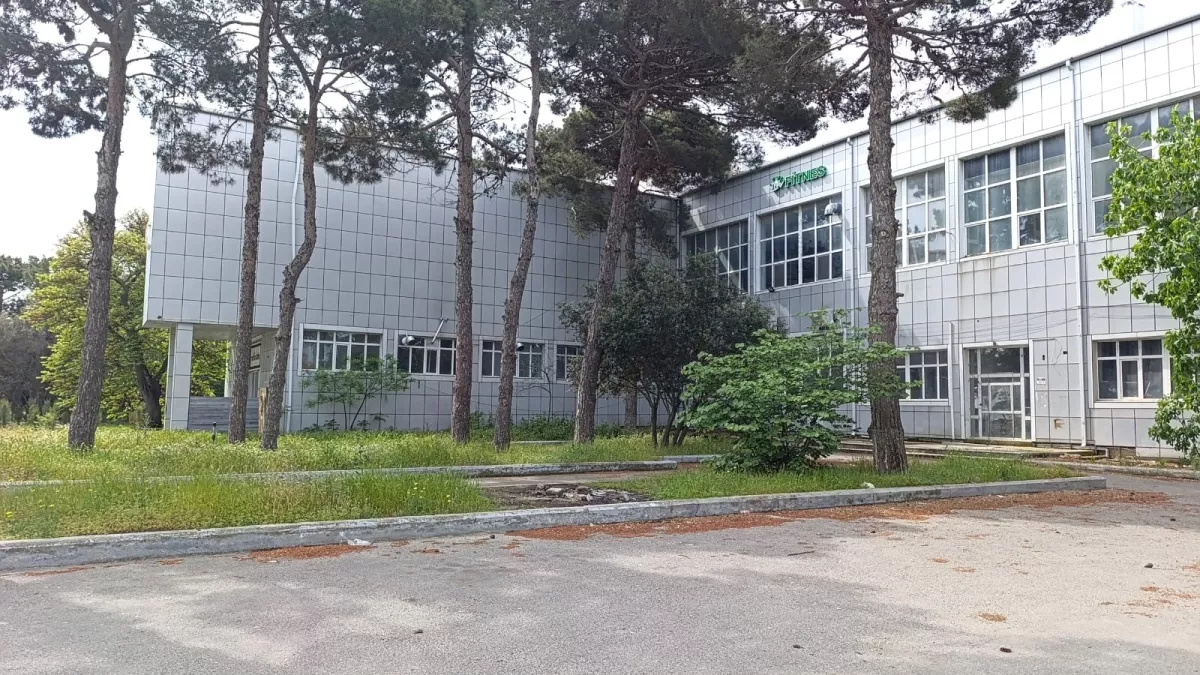
Nevertheless, it retains its historical and architectural value, remaining an important testimony to the development of Soviet modernist architecture in Baku and on the Absheron Peninsula, as well as a valuable heritage of its era.
Konstantin Ivanovich Senchikhin succeeded in creating not just a functional structure, but an expressive architectural object that harmoniously combines rationality, aesthetics, and the spirit of its time.
In 2017, “Azermarka,” commissioned by the Union of Architects of Azerbaijan, issued a postage stamp featuring his image, which became recognition of Senchikhin’s significant contribution to the country’s architectural heritage.
His work occupies an important place in the history of Azerbaijani architecture, and the buildings he created continue to shape the urban environment. His legacy is not just architecture, but part of the cultural code of an entire era.
By Vahid Shukurov, exclusively for Caliber.Az







 editor@caliber.az
 +994 55 444-88-98
 Азербайджан, Баку, ул. Низами, 203, Af Business House, 5-й этаж