










Europe's Parisian secrets “Coalition of the willing” summit in focus
The French capital hosted two important events this week. First, the leaders of around 25 countries, along with representatives of the EU, NATO, and Ukraine, held another summit of the "Coalition of the willing." The following day, they symbolically reinforced the decisions adopted at the summit with a joint parade marking Bastille Day. Together, these events demonstrated that Europe is increasingly seeking to build its own security architecture, although unity within it remains elusive.
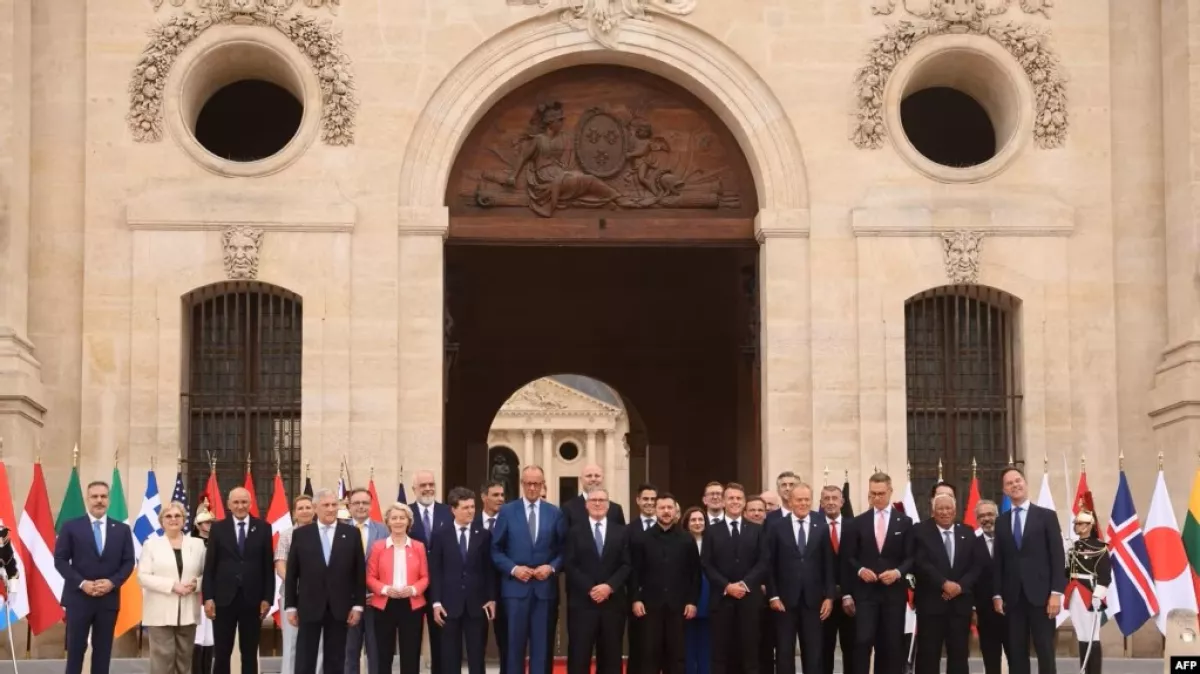
The "Coalition of the willing" emerged in the spring of 2025 at the initiative of France and the United Kingdom. Its creation was a response to several factors at once: uncertainty surrounding future U.S. policy following Donald Trump's return to the White House, direct contacts between Washington and Moscow on settling the Russia–Ukraine conflict, and the desire of European countries not to be left out of discussions on Ukraine's future.
From the outset, the format was conceived not as an alternative to NATO, but as a flexible grouping of states willing to participate in providing security guarantees for Ukraine following a possible ceasefire. At the same time, European leaders made little effort to conceal that the initiative was about more than just supporting Kyiv. Paris and London repeatedly emphasised that sustainable security guarantees for the Ukrainian state are regarded as a necessary condition for Europe's own long-term security and for reducing the risk of another large-scale confrontation on the continent.
Over the past year and a half, the European system of support for Kyiv has become considerably more complex. Whereas in the early years of the war the primary mechanism for coordinating military assistance was the Ramstein format—the Ukraine Defence Contact Group, bringing together more than 50 countries—its functions are now divided among several platforms. Ramstein continues to coordinate the supply of weapons, ammunition, air defence systems, and the training of the Ukrainian armed forces. NATO, through its NATO Security Assistance and Training for Ukraine (NSATU) mission, is responsible for organising long-term military assistance and training. The "Coalition of the willing" has assumed a different role: it is developing future security guarantees for Ukraine following a possible ceasefire, planning the deployment of the Multinational Force Ukraine (MNF-U), whose operational headquarters will be based in Paris, and coordinating preparations among the countries willing to participate in the mission.
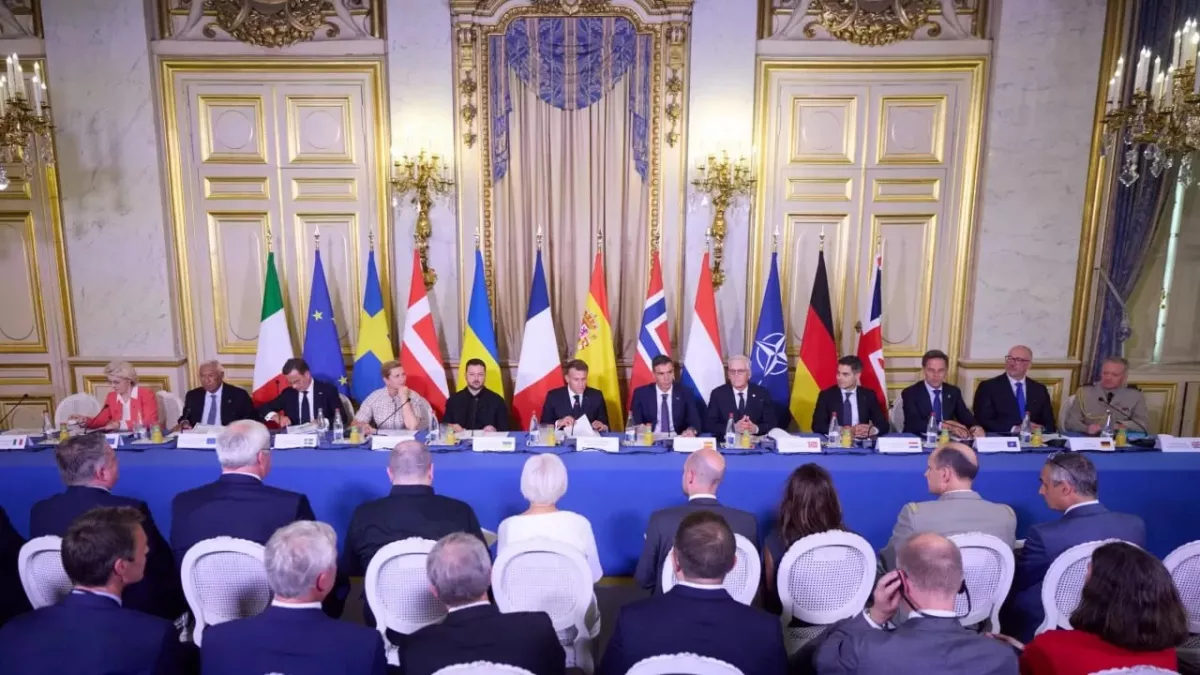
These issues were the main focus of the Paris summit, whose most concrete outcome was the decision to hold the first exercises of the Multinational Force Ukraine. Following the meeting, Polish Prime Minister Donald Tusk announced that the drills would take place this autumn in Poland with the participation of Polish, French, and British units. According to the organisers' plan, the exercises are intended to rehearse troop deployment, logistics, headquarters coordination, and command and control of forces that could be deployed after a ceasefire agreement is reached. One of the summit's key points of intrigue was Berlin's position: contrary to initial speculation that it would stay away from the exercises, a German government spokesperson officially confirmed that Germany would participate in the autumn drills and is currently working out the format of its involvement.
An important technological breakthrough announced at the meeting was the creation of a new structure within the coalition—the Anti-Ballistic Missile Coalition. Together with major European defence companies, Ukraine is launching the Freyja project—an ambitious program aimed at jointly developing and producing a more affordable European counterpart to the U.S.-made Patriot system to protect Ukrainian and European skies.
In addition, the participants agreed to significantly escalate sanctions pressure by coordinating efforts to conduct physical inspections and boarding operations on tankers belonging to Russia's "shadow fleet" in international waters. At the same time, the key political decisions were once again postponed. The summit failed to provide answers to questions regarding the conditions under which the coalition's forces could be deployed, what their mandate would be, who would make decisions on the use of force, and what commitments the participating states would undertake. It is precisely here that the project's main contradictions become apparent. The first is that not all participants are prepared for the same level of involvement. France and the United Kingdom consider the possibility of deploying their troops after hostilities have ceased. Many other countries are willing to participate only in training Ukrainian personnel, providing logistical support, intelligence assistance, or financing individual elements of the future mission.
The second contradiction concerns the role of the United States. Paris has consistently promoted the idea of European strategic autonomy, whereas London continues to maintain that any security guarantees should remain as closely integrated as possible with NATO and U.S. capabilities. Most participants also acknowledge that without the political, intelligence, and military support of the United States, the effectiveness of any future mission would be significantly reduced.
The third issue remains fundamental. There is still no answer to the question of what exactly the coalition's forces should do in the event that the war resumes. It has yet to be determined whether they would be obliged to engage in combat, whether they would be authorised to use force independently, and who would make the corresponding political decisions.
One can debate at length how quickly the "Coalition of the willing" will evolve into a fully operational mechanism. What is already clear, however, is that Europe has, for the first time in many decades, begun creating its own instruments of collective military planning outside NATO's traditional framework. For now, it is more of an organisational framework than a fully fledged military-political alliance. Yet it is often precisely such initiatives that become the foundation of a new security architecture.







 editor@caliber.az
 +994 55 444-88-98
 Азербайджан, Баку, ул. Низами, 203, Af Business House, 5-й этаж