










General Ryan: Ukraine attacking Russians where they are weak
Retired Australian Army General and military analyst Mick Ryan continues to follow the progress of the Russian-Ukrainian war on his Twitter page. He spoke for the first time, using the concept of "corrosion strategy," about the tactics of the Ukrainian army. Thus, he decided to share his observations regarding this strategy and also conclusively acknowledged that Ukrainians are "gods of war in the 21st century."
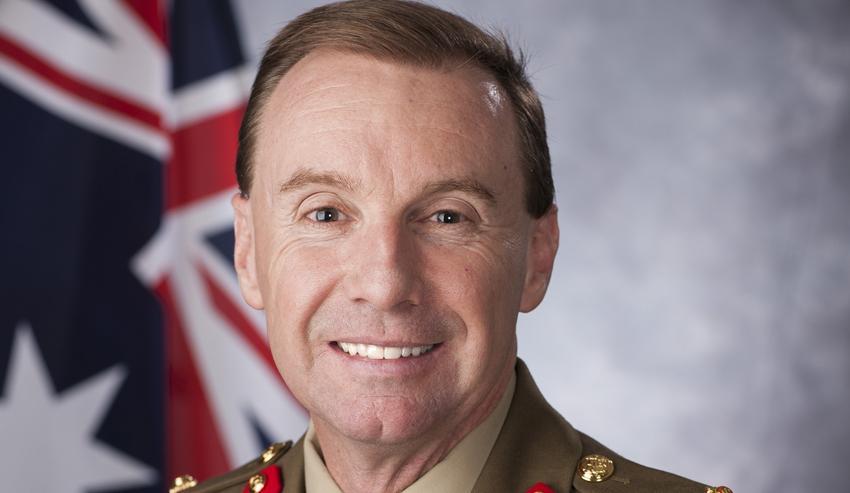
According to him, it is important to study the Ukrainian military strategy and how the AFU fights. The strategy offers important insights to modernize the Western military, many of which remain mired in the intellectual quicksand of the Cold War and political doctrines.
During the Russian invasion, the Ukrainian military was forced to constantly re-access its strategic objectives. Russia has downgraded their political goals for Ukraine, and the strategy for achieving them. The Ukrainians have fought and subverted Russian strategy.
While political objectives shape how war is conducted and what battles are fought, so too do battles reshape political objectives. It has been the Ukrainian military strategy, implemented with courage and discipline, that has driven this.
The Ukrainians have achieved this through the adoption of a simple military strategy: corrosion. The Ukrainian approach has embraced the corrosion of the Russian physical, moral, and intellectual capacity to fight in Ukraine - and in the global information environment.
The analyst believes that the strategy of corrosion sees Ukraine attacking the Russians where they are weak, while also using some of their combat power to delay and frustrate Russian combat forces. It extends beyond tactics and operations - it also attacks Russian military strategy.
British military historian and theorist, Basil Liddell Hart described this as the indirect approach. He wrote writes how “effective results in war have rarely been attained unless the approach has had such indirectness as to ensure the opponents unreadiness to meet it.”
The Ukrainians have taken this advice to heart. They have attacked the weakest physical support systems of an army in the field – communications networks, logistic supply routes, rear areas, artillery and senior commanders in their command posts.
In the Battles for Kyiv and Kharkiv, the Ukrainians were able to fight the Russians to a standstill because they were able to penetrate Russian rear areas and destroy parts of their logistic support. And in doing so, they had a significant impact on Russian morale. The Ukrainians therefor corroded the northern Russian expedition physical and morally from within, and forced its ejection from Ukraine.
The Ukrainians had less success with this approach in the Donbas however. Due to the alignment of the front line, and the concentration of most Russian offensive capacity, the Ukrainians were drawn into an attrition fight there for many weeks. This is a way of war that Russians embrace and one which the Ukrainians would have preferred to avoid. It was a crunching and destructive fight, with many lives spent on both sides for minor tactical gains by the Russians.
The military expert reflects on the issue of the introduction of HIMARS that changed this dynamic. It allowed the Ukrainians to realign their defensive operations in the east and adapt to attack the Russian strength (artillery) by targeting its ammunition supply depots. The Ukrainians are re-adopting the asymmetric conventional tactics they used so successfully early in the war. This is the Ukrainian ‘deep battle’, an integral part of their strategy of corrosion.
Ryan notes that another key target is command and control nodes, or in other words, command posts with senior Russian commanders. The ability to rapidly target these and use HIMARS to inflict maximum destruction is vital. Because beyond the physical, there is a psychological impact. Removing headquarters also removes important coordination nodes, breaking down force unity of effort. Targeting soldiers and units degrades (further) their morale and cohesion.
Russian morale is being corroded because of its battlefield defeats in the south, declining availability of artillery and destruction (seen on social media) of supply depots. And clever Ukrainians innovations like this are also having an impact. The use of social media, showing off Russian deficiencies, has magnified this moral corrosion. The corrosion in morale has resulted in declining battlefield discipline, with Russian desertions, battlefield refusals and – horribly – frequent war crimes.
The analyst admires how the Ukrainians have also forced on the Russians a deeper form of intellectual corrosion. Under pressure to achieve some form of victory due to previous setbacks, the Russians are taking greater tactical and operational risks with their military operations. More broadly, the Russians are having to form volunteer battalions which will not be as well-equipped, led or trained as the Russian forces that entered Ukraine in February. This is corroding the Russian military and its capacity to sustain operations in the long term.
The Ukrainian consistency in implementing their strategy of corrosion now sees the Russian Army under pressure, with insufficient reinforcements to replace an increasingly exhausted force that is under attack physically and psychologically.
Strategically, the Ukrainians are corroding Russia’s international standing with their global influence operations. And they have secured strategic commitments from the EU and NATO. In corroding the Russian military physically, morally, and intellectually, the Ukrainians have evolved the military art. This is what 21st century war looks like. The Ukrainians have proved to be masters of it.
"Ukraine, largely, has refused to fight how Russia wants to fight. It has developed and implemented its own military strategy with great discipline. What might other nations learn from the Ukrainian Armed Forces? In short – a lot. That is the topic of my next thread," the analyst stressed.







 editor@caliber.az
 +994 55 444-88-98
 Азербайджан, Баку, ул. Низами, 203, Af Business House, 5-й этаж