










How Sumgayit is transforming Azerbaijan’s economy Turning investment into jobs and global trade
In recent years, Azerbaijan has implemented large-scale initiatives as part of its new industrialisation strategy, with the development of industrial parks and industrial zones in several regions of the country serving as a key instrument. The most extensive and diversified projects for forming industrial clusters have been carried out in Sumgayit.
Recently, President Ilham Aliyev visited the Sumgayit Industrial Park, where a ceremony was held to launch factories producing mirror sheets and cardboard packaging. The president also took part in laying the foundation for a plant that will produce polypropylene and laminated bags.
The reforms of the past decade, aimed at new industrialisation, have positioned Azerbaijan’s non-oil sector as a key driver of economic growth, and today the growth rates of non-oil industries significantly exceed the overall GDP dynamics. The government has set a priority goal of increasing the total volume of non-oil exports to $5.3 billion by early 2027. To achieve this strategic objective, non-oil exports are expected to rise 1.8 times over the next couple of years, non-oil GDP to grow 1.3 times, and the share of the private sector in the country’s GDP to reach 88%.
Among other things, these trends will become central to the new “Socio-Economic Development Strategy for 2027–2030,” which the Azerbaijani government is currently finalising. Agro-processing and non-oil industries, the transport and ICT sectors, green energy, and energy efficiency have been identified as key drivers of sustainable economic growth. The strategy focuses on new stages of large-scale diversification of the national economy, where, alongside the industrial development of non-oil sectors with high export potential, a strong emphasis will be placed on digitalisation and the implementation of Industry 4.0 elements. Importantly, the execution of these plans will fully include the territories of Azerbaijan liberated from occupation.
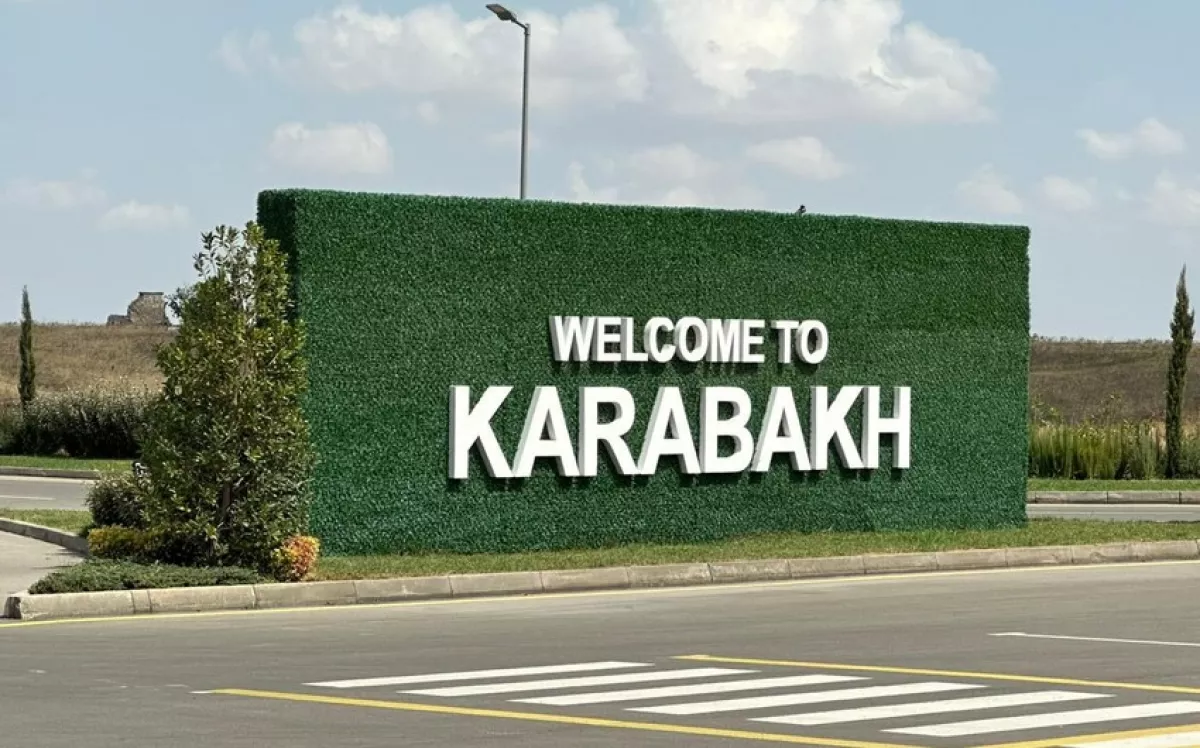
Notably, industrial clusters and special economic zones (SEZs) remain the most important instruments for achieving the country’s strategic economic development goals through 2030. All current residents benefit from numerous tax, customs, utility, and other preferences, have access to preferential loans, and enjoy state-funded infrastructure, including production and office facilities, as well as integration with transport networks.
Leading the way in terms of resident companies, investment volume, and operational enterprises are the Sumgayit Technopark, launched in 2009, and the Sumgayit Chemical Industrial Park (SCIP), established in 2011. Renamed in September 2025 as the Sumgayit Industrial Park (SIP), these clusters continue to expand, with the number of resident companies growing steadily each year.
During his recent visit to SIP, President Ilham Aliyev attended the opening of Azermirror LLC’s mirror sheet production plant. Granted resident status in 2023, Azermirror developed a one-hectare facility with an annual design capacity of 900,000 square metres of mirror sheets, highlighting the park’s ongoing industrial growth and investment potential.
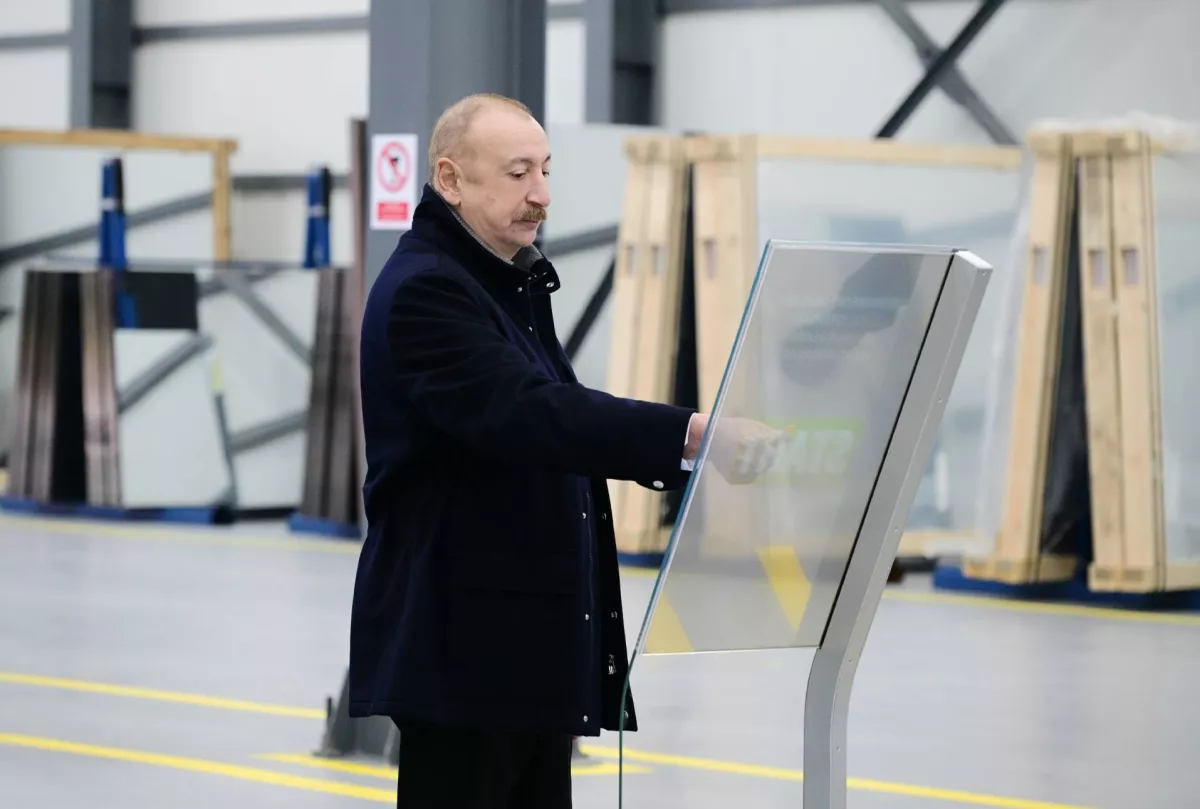
The investment value of the project, implemented using Chinese technologies, amounts to 6.13 million manats ($3.7 million), and it will provide permanent employment for 30 people. The enterprise is expected to meet domestic market demand, with part of its production earmarked for export. During the plant’s launch ceremony, it was noted that the Azerbaijan Small and Medium Business Development Fund (SIF) under the Ministry of Economy provided a preferential loan of 1.5 million manats ($882,000) for the establishment of the enterprise. In addition, the company benefited from all the incentives available to industrial park residents, receiving tax and customs exemptions worth 600,000 manats ($352,000).
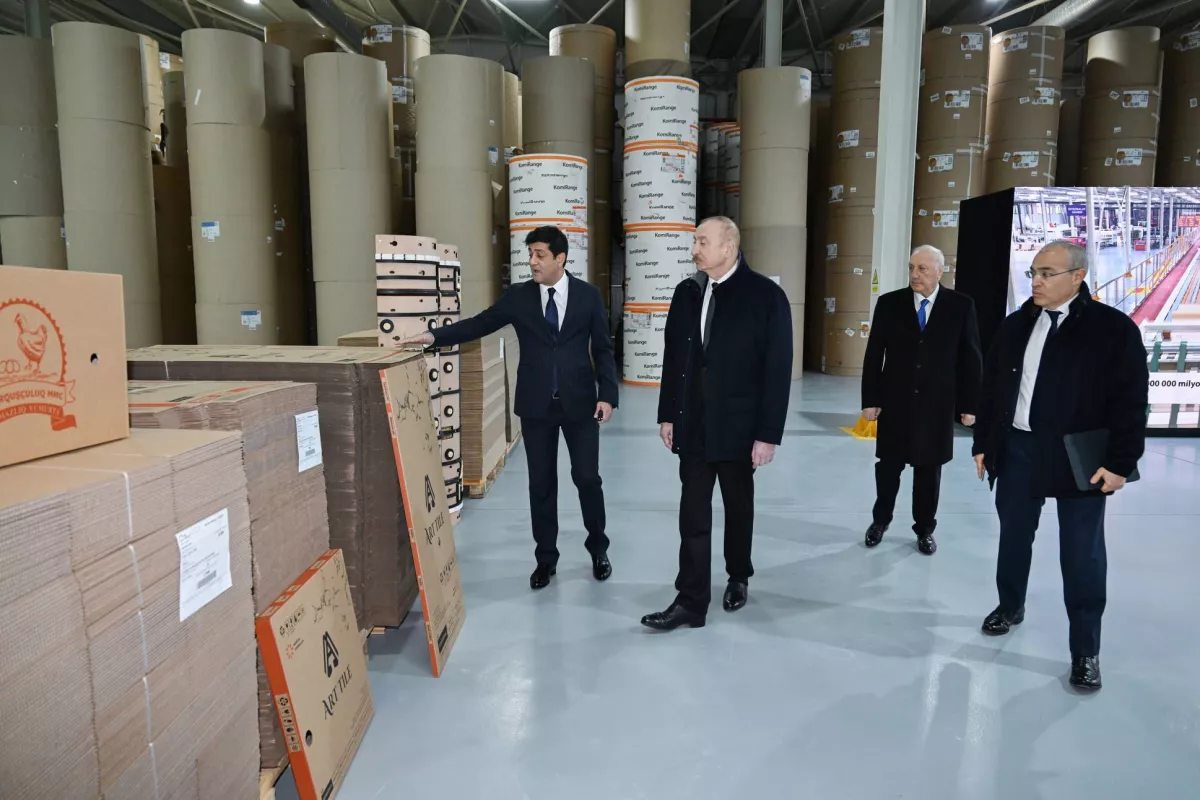
During his visit to the Sumgayit industrial zone, the President also participated in the commissioning of Baku Cardboard and Box Factory LLC, a cardboard packaging production facility that created 64 permanent jobs. After receiving resident status in 2023, the company built a facility on roughly 3 hectares, equipped with Turkish and Chinese technologies, designed to produce 55 million square metres of cardboard packaging annually, part of which is intended for export. In the first stage, the plant will focus on cardboard and box production, while the second stage will involve processing local raw materials required for cardboard manufacturing. The investment value of this enterprise is 20 million manats ($11.7 million), including a 2 million manat ($1.7 million) preferential loan from SIF, as well as tax and customs exemptions totalling nearly 1.3 million manats ($764,000).
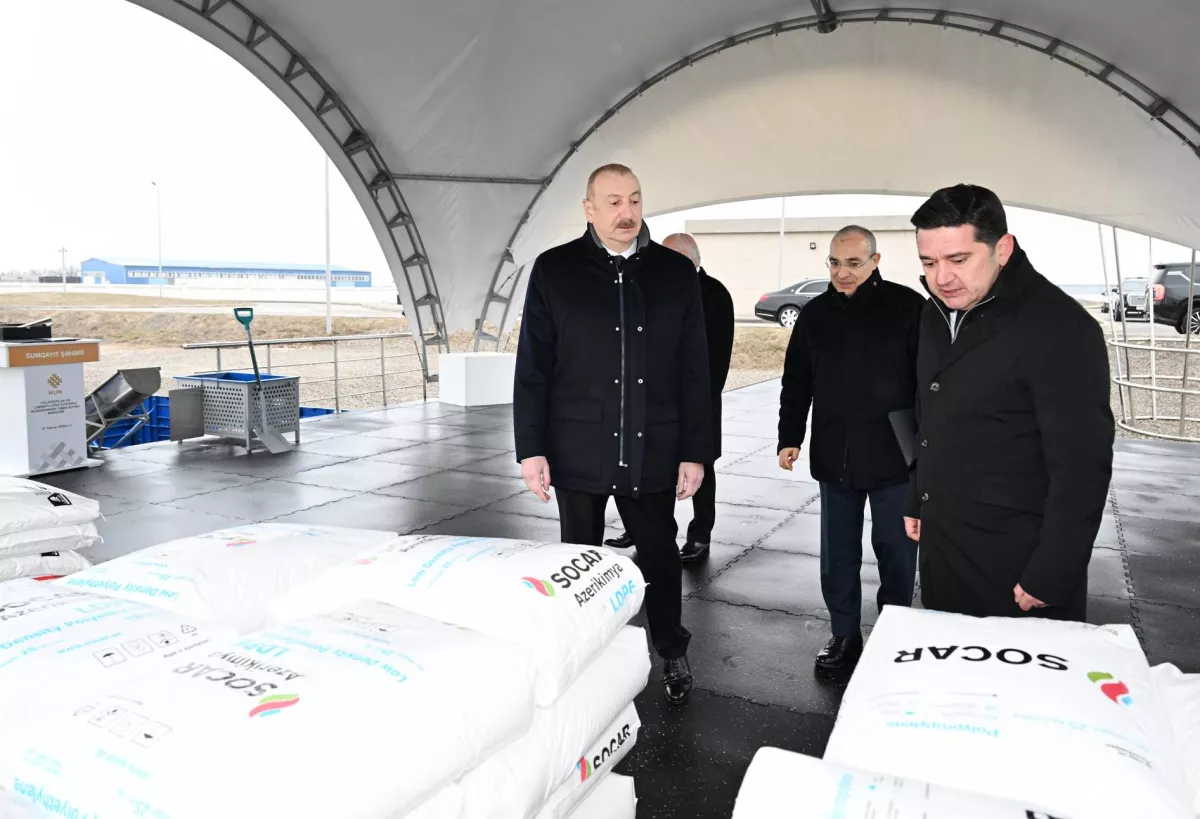
On the same day, President Ilham Aliyev took part in laying the foundation for Nun LLC, a polypropylene and laminated bag production facility within the SIP, which will provide permanent employment for 140 workers. Granted resident status in 2025, the company will build a one-hectare factory using German technologies, with an annual production capacity of 1,680 tonnes of laminated bags and 1,440 tonnes of polypropylene bags, totalling over 3,120 tonnes of output. The total investment in the facility is estimated at 11.2 million manats ($6.6 million), including a 3 million manat ($1.7 million) preferential loan from SIF. Imported equipment for the enterprise will also be exempt from VAT and customs duties.
The localisation of new facilities in the Sumgayit Industrial Park once again highlights the importance and potential of this industrial cluster. On a total area of 640 hectares, the park currently hosts 40 resident companies, with a potential project value of 6.7 billion manats ($3.9 million) and actual investments estimated at 5.5 billion manats ($3.2 million). Total sales by SIP residents have reached 15.4 billion manats ($9 million), including 5.7 billion manats ($3.3 million) in exports. The industrial park currently provides employment for 6,135 people, and with planned initiatives, the number of permanent jobs is expected to increase to 8,800.
In total, Azerbaijan currently operates eight industrial parks and four industrial zones, noted Minister of Economy Mikayil Jabbarov, who participated in the events at the Sumgayit Industrial Park: “Work is underway to establish the Nakhchivan Industrial Park, as well as a new Western Industrial Park in the city of Ganja and the Shamkir district.”
According to the minister, over 7 billion manats ($4.12 billion) have so far been invested in the country’s industrial zones, and 104 enterprises have commenced production, creating more than 11,000 permanent jobs. This number is expected to grow further, as an additional 1.74 billion manats ($1.02 billion) will be invested in the next stage of ongoing projects.
Overall, production in the industrial zones has reached 19.4 billion manats ($11.41 billion), of which goods worth 6.1 billion manats ($3.59 billion) have been exported to approximately 70 countries worldwide. Products manufactured in Azerbaijan’s domestic industrial clusters are exported to Eastern and Western Europe, North and South America, Asia, CIS countries, Türkiye, and beyond. These exports primarily include polymers, construction chemicals, steel, polymer pipes, lubricants, urea and carbamide fertilisers, sulfuric acid, cable products, construction glass, ceramic tiles, tobacco products, yarn, electrodes, energy and fire-fighting equipment, aquaculture feed, wallpaper, various types of footwear, and more.







 editor@caliber.az
 +994 55 444-88-98
 Азербайджан, Баку, ул. Низами, 203, Af Business House, 5-й этаж