










Legends of summer: England vs Argentina national teams Rivalry under the focus of history
The history of the football rivalry between England and Argentina has long gone beyond the boundaries of sport, and every new encounter between the two national teams is inevitably accompanied by political associations and memories of events that took place long before the opening whistle. This is precisely why the upcoming 2026 World Cup semi-final is attracting such interest: it is being followed not only by football fans, but also by those who remember one of the most painful chapters in the relations between the two countries.
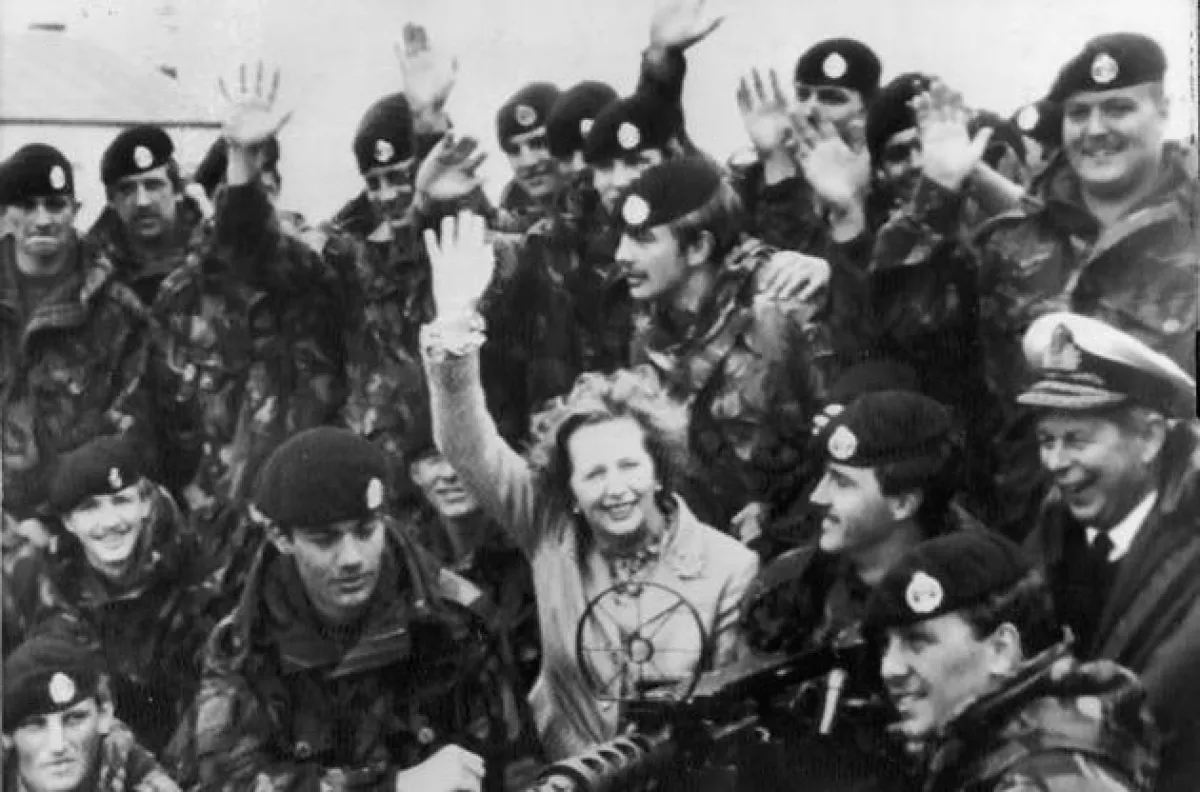
At the core of this historical tension lies the dispute over the Falkland (Malvinas) Islands. In the spring of 1982, the territorial conflict escalated into a full-scale war: Argentine forces landed on the archipelago, but several weeks later the United Kingdom restored control over it.
The victory strengthened the position of Margaret Thatcher’s government, while the defeat became one of the factors behind the rapid fall of the Argentine military junta. Despite the decades that have passed, the issue of sovereignty has still not been resolved: London continues to consider the islands a British Overseas Territory, while Buenos Aires consistently refers to them as the Malvinas Islands and considers them part of its country.
And today history is once again reminding us of itself. Just days before the semi-final, Argentine Foreign Minister Pablo Quirno published a detailed article in which he reaffirmed Buenos Aires’ unchanged position on the issue of the islands’ sovereignty, and also noted that the opinion of the current inhabitants of the archipelago cannot determine state sovereignty. However, the minister’s statement was preceded by another event – the passage this month of the British patrol ship HMS Medway through Argentina’s exclusive economic zone on its way to the Chilean port of Punta Arenas.
Thus, it is once again necessary to note the symbolism of the moment: the diplomatic escalation coincided with anticipation of one of the most significant matches in world football, once again placing the sporting rivalry under the harsh focus of history.

Notably, the British established full control over the Falklands on June 14, 1982, the day after the start of the FIFA World Cup in Spain. That summer, many hoped to see the two national teams face each other, but it never happened—the teams ended up in different groups during the second group stage, from which neither advanced.
However, the long-awaited duel that took place four years later rewarded the world with all its relentless passion. The quarter-final of the 1986 FIFA World Cup in Mexico became one of the most famous matches in football history.
It was then that Diego Maradona first scored with the help of an unsporting trick that went unnoticed by the referee, producing the legendary goal, and just a few minutes later—seemingly proving that he truly was the greatest footballer of his era—created what many consider the greatest goal in football history, dribbling past almost the entire England team. After the final whistle, Maradona openly stated that, for Argentinians, the victory had become a kind of revenge for the defeat in the 1982 war and, as is well known, famously described his handball as the “Hand of God.”
Twelve years later, the story took another dramatic turn. At the 1998 FIFA World Cup in France, England and Argentina met again in the knockout stage—more precisely, in the Round of 16. The teams exchanged goals in the first half, with Michael Owen scoring one of the tournament’s most beautiful goals. However, the defining moment of the match was the sending-off of David Beckham: after a crude provocation by Diego Simeone, the then-young England midfielder failed to contain his frustration and lightly flicked the Argentine with his foot.
Simeone, who had been waiting for just such a reaction, collapsed to the ground, exaggerating the consequences of what he portrayed as a serious foul. Danish referee Kim Milton Nielsen, who had not seen the beginning of the incident, produced a red card. England were reduced to ten men but managed to take the match to a penalty shootout, where they were ultimately defeated.
The match was marked by another memorable episode—in extra time, the referee disallowed a goal by Sol Campbell following a free kick, ruling that Alan Shearer had fouled Argentine goalkeeper Carlos Roa. In England, that decision is still regarded as one of the most controversial in the national team’s World Cup history, and after that match, the rivalry between the two sides became firmly established as one of the most emotional and fiercely contested in world football.
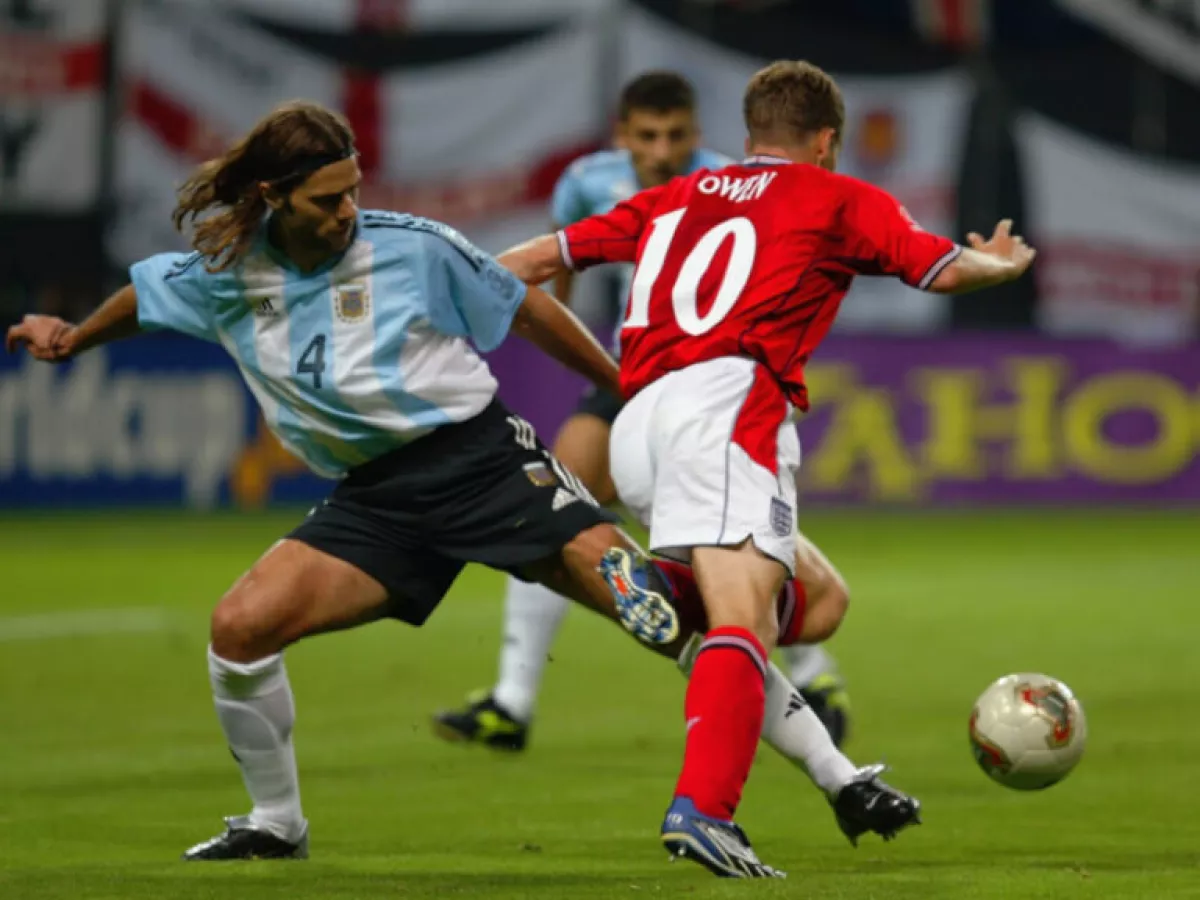
Four years later, the story took yet another turn. At the 2002 FIFA World Cup in Japan and South Korea, the two teams met in a group-stage match. In the 44th minute, Michael Owen was brought down inside the penalty area, and his teammates unhesitatingly handed the ball to their captain, David Beckham, fully aware of how important it was for him to atone to both the national team and the country for the youthful mistake he had made four years earlier.
Leaving nothing to chance, Beckham struck the ball with full force straight down the middle of the goal. The match ended 1–0. In England, the victory was seen as the long-awaited answer to the painful defeats of previous years, especially since Argentina, unlike England, failed to advance to the knockout stage.
Today’s semi-final is also noteworthy because, for the first time in his more than two-decade-long career, football legend Lionel Messi will play an official World Cup match against England. Meanwhile, England’s formidable lions—Harry Kane and Jude Bellingham—are clearly not prepared to allow the insatiable Argentine maestro to celebrate a victory over his country’s historic rival.
The match has gained additional attention due to controversy surrounding the tournament: in the lead-up to the semi-final, a petition calling for Argentina’s expulsion from the World Cup attracted significant interest, with its authors accusing FIFA of showing refereeing favouritism toward the reigning world champions.
Nevertheless, the history outlined above—in which sport and politics have blended into a remarkably rich and complex cocktail—only heightens, rather than overshadows, the main event. Today, two great teams will take the field against each other, which means that, regardless of the outcome, a great football spectacle awaits us.







 editor@caliber.az
 +994 55 444-88-98
 Азербайджан, Баку, ул. Низами, 203, Af Business House, 5-й этаж