










Polish scientists unveil "invisible shield" to stop drones safely
Polish researchers have unveiled an electromagnetic system capable of instantly disabling hostile drones, a development they say could significantly reshape the protection of critical infrastructure and sensitive locations.
The system, dubbed STRATUS, was developed by a team at Gdańsk University of Technology and works by emitting powerful electromagnetic pulses that disrupt or destroy the electronic components of unmanned aerial vehicles, as reported by TVP World.
Unlike traditional counter-drone solutions such as firearms or explosive interceptors, STRATUS uses short, high-intensity electromagnetic bursts to neutralise drones almost immediately, without triggering physical explosions. Researchers note that this makes the technology especially well-suited for deployment around airports, power plants, ports, and large public events, where conventional methods could introduce serious safety risks.
The significance of such safe drone-intervention techniques acquires special urgency in light of the mounting incidents of UAVs crossing sovereign borders, as has been the case in multiple European states over the past months.
At the core of STRATUS is a sophisticated electromagnetic effector designed to generate extremely strong yet precisely directed pulses. The research team says the primary technical challenge was not producing the electromagnetic impulse itself, but managing the extreme voltages and power densities involved while maintaining operational safety.
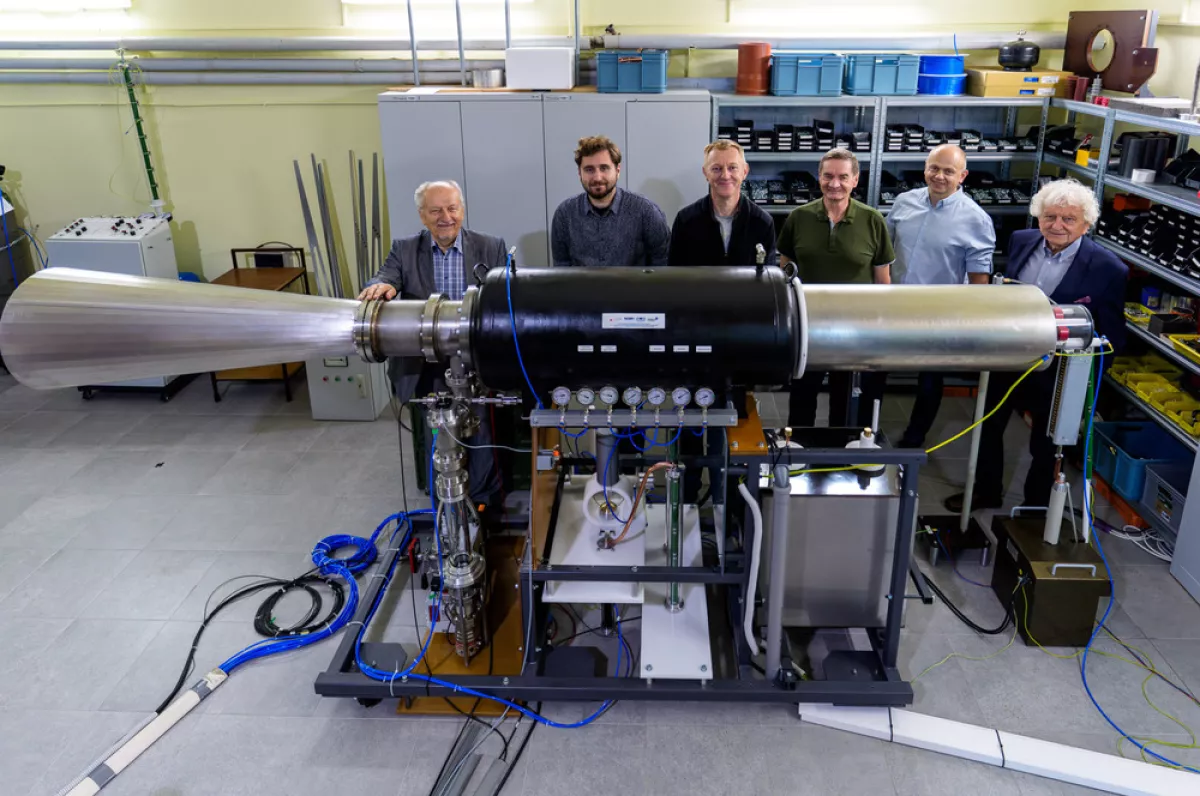
Scientists have compared the system to an “invisible shield,” emphasising that it disables drones electronically rather than shooting them down.
The technology has so far been successfully tested under laboratory and controlled conditions, though it has not yet entered operational use.
Counter-drone measures span a broad range of approaches, from physically destroying unmanned aerial vehicles to electronically neutralising their onboard systems. The STRATUS technology falls into the latter category, alongside widely used methods such as radio-frequency jamming and GPS spoofing.
STRATUS has secured more than 21 million zlotys (approx. €5 million) in funding from Poland’s National Centre for Research and Development, the state agency responsible for supporting innovation projects.
By Nazrin Sadigova







 editor@caliber.az
 +994 55 444-88-98
 Азербайджан, Баку, ул. Низами, 203, Af Business House, 5-й этаж