










The great reshuffle What lies behind the announced “renewal of power” in Ukraine?
The sweeping government reshuffle announced by Ukrainian President Volodymyr Zelenskyy in recent days appears to be a far more significant political development than a routine replacement of officials. Formally, the changes concern the Cabinet of Ministers, the diplomatic corps, and the security sector. However, viewed in a broader political context, what is unfolding points to something more substantial: Ukraine is entering a phase of preparation for an election campaign, even though the official date of the vote remains unknown.
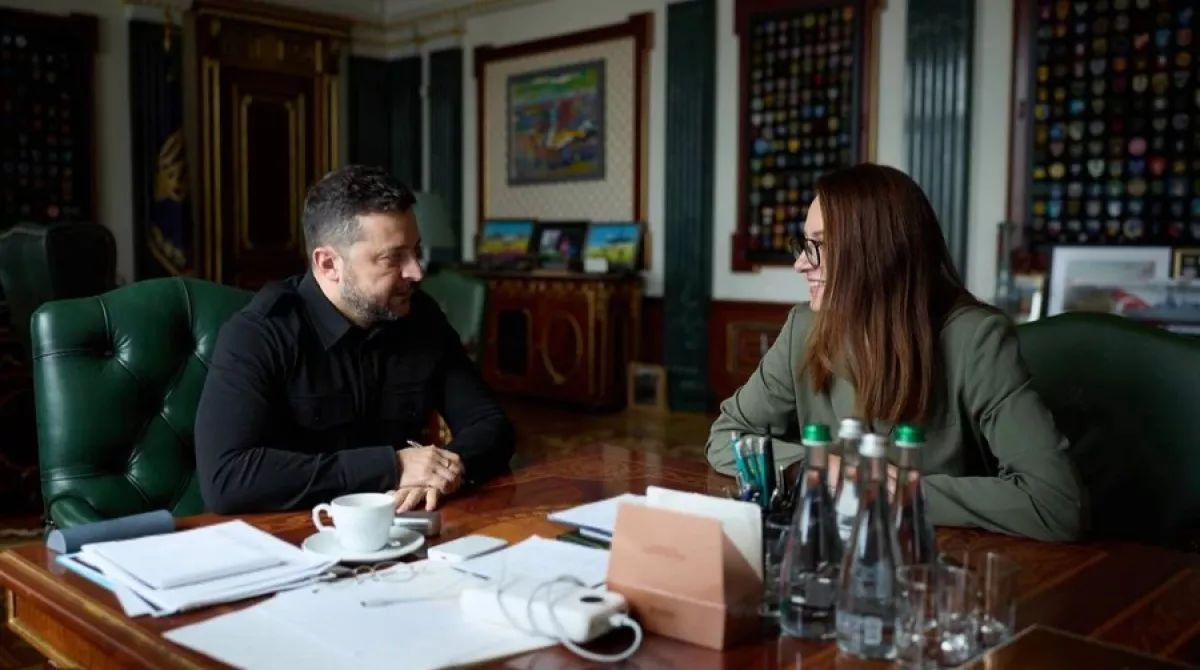
In his address, Zelenskyy emphasised the need to renew the government, adopt new approaches to foreign policy, and ensure more effective implementation of international agreements. At the same time, the list of priorities—the United States, the European Union, Poland, Hungary, China, and the Middle East—appears more like a political declaration than a concrete agenda for the new Cabinet. The key message, however, lies elsewhere: the president is seeking to demonstrate both to Ukrainian society and to the country's Western partners that the authorities are capable of renewal and are prepared to learn from the challenges that have accumulated.
It is no secret that over the past two years, a growing number of questions have been raised about Ukraine's leadership across a wide range of issues—from the fight against corruption, the effectiveness of public administration, and personnel policy to coordination between state institutions, the implementation of reforms, and adherence to democratic procedures. These concerns are voiced not only by Ukrainians but also by the country's Western allies, whose financial, military, and political support remains critical to the Ukrainian state.
Against this backdrop, the announced personnel changes are clearly aimed at two audiences, the first of which is external. For Washington, Brussels, Berlin, and other Western capitals, it is essential to see that the Ukrainian authorities are responding to corruption risks and are prepared to take politically difficult decisions. Particularly sensitive in this context is the situation surrounding Ukraine's ambassador to the United States, Olha Stefanishyna, whose dismissal, according to reports by several Ukrainian media outlets, may be linked to an investigation by the National Anti-Corruption Bureau of Ukraine (NABU). At this stage, the discussion concerns only the possibility that she could be formally notified of suspicion, but the very circulation of such reports poses significant reputational risks—especially given that Washington currently serves as Ukraine's most important diplomatic arena.
At a time when the U.S. administration places particular emphasis on transparency and the rule of law, a potential corruption scandal involving the country's former top envoy in Washington is, to put it mildly, highly undesirable. If the reports prove accurate, the logic behind the presidential administration's actions is easy to understand: remove a potential source of reputational damage before it escalates into an international crisis.
The second audience is domestic. Ukrainian society is gradually growing weary of the mistakes—and, at times, outright failures—of the current authorities. After more than seven years of Zelenskyy's presidency, it is no longer possible to attribute the country's problems to the legacy of his predecessors. That is why it is important for the incumbent president to create a sense of forward momentum by signalling his willingness to replace officials, restructure the system of governance, and seek new solutions.
This, however, raises a fundamental question: Is the system itself really changing? It is precisely here that the main paradox of the current reshuffle becomes apparent. Over the course of his presidency, Volodymyr Zelenskyy has built a highly centralised model of state governance. Despite Ukraine's parliamentary-presidential system, it is the Presidential Office on Bankova Street that effectively determines key personnel appointments, shapes the government's agenda, and exercises considerable influence over the parliamentary majority.
In recent years, Ukraine has gone through several changes of government: prime ministers, ministers of defence, foreign affairs, infrastructure, and economy, as well as heads of state-owned companies, have all been replaced. Yet the fundamental decision-making mechanism has remained largely unchanged. For this reason, many Ukrainian experts argue that the question of who exactly becomes the next prime minister is largely symbolic.
One of the leading candidates for the post is reportedly Serhii Koretskyi, head of Naftogaz, whom Volodymyr Zelenskyy recently publicly praised for his performance in state energy companies. This praise helps shape Koretskyi’s image as an effective manager whom the president is personally elevating to a higher level of responsibility.
A similar logic may explain the possible appointment of Yuliia Svyrydenko to diplomatic work in the United States: it can be interpreted as the transfer of an experienced official to one of the country’s most important foreign-policy posts. However, such personnel decisions are unlikely to signal a redistribution of political influence. On the contrary, they appear to demonstrate a further concentration of the governing vertical around the president.
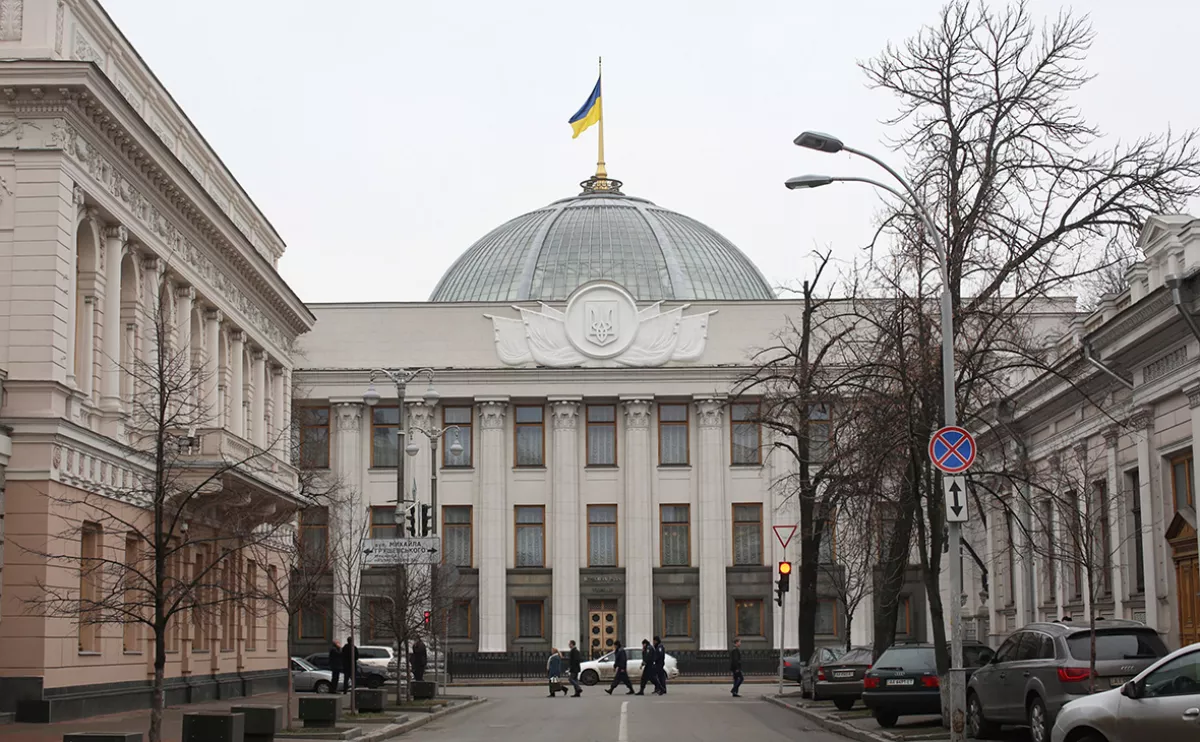
Equally revealing is the situation surrounding the formation of the new government. According to Ukrainian analysts, there are currently not enough votes in the Verkhovna Rada to approve a new prime minister. This means that the Presidential Office is being forced to engage in complex negotiations with parliamentary groups and individual lawmakers, offering various political compromises to secure the necessary support. The situation suggests that Ukraine's parliament is increasingly serving as a body that formalises decisions made elsewhere, rather than functioning as a platform for genuine political debate.
Another notable feature of the current reshuffle is that most of the reported appointments have been accompanied by numerous information leaks. As a result, the public learns in advance—through the media—the names of prospective ministers, diplomats, and security officials. This allows the Presidential Office to gauge public reaction and shape the desired information environment before final decisions are announced.
At the same time, the personnel reshuffle has not been accompanied by any public assessment of the previous government's performance. No reports have been presented on the implementation of the Cabinet's program, no specific reasons have been given for the anticipated dismissals, and there has been no open political debate about the shortcomings of the executive branch. As a result, the impression is that it is primarily the individuals who are being replaced, while the decision-making mechanism itself remains unchanged.
For this reason, the current reshuffle appears less like a genuine administrative reform than an element of Volodymyr Zelenskyy's broader political strategy to preserve his grip on power.







 editor@caliber.az
 +994 55 444-88-98
 Азербайджан, Баку, ул. Низами, 203, Af Business House, 5-й этаж