










Aegean bowstring: why is Athens challenging the Turkish doctrine? Artem Kirpichenok’s analysis
In antiquity, the maritime domain held a literally sacred significance for Athens. Over time, the Greek authorities supplemented this perception with issues of identity and state sovereignty. This outlook has endured to the present day, even though it does not fully correspond to the realities of the contemporary geopolitical landscape.
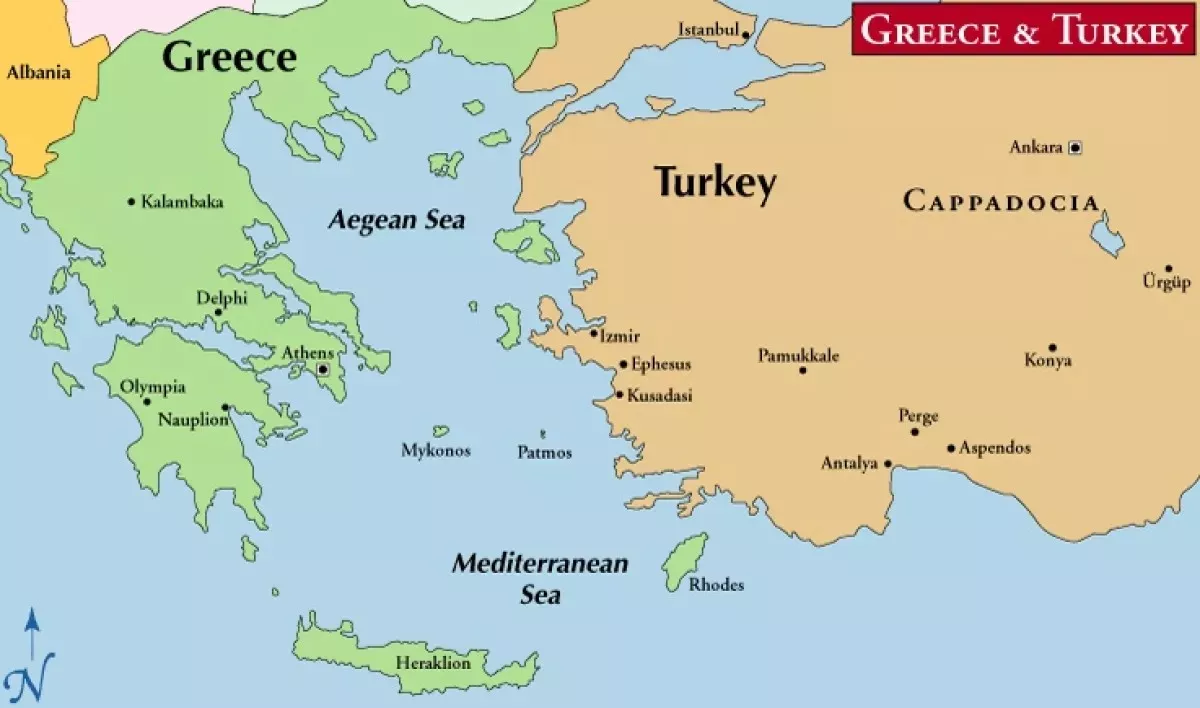
This Greek bias is particularly evident in its approach to Türkiye’s “Mavi Vatan” (“Blue Homeland”) doctrine, a security concept that encompasses Türkiye’s maritime jurisdiction zones in the Black Sea, the Aegean Sea, and the Mediterranean. Athens, however, views the doctrine as a form of “revisionist policy.”
Guided by this maximalist and one-sided perspective, the Greek authorities have begun developing a multi-layered strategy aimed at limiting Ankara’s legal and practical freedom of manoeuvre in matters of maritime jurisdiction. The objective is to create an institutional framework that would render Greece’s claims “predictable,” “normative,” and effectively synonymous with the existing “status quo.”
To achieve this, Greece relies not only on the capabilities of its Armed Forces but also on a range of diplomatic, institutional, and legal instruments. By treating its chain of islands as a geographical continuum with the mainland, Athens bases its legal and institutional approach on the 1982 United Nations Convention on the Law of the Sea (UNCLOS).
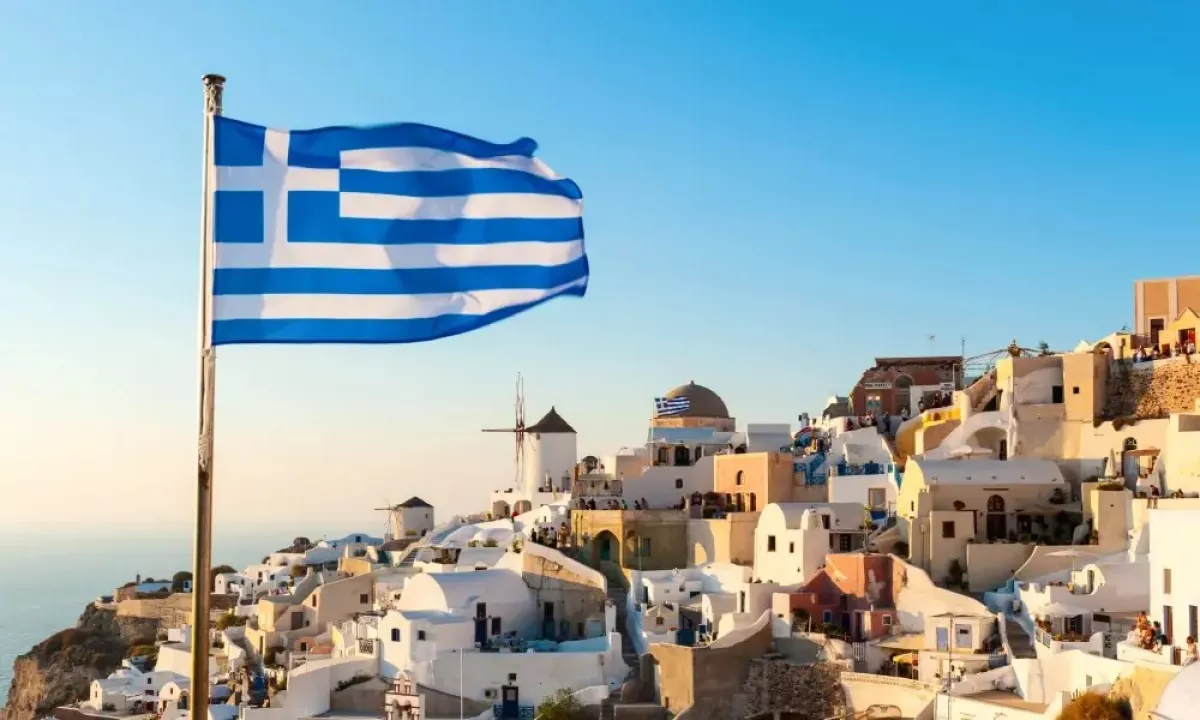
According to Article 121 of the convention, islands (with the exception of rocks incapable of sustaining human habitation or economic life) are entitled to their own territorial sea, contiguous zone, continental shelf, and Exclusive Economic Zone (EEZ). By seeking to institutionalise an approach under which its mainland and island territories constitute a single and indivisible geopolitical space, Athens aims to advance the concept of the “Aegean Sea as a Greek lake,” thereby securing an undeniable strategic advantage.
First, given that Greek islands such as Crete, Rhodes, and especially Kastellorizo are located in close proximity to the Turkish coastline, such a development would, from a legal standpoint, cut Türkiye off from much of the Eastern Mediterranean. Second, revised navigation charts and emerging legal precedents would automatically marginalise Ankara’s objections.
Third, Greece’s use of UNCLOS as the principal normative framework is intended to foster a negative perception of the Republic of Türkiye within the international community, portraying it as a state that “fails to comply with international law and deviates from generally accepted global norms.” At the same time, Athens deliberately disregards Ankara’s repeated warnings that any Greek decision to extend its territorial waters in the Aegean Sea to 12 nautical miles would be regarded by Türkiye as a casus belli — a cause for war.

Another key strategic line adopted by Greece to counter Türkiye’s Mavi Vatan doctrine is the internationalisation of maritime jurisdiction disputes. This is not merely about securing diplomatic backing; it is also an attempt to raise the political costs for Türkiye and offset the asymmetry in resources between the two states.
This strategy is pursued through three mutually reinforcing channels, the first of which is the European Union. Within the EU framework, Greece frames the maritime jurisdiction dispute in terms of the “security of Europe’s borders,” the “protection of the European Union’s maritime jurisdictions,” and “intra-EU solidarity.” In other words, Athens deliberately elevates the issue to the Brussels level, where it may generate the threat of sanctions and political pressure from European institutions.
The second avenue of Greek diplomatic activity is NATO, where efforts to counter Türkiye are presented under such slogans as “alliance cohesion,” “crisis management,” and “regional stability.” Through this approach, Athens seeks to argue that Türkiye’s naval policy is incompatible with the alliance’s security interests and fundamental principles.
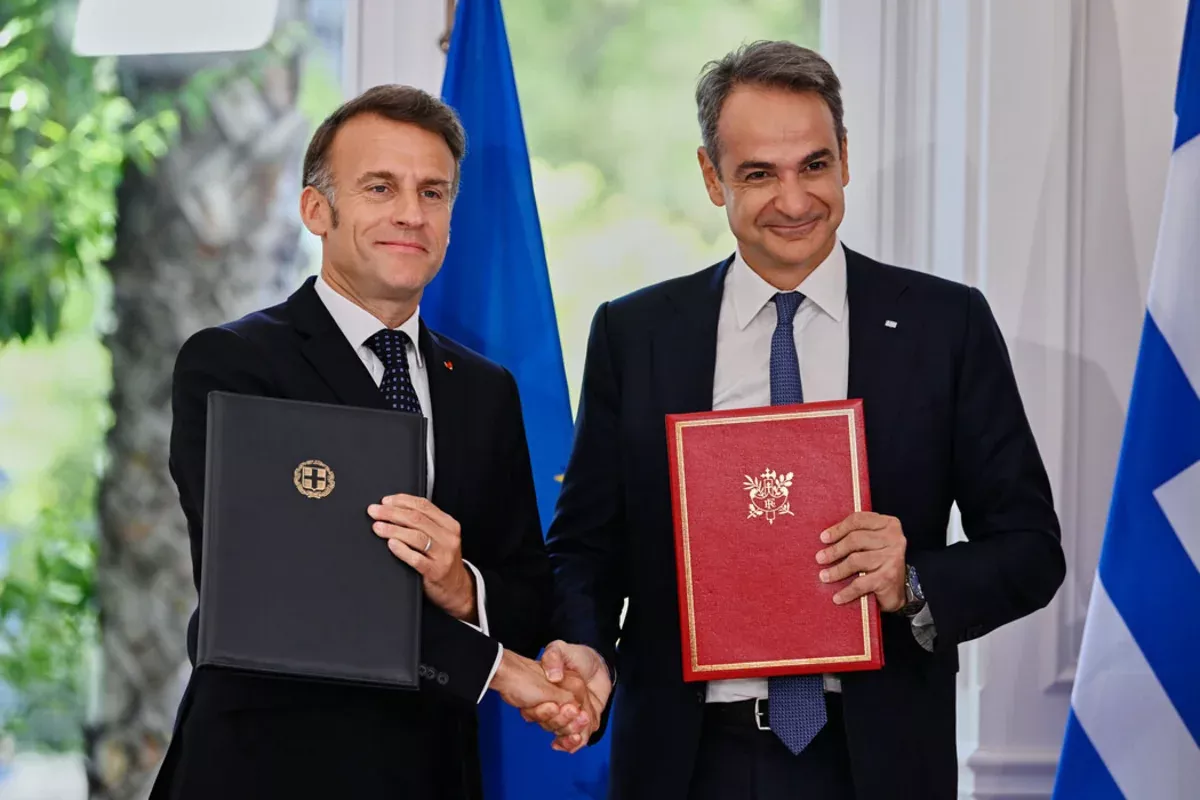
The third vector is the deepening of ties with countries such as France, exemplified by President Macron’s recent visit to Greece and his controversial statements. This cooperation includes expanded access to military bases, participation in arms procurement programmes, and joint military exercises. The agreements concluded within this framework are presented by the Greek side as a “stable platform for strengthening peace, cooperation, energy security, trade, and investment.” In essence, they are used to counter Türkiye’s Mavi Vatan doctrine, which Athens portrays as a concept that “threatens peace and stability in the region.”
These efforts are complemented by Greece’s alliance-building policy in the Eastern Mediterranean, aimed at excluding Türkiye from regional security arrangements and control over energy flows. The cornerstone of this approach is political and legal cooperation with the Greek Cypriot administration. In this context, Athens, in coordination with Nicosia—which is also a member of the European Union—actively promotes its arguments for expanded maritime jurisdiction within the EU, seeking to make them part of the broader European discourse.
At the same time, trilateral and quadrilateral summits, joint energy forums, and security dialogues are designed to establish a framework for cooperation in the Eastern Mediterranean that does not include Ankara. From this perspective, the Eastern Mediterranean Gas Forum (EMGF) and the Eastern Mediterranean Energy Centre (EMEC) function not merely as mechanisms for coordinating energy supplies, but as instruments of regional governance that operate without Turkish participation. Likewise, the EastMed pipeline project—whose economic viability remains a subject of debate—is viewed as a means of excluding the Republic of Türkiye from the region’s economic architecture.
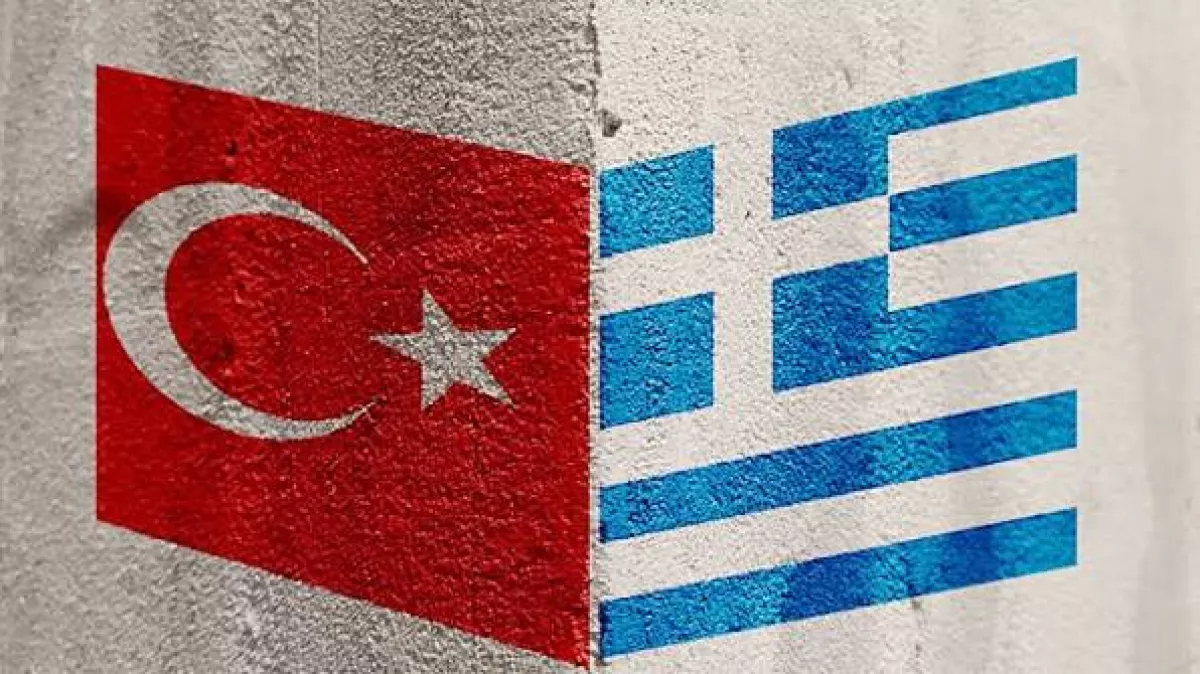
In addition to diplomatic and economic measures, Athens has taken steps to militarise the Aegean islands, a move that, according to critics, runs counter to international agreements such as the 1923 Lausanne Peace Treaty, which established a demilitarised status for the islands of Chios, Samos, Lemnos, Lesbos, and Ikaria, and the 1947 Paris Peace Treaty, which imposed similar demilitarisation provisions on the Dodecanese archipelago (including Rhodes) following its transfer from Italy to Greece after the Second World War.
At the same time, the Greek authorities continue to strengthen their Armed Forces. In this process, particular emphasis is placed on concentrating naval power in the most vulnerable areas and achieving qualitative superiority in key domains such as anti-submarine warfare, naval air defence, and the deployment of advanced logistics, intelligence, surveillance, and reconnaissance capabilities.
As a number of analysts have pointed out, Athens’ policy of countering the Mavi Vatan doctrine and consolidating Greek influence in the region is accompanied by structural risks that increasingly encourage both sides to view each other’s intentions with suspicion. As a result, even defensive measures tend to be interpreted as evidence of aggressive ambitions. This dynamic creates a cumulative effect which, in the medium to long term, could become the equivalent of a tightly drawn bowstring—an ever-growing source of tension with the potential to trigger a broader confrontation.







 editor@caliber.az
 +994 55 444-88-98
 Азербайджан, Баку, ул. Низами, 203, Af Business House, 5-й этаж