










Shusha verdict: anti-Azerbaijani campaign gets a political reckoning Article by Matanat Nasibova
President of Azerbaijan Ilham Aliyev's keynote address at the opening of the 4th Shusha Global Media Forum has already gone down in history not because of individual remarks, but as a comprehensive set of sharp strategic messages directed simultaneously at the South Caucasus region and the international community.
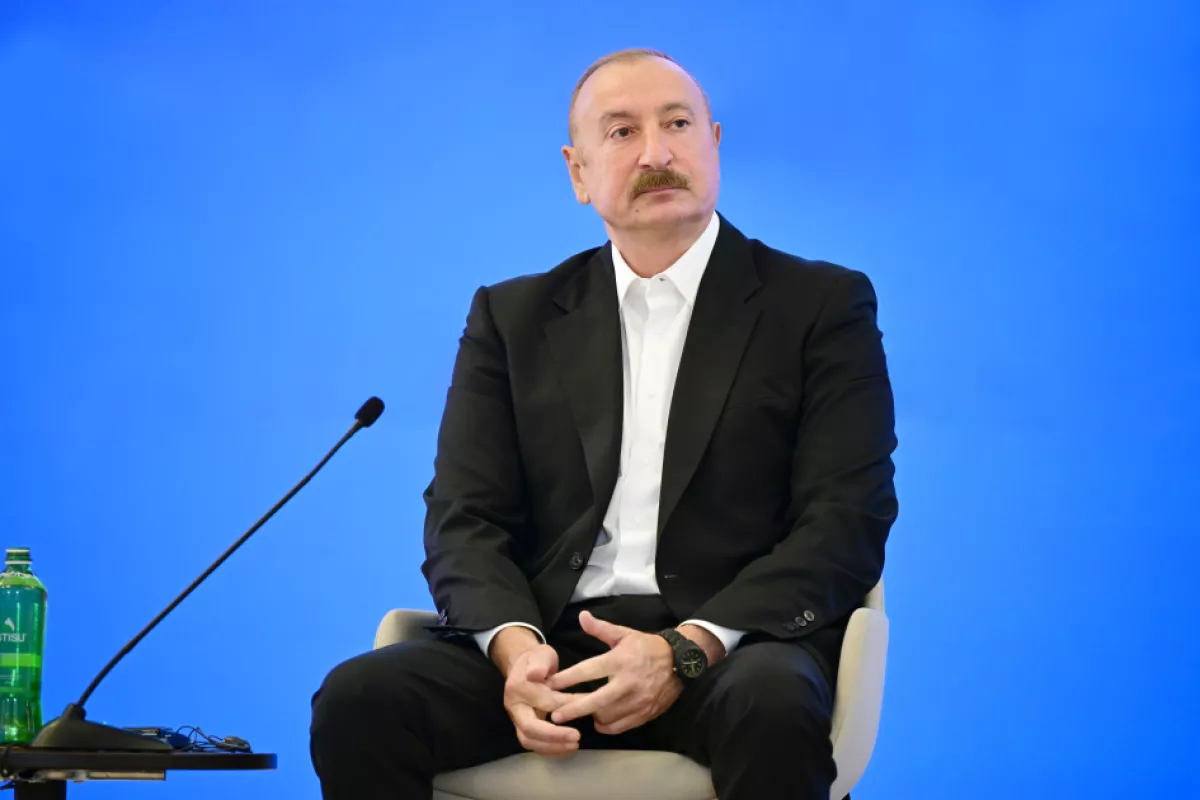
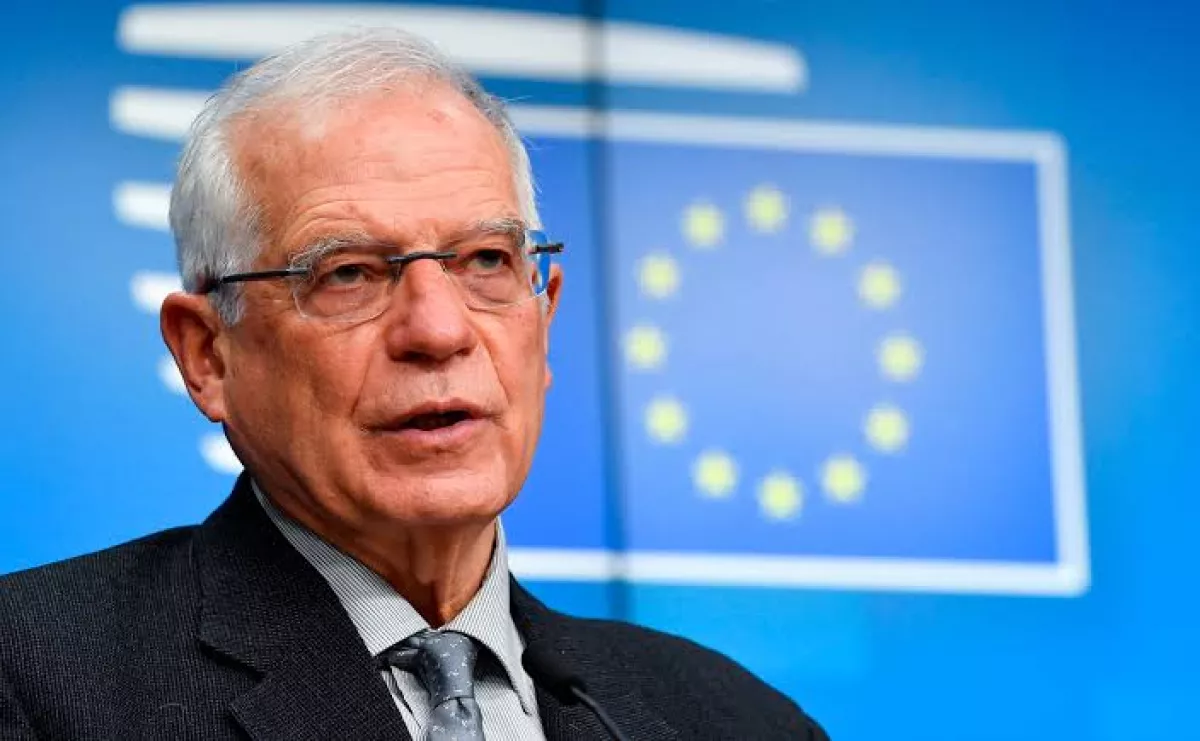
Responding to a question from forum participant Cristian-Augustin Niculescu-Țâgârlaș, a Romanian senator, lawyer, and member of the Romania–Azerbaijan Parliamentary Friendship Group, the head of state objectively noted that Azerbaijan's relations with the European Commission had gone through a difficult period, largely due to the policies pursued by former EU High Representative for Foreign Affairs and Security Policy Josep Borrell, whose actions nearly led to the breakdown of relations between Brussels and Baku.
President Aliyev also linked those developments to reports about Borrell's alleged connections with former International Criminal Court Prosecutor Luis Moreno Ocampo, who is widely known for his openly pro-Armenian stance.
“You mentioned several important aspects of our relations with the European institutions, including the European Commission and the Parliamentary Assembly of the Council of Europe. And as you know, there is a big difference between the relations with one and the other. With the European Commission, though, we did not have easy times during the previous Commission, especially due to the destructive role of the former head of European diplomacy, Mr. Borrell, who actually ruined, or almost ruined, relations between the European Commission and Azerbaijan. And now it's obvious why. Because he was strongly influenced by some corrupt figures, including former Prosecutor of the International Criminal Court Mr. Ocampo, who in his comments publicly acknowledged that Mr. Borrell was on his payroll, and the money for Mr. Ocampo was coming from a Russian-Armenian oligarch, who is now under house arrest in Armenia,” the head of state said.
The Azerbaijani leader's statement has once again brought to the forefront a question that has puzzled not only Azerbaijan, but many observers abroad for years: Why did certain representatives of European institutions display such an overtly biased approach toward Baku, disregarding the norms of international law and the principle of states' territorial integrity?
It may well be that the Ocampo affair provides at least part of the answer. It is no coincidence that, over an extended period, his name repeatedly surfaced in connection with an anti-Azerbaijani information campaign.
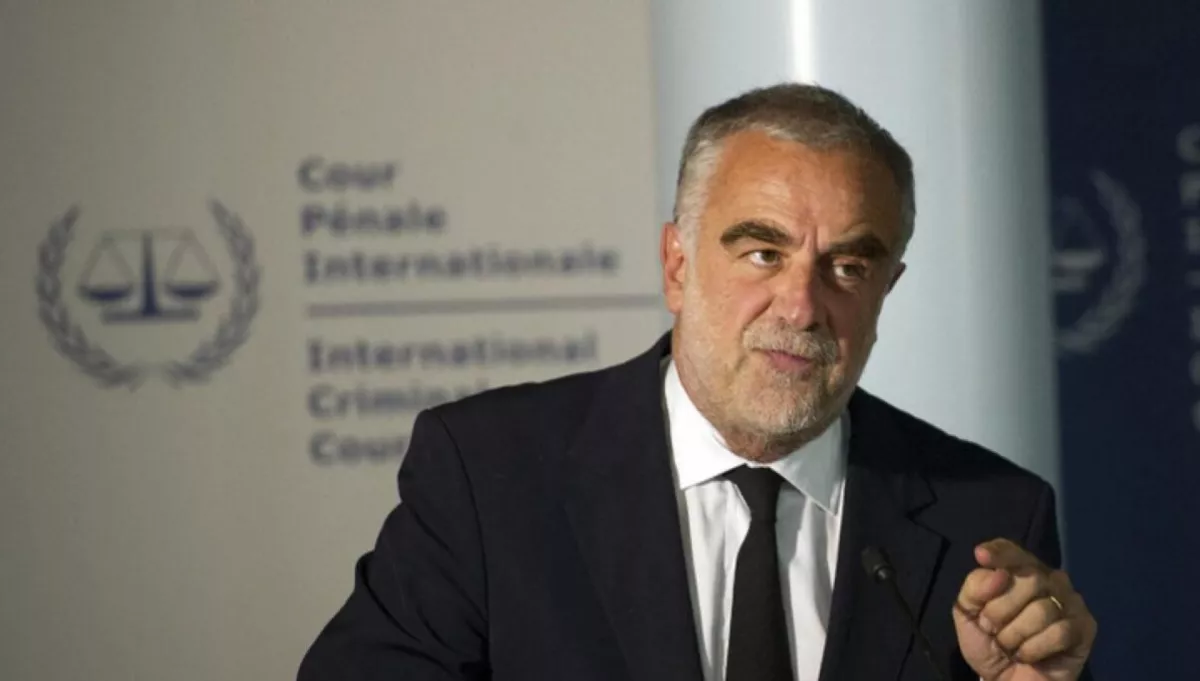
Following Armenia's crushing defeat in the Second Karabakh War, this loyal servant of the global Armenian cause embarked on an active campaign to promote blatant falsehoods about Azerbaijan. Among other things, he advanced such unsubstantiated narratives as the alleged "genocide of Armenians in Karabakh," presenting an entire "report" on the subject in the summer of 2023 at the request of Arayik Harutyunyan.
Later, in December of the same year, he released a second report on the alleged "genocide of the people of Nagorno-Karabakh." In reality, however, the document was based on claims put forward by Gassia Apkarian, a judge of the Orange County Superior Court in California. It hardly needs to be said that these allegations were replete with fabricated claims about a supposed "humanitarian catastrophe" in Karabakh.
It is enough to note that this so-called report—more accurately, an Ocampo paper—was thoroughly dismantled by Rodney Dixon KC, a leading international lawyer and legal expert at Temple Garden Chambers. Drawing on documented facts, Dixon demonstrated the lack of substance behind the former International Criminal Court prosecutor's anti-Azerbaijani conclusions.
Undeterred, however, Ocampo continued to serve as one of the Armenian lobby's most prominent media advocates, stepping up his activities in the run-up to COP29, which was hosted by Baku. In 2024, he presented a report entitled "International Legal Aspects of the Forced Deportation of Nagorno-Karabakh Armenians" before the Human Rights Committee of the German Bundestag. At the time, the Armenian diaspora and Dashnak organizations placed considerable hopes in his efforts, expecting him to portray the voluntary departure of Armenians from Azerbaijan's Karabakh region as an "expulsion" and thereby sway the German government in favor of the Armenian lobby.
Baku has long maintained that the former ICC prosecutor's anti-Azerbaijani activities were politically motivated. As later developments suggest, however, they may have been driven not only by political considerations, but also by financial incentives.
The ANEWZ television channel released a documentary containing footage of Ocampo, Eduard Melikyan—the political coordinator of oligarch Samvel Karapetyan—and other individuals linked to them. The film also featured Ocampo himself claiming that a former legal adviser to Josep Borrell had worked for him and, according to his account, had been placed on the campaign's payroll.
Taken together, these allegations point to what is presented as a coordinated network that ultimately leads to former EU foreign policy chief Josep Borrell, offering an explanation for the bias toward Baku that he displayed throughout his tenure. In this context, Borrell's much-quoted description of Europe as a "garden" is often cited by his critics as illustrative of his broader worldview.
As for Russian-Armenian oligarch Samvel Karapetyan, whose name also appears in the network described in the documentary, the picture, from Baku's perspective, appears unmistakably clear—with its objectives, operatives, and even those portrayed as directing the effort from above.
As the saying goes, however, times change—and history has a way of putting everything in its proper place. Luis Moreno Ocampo is now engaged in private legal practice, Samvel Karapetyan is under house arrest in Armenia, and Josep Borrell, as President Ilham Aliyev remarked during his address in Shusha, "is now out of politics, hopefully forever."
Azerbaijan, meanwhile, continues its path toward new achievements, steadily strengthening its position on the international stage. At the same time, the new European Commission is seeking to revive relations with Baku—a development that should serve as an example for a number of European institutions, including the Parliamentary Assembly of the Council of Europe and the European Parliament, whose bias President Ilham Aliyev, in his address, aptly described as an "obsession with Azerbaijan"—one these institutions would do well to overcome.







 editor@caliber.az
 +994 55 444-88-98
 Азербайджан, Баку, ул. Низами, 203, Af Business House, 5-й этаж