










Azerbaijan offers Europe a new world map: gas, corridors, digitalisation Hikmet Hajiyev for EU Today
The European media outlet EU Today has published an interview by political commentator and editor Gary Cartwright with Hikmet Hajiyev, assistant to the president of Azerbaijan and head of the foreign policy department of the Presidential Administration. Caliber.Az reprints the material.
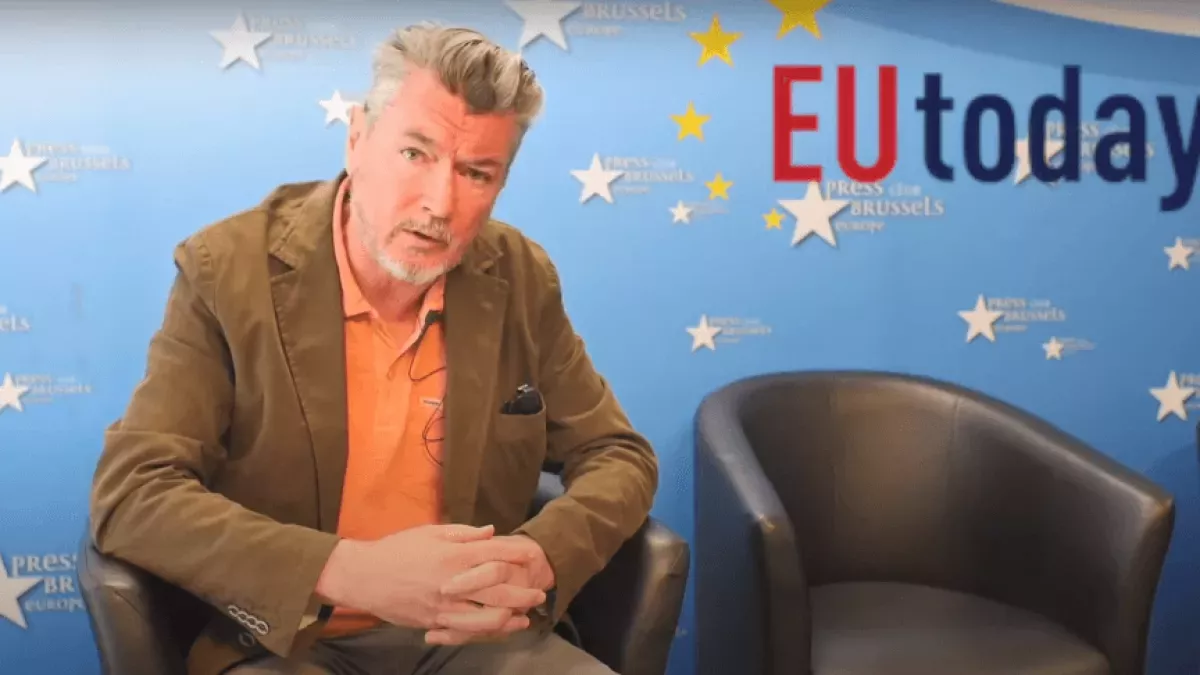
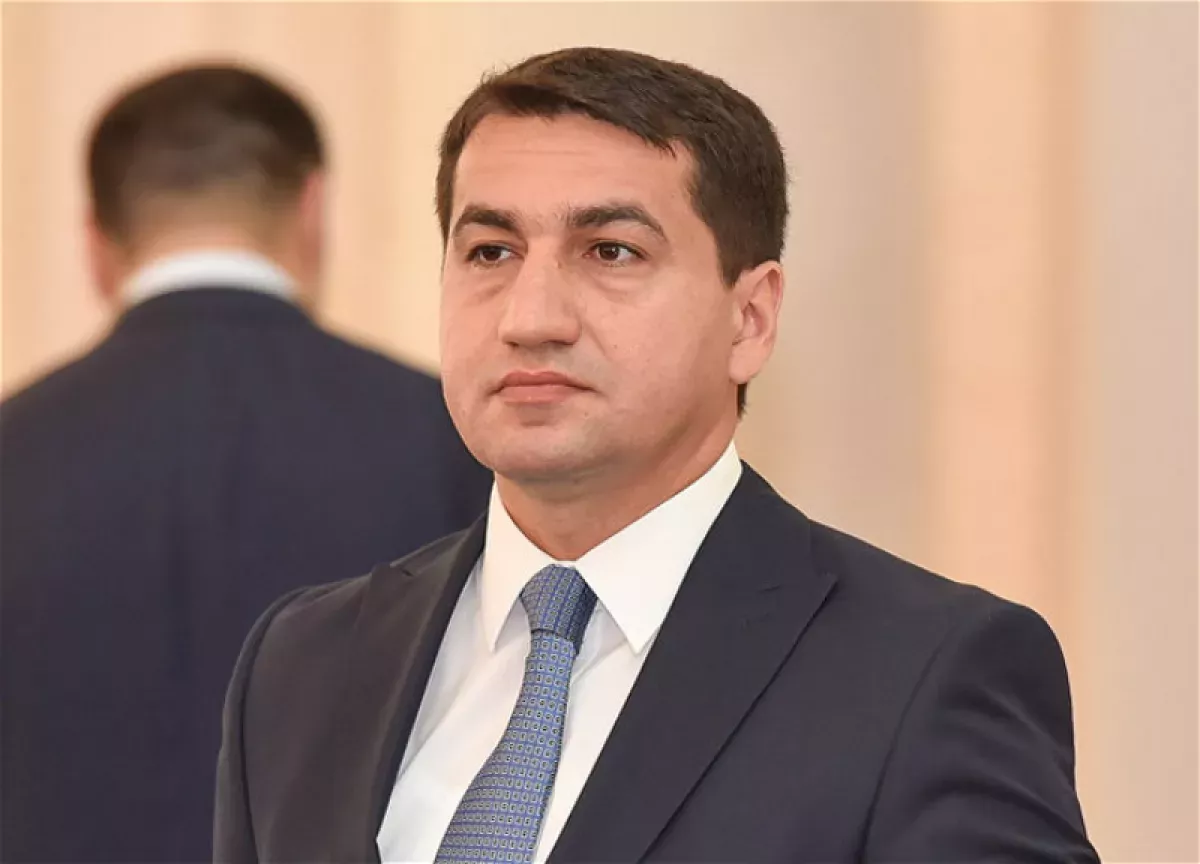
Hikmat Hajiyev, Assistant to the President of Azerbaijan and Head of the Foreign Policy Affairs Department of the Presidential Administration, used a briefing at the Embassy of the Republic of Azerbaijan in Brussels to present Baku’s case for closer cooperation with the European Union on connectivity, energy and regional security.
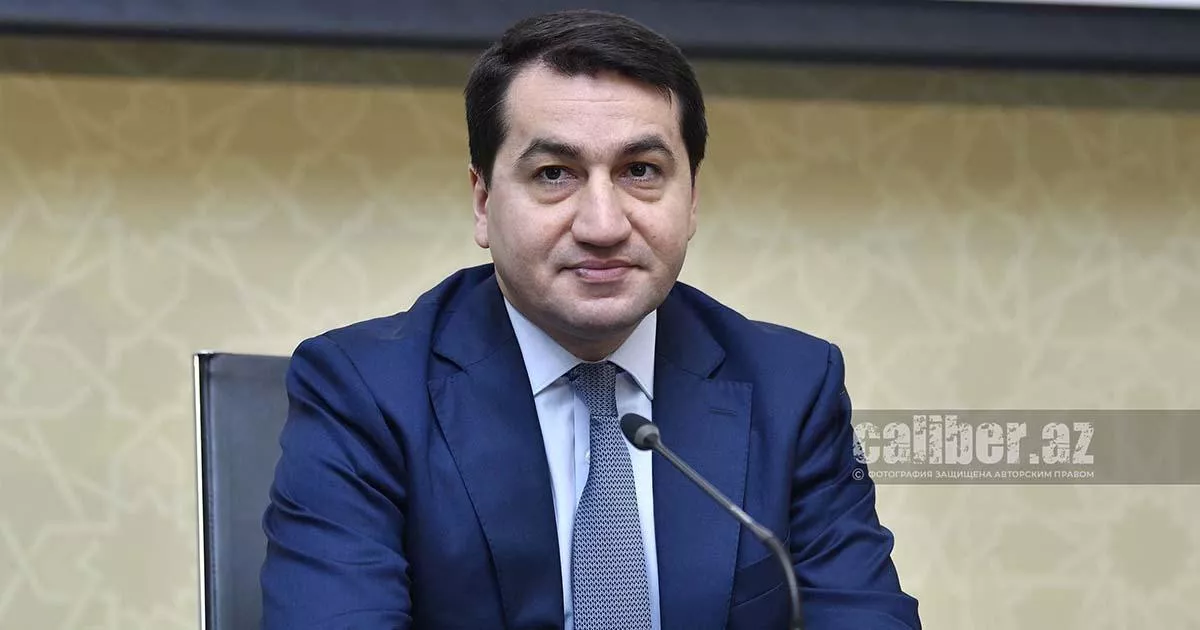
In an exclusive interview with EU Today and a small group of journalists, he framed Azerbaijan’s current agenda as a move “from winning the war to winning the peace” in the South Caucasus.
At the core of his message was the planned Zangezur Corridor, which he linked directly to both Azerbaijan’s post-conflict strategy and the EU’s wider connectivity goals. Describing it as part of the “Middle Corridor” between China, Central Asia and Europe, he said the route “will have a transformative impact on the Eurasian transport landscape” and that Azerbaijan saw itself “playing a pivotal role in this process”.
According to Azerbaijani officials, the corridor on Azerbaijan’s territory is expected to handle up to 15 million tonnes of cargo a year once fully operational, with work on the Azerbaijani section due to be completed in 2026. Hajiyev said Baku “would like also to see European Union as part of this new transport composition”, including in the framework of the EU’s Global Gateway initiative.
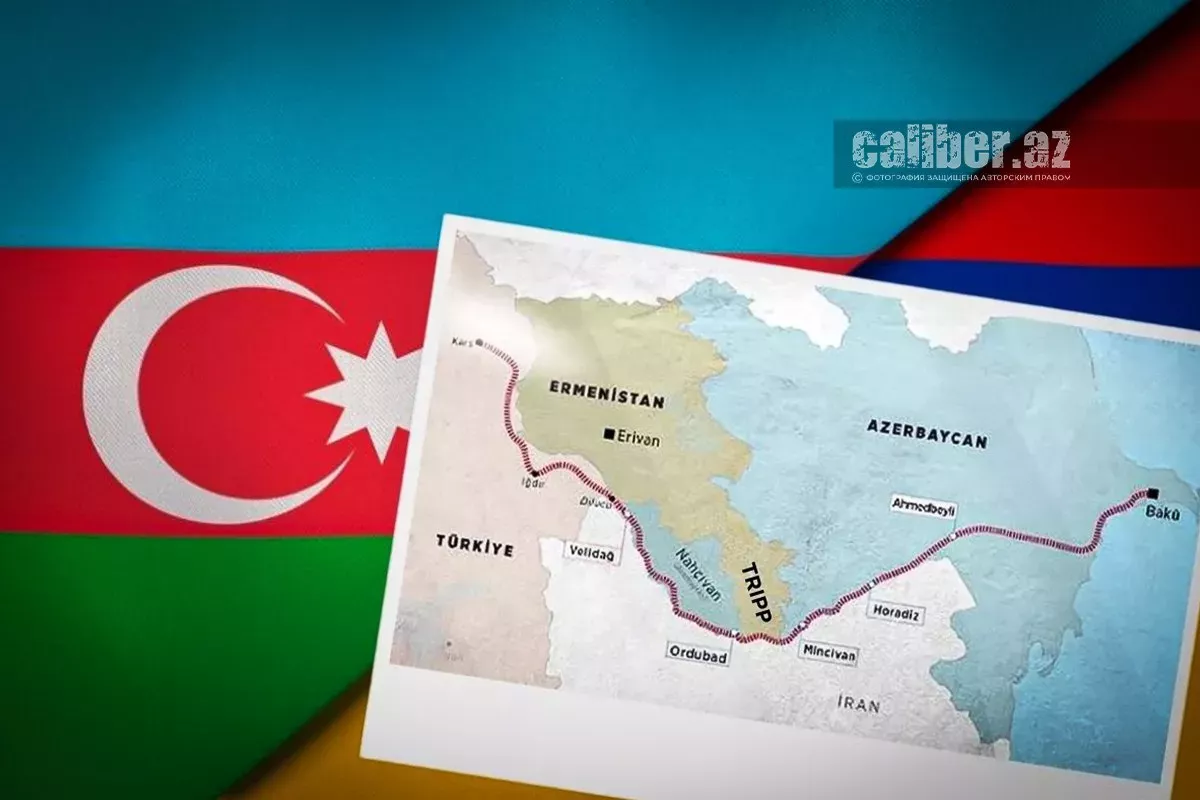
He presented the corridor as a practical component of what he called Azerbaijan’s “winning the peace strategy”. “War is over for Azerbaijan and conflict is over,” he said. “We need to solidify the peace on the ground and to make the peace also long lasting.” Peace, he argued, “shouldn’t be only like the lack of the war,” but should bring “prosperity and development” and build interdependence between neighbours. In that context, he suggested that Armenia could move from a “deadlocked entry” to a transit country as east–west and north–south links expand.
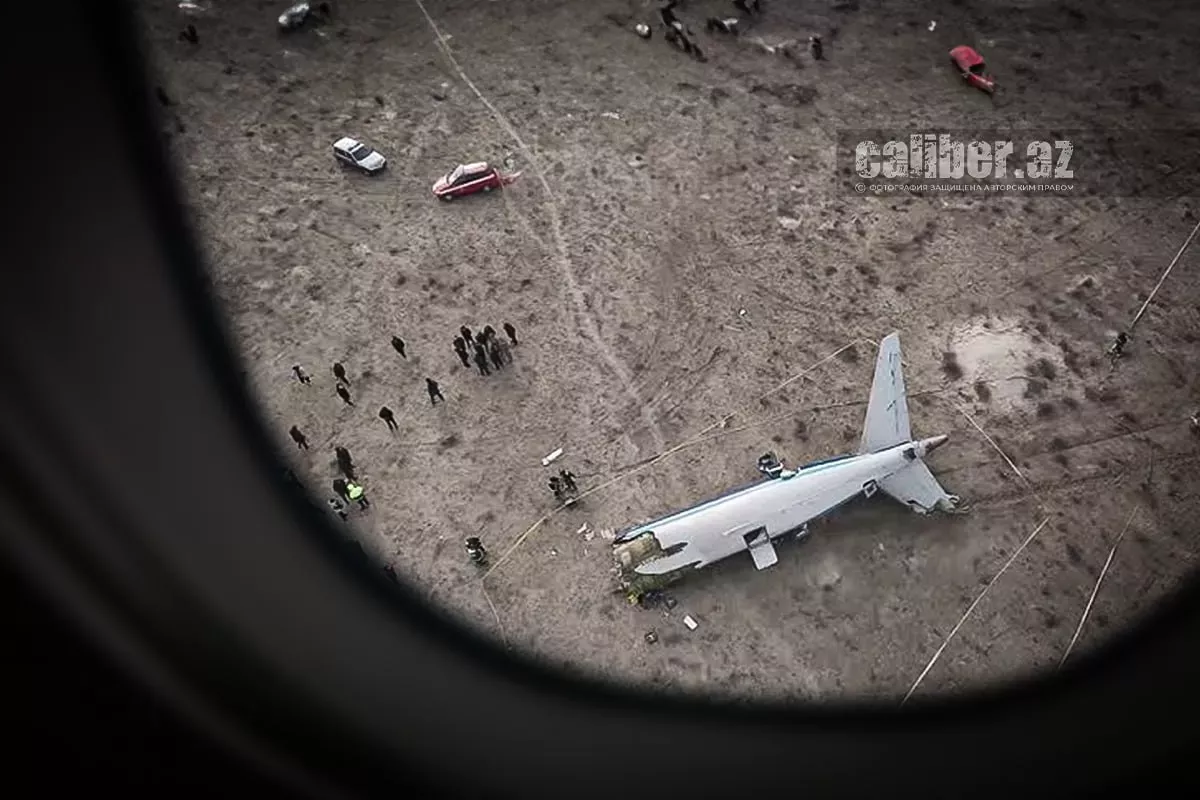
Hajiyev also discussed relations with Russia in the wake of the recent downing of an Azerbaijani civilian aircraft. He acknowledged “a certain misunderstanding” and “emotions” in the immediate aftermath, but said that Baku’s concerns had been discussed at a subsequent meeting in Dushanbe. Azerbaijan, he said, had sought four elements from Moscow: an official apology, a full investigation, justice for those responsible and compensation. “Once these issues are addressed,” he stated, “we are turning the page of the misunderstanding and continuing as normal neighbourly relations between the two countries.”
On the war in Ukraine, Hajiyev reiterated that Azerbaijan would not become involved militarily. “Azerbaijan upfront… is not engaged and will not engage in any military component of this conflict,” he said. Instead, he highlighted humanitarian support and energy cooperation. Since 2022, Baku has provided more than $40 million in assistance to Ukraine, including humanitarian supplies, reconstruction support and programmes for children affected by the war. “We are continuing the programme of rehabilitation of Ukrainian children,” he noted, pointing to regular groups received in Azerbaijan for social and psychological support. He also referred to the delivery of what he called “symbolic gas” to Ukraine despite Russian attacks on energy infrastructure.
On sanctions, he rejected suggestions that Azerbaijan is being used to circumvent Western measures against Russia. Hajiyev said Baku is “very vigilant on the sanctions story” and argued that trade data did not show any sharp post-2022 increase in turnover with Russia. By contrast, he pointed to Armenia’s strong trade growth with Russia and characterised it as re-export rather than new industrial output, remarking that Armenia “is not in a capacity to produce Mercedes or Apples or Samsungs”.
Energy cooperation with Europe was another major theme. The EU imported about 11.7 billion cubic metres of Azerbaijani gas in 2024 via the Southern Gas Corridor, up from 8 bcm in 2021, and a 2022 agreement envisages volumes rising to at least 16 bcm by 2027 if infrastructure and contracts allow. The European Commission notes that SOCAR now supplies gas to 12 countries, including eight EU member states. Hajiyev said further expansion of the Trans-Adriatic Pipeline and associated infrastructure would be possible if there were “genuine interest” and long-term contractual commitments from the European side.
Looking ahead, he placed particular emphasis on renewables. Azerbaijan’s Ministry of Energy estimates the country’s technical renewable potential at around 135 gigawatts onshore and 157 gigawatts offshore, largely in the Caspian Sea. President Ilham Aliyev has announced a target of around 6 gigawatts of renewable capacity – solar, wind and hydropower – by 2030, with contracts and memoranda already signed covering roughly 10 gigawatts of planned projects. “By 2030, Azerbaijan will be in a capacity to produce 6 gigawatts of renewable electricity,” Hajiyev said, arguing that this would allow more gas to be freed for export to Europe.
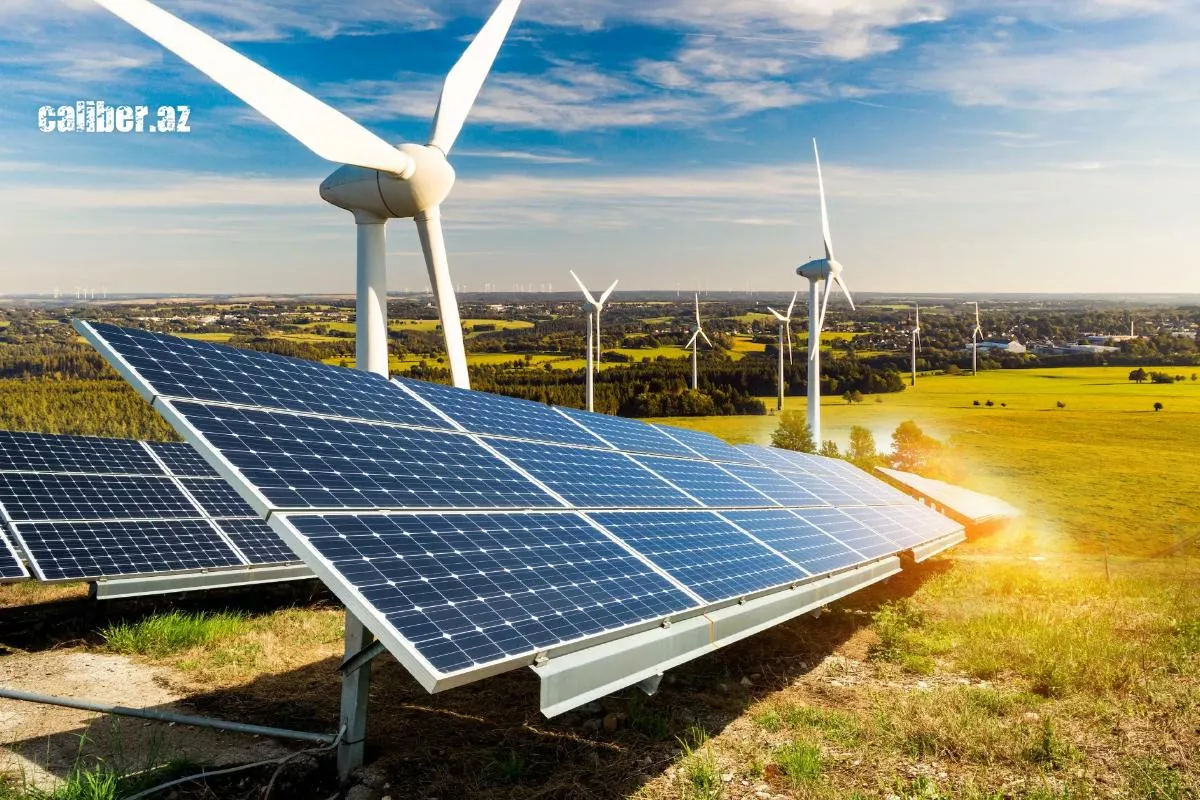
He linked this projected capacity to Europe’s digital and artificial intelligence objectives, arguing that electricity supply will constrain data-centre growth within the EU. “Europe needs new partners, outsource it,” he said, presenting Azerbaijan as a future regional hub within a “digital Silk Way” carrying data from Central Asia to Europe. Baku has for several years promoted fibre-optic initiatives and data-corridor concepts alongside its transport and energy projects. With “comparatively cheap electricity” and suitable climatic conditions in the country’s northern regions, Hajiyev said Azerbaijan has “all merits and conditions of becoming the new data centre in the global digitalisation concept”.
Turning to Iran, Hajiyev said that, from Baku’s perspective, the diplomatic fall-out from the armed attack on Azerbaijan’s embassy in Tehran has now been managed. The attacker, he noted, had been prosecuted under Iranian law, and Azerbaijan had “completely turned that page”. Relations, he said, were now “normal and stable”, and he referred to what he called good personal chemistry between President Ilham Aliyev and President Masoud Pezeshkian. Iran features in Baku’s wider connectivity plans through the Aghband–Kelaleh road bridge over the Araz River, which is due to be structurally completed by the end of 2025, with border and customs infrastructure expected in early 2026. “We see Iran as a neighbour, as a partner, and [are] looking forward to further develop economic and trade relations,” he said.
Hajiyev also referred to EU engagement in the region, highlighting the mediation role played by former European Council President Charles Michel between Baku and Yerevan.
Hajiyev said Azerbaijan is ready to deepen cooperation with the EU on energy security and connectivity, while echoing President Aliyev’s public calls for European financial institutions to show more flexibility on gas-related infrastructure if the EU wishes to sustain and expand imports. Azerbaijan, he concluded, is “doing hard work on the ground” to secure peace and stability in the South Caucasus and “also need[s] the support of our partners”, adding that the response in Brussels had been “very positive… unanimous solidarity”, because “if you are fighting for the peace, there should be normal support for that.”







 editor@caliber.az
 +994 55 444-88-98
 Азербайджан, Баку, ул. Низами, 203, Af Business House, 5-й этаж