










Bollywood as a weapon: India turns cinema into a factory of hatred Article from Pakistani media
A Pakistani newspaper, Dawn, published an article criticising anti-Pakistan propaganda in Indian cinema. Caliber.Az presents the full article to its readers.
Editor’s note: The author of the article is Rafia Zakaria, a lawyer and human rights advocate. She is a columnist for Dawn, and her articles are regularly published in Al Jazeera, Dissent, Guernica, and many other outlets.
A few days ago, I made the mistake of posting a simple question on X. I had just seen the Indian film Dhurandhar, which attempts to connect Karachi’s Lyari gang wars of the 1990s to the Mumbai terrorist attack many years later. My question was simple and legitimate: “Why are Indians so obsessed with Pakistan?” I posed the question out of genuine bafflement. Pakistan has been attacked by India numerous times, yet one would have to look incredibly hard to find Pakistani television or film media focus on proving Indian villainy. India, and Dhurandhar is evidence of this, is utterly obsessed with presenting mono-dimensional characters of Pakistanis and of Muslims, all of whom seem to be intent on attacking India.
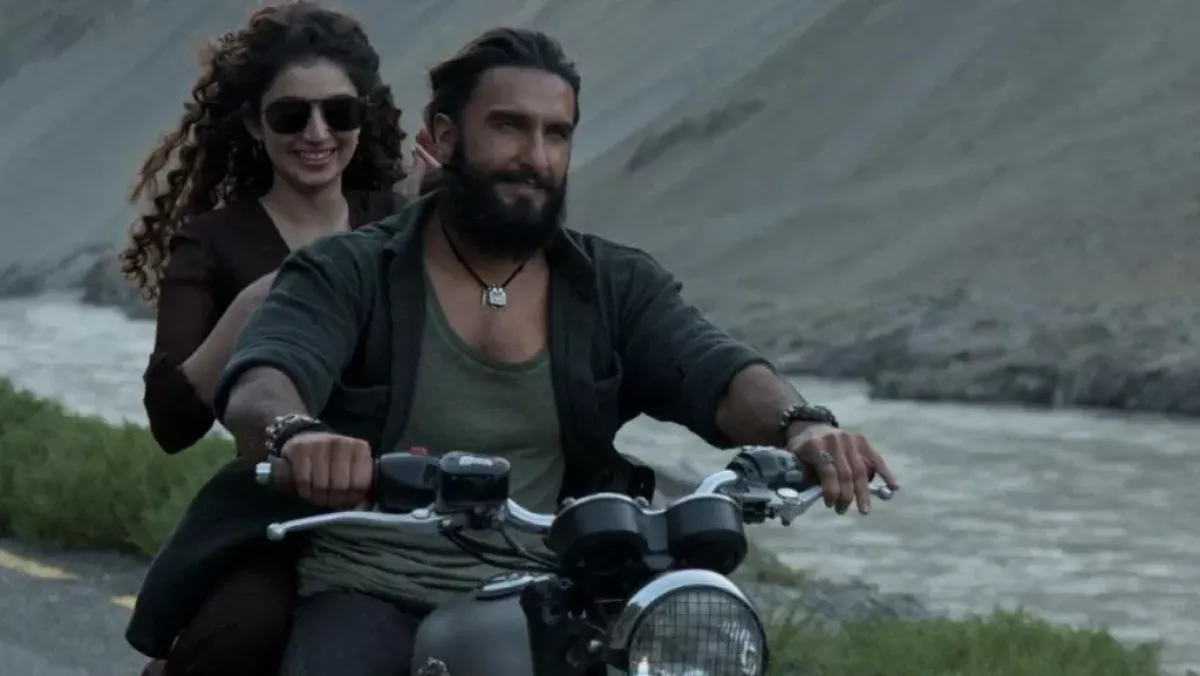
Unsurprisingly, the second I posed the question, the troll farms set about hurling insults of the worst kind at me. The level of vitriol in these comments was further evidence of nationalist anger. No Pakistani wakes up thinking about insulting random Indian columnists who write for Indian papers — the converse sadly is not true. I had also posed the question for a second reason: as those who have watched the film will notice, the film is well made. Bollywood filmmakers have made advances in cinematography, scriptwriting, the musical score, action sequences and production in general. How then can they be so retrogressive and backward in producing well-rounded characters if they are Muslim?
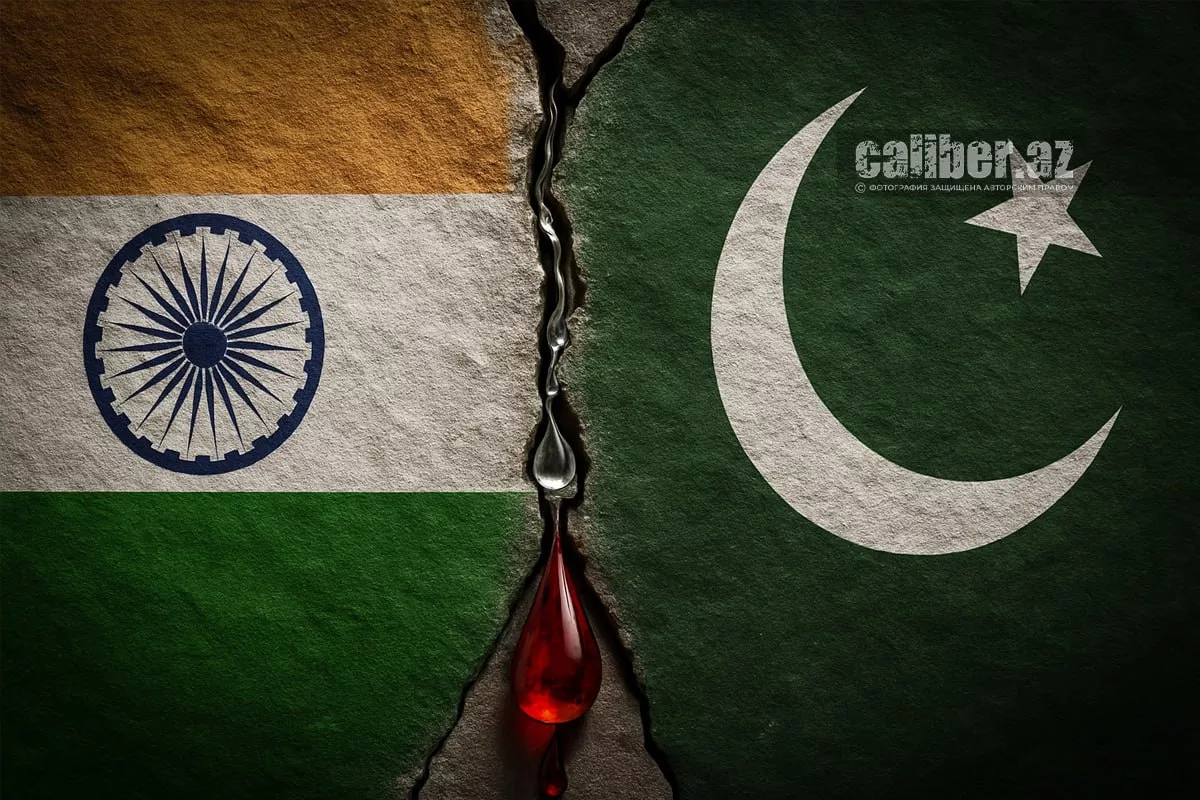
This time it is not Pakistanis alone who are fed up with such long productions of what is essentially Islamophobia. While the film is doing well in India — understandable given the kind of vitriolic anti-Pakistan narrative that is fed by the state to an entire generation — it has already been blocked in a number of Gulf countries. Given that millions of South Asians live in that region, this means that the film’s earnings have now been majorly hit. It appears that the state-driven narrative of animosity in India against Muslims might be getting in the way of the eagerness of many of its citizens to work in the Muslim countries of the Gulf. It is also likely that such actions will be repeated in the future as Pakistan increases its security presence in the Gulf.
How did India, once a secular and admired democracy, fall into such a deep pit of propaganda and historical mistruths? Some clues can be found in a dataset and article released by one of the few remaining esteemed and independent news sources in India. CERI-SciencesPo and The Caravan magazine — whose staff has faced harassment at the hands of Prime Minister Narendra Modi’s supporters — released an incredible initiative titled ‘Seeing the Sangh: The RSS Project’. The initiative, which features an eye-opening map reveals how the Rashtriya Swayamsevak Sangh, which Modi has deceptively called “the largest NGO in the world” is actually “the largest far right network in history”.
The RSS along with its nasty propaganda against Muslims and minorities and its constant whetting of religious hatred has managed to become huge. The “RSS formally acknowledges only about three dozen affiliates, even though it is widely understood to coordinate a sprawling network,” ‘Seeing the Sangh’ explains. As is evident from the map, there are in fact a vast number of organisations in India that apparently do what the RSS wants — from organising mobs to lynch Muslims to developing campaigns to destroy mosques, to changing the names of cities and streets, to harassing ordinary Muslims to all manner of other hate-filled actions.
In the words of Christophe Jaffrelot, the research director at Sciences-Po in Paris and an esteemed scholar of South Asian history, “Hindutva is often equated with BJP, the Hindu nationalist party, but this ethno-religious movement has also developed deep roots in civil society since the creation of RSS in 1925. This dataset [on which the project is based], by revealing connections between the RSS, the mother organisation, and a myriad of more or less acknowledged subsidiaries which go much beyond what is known as the ‘Sangh Parivar’ (the RSS family), makes it very clear: extreme Hindu nationalist activists have reached out to almost every social and professional milieu. This network is not confined to India but is expanding globally thanks to the support of the diaspora, something this database captures also in great detail.”
Bollywood films are no exception to the rule. Nothing, it seems, happens in India today without the blessings and accommodation of the Hindutva mindset. It follows that even talented filmmakers who may have wished to make a more evolved film focused on story rather than propaganda have to produce slick and smartly produced garbage. If Dhurandhar did not have to fit into that box it could have competed with the best Hollywood film. But this is the story of India under Modi. Such is the toxic grip of Hindutva that potential and talent are being destroyed. Unfortunately, a large section of the Indian diaspora appears to have embraced Hindutva. This has led major US academic institutions like Rutgers and Stanford to focus on the poison being spread through this far right ideology.
The cost of hatred is that it eats a country whole from the inside. The ‘Seeing the Sangh’ map reveals just how this has happened in India. Even as a large section of Indians may be oblivious to the cost that the Modi regime has incurred, the rest of the world can see the tragedy clearly. Ironically, despite their general eagerness to underscore how awful all Pakistanis are — the Indian audience watching Dhurandhar appears to have fallen in love not with the Indian spy character who roams Karachi for RAW but the character of Rehman Dakait. Whether they admit it consciously or not everyone knows a lie when they encounter one.







 editor@caliber.az
 +994 55 444-88-98
 Азербайджан, Баку, ул. Низами, 203, Af Business House, 5-й этаж