










Modern engineering can handle Baku's geological challenges for new metro station Transport expert talks to Caliber.Az
As Baku Metro presses ahead with plans to expand the capital’s underground network, some concerns have been raised by members of civil society over the geological complexity of one of the proposed sites.
The discussion focuses on a planned station on the Purple Line, tentatively named B-5, which is set to be built near the existing Nizami Ganjavi metro station, close to Central Park and the Azerbaijan State Academic Drama Theatre.
Critics, including Sahib Mammadov, the Chairman of the Azerbaijan Labour Rights League, have argued that construction in the area would be extremely difficult due to challenging geological conditions.
However, Azerbaijani transport expert Rauf Aghamirzoyev pushed back on those concerns in comments to Caliber.Az, stressing that modern engineering solutions are capable of addressing such issues.
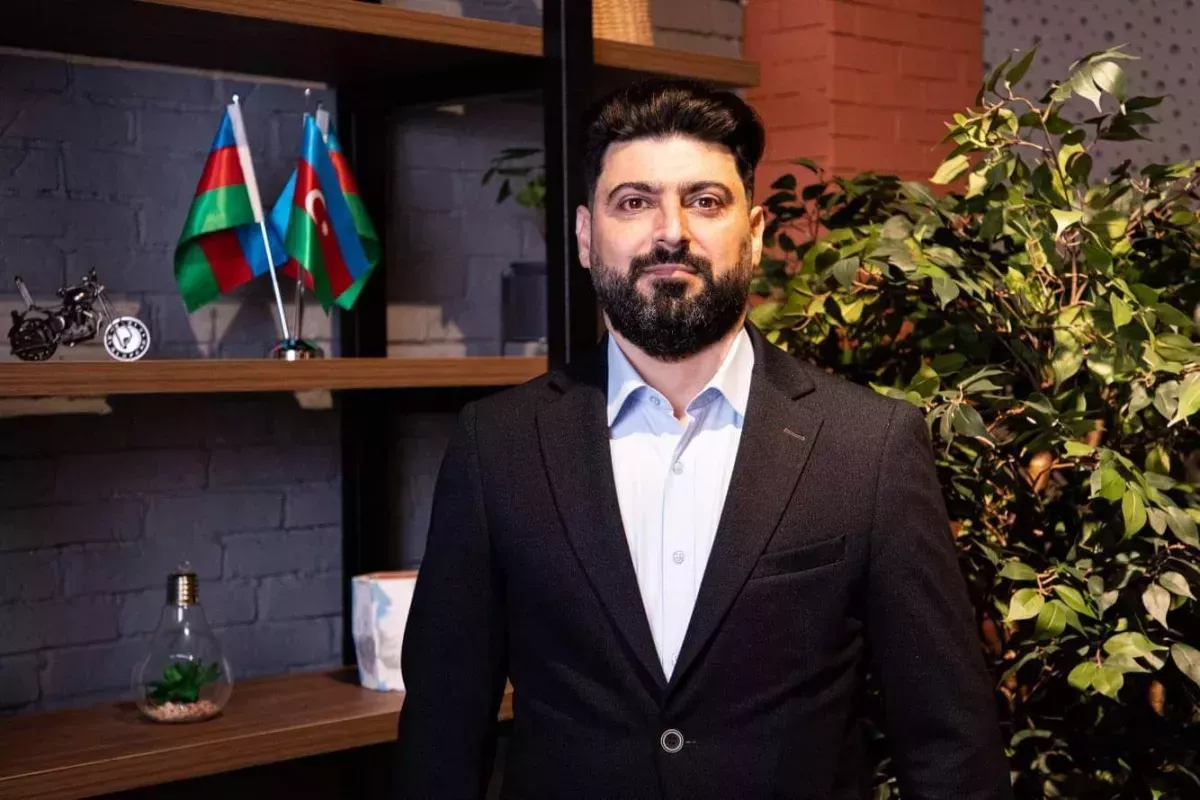
“The area where the Nizami Ganjavi station is located is indeed one of the most geologically complex in Baku. However, this is no longer an unsolvable problem,” he said.
Aghamirzoyev noted that older construction techniques, such as caisson methods, are now rarely used, with modern metro construction relying on more advanced tunneling approaches.
Among the most effective solutions, he said, are Earth Pressure Balance tunnel boring machines (EPB TBMs), which are designed to operate in soft, wet, sandy, or clay-rich soils.
“This technology minimizes the risk of ground subsidence by balancing soil pressure and has been successfully used in some of the most challenging hydrogeological conditions around the world,” he explained.
As an example, he pointed to the M5 metro line in Istanbul, where construction in difficult ground conditions was completed without major issues.
He also highlighted the New Austrian Tunneling Method (NATM), a well-established approach based on detailed geological analysis and flexible adaptation during construction, particularly useful in dense urban areas.
Baku itself has experience with complex tunneling projects. Aghamirzoyev referenced the construction of a second exit at the Elmlar Akademiyasi metro station, which involved tunneling above an existing line and using reinforcement techniques such as jet grouting.
“The issue is not whether the technology exists, but whether the right choices are made,” he emphasized, citing the importance of proper geological surveys, selecting suitable methods, and ensuring strong design and oversight.
He added that there is no need to “reinvent the wheel,” as proven solutions already exist and can be adapted to Baku’s conditions.
The expert also noted that large metro expansion projects are typically supported by international financial institutions, which carefully assess risks before allocating funding
In particular, the extension of the Green Line is expected to be financed with a $700 million loan from the Asian Development Bank, with four new stations planned by 2030.
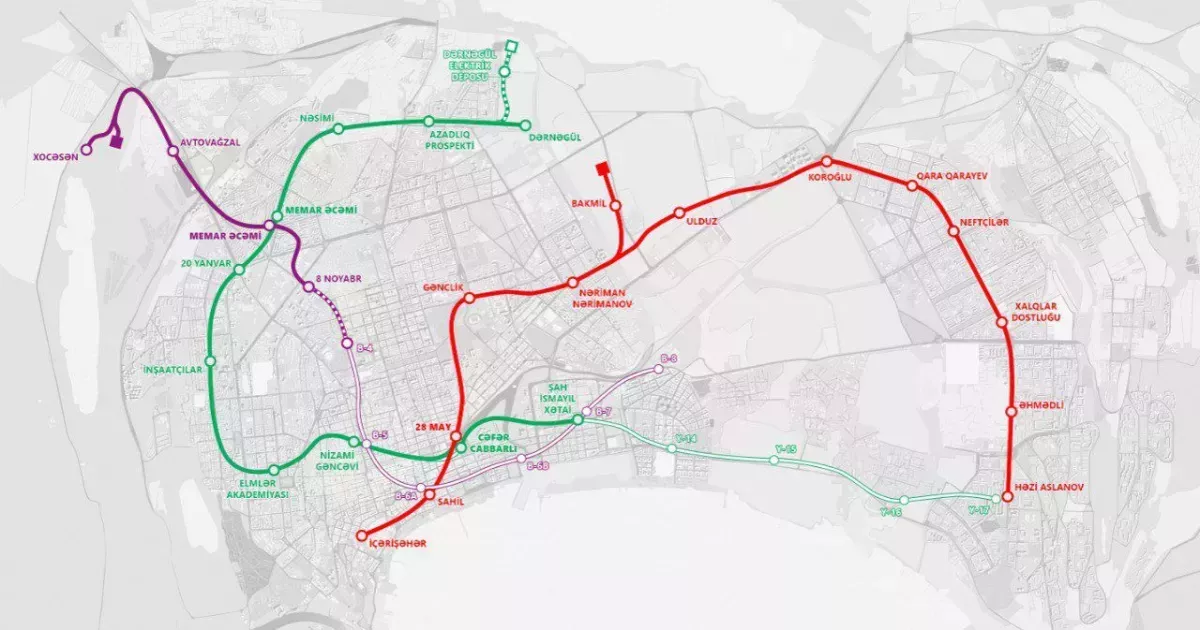
According to Aghamirzoyev, tenders for the construction of new tunnels and stations are expected to be announced in 2026, when more details on the technical approach will become clear.
By Nazrin Sadigova







 editor@caliber.az
 +994 55 444-88-98
 Азербайджан, Баку, ул. Низами, 203, Af Business House, 5-й этаж