










Palestinian programmers build apps to tackle daily challenges in Gaza
Residents of the Gaza Strip are still recovering from the devastating consequences of the war between the Hamas militant group and the Israeli military, but a growing number of young IT developers are turning to technology to help people navigate daily life under difficult conditions.
Local software specialists are building practical mobile applications designed to address some of the most urgent challenges facing Gaza’s population, from transportation difficulties to recovering lost belongings. Several developers spoke to Al Jazeera about the projects they are trying to launch despite severe economic and technical obstacles.
One of them, 23-year-old programmer Saja al-Ghoul, created an app called “Waselni” — Arabic for “help me reach my destination” — aimed at easing Gaza’s worsening transportation crisis.
The app allows users to coordinate shared rides and split travel costs, which have risen sharply during the war. It also includes a prepaid electronic wallet designed to help users work around Gaza’s growing cash shortages.
“Anyone can propose a trip, for example, from al-Shifa area to as-Saraya in central Gaza City at 8am, and then other people can join the same ride and split the cost,” al-Ghoul explained.
Another developer, 26-year-old information systems graduate Bahaa al-Mallahi, focused on a different wartime challenge: helping people recover lost belongings.
“People lost almost everything during displacement,” Bahaa said. “Personal belongings, official papers, phones, bags … Sometimes, things with little financial value but immense importance to their owners.”
After noticing that social media was flooded with posts about missing items, he developed a digital lost-and-found platform called “Rajja’li” — Arabic for “return it to me.”
“If you find something, you post it on the platform. If you lose something, you search for it there,” he explained.
Bahaa also hopes to eventually expand the platform to help locate missing children — a growing issue amid displacement, overcrowding and communication breakdowns in Gaza.
“Every day we see announcements about missing children,” he said. “Because of life in tents and the breakdown of communication, finding children and reconnecting them with their families is difficult.”
He said future versions of the platform could send instant alerts to nearby users containing a missing child’s photo and description.
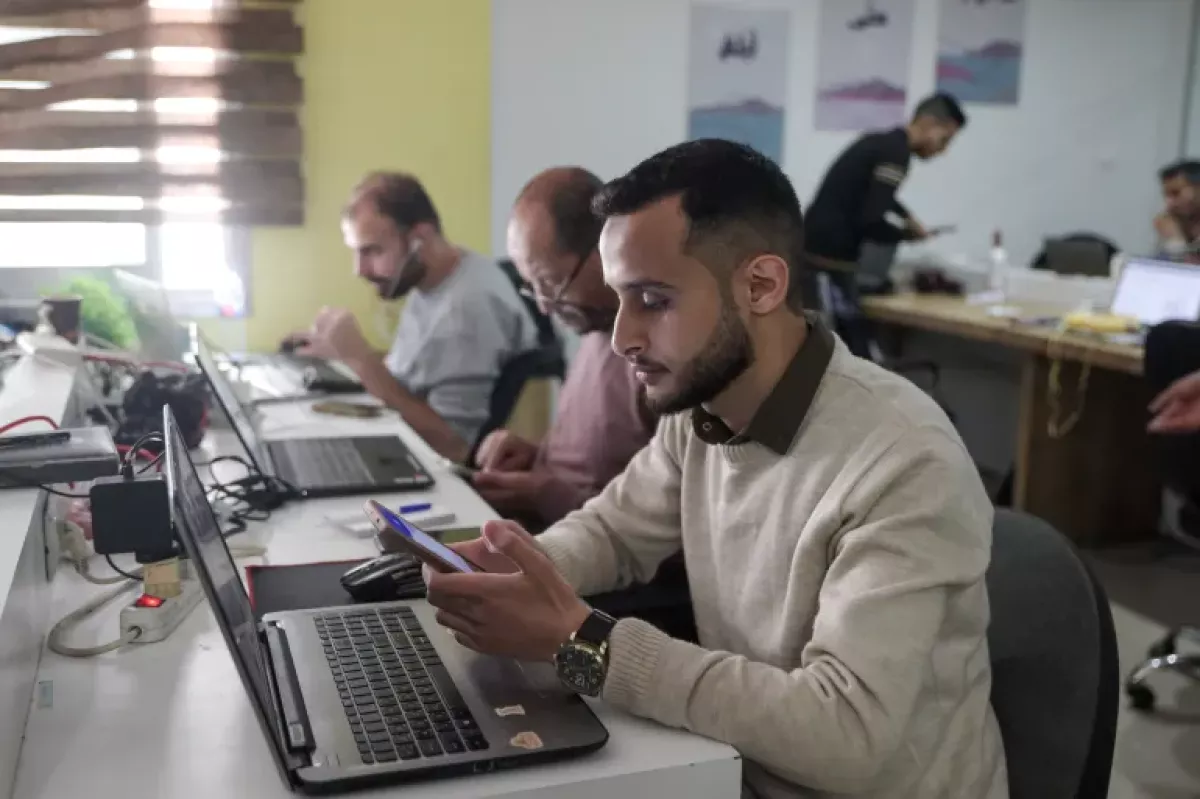
Obstacles facing Gaza’s tech field
As Al Jazeera noted, both developers face significant hurdles — some common to startup culture everywhere, and others unique to life in Gaza during wartime.
For Waselni to function effectively, Saja said the app needs widespread adoption. If users open it and find too few people travelling along similar routes, they may stop using it altogether. She acknowledged that support from local authorities could help promote the app and verify drivers.
Bahaa, meanwhile, said his platform would require cooperation from official institutions if users are expected to trust it with sensitive documents and personal information.
But the challenges extend far beyond visibility and trust. The financial burden of app development has become especially difficult for young programmers in Gaza, particularly as many software projects increasingly rely on paid artificial intelligence tools and subscriptions.
“We need AI subscriptions, and these are extremely expensive,” Bahaa said. “Even basic services have become paid, and prices keep rising.”
Before the war, Bahaa worked as a network engineer for a local internet provider. After losing his job, he attempted to secure remote work with companies outside Gaza but said opportunities were nearly impossible to find.
With economic conditions deteriorating further, many young professionals in Gaza now face a combination of unemployment, recurring electricity and internet outages, and rapidly rising work-related costs
By Nazrin Sadigova







 editor@caliber.az
 +994 55 444-88-98
 Азербайджан, Баку, ул. Низами, 203, Af Business House, 5-й этаж