










Trump’s Eurasian pivot: US focuses on the Caucasus and Central Asia Townhall on the burden of Section 907
The American website Townhall has published an article examining the growing U.S. presence in the South Caucasus and Central Asia. Caliber.Az highlights the key excerpts from the article for its readers.
Editorial note: The article’s author is Stephen J. Blank, Senior Fellow at the Foreign Policy Research Institute (FPRI).

“Vice President JD Vance’s trip this month to the Caucasus, a strategic region between the Black Sea and the Caspian, connecting Europe and Asia, and bordering Russia, Iran, and Turkey, represents a striking demonstration of the administration’s growing commitment to an enduring and large-scale presence there. Similarly, the recent visit of Central Asian presidents to Washington for the November 2025 C5+1 meetings with the U.S. and their representation at the founding meeting of the U.S. Project Vault initiative to compete with China for access to and control over critical materials underscore Washington’s determination to play a significant role in Central Asia. Moreover, in both regions, local governments are enthusiastically welcoming this new American policy, which aims to engage the Caucasus and Central Asia through long-term business and economic projects.
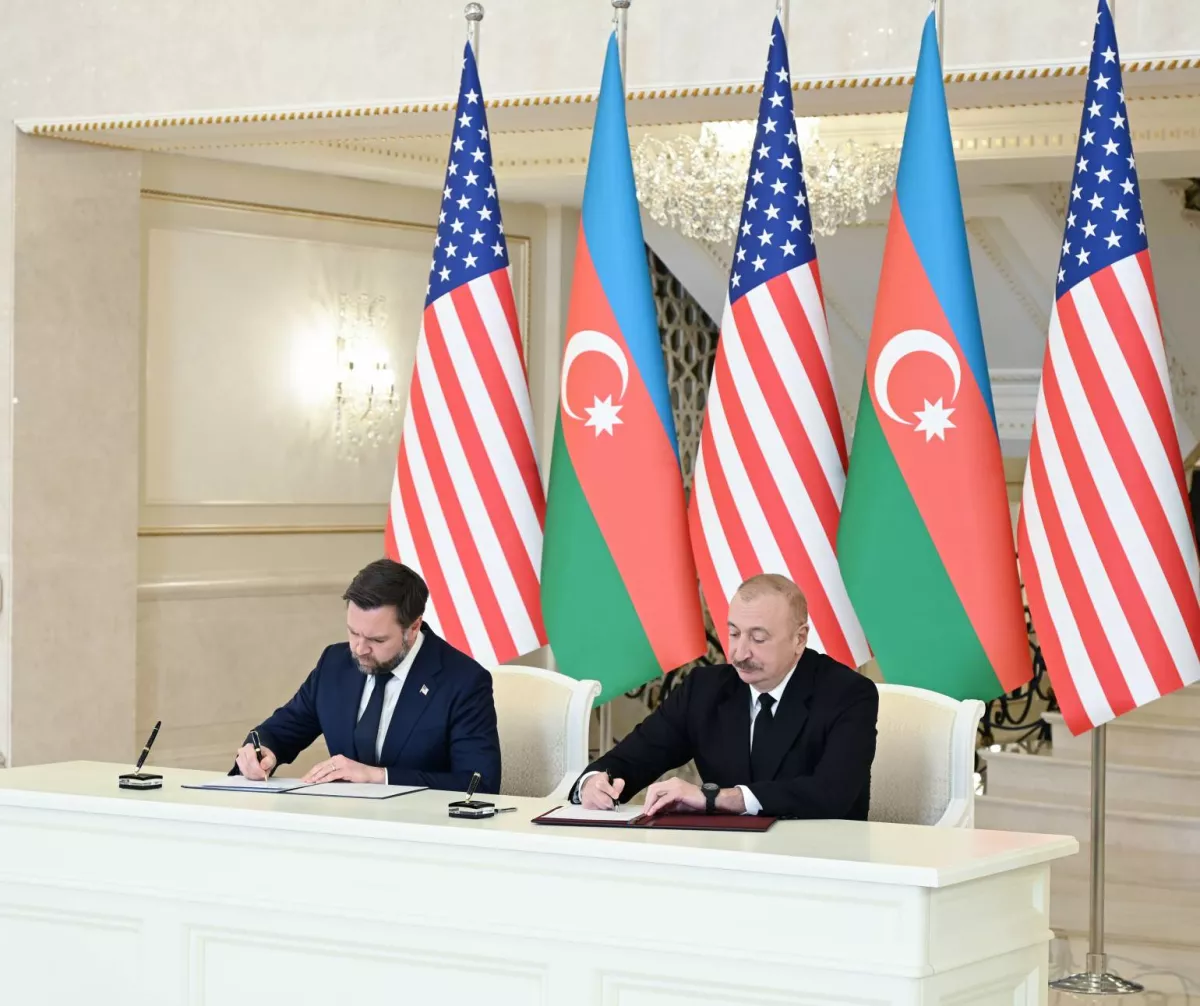
In Baku, Vance and Azerbaijan’s President Aliyev signed a historic bilateral Charter on Strategic Partnership, formalizing a wide range of economic and strategic cooperation. Both sides will engage on regional connectivity and mutual investment to include the transcontinental trade route, the Middle Corridor from China to Europe, the Trump Road for International Peace and Prosperity (TRIPP) that links Azerbaijan to Armenia and Turkey, and bilateral expansion of their oil, gas, electricity, space, digital, cyber, and AI sectors. Furthermore, Washington will work with Baku on cybersecurity, demining, protection of critical infrastructure, technology transfer, and anti-terrorism. Beyond these areas of cooperation, Washington is sending Azerbaijan an undisclosed number of coastal vessels for defense in the Caspian Sea, thereby formalizing bilateral defense cooperation.
In Armenia, Vance announced a new $9 billion civilian nuclear cooperation agreement [...] The new agreement allows Washington to license nuclear technology and equipment to Armenia, providing longer-term fuel and maintenance contracts [...] Vance also announced the transfer of $11 million in reconnaissance drone technology to Armenia and proclaimed U.S. readiness to export advanced computer chips to Armenia and invest in its infrastructure. In addition, as the U.S.-brokered peace treaty between these states takes hold, Azerbaijan is now also supplying energy and Russian wheat to Armenia as part of the peace agenda fostered by the Trump administration.

[...] Congress can and should support these initiatives, which strengthen U.S. influence, increase the sovereignty of local governments, and foster peace and prosperity in Eurasia while checking Russo-Chinese ambitions. Specifically, Congress should pass legislation abolishing Section 907 of the Freedom Support Act of 1993, which bans aid to Azerbaijan unless the Office of the President issues or extends waivers. This legislation, passed in 1992 during the war between Armenia and Azerbaijan at the behest of the U.S. Armenian lobby, has become irrelevant and today is counterproductive. Signing of a Strategic Partnership Charter between the United States and Azerbaijan leaves Section 907 as a legislative obstacle for U.S. foreign policy. The war is over, and the opportunities expressed in the TRIPP and Vance’s visit should motivate Congress to seize the moment to advance not only American but also Armenian and Azerbaijani interests in enduring peace and robust, thriving ties with the U.S.
Similarly, Congress should repeal the 1974 Jackson-Vanik Amendment, which applies to non-market economies that block the emigration of their citizens [...] as long as this legislation is on the books, it constitutes a serious obstacle to U.S. trade and investment with the Central Asian states [...] Since legislation to that end is currently before the Senate, it should act promptly to terminate both this Amendment and Section 907, thus opening the pathway to mutually beneficial economic and geopolitical relations between the U.S. and the governments of both regions. Such opportunities are rare in international affairs. U.S. legislators should act quickly to seize the momentum and remove legislative roadblocks, thereby allowing diplomatic and trade relations with Eurasian countries to flourish in the great strategic game America is playing,” wrote Stephen Blank.







 editor@caliber.az
 +994 55 444-88-98
 Азербайджан, Баку, ул. Низами, 203, Af Business House, 5-й этаж