










Armenia’s sovereignty vs. diaspora pressure Washington lobby risks undermining national strategy
Israeli newspaper The Times of Israel has published an article examining the complex relations between Armenia and Israel and highlighting the Armenian lobby’s negative influence on Yerevan’s policies. Caliber.Az presents the most telling parts of the piece.
Editor's note: The author of this article, Michael Borodkin, is an analyst with the Jerusalem Institute for Strategy and Security (JISS), focusing on Iran and regional power competition.

"As Armenia seeks pragmatic ties with the West, diaspora activism risks constraining its freedom of manoeuvre.
While the government in Yerevan attempts to navigate an increasingly difficult regional reality, its most significant obstacle is often found in Washington rather than Baku. The widening rift between Armenia’s political leadership and the Armenian National Committee of America (ANCA) has become a structural constraint. This disconnect is narrowing Armenia’s room for manoeuvre at a time when national survival depends on diplomatic flexibility.
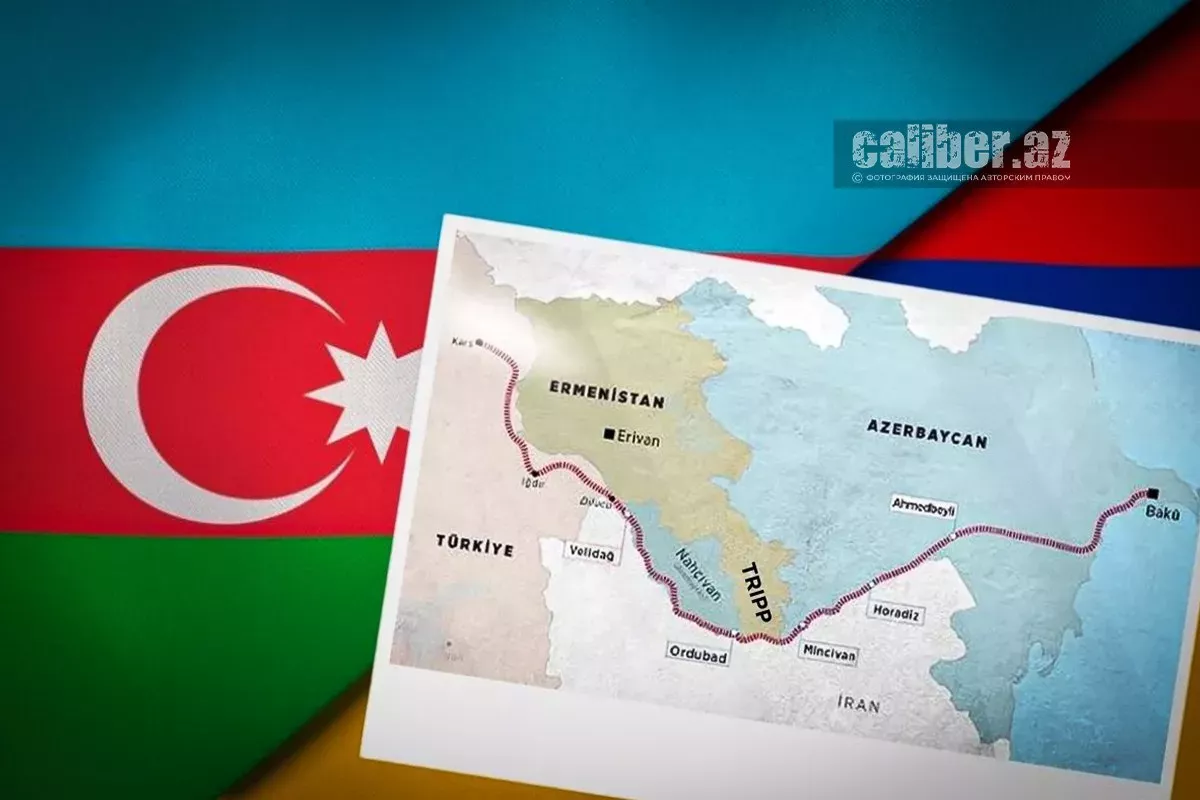
This pragmatic orientation has also been reflected in diplomatic channels. In late 2025, senior Armenian officials held consultations with Israeli counterparts, reportedly including Deputy Foreign Minister Vahan Kostanyan’s visit to Israel. These discussions touched on the Trump Route for International Peace and Prosperity (TRIPP).
In late December, in Yerevan, Economy Minister Gevorg Papoyan met with Israeli Ambassador Yoel Lion to discuss economic cooperation and technological partnerships. Together, these steps reflect a sovereign Armenia seeking practical anchors in the West and in Israel.
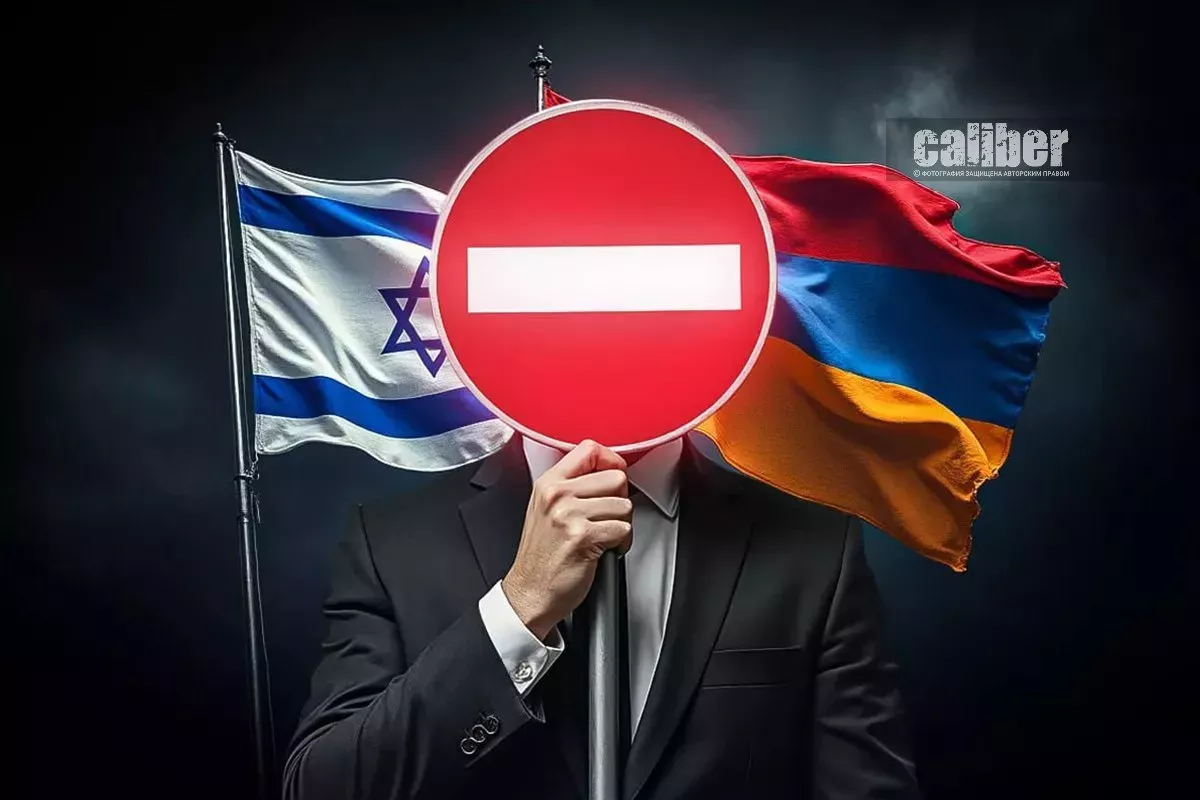
At the same time, the ANCA has pursued a markedly different course. Executive director, Aram Hamparian accusing Israel of aiding and abetting genocide in Karabakh, territory held for decades by Armenian separatists on internationally recognised Azerbaijani land.
For the Armenian government, Israel is a vital channel for technology and economic cooperation. For the lobby, it remains a vehicle for ideological signalling.
This same pattern plays out in Jerusalem. The ANCA has turned a municipal real estate dispute in the Armenian Quarter, known as the Cows’ Garden, into a high-profile political cause. By framing the issue as an existential crisis and lobbying the U.S. Capitol for intervention, the Armenian diaspora has turned a legal and municipal matter into a diplomatic friction point.
This includes escalating the discourse around property taxes and foreclosure proceedings against the Patriarchate, moving the debate from a legal framework into the realm of international grievance.
For Yerevan, this dynamic is a liability. While the Armenian government seeks to stabilise and quietly improve relations with Israel, the lobby exports local friction to Washington. This creates unnecessary tension with a key regional actor and U.S. ally at precisely the moment Armenia can least afford strategic isolation.
The sharpest point of contention has emerged around the Trump Route for International Peace and Prosperity. As the Armenian government explores this U.S.-backed normalisation framework as a means of strengthening its sovereignty, the ANCA has launched a public campaign against it. Drawing in part on claims from leaked or partial documents, the lobby argues that the initiative “rewards genocide” and undermines Armenian national interests.
By obstructing this process, the lobby is not merely opposing a specific policy proposal. It is diverging from the broader Western strategy for the Caucasus. This risks portraying Armenia as an unreliable partner to U.S. policymakers and further isolating Yerevan from potential security guarantees.
These tensions also intersect with wider regional dynamics. Prime Minister Nikol Pashinyan’s efforts to recalibrate Armenia’s foreign policy away from Russia and toward the West have widened a divide with diaspora networks. Iran, in turn, benefits from Armenian dependence and regional instability. In this context, diaspora activism that undermines U.S.-backed normalisation frameworks may inadvertently align with Russian and Iranian interests.
The 2024 Tavush protests and the 2025 arrest of Archbishop Bagrat Galstanyan underscored the depth of Armenia’s internal polarisation. As Armenia’s relations with Russia have deteriorated, analysts at the OSW Centre for Eastern Studies assess that Moscow has sought to support and energise Armenia’s opposition, at least indirectly. Armenian analysts have noted how diaspora activism can at times distort national discourse and constrain policy debate.
Armenia’s leadership must make clear to Washington that its foreign policy is not outsourced to diaspora organisations with independent agendas. At the same time, policymakers in Jerusalem and Washington should distinguish between lobby rhetoric and the national interests of the Armenian state.
Strengthening direct channels with Yerevan is necessary to bypass these obstacles. Armenia requires realism to survive. If the Washington lobby continues to prioritise ideology over strategy, it risks weakening the very foundations it claims to defend," Borodkin wrote.







 editor@caliber.az
 +994 55 444-88-98
 Азербайджан, Баку, ул. Низами, 203, Af Business House, 5-й этаж